What is a Volunteer Cover Letter
A volunteer cover letter is a formal document that introduces you to an organization or cause, expressing your interest in volunteering and highlighting your relevant skills and experiences. It’s your opportunity to make a strong first impression and demonstrate why you’re the ideal candidate for the volunteer role. Think of it as your personal pitch, a way to convey your enthusiasm and commitment to the organization’s mission and make a compelling case for why they should choose you. It’s your chance to differentiate yourself from other potential volunteers and showcase what you bring to the table. The cover letter is often submitted alongside a resume or application form, but sometimes it is used instead of application form.
Why is a Volunteer Cover Letter Important
A well-crafted volunteer cover letter is crucial for several reasons. First, it showcases your personality and enthusiasm in a way that a resume cannot. It allows you to express your genuine interest in the organization and explain why you are passionate about their cause. Second, it demonstrates your communication skills and attention to detail. A professionally written cover letter reflects positively on your ability to represent the organization. Third, it provides an opportunity to tailor your application to the specific volunteer role and highlight the skills and experiences most relevant to the position. Fourth, the process of writing one shows your commitment and dedication to the organization. Lastly, it helps you to stand out from other applicants.
Key Elements of a Volunteer Cover Letter

A strong volunteer cover letter comprises several essential elements that work together to present you as a compelling candidate. Structuring your cover letter with the following components will greatly improve your chances of success. Each of these parts plays a critical role in conveying your interest, skills, and commitment to the organization. From the initial greeting to the final signature, each aspect should be carefully considered and crafted to create a cohesive and persuasive document. These include contact information, date, recipient’s information, salutation, body paragraphs, complimentary close, and signature.
Contact Information
Start with your contact information at the top of the letter. This should include your full name, address, phone number, and email address. This ensures that the organization can easily reach you. This section should be clear, concise, and easy to read. Always make sure your contact information is up-to-date.
Date
Below your contact information, include the date you are writing the letter. This helps the organization keep track of when you submitted your application. Ensure that the date is formatted correctly according to the standard conventions of the organization’s region.
Recipient’s Information

Address the letter to the appropriate person if possible. Research the organization to find the name and title of the person in charge of volunteer recruitment or the hiring manager. If you can’t find a specific name, use a general title like “Volunteer Coordinator.” This personal touch demonstrates your attention to detail and initiative.
Salutation
Use a professional salutation such as “Dear Mr./Ms./Mx. [Last Name]” or “Dear Volunteer Coordinator.” Avoid using overly casual greetings. If you don’t know the recipient’s name, you can use “Dear Hiring Manager” or “To Whom It May Concern,” but try to avoid these if possible.
Body Paragraph 1: Expressing Interest
In the first paragraph, state the specific volunteer position you are applying for or the area of volunteering you are interested in. Clearly express your interest in the organization and explain why you are drawn to their mission. Briefly mention how you learned about the opportunity and what motivated you to apply. Make sure your enthusiasm is evident and sincere, setting a positive tone for the rest of the letter.
Body Paragraph 2: Highlighting Skills and Experiences

This paragraph is your opportunity to showcase your relevant skills and experiences. Identify the skills and experiences that align with the volunteer role’s requirements. Provide specific examples of how you have used these skills in the past. If you are a student, mention your academic achievements, relevant coursework, and any extracurricular activities that showcase your abilities. Quantify your accomplishments whenever possible using numbers or data to demonstrate impact.
Body Paragraph 3: Demonstrating Passion and Commitment
In the third paragraph, express your passion for the organization’s cause and your commitment to volunteering. Explain why you are passionate about their mission. Highlight any personal connection you have to the cause. Reiterate your commitment to the volunteer role and mention your availability. Conclude by expressing your eagerness to contribute to the organization’s success.
Closing Paragraph
In your closing paragraph, thank the reader for their time and consideration. Reiterate your interest in the volunteer opportunity and express your willingness to provide any additional information or participate in an interview. Include a call to action, such as mentioning that you look forward to hearing from them soon.
Complimentary Close

Use a professional complimentary close such as “Sincerely,” “Best regards,” or “Thank you.” Choose a closing that is appropriate for the tone of your letter and the culture of the organization.
Signature
Type your full name below your closing. If you are submitting a printed letter, leave space for your handwritten signature above your typed name.
Formatting Your Volunteer Cover Letter
Proper formatting is essential for making your cover letter easy to read and visually appealing. A well-formatted letter shows that you pay attention to detail and have a professional approach. This will make your cover letter stand out. The following formatting guidelines will help you create a professional document.
Font and Font Size

Choose a professional and easy-to-read font, such as Times New Roman, Arial, or Calibri. Use a font size between 10 and 12 points to ensure readability. Stick to a single font throughout the entire document. Avoid using overly decorative or unusual fonts that may distract the reader.
Margins and Spacing
Set your margins to 1 inch on all sides to provide a balanced and clean look. Use single-line spacing for the body of your letter and double-line spacing between paragraphs to improve readability. Proper spacing helps to avoid a cluttered appearance and makes the document easier to scan.
Proofreading and Editing
Proofread your cover letter carefully for any grammatical errors, typos, or inconsistencies. Errors can negatively impact your impression, so ensure your letter is flawless. Ask a friend or family member to review your letter to catch any mistakes you might have missed. Pay close attention to spelling, punctuation, and grammar, as these can make a significant difference in how you are perceived.
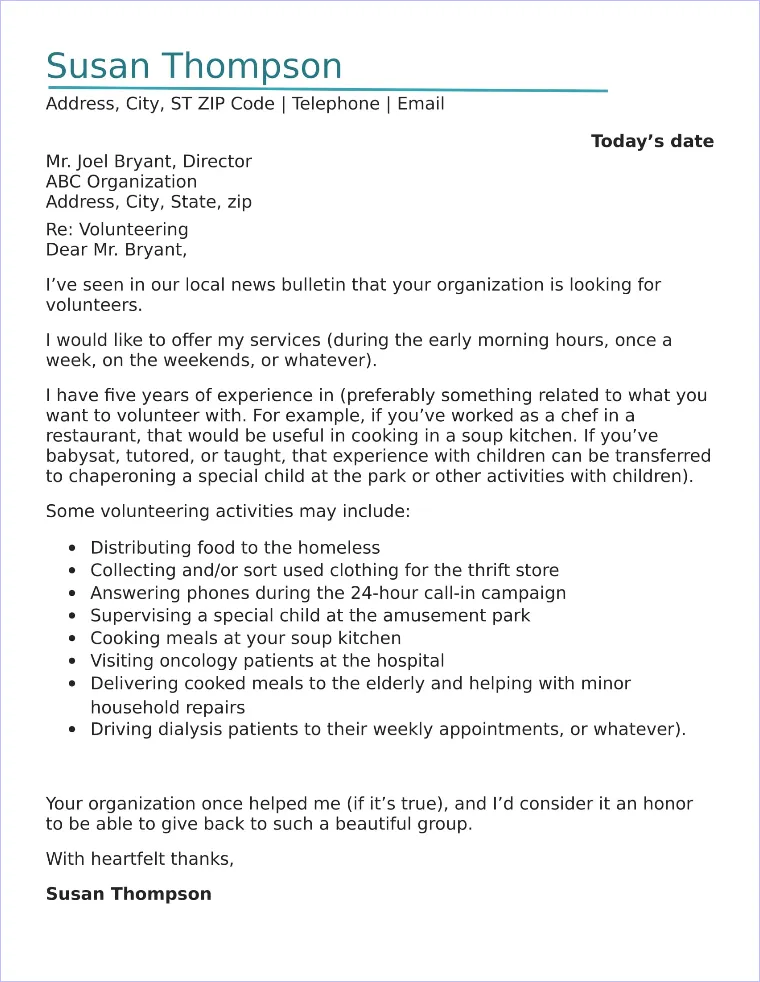
Example Volunteer Cover Letter

Here is an example volunteer cover letter. Remember to tailor the content to your experiences and the specific organization.
Tips for Writing a Compelling Volunteer Cover Letter
Writing a compelling volunteer cover letter requires careful attention to detail and a clear understanding of your goals. The following tips can help you create a letter that effectively showcases your skills, enthusiasm, and commitment to the organization. These tips provide a practical guide to help you stand out and demonstrate your suitability for the volunteer role.
Research the Organization
Before writing your cover letter, thoroughly research the organization and the specific volunteer role. Visit their website, read their mission statement, and understand their values. Tailor your letter to align with their goals and show that you understand what they do. This demonstrates your genuine interest and shows that you are not just applying for any opportunity.
Tailor Your Letter
Customize your cover letter for each volunteer position. Avoid using a generic template. Address the specific requirements and expectations outlined in the job description. Highlight the skills and experiences that are most relevant to the role. Tailoring your letter shows that you have taken the time to understand the specific needs of the organization.
Use Action Verbs
Start your sentences with strong action verbs to describe your skills and accomplishments. Action verbs make your letter more dynamic and engaging. Instead of saying “I was responsible for,” try “I managed,” “I led,” or “I coordinated.” This helps to showcase your abilities more effectively and make a lasting impression.
Keep it Concise
Keep your cover letter concise and to the point. Aim for one page in length. Focus on the most important information and avoid unnecessary details. Be clear, direct, and easy to read. Use short paragraphs and clear language. This will make it easier for the reader to quickly grasp your qualifications and interest.
Proofread Carefully
Thoroughly proofread your cover letter for any errors in grammar, spelling, and punctuation. Errors can undermine your credibility and make you appear less professional. Ask a friend or family member to review your letter as well to catch any mistakes you may have missed.
Common Mistakes to Avoid
Avoiding common mistakes is essential to ensure your volunteer cover letter effectively presents you as a suitable candidate. Understanding and preventing these pitfalls can significantly increase your chances of success. Knowing these common mistakes will help you present yourself in the best possible light. These pitfalls can inadvertently undermine your application and reduce your chances of getting selected.
Ignoring the Instructions
Always follow the instructions provided by the organization. If they specify a certain format, length, or content, make sure your cover letter adheres to these guidelines. Failing to follow instructions suggests that you may not pay attention to detail.
Being Vague
Avoid being vague or generic in your cover letter. Provide specific examples of your skills and experiences. Quantify your accomplishments whenever possible. Generic statements do not showcase your unique qualifications and fail to impress the reader.
Using Generic Templates
Do not use a generic template without tailoring it to the specific volunteer position. Generic templates do not demonstrate that you have taken the time to understand the organization’s mission and needs. Customize your letter to the organization and the role.
Not Proofreading
Always proofread your cover letter before submitting it. Typos and grammatical errors can make you appear unprofessional. Ask a friend or family member to review your letter as well. Errors can significantly detract from your overall presentation and reduce your chances of selection.
Conclusion
Writing a compelling volunteer cover letter is a crucial step in securing a volunteer position. By following the guidelines and tips provided in this guide, you can create a document that effectively showcases your skills, enthusiasm, and commitment to the organization. Remember to tailor your letter to each specific opportunity, research the organization thoroughly, and present yourself professionally. Good luck with your volunteer applications, and remember to highlight your passion and dedication throughout the process. With a well-crafted cover letter, you can increase your chances of making a positive impact and contributing to a cause you care about. Use the information here to guide you through the process, and you’ll be on your way to becoming a valued volunteer!