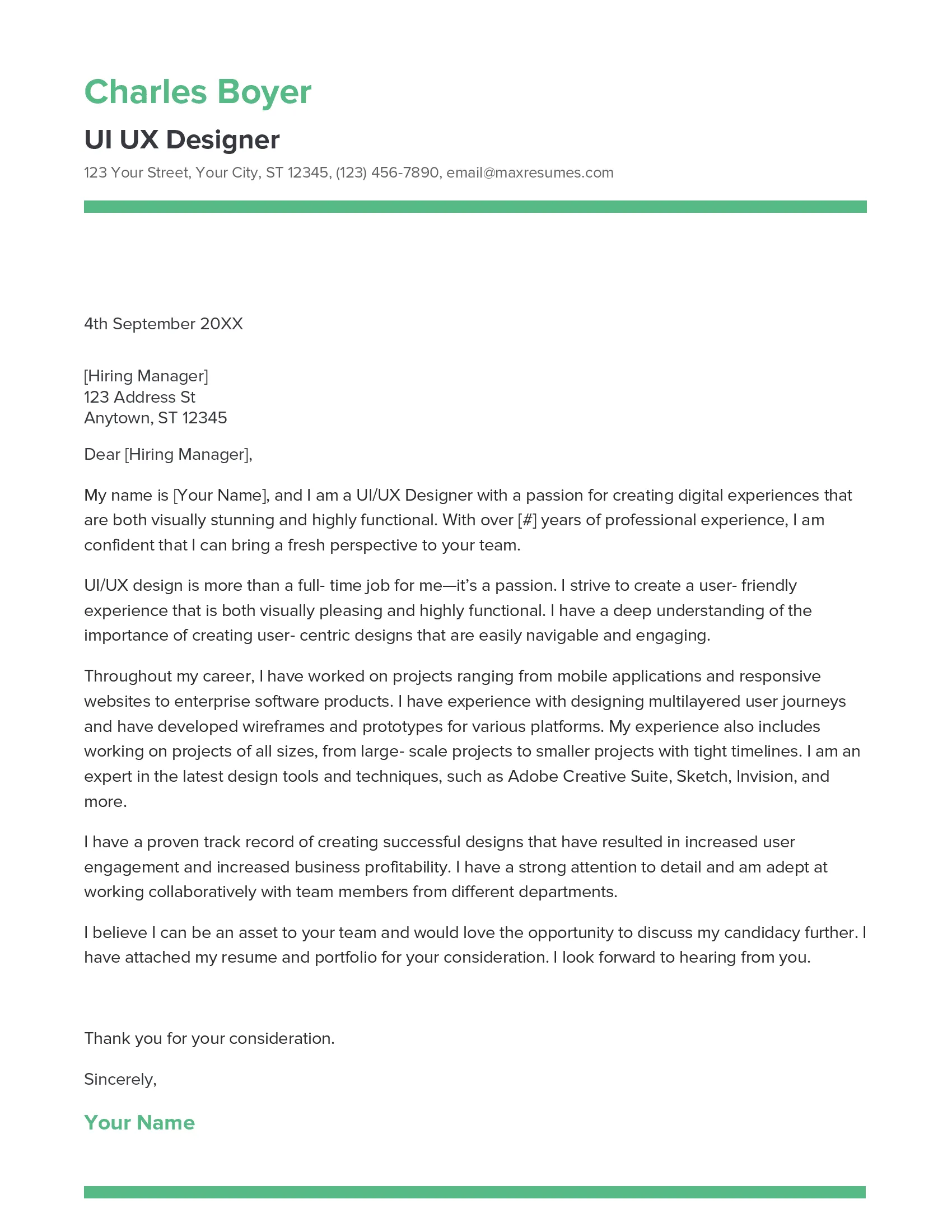
Crafting an Effective UI UX Cover Letter
In the competitive world of UI UX design, a well-crafted cover letter is your secret weapon. It’s your chance to go beyond the bullet points of your resume and demonstrate your passion, skills, and understanding of the role and company. A compelling cover letter can significantly increase your chances of getting noticed and landing an interview. This guide provides a comprehensive approach to help you create a cover letter that stands out from the crowd, showcasing your unique value proposition as a UI UX professional.
Understanding the Purpose of a Cover Letter
A cover letter is more than just a formality; it’s your personal marketing document. Its primary purpose is to introduce yourself, highlight your relevant skills and experience, and express your enthusiasm for the specific role and company. It allows you to tell a story, connecting your past experiences to the future opportunity. It helps humanize your application, demonstrating your communication skills and personality, which are crucial in UI UX design roles. The cover letter provides a platform to showcase your understanding of user-centered design principles in your communication style.
Highlighting Relevant Skills and Experience

Focusing on your key skills and experiences relevant to the job description is crucial. Don’t just list your skills; illustrate how you’ve applied them to achieve specific results. Use the STAR method (Situation, Task, Action, Result) to describe your accomplishments. This approach makes your achievements tangible and demonstrates your problem-solving abilities. Tailor this section to match the job requirements, emphasizing skills and experiences that align with the role’s needs and the company’s values. For example, If the job requires prototyping, describe a project where you utilized prototyping tools like Figma or Adobe XD to create user-friendly interfaces.
UI UX Design Skills to Showcase
Identify the core UI UX design skills the employer values. This often includes user research, information architecture, wireframing, prototyping, usability testing, visual design, and interaction design. Highlight your proficiency in these areas, providing concrete examples. For example, If you’re skilled in user research, describe a project where you conducted user interviews, created user personas, and used the insights to inform your design decisions. If you have strong visual design skills, explain how you create visually appealing and consistent designs that enhance the user experience. Showcase a strong understanding of design systems, accessibility standards, and responsive design principles.
Quantifiable Achievements
Whenever possible, quantify your achievements. Use numbers and metrics to demonstrate the impact of your work. Instead of saying you “improved user engagement,” state that you “increased user engagement by 20% after redesigning the onboarding flow.” Quantifiable results demonstrate the value you bring to the table. Describe any projects where your designs led to measurable improvements, such as increased conversion rates, reduced bounce rates, or higher user satisfaction scores. This helps potential employers quickly understand the tangible benefits of hiring you.
Tailoring Your Cover Letter

Generic cover letters are easy to spot and often get ignored. Tailoring your letter to each specific job application is essential to show that you’ve done your research and are genuinely interested in the role. Demonstrate your understanding of the company’s mission, values, and products. Reference specific projects or initiatives that resonate with your skills and experience. Highlighting your understanding of the company’s brand and how you would fit into their design team shows that you are a good fit.
Researching the Company and Role
Before writing your cover letter, thoroughly research the company and the specific role. Visit the company’s website, explore their products or services, and read their blog or news articles. Understand their design philosophy, their target audience, and the challenges they face. Examine the job description carefully, identifying the key skills and requirements. Understand what the company expects and what is most valuable to them. Knowing this information helps you tailor your letter to align with their needs and demonstrate how you can contribute to their success.
Personalizing Your Letter
Personalize your letter to show genuine interest. Address the hiring manager by name (if possible), and reference something specific about the company or role that excites you. Express your enthusiasm for the opportunity and explain why you are a good fit for their team. Mention any of their projects you admire or how you can contribute your unique perspective. This level of personalization shows that you’ve invested time and effort in the application, making you stand out from generic applicants. Personalization demonstrates that you are truly interested in joining the team.
Structuring Your UI UX Cover Letter

A well-structured cover letter is easy to read and conveys your message effectively. The structure should include an engaging opening, a compelling body, and a strong closing. Keep your letter concise, typically one page. Use clear and professional language, and ensure the tone is appropriate for the company and role. Formatting, clarity, and organization are crucial to making a good impression. Proper structure helps recruiters quickly grasp your most important qualifications and understand why you’re a good fit for the company.
Opening Paragraph Best Practices
The opening paragraph is your first chance to grab the reader’s attention. Start with a strong hook, such as an enthusiastic statement about the role or a brief mention of your most relevant achievement. Clearly state the position you are applying for and where you found the job posting. Highlight one or two key skills or experiences that make you a strong candidate. Avoid generic openings; show excitement and tailor it to the specific company. The goal is to immediately capture the hiring manager’s interest and encourage them to read further.
Body Paragraphs Crafting Your Message
The body of your cover letter is where you expand on your skills and experience. Use 2-3 paragraphs to highlight your most relevant qualifications and achievements. Provide specific examples of your work and demonstrate how you have applied your skills to achieve results. Connect your skills to the requirements of the job, showcasing your understanding of their needs. Describe the project or task, and use the STAR method to highlight your contributions. It is your chance to showcase your soft skills, such as communication and collaboration, by describing how you worked with other team members.
Closing Paragraphs and Call to Action

Your closing paragraph should reiterate your interest in the role and the company. Summarize why you are a good fit and express your enthusiasm for the opportunity. Include a clear call to action, such as inviting the hiring manager to review your resume or schedule an interview. Thank the reader for their time and consideration. Make sure to proofread the closing paragraph for any errors. A strong closing paragraph leaves a lasting positive impression and encourages the hiring manager to take the next step.
UI UX Cover Letter Examples and Templates
Analyzing successful cover letter examples and adapting templates can provide a helpful starting point. However, avoid simply copying and pasting; instead, use the templates as a guide to structure your own unique letter. Tailor the content to reflect your experiences and the specific requirements of the job. Researching and adapting existing formats offers insight into effective cover letter writing. This way, you’ll get a personalized cover letter that accurately represents your experience.
Analyzing Successful Cover Letters
Examine examples of cover letters from successful UI UX designers. Pay attention to their structure, language, and the way they highlight their skills and experiences. Identify the techniques that make their letters effective. Note the tone, the level of detail, and how they connect their past experiences to the desired job. Look for common patterns like use of strong verbs, a focus on results, and a clear call to action. Adapt the strategies to demonstrate your skills and experience.
Adapting Templates for Your Application

Use cover letter templates as a starting point but personalize them. Replace the generic content with your specific information and tailor the language to the role and company. Adapt the formatting to match your resume and create a professional look. Add a personal touch that reflects your personality and enthusiasm. Make sure to thoroughly proofread your personalized letter for accuracy and clarity. Customize the template and refine the language to reflect your unique skills and the job requirements.
Common Mistakes to Avoid
Certain mistakes can quickly disqualify your cover letter. Avoid these errors to increase your chances of success. Be mindful of the details to make a professional impression. Make sure to provide correct information to show that you’re committed to the role.
Generic Language and Lack of Personalization
Avoid using generic phrases or a one-size-fits-all approach. Recruiters can easily spot generic cover letters, showing a lack of genuine interest. Tailor the letter to the specific company and role. Show enthusiasm by researching the company and mentioning aspects that resonate with your interests. Emphasize your unique perspective, what you admire about the company, and your understanding of the role. Personalized content helps showcase your genuine interest and qualifications.
Typos and Grammatical Errors
Typos and grammatical errors can undermine your credibility. Carefully proofread your cover letter before submitting it. Use spell-check and grammar-check tools to catch any mistakes. Ensure that your language is clear, concise, and professional. Ask someone to review your letter for any errors. A well-edited and polished cover letter demonstrates attention to detail and professionalism, which are essential qualities for a UI UX designer.
Ignoring the Job Description
Ignoring the job description is a major mistake. Tailor your cover letter to match the specific requirements. Highlight the skills, experiences, and qualifications mentioned in the job posting. Show how your skills and experiences align with the needs of the role. Demonstrate how your experience helps in addressing their challenges. Focusing on the job description demonstrates that you are a strong fit and have the qualifications required.
Optimizing Your Cover Letter for Applicant Tracking Systems (ATS)
Many companies use ATS to screen cover letters and resumes. To ensure your letter is seen by a human, you must optimize it for ATS. These systems scan your application for relevant keywords, so it is important to follow some simple guidelines.
Formatting Guidelines for ATS
Use a simple, clean format that’s easy for the ATS to read. Avoid complex formatting, tables, images, or unusual fonts. Use standard fonts like Arial, Calibri, or Times New Roman. Save your cover letter as a PDF to preserve the formatting. A clean format makes sure that your content is correctly interpreted by the ATS.
Using Relevant Keywords
Carefully review the job description and identify the key skills and keywords the employer is looking for. Incorporate these keywords naturally throughout your cover letter. Make sure the keywords fit the context, as keyword stuffing can be a red flag. Integrate keywords into your descriptions of your projects, skills, and experiences. Use relevant keywords to optimize your letter and help it get through the ATS and to the hiring manager.
Proofreading and Editing Your UI UX Cover Letter
Proofreading and editing are crucial steps in the cover letter writing process. Review your letter multiple times to catch any errors. Poor writing can damage your image and negatively influence the decision to move forward with your application. Editing makes sure that your cover letter is polished, professional, and reflects your best work.
Tools and Resources
Utilize tools and resources to improve your cover letter. Use grammar checkers and proofreading software to catch any mistakes. Seek feedback from mentors, career counselors, or other UI UX professionals. Read cover letter examples from various sources to gain inspiration and ideas. These resources will help you refine your content and improve the quality of your cover letter.
Crafting a compelling UI UX cover letter requires effort, attention to detail, and a deep understanding of the role and company. By following these guidelines, you can create a cover letter that gets noticed, showcases your skills, and helps you land your dream job. Good luck with your job search!