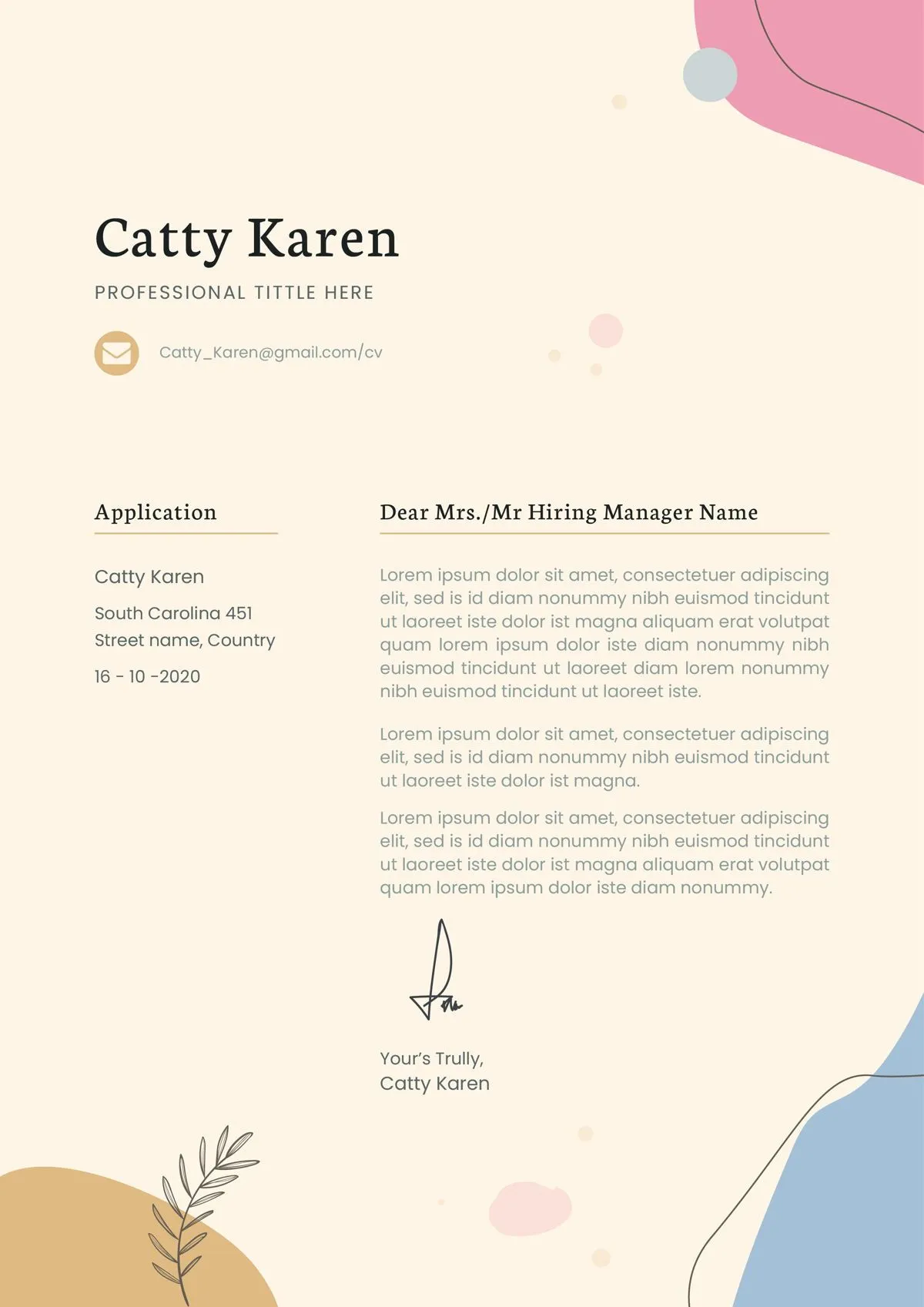
What is a Cover Letter?
A cover letter is a crucial document that accompanies your Curriculum Vitae (CV) or resume when you apply for a job. It serves as your initial introduction to a potential employer, providing a personal touch and context to your qualifications. Unlike your CV, which lists your skills and experiences, a cover letter allows you to elaborate on why you’re the perfect fit for the specific role and company. It’s your chance to showcase your personality, express your interest, and demonstrate your understanding of the job’s requirements. A well-crafted cover letter can significantly increase your chances of getting noticed and securing an interview.
Why Use a Cover Letter for Your CV?
While your CV provides a snapshot of your professional history, a cover letter offers the opportunity to delve deeper. It allows you to connect your skills and experiences directly to the job requirements, making a compelling case for why you should be considered. A cover letter demonstrates your communication skills, personality, and genuine interest in the position. It allows you to address any potential gaps in your CV, such as career changes or periods of unemployment, and explain how your unique background makes you an ideal candidate. Moreover, it shows that you’ve taken the time to research the company and understand their needs, which can set you apart from other applicants.
Cover Letter Essentials

A compelling cover letter includes several key components that work together to make a positive impression. A professional header with your contact information, the date, and the recipient’s details establishes a formal tone. The greeting should be personalized whenever possible, addressing the hiring manager by name. The body of the letter should be well-structured, with an introductory paragraph that states your purpose, followed by paragraphs highlighting your relevant skills and experiences. The closing paragraph should reiterate your interest and include a clear call to action. Finally, a professional sign-off completes the letter.
Header Section
The header is the first element of your cover letter, and it’s crucial for presenting a professional image. Start with your full name, address, phone number, and email address. These details should be clearly formatted and easy to read. Below your contact information, include the date. Then, provide the hiring manager’s name, title, and the company’s name and address. Ensuring that all information is correct and up-to-date is essential to a strong first impression. This section immediately identifies you and provides the necessary information for the employer to contact you.
Greeting the Recruiter
The greeting sets the tone for your cover letter and should be appropriate for the company culture. Whenever possible, address the hiring manager by name, as it demonstrates that you’ve done your research and are genuinely interested in the role. If you’re unable to find the hiring manager’s name, use a professional greeting like “Dear Hiring Manager” or “Dear [Department Name] Team.” Avoid generic greetings like “To Whom It May Concern,” as they can make your letter feel impersonal. Ensure the greeting aligns with the company’s formality, as a more casual greeting may not be suitable for all workplaces.
Body Section

The body of your cover letter is where you make your case for why you’re the best candidate for the job. It should be well-organized, concise, and compelling. Use the body to highlight your relevant skills and experiences, connecting them to the job requirements. The body typically consists of three main paragraphs: an introductory paragraph, a paragraph detailing your skills and experiences, and a concluding paragraph that summarizes your interest and includes a call to action. Each paragraph should have a clear purpose and contribute to the overall message, making it easy for the reader to understand your qualifications and enthusiasm.
First Paragraph Introduce Yourself
The introductory paragraph should immediately grab the reader’s attention and state the purpose of your letter. Start by mentioning the specific position you’re applying for and where you found the job posting. Briefly state why you are interested in the role and the company. This paragraph should be concise and engaging, setting the stage for the rest of your letter. Your goal here is to capture the hiring manager’s interest and encourage them to keep reading. It is your first chance to make a positive impression, so make it count and clearly communicate your intent.
Second Paragraph Highlight Relevant Skills
In the second paragraph, delve into your relevant skills and experiences. Analyze the job description and identify the key requirements. Then, provide specific examples from your past experiences that demonstrate how you’ve used those skills to achieve results. Quantify your accomplishments whenever possible, using numbers and data to showcase your impact. Avoid simply listing your skills; instead, describe how you applied them in real-world scenarios. Tailor this section to the specific job you’re applying for, highlighting the skills and experiences most relevant to the role. This targeted approach will demonstrate your understanding of the job requirements and your ability to meet them.
Third Paragraph Showcase Your Passion

The third paragraph is your chance to showcase your passion for the company and the role. Explain why you’re excited about the opportunity and what makes you a good fit for the company culture. Demonstrate that you’ve researched the company and understand its mission, values, and goals. Express your enthusiasm for the industry and the challenges of the role. This paragraph should convey your genuine interest and make you seem like someone who is eager to contribute. Show how your personal goals align with the company’s objectives. It will give the recruiter a clear picture of your dedication and commitment.
Call to Action
Include a clear call to action in your cover letter. Tell the hiring manager what you want them to do next, such as scheduling an interview or reviewing your application. Reiterate your interest in the position and the company, and express your enthusiasm for the opportunity to discuss your qualifications further. Make it easy for the hiring manager to take the next step by providing your contact information, again, if necessary. The call to action reinforces your proactive approach and encourages the recruiter to move forward with your application. This final push is essential for guiding the hiring manager and ensuring your application is not overlooked.
Closing Section
The closing section of your cover letter should reinforce your professionalism and leave a lasting positive impression. The formal closing and your sign-off are crucial for setting the right tone. This section is the last thing the hiring manager will read, so it’s essential to end on a strong note. This is where you reiterate your interest and provide the final touch that distinguishes your application.
Formal Closing

Use a professional closing to end your cover letter. Appropriate choices include “Sincerely,” “Best regards,” or “Yours sincerely.” Avoid informal closings like “Thanks” or “Best,” as they may not be suitable for all workplaces. The closing should be followed by a comma and then a line for your handwritten signature. Ensure your closing aligns with the overall tone of your cover letter and the company’s culture. Maintain a consistent level of professionalism throughout to demonstrate your attention to detail.
Sign-off
After the closing, type your full name. This is where your signature would go if you were submitting a physical letter, and is a standard practice in any cover letter. Ensure your name is clear and easy to read. Your name at the end provides a professional finish to your letter. By ensuring your sign-off includes all the necessary elements, you present a polished and complete application.
Common Mistakes to Avoid
Several common mistakes can undermine the effectiveness of your cover letter. Avoiding these errors can significantly improve your chances of making a positive impression. Pay close attention to the tone and content of your letter to avoid common pitfalls.
Overly Generic Content

One of the most common mistakes is using a generic cover letter. Employers can quickly spot cover letters that are not tailored to the specific role or company. Avoid using the same letter for every application, and instead, customize your letter to match the requirements of each job. Research the company and tailor your skills and experiences to the job description. Generic content shows a lack of interest and a lack of understanding of the company’s needs. A personalized cover letter demonstrates your genuine interest and increases your chances of getting noticed.
Typos and Grammatical Errors
Typos and grammatical errors can severely damage your credibility. Proofread your cover letter multiple times before submitting it. Use a spell checker and grammar checker, but don’t rely on them completely. Read your letter out loud to catch any awkward phrasing or mistakes. A well-written cover letter reflects your attention to detail and professionalism. Errors can create a negative impression and make you appear careless. Always have someone else review your cover letter for a fresh perspective and to catch any mistakes you might have missed.
Ignoring the Job Description
Ignoring the job description is a critical mistake. The job description provides essential information about the role and the skills and experiences the employer is looking for. Tailor your cover letter to address the specific requirements outlined in the job description. Highlight your relevant skills and experiences and provide examples of your accomplishments. Avoid simply repeating the job description; instead, use it as a guide to showcase how you meet the requirements. Demonstrating how you can provide value by addressing the job description increases your chances of impressing the recruiter.
Tips for Customization

Customizing your cover letter is critical for making a strong impression. A customized cover letter shows that you’ve taken the time to understand the company and the role. The key is to research the company and the specific job requirements and tailor your letter accordingly. This allows you to highlight the skills, and experiences that make you the perfect fit for the position.
Tailoring to the Specific Role
Tailor your cover letter to the specific role by carefully reviewing the job description. Identify the key skills, experiences, and qualifications the employer is looking for. Then, highlight how your background and accomplishments align with those requirements. Provide specific examples of how you’ve demonstrated those skills in the past. Use keywords from the job description to make your letter easily searchable by applicant tracking systems (ATS). Avoid using a generic template; instead, customize your letter to match the job requirements. Customization increases your chances of getting noticed and landing an interview.
Using Keywords from the Job Posting
Use keywords from the job posting to demonstrate your understanding of the role and to help your cover letter get past applicant tracking systems (ATS). Identify the key skills, experiences, and qualifications mentioned in the job description. Incorporate these keywords naturally throughout your cover letter. However, avoid keyword stuffing, which can make your letter sound unnatural. Instead, integrate the keywords into your sentences and phrases. A well-written cover letter that includes relevant keywords will highlight your qualifications and demonstrate your understanding of the role. By using keywords strategically, you can ensure your application gets noticed by both humans and machines.
In conclusion, a well-crafted cover letter is a powerful tool that can significantly enhance your job application. By following these guidelines and tips, you can create a cover letter that grabs the attention of hiring managers, showcases your qualifications, and increases your chances of securing an interview. Remember to tailor your letter to each specific job, proofread carefully, and always highlight your enthusiasm and fit for the role. Your cover letter is your first chance to impress, so make it count!