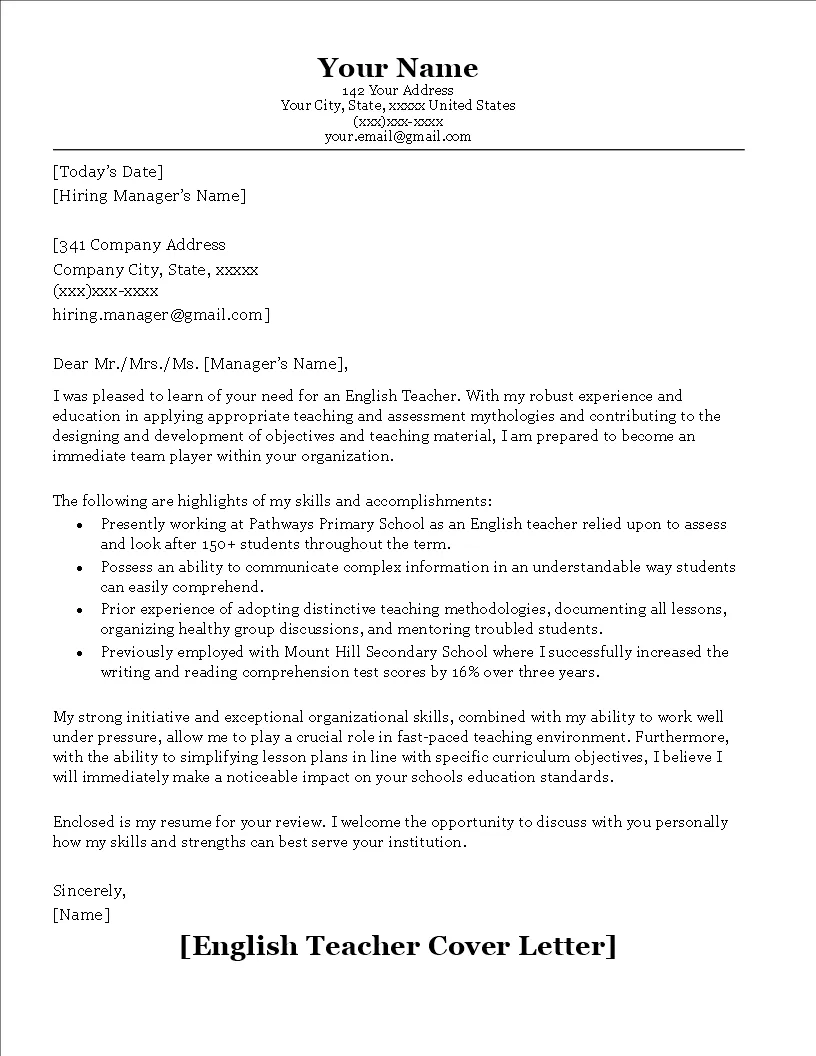
The Importance of a Teacher Cover Letter
In the competitive world of education, a well-crafted teacher cover letter can be your secret weapon. It serves as your first introduction to a potential employer, offering a glimpse into your personality, passion, and qualifications. Unlike your resume, which provides a factual overview of your experience, the cover letter allows you to connect with the hiring manager on a personal level and articulate why you are the perfect fit for the role. It’s your opportunity to make a lasting impression and stand out from the crowd of applicants, showcasing not just what you’ve done, but who you are as an educator.
Why a Cover Letter Matters for Teachers
Many teachers underestimate the power of a cover letter, but it’s a crucial component of any job application. A cover letter provides context to your resume and allows you to explain gaps in employment, career changes, or unique skills that might not be immediately apparent from a list of dates and job titles. It’s your chance to paint a vivid picture of your teaching philosophy, your commitment to student success, and your enthusiasm for the specific position. Furthermore, a well-written cover letter demonstrates your communication skills, attention to detail, and dedication to going above and beyond.
First Impressions Matter

In the hiring process, first impressions are everything. Your cover letter is often the first interaction a school administrator has with you. A compelling cover letter immediately grabs their attention and piques their interest, making them eager to learn more about you. A poorly written cover letter, on the other hand, can be an instant deal-breaker, regardless of your qualifications. The cover letter allows you to showcase your personality, your values, and your genuine interest in the school and the position, all of which contribute to making a positive and memorable first impression.
Understanding the Goal of a Teacher Cover Letter
The primary goal of your teacher cover letter is to secure an interview. It’s not just about listing your accomplishments; it’s about persuading the hiring manager that you are the best candidate. You need to demonstrate how your skills, experience, and personality align with the needs of the school and the specific role. This requires careful research, thoughtful writing, and a clear understanding of what the employer is looking for. Your cover letter should highlight your unique strengths and make a compelling case for why you deserve an interview.
Highlighting Your Qualifications
Your cover letter is the perfect place to highlight the qualifications most relevant to the teaching position. Don’t simply restate what’s on your resume; instead, elaborate on your skills and achievements. Provide specific examples of how you’ve successfully implemented teaching strategies, managed a classroom, or improved student outcomes. Quantify your accomplishments whenever possible. Did you increase test scores? Implement a successful new program? Showcase your abilities and the impact you’ve made in previous roles. Be sure to align your qualifications with the requirements mentioned in the job description.
Showcasing Relevant Experience
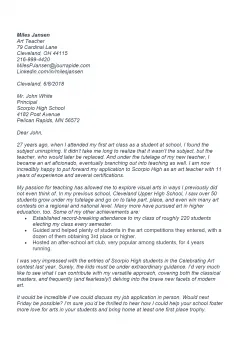
The cover letter provides an opportunity to connect your experience to the specific role. Identify the key responsibilities and requirements outlined in the job description and provide concrete examples from your past roles that demonstrate your ability to meet those needs. Share specific examples of your teaching experience, including the grade levels you’ve taught, the subjects you’ve specialized in, and the types of students you’ve worked with. By demonstrating that your experience aligns with the needs of the school, you show you have a deep understanding of what is expected of you.
Demonstrating Passion for Teaching
Teaching is more than just a job; it’s a calling. Your cover letter should convey your passion for education and your genuine enthusiasm for working with students. Share your teaching philosophy and describe what inspires you to be an educator. Mention specific aspects of the school or the position that particularly excite you. Make it clear that you are committed to creating a positive and engaging learning environment. Your passion for teaching is contagious and can be a key differentiator when the hiring manager is deciding between different candidates.
Key Elements of a Winning Teacher Cover Letter
A strong teacher cover letter includes several key elements that work together to create a compelling narrative. From the personalized greeting to the call to action, each component plays an important role in presenting you as a qualified and enthusiastic candidate. Focusing on these essential elements ensures that you deliver a cover letter that stands out and makes a strong impression.
Personalized Greeting and Introduction
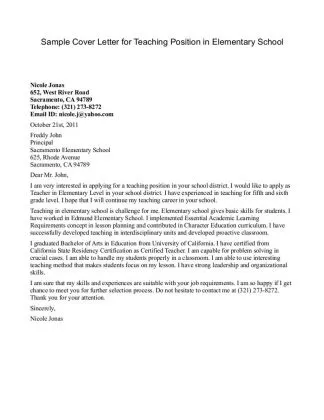
Start your cover letter with a personalized greeting. If possible, address the hiring manager by name. Research the school website, LinkedIn, or other online resources to identify the person responsible for hiring. This shows you’ve taken the time to learn about the school and the role. In your introduction, state the position you are applying for and briefly explain why you’re interested. Clearly communicate your passion for teaching and your specific interest in the school. Make a strong first impression that gets their attention.
Highlighting Your Skills and Achievements
This is where you highlight your skills and achievements. Instead of simply listing your qualifications, provide specific examples of your accomplishments. Describe situations where you successfully applied your skills, the challenges you faced, and the positive outcomes you achieved. Emphasize the skills and experiences that align with the job requirements. Quantify your achievements whenever possible (e.g., “Increased student test scores by 15%” or “Implemented a new literacy program that improved reading comprehension by 20%”).
Focusing on Student Impact
Always focus on the impact you’ve had on students. Share stories that highlight your ability to create a positive learning environment and foster student success. Demonstrate your ability to connect with students, differentiate instruction, and meet the diverse needs of learners. Mention how you have gone above and beyond to support your students. Your passion for helping students succeed should be evident in every paragraph of your cover letter.
Addressing the Specific Job Requirements

Carefully review the job description and tailor your cover letter to address the specific requirements outlined. Identify the key skills, qualifications, and experiences the school is looking for and provide evidence that you possess them. Use keywords from the job description, but do so naturally. Demonstrate a clear understanding of the role and explain how your skills and experience align with the school’s needs. By addressing the specific job requirements, you show that you’ve taken the time to understand the role and are a good fit for the school.
Call to Action and Closing
End your cover letter with a strong call to action. Express your interest in an interview and thank the hiring manager for their time and consideration. Reiterate your enthusiasm for the role and the school. Provide your contact information and make it easy for the hiring manager to reach you. Consider including a statement about your availability for an interview. The closing should leave the hiring manager with a sense of anticipation and a desire to learn more about you.
Formatting and Design Tips for Teacher Cover Letters
While the content of your cover letter is the most important aspect, the formatting and design can significantly impact its readability and professionalism. A well-formatted cover letter is easy to read and visually appealing, increasing the likelihood that the hiring manager will read it carefully and fully understand your qualifications. The following tips will help you create a professional cover letter that presents you in the best possible light.
Choosing the Right Font and Font Size

Choose a professional and easy-to-read font, such as Times New Roman, Arial, or Calibri. Avoid overly decorative or unusual fonts, as they can be difficult to read. Use a font size between 11 and 12 points for the body of your cover letter. This ensures that the text is large enough to be read comfortably without appearing cluttered. A legible font and appropriate font size show you care about the details.
Formatting the Letter for Readability
Use clear formatting to make your cover letter easy to read. Use appropriate spacing between paragraphs, typically one or one-and-a-half lines. Use left alignment, and avoid justifying the text, as this can create awkward spacing. Use bullet points or numbered lists to highlight key achievements or skills, making your cover letter visually appealing and easier to scan. Break up long paragraphs into shorter, more manageable ones to maintain the reader’s interest. This makes your cover letter more readable and increases the chances that the hiring manager will read it entirely.
Proofreading and Editing for Errors
Proofread your cover letter carefully for any grammatical errors, spelling mistakes, and typos. These errors can damage your credibility and make a negative impression on the hiring manager. Use a spell checker and grammar checker, but also read the letter aloud to catch any errors that the software might miss. Ask a friend or colleague to proofread your cover letter as a second pair of eyes. Pay close attention to details to ensure your cover letter is polished and professional.
Common Mistakes to Avoid in Teacher Cover Letters

There are several common mistakes that can undermine your teacher cover letter and decrease your chances of landing an interview. Avoiding these pitfalls can significantly increase your chances of success. Pay attention to these details and edit accordingly. These mistakes can make a negative impression and diminish your chances of getting an interview.
Generic or Uninspired Language
Avoid using generic or uninspired language. Phrases like “I am a hard worker” or “I am passionate about teaching” are commonplace and lack impact. Instead, provide specific examples of your accomplishments and experiences to demonstrate your abilities. Avoid clichés. Use vivid, active language that showcases your personality and enthusiasm. Make your cover letter stand out with authentic voice and specific examples that demonstrate your skills and enthusiasm.
Focusing Too Much on Yourself
While it is essential to highlight your qualifications, avoid focusing too much on yourself and your needs. Instead, focus on how your skills and experience can benefit the school and the students. Show that you understand the school’s needs and that you are eager to contribute to their mission. Frame your accomplishments in terms of how they can benefit the students and the school. Demonstrate your understanding of the school’s values, and highlight how you would contribute to their success.
Ignoring the Job Description
Failing to address the specific requirements of the job description is a common mistake. Carefully review the job description and tailor your cover letter to highlight the skills, experiences, and qualifications that the school is looking for. Use keywords from the job description but ensure the language flows naturally. Demonstrate that you understand the needs of the school and that you are a good fit for the role. Tailor your cover letter to demonstrate you have thoroughly read the job description and are responding directly to its requirements.
Sending the Wrong File Type
Always submit your cover letter in the format requested by the school. If no specific format is requested, a PDF file is generally preferred, as it preserves the formatting and is easily accessible on various devices. Avoid sending a Word document unless it’s specifically requested. Make sure your name and the position appear in the file name. Always test the document to ensure that it is viewable and that there are no formatting issues.
Tailoring Your Cover Letter for Each Application
One of the most important secrets to writing a successful teacher cover letter is tailoring it for each application. Generic, one-size-fits-all cover letters rarely make a strong impression. It is important that you show your interest and research the organization.
Researching the School and the Role
Before writing your cover letter, thoroughly research the school and the specific teaching role. Visit the school’s website, review its mission statement, and learn about its programs and values. Read the job description carefully, paying attention to the required qualifications, skills, and experiences. Understanding the school’s culture and the needs of the role will allow you to tailor your cover letter to demonstrate how you can contribute to their success. This research shows that you are serious about the opportunity.
Customizing the Letter to Match the School’s Values
Align your cover letter with the school’s values and mission. Highlight the aspects of your experience and teaching philosophy that resonate with the school’s approach. If the school emphasizes collaboration, showcase your experience working in teams. If the school focuses on student-centered learning, emphasize your ability to differentiate instruction and meet the needs of all learners. Show that you understand the school’s unique culture and that you are a good fit for their team.
Referencing Specific Aspects of the Job Description
Throughout your cover letter, reference specific aspects of the job description. Use keywords from the job description and highlight the skills and experiences that match the school’s requirements. Provide examples of how you’ve demonstrated these skills in previous roles. By directly addressing the job description, you show that you have carefully considered the role and that you possess the qualifications the school is seeking. This demonstrates that you are a thoughtful and dedicated candidate.
Finalizing and Submitting Your Teacher Cover Letter
Before submitting your teacher cover letter, take the time to finalize it carefully. Proofread and edit the letter for any errors. Ensure the formatting is correct and that the letter is easy to read. Following these steps ensures that your cover letter makes a professional impression.
Reviewing the Letter Before Submission
Before submitting your cover letter, review it multiple times. Check for any grammatical errors, spelling mistakes, or typos. Ensure that the formatting is consistent and that the letter is easy to read. Read the letter aloud to catch any awkward phrasing or sentences that don’t flow smoothly. Consider asking a friend or colleague to proofread your cover letter as a second pair of eyes. A final review ensures a professional and polished cover letter.
Submitting the Cover Letter in the Correct Format
Always submit your cover letter in the format requested by the school. If no specific format is specified, a PDF file is generally preferred. This ensures that the formatting is preserved and that the document can be easily viewed on various devices. Make sure your name and the position appear in the file name. Double-check the submission instructions to ensure you are following all the requirements. Always test the file to ensure it is viewable and has no formatting errors. Submitting the letter in the correct format shows attention to detail and professionalism.
In conclusion, a well-crafted teacher cover letter is a crucial tool for landing your dream job. By understanding the importance of a cover letter, following the key elements of a winning letter, avoiding common mistakes, and tailoring your letter to each application, you can significantly increase your chances of getting an interview. Focus on showcasing your qualifications, demonstrating your passion for teaching, and highlighting how your skills align with the needs of the school. With the right approach, your cover letter can open doors to exciting opportunities and help you launch a fulfilling career in education.