Introduction
A well-crafted cover letter is your first opportunity to make a positive impression on a potential employer. For teachers, this is particularly crucial, as it showcases not only your qualifications but also your passion for education, your teaching philosophy, and your ability to connect with students and the wider school community. A strong cover letter can set you apart from other applicants, especially in a competitive job market. It provides a platform to elaborate on your resume, highlighting specific skills and experiences that align with the school’s needs and values. When writing a cover letter for a teaching position, it’s essential to remember that you are more than just a collection of credentials; you are an educator who can inspire, motivate, and contribute to the growth of young minds. This guide provides teacher cover letter examples, offering a look at the key elements and tailoring tips to create an impactful application that gets noticed.
Key Elements of a Teacher Cover Letter
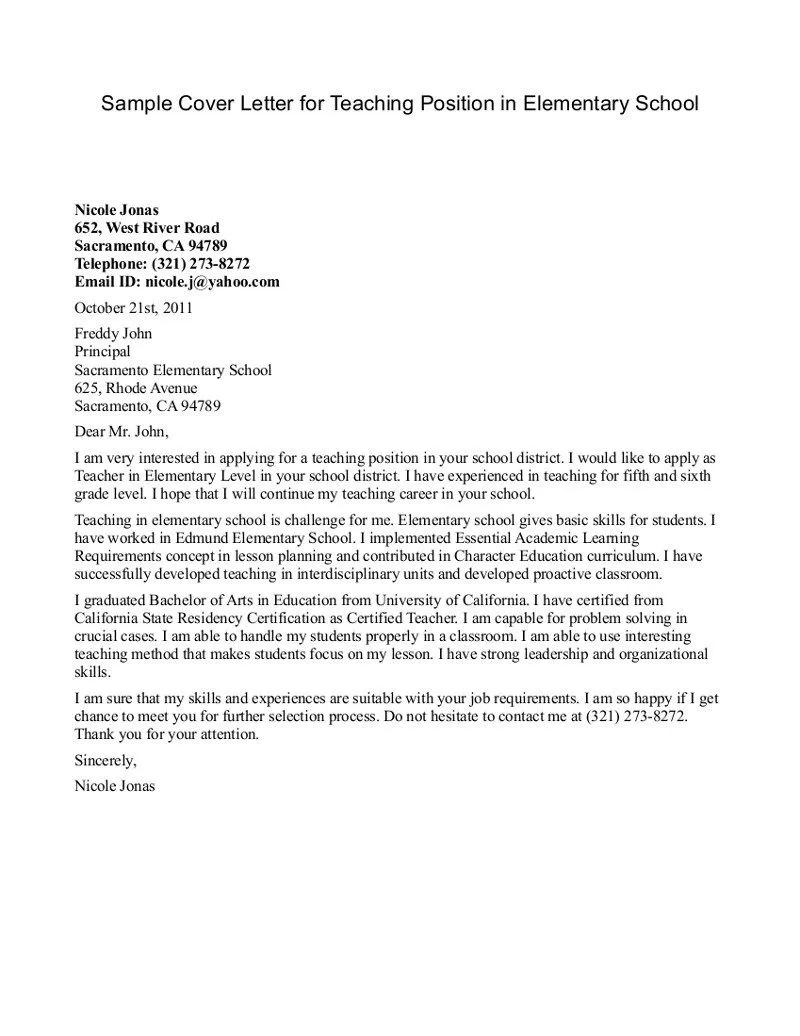
Every cover letter should include certain essential elements, tailored specifically for the role of a teacher. Begin with a professional heading that includes your contact information and the date, followed by the recipient’s details (the principal’s or hiring manager’s name, school name, and address). The opening paragraph should immediately capture the reader’s attention. State the position you’re applying for and how you learned about it. Briefly, express your enthusiasm for the opportunity and the school. In the body paragraphs, delve deeper into your qualifications. Highlight relevant experience, such as teaching experience, student teaching, or volunteer work in educational settings. Mention your educational background, including degrees, certifications, and any specialized training. Use specific examples to demonstrate your skills, such as classroom management, lesson planning, and student assessment. Quantify your accomplishments whenever possible by providing data such as improved test scores or successful implementation of a new curriculum. Conclude your letter with a strong closing statement that reiterates your interest in the position and expresses your eagerness for an interview. End with a professional closing, such as “Sincerely” or “Respectfully,” followed by your typed name and signature (if submitting a hard copy).
Highlighting Your Skills and Experience

When highlighting your skills and experience, be sure to tailor your writing to the specific needs of the school and the position. Showcase your teaching methodologies by mentioning your preferred teaching styles, such as project-based learning, differentiated instruction, or inquiry-based learning. Describe your experience with curriculum development and your ability to align lessons with educational standards. Illustrate your classroom management skills by providing examples of how you create a positive and inclusive learning environment. Include your experience with technology integration, specifying any software or platforms you’re proficient in using. Emphasize any special skills or experiences that set you apart. If you have experience working with students with special needs, mention it. Include details of any extracurricular activities you’ve led or participated in, such as clubs, sports teams, or school events. Use action verbs to describe your responsibilities and accomplishments. For instance, instead of writing ‘responsible for lesson planning,’ use ‘developed and implemented engaging lesson plans that improved student engagement by 20%.’ Provide concrete examples to back up your claims, such as ‘Implemented a new reading program that improved students’ reading comprehension scores by 15%.’
Tailoring Your Cover Letter
To maximize your chances of success, personalize your cover letter for each position. Research the school and the specific role to understand the school’s mission, values, and any specific needs or challenges it may be facing. This understanding will allow you to tailor your letter to address those needs directly. Use the job description as a guide to identify the key qualifications and skills the school is seeking. Structure your letter to align with these requirements, ensuring you address each point mentioned in the job description. Show your understanding of the school’s vision and values by mentioning how your teaching philosophy aligns with their approach. If possible, mention any specific programs or initiatives that the school is known for and how your skills can contribute. Customize the tone and language of your letter to match the school’s culture. Use formal language for traditional schools and more informal language for innovative schools. Addressing the hiring manager by name (if known) shows your attention to detail and genuine interest. Make sure that all the information provided is accurate and reflects the specific requirements of the position.
Teacher Cover Letter Sample 1 Elementary School
Dear [Principal’s Name],
I am writing to express my enthusiastic interest in the Elementary School Teacher position at [School Name], as advertised on [Platform]. With my [Number] years of experience in elementary education and my passion for creating engaging learning environments, I am confident I can significantly contribute to your school’s mission. During my time at [Previous School], I developed and implemented differentiated lesson plans that improved student engagement by 25%. My experience includes teaching [Specific Subjects] to students in grades [Grades Taught]. I am proficient in using technology, including [Specific Software]. I am also proficient in [Specific curriculum]. I am eager to discuss how my skills and experience align with the needs of [School Name].
Sincerely, [Your Name]
Teacher Cover Letter Sample 2 High School

Dear [Principal’s Name],
I am writing to express my interest in the High School Teacher position at [School Name]. I am highly motivated, with [Number] years of experience in high school education and a strong background in [Subject]. My experience includes teaching advanced courses like [AP/IB courses], and I have a proven record of helping students to achieve high scores. I am passionate about fostering critical thinking and providing personalized instruction. I have experience creating a positive and inclusive classroom. I am adept at curriculum development and technology integration, including [specific technologies]. I look forward to the chance to discuss my application in person.
Sincerely, [Your Name]
Teacher Cover Letter Sample 3 Special Education
Dear [Principal’s Name],
I am writing to apply for the Special Education Teacher position at [School Name]. I possess a [Degree] in Special Education and have [Number] years of experience in this field. I have extensive experience with IEP development, managing diverse learning needs, and creating inclusive classroom environments. During my previous role at [Previous School], I successfully implemented [Specific Strategy or Program], which resulted in improved academic performance and social skills for students with disabilities. I am dedicated to providing individualized support and fostering a supportive learning environment for all students. I am also proficient in [Specific Technologies/Techniques]. I am looking forward to the opportunity to discuss how I can contribute.
Sincerely, [Your Name]
Teacher Cover Letter Sample 4 Substitute Teacher
Dear [Principal’s Name],
I am writing to express my interest in the Substitute Teacher position at [School Name]. I am available to work on [Days of the Week/Specific Schedule] and am looking forward to the opportunity. I have a [Degree/Certificate] and a strong background in [Subjects/Grade Levels]. I am highly adaptable and can provide immediate support to students. I am proficient in managing classroom activities, maintaining a productive learning environment, and adhering to school policies. I have experience working with students of diverse backgrounds and abilities. I am eager to contribute positively to [School Name]’s mission.
Sincerely, [Your Name]
Teacher Cover Letter Sample 5 Principal

Dear [Superintendent’s Name],
I am writing to express my interest in the Principal position at [School Name]. With [Number] years of experience in education and leadership, I am confident in my ability to lead and create a positive, efficient school environment. Throughout my career, I have demonstrated strong leadership skills, including [List of Skills]. At [Previous School], I improved test scores by [Percentage] and raised student engagement by [Percentage]. I am dedicated to creating a collaborative learning environment. I look forward to the opportunity to discuss my application in person.
Sincerely, [Your Name]
Formatting and Proofreading Your Cover Letter
Proper formatting and meticulous proofreading are critical for a successful cover letter. Use a professional and easy-to-read font, such as Times New Roman, Arial, or Calibri, with a font size between 10 and 12 points. Maintain consistent formatting throughout the document, including font style, spacing, and margins (typically 1 inch on all sides). Ensure your letter is well-organized and easy to follow, with clear headings and concise paragraphs. Use a professional tone and avoid slang or casual language. Before submitting your cover letter, carefully proofread it for any grammatical errors, spelling mistakes, or typos. Read the letter aloud to catch any awkward phrasing. Consider using grammar-checking software or asking a friend or colleague to proofread your letter. A well-formatted and error-free cover letter demonstrates your professionalism and attention to detail, increasing your chances of making a positive impression on the hiring committee.
Conclusion
A well-crafted cover letter is more than just a formality. It’s an opportunity to present your qualifications and showcase your passion for teaching. By following the examples and suggestions provided in this guide, you can create a compelling cover letter that grabs the attention of potential employers and helps you secure an interview. Tailor your letter to each position, highlight your skills and experience, and always proofread for accuracy. Remember that your cover letter represents your first interaction with a school. A well-written cover letter helps you make a strong initial impression, increasing your chances of landing a teaching position. Good luck with your job search!