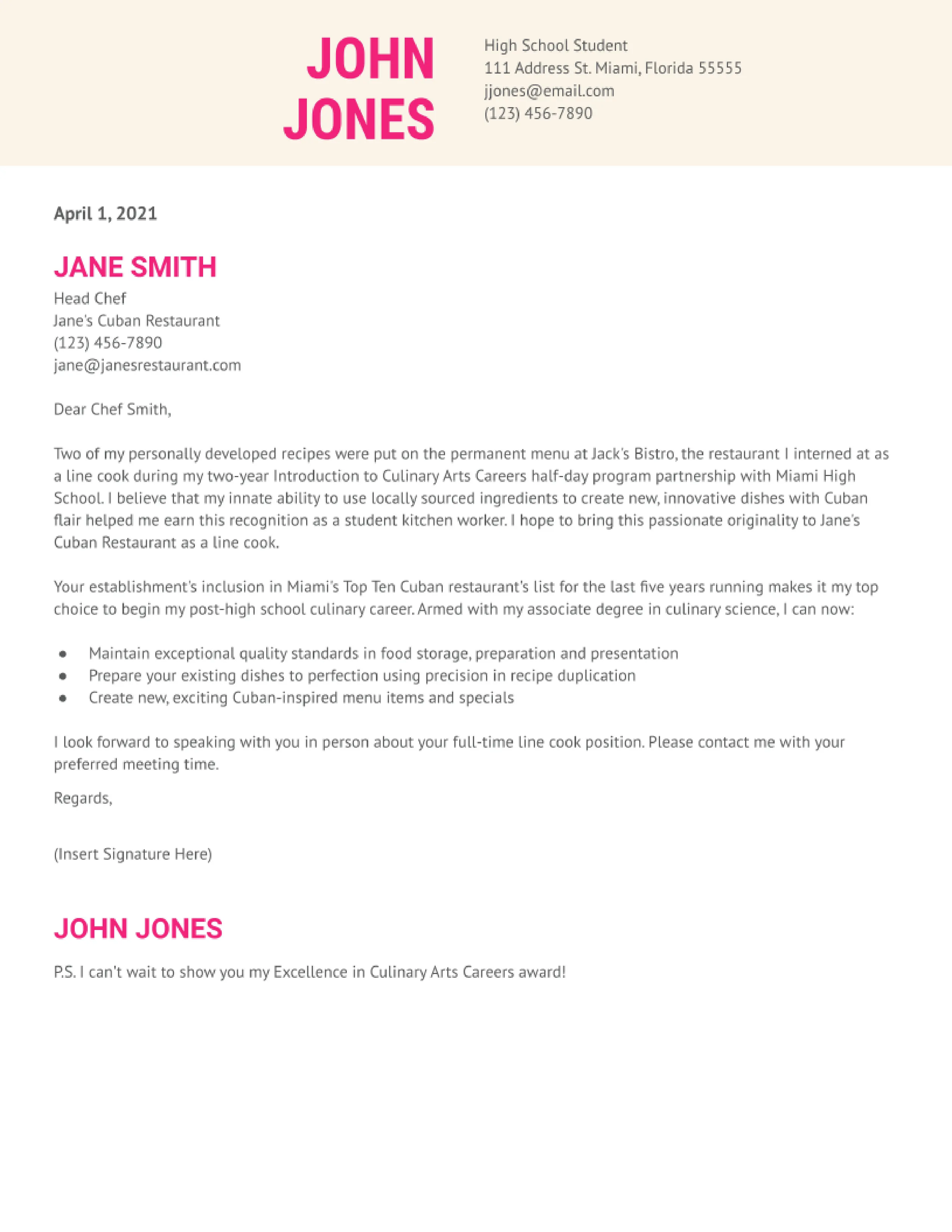
Why a Great Cover Letter Matters for High School Students
As a high school student, you might think a cover letter isn’t as crucial as it is for experienced professionals. However, a well-crafted cover letter is your chance to make a strong first impression, demonstrating your enthusiasm and suitability for a job, volunteer position, or internship. It allows you to go beyond the confines of your resume and highlight skills and experiences that directly relate to the opportunity. A compelling cover letter can significantly increase your chances of getting noticed, especially when you might lack extensive work experience. It showcases your communication skills, personality, and willingness to go the extra mile. A great cover letter can set you apart from other applicants, proving your commitment and genuine interest. Remember, it’s your personal introduction to a potential employer.
Highlighting Your Skills
One of the most important aspects of your cover letter is highlighting your skills. Even if you haven’t held a traditional job, you possess various skills gained through academics, extracurricular activities, and personal experiences. The key is to identify and articulate these skills in a way that relates to the position you’re applying for. Think about what the employer is looking for and match your skills to their requirements. Use action verbs to describe your abilities and provide specific examples of how you’ve demonstrated those skills in the past. This will help the employer envision you performing the tasks required.
Transferable Skills from School Activities

Your involvement in school clubs, sports teams, and academic projects provides a wealth of transferable skills. For instance, participating in a debate team enhances your communication, critical thinking, and public speaking abilities. Being a member of the student council demonstrates leadership and teamwork skills. Participating in a sports team shows discipline, perseverance, and the ability to work under pressure. Include specific examples to showcase how these skills translate to the job or volunteer position you are applying for. For example, if you were a team captain, describe how you motivated your teammates and ensured everyone worked towards a common goal.
Showcasing Volunteer Experience
Volunteer experience is a great way to demonstrate your commitment, responsibility, and willingness to help others. Whether you volunteer at a local charity, a community event, or a hospital, be sure to include details about your role and the tasks you performed. Highlight any skills you used during your volunteer work, such as communication, organization, or problem-solving. Explain what you learned from your experience and how it prepared you for the job or opportunity you are seeking. This showcases your initiative and proves you are willing to contribute to something bigger than yourself. Moreover, it adds a layer of character to your application.
Demonstrating Soft Skills
Soft skills are essential for success in any job. They include communication, teamwork, problem-solving, time management, and adaptability. Your cover letter should highlight your soft skills through specific examples. For instance, if you worked on a group project, describe your role and how you contributed to the team’s success. Mention how you handled a challenging situation, demonstrating your problem-solving skills. If you managed multiple tasks simultaneously, highlight your time-management abilities. Use the cover letter to showcase your ability to work well with others, resolve conflicts, and adapt to new situations. These skills are highly valued by employers.
Formatting Your Cover Letter

The format of your cover letter is just as important as its content. It should be professional, easy to read, and visually appealing. Proper formatting shows that you pay attention to detail and take pride in your work. Use a clear and concise layout, with appropriate spacing and margins, to make it easier for the reader to follow along. Make sure your letter is well-organized, with clear sections and headings. This will help the employer quickly grasp your key qualifications and the value you bring. Proofread carefully to eliminate any errors in grammar and spelling, and maintain a consistent format throughout the document.
Choosing the Right Font and Layout
Select a professional font, such as Times New Roman, Arial, or Calibri, with a size between 11 and 12 points. Ensure the font is easy to read and does not distract from the content. Use consistent spacing, typically single-spaced for the body of the letter and double-spaced between paragraphs. Use standard margins (1 inch on all sides). Align your text to the left, with a justified alignment only if you are absolutely sure of your formatting abilities, as it may create uneven spacing. This ensures a clean and organized appearance. A well-formatted document demonstrates your professionalism and attention to detail.
Keeping it Concise and Engaging
Keep your cover letter concise and to the point. Aim for a length of one page, ideally no more than 300-400 words. Focus on the most relevant information and avoid unnecessary details. Use strong action verbs and clear language to convey your message effectively. Capture the reader’s attention with a compelling opening paragraph and maintain their interest throughout the letter. Avoid overly formal or generic language. Let your personality shine through while maintaining a professional tone. A well-written and engaging cover letter will leave a lasting impression.
What to Include in Your Cover Letter

Your cover letter should include specific information to properly introduce yourself, highlight your qualifications, and express your interest in the position. Each section serves a distinct purpose, working together to persuade the employer to consider your application. Ensure you personalize each cover letter to match the specific opportunity you are seeking.
Your Contact Information and Date
Start your cover letter with your contact information, including your name, address, phone number, and email address. This allows the employer to easily reach you. Include the date you are submitting the letter. Place this information at the top of the letter, either aligned to the left or right. Make sure your contact information is accurate and professional. Avoid using a casual email address; instead, opt for a professional-sounding one.
The Employer’s Information
Next, include the employer’s information, such as the hiring manager’s name (if you know it), their title, the company name, and the company’s address. If you don’t know the hiring manager’s name, you can use a general salutation like “Dear Hiring Manager.” Always address the letter to a specific person when possible, as it shows you’ve done your research and are genuinely interested in the position. This personal touch can make a positive impression.
A Compelling Opening

The opening paragraph is your chance to grab the reader’s attention and express your interest in the position. State the specific job or opportunity you’re applying for, and mention where you saw the job posting. Immediately express your enthusiasm and briefly state why you are interested in the role and the company. A strong opening creates a positive first impression and encourages the reader to continue reading your letter. Avoid generic phrases and instead, use specific details to make your opening stand out. For example, mention something you admire about the company or how the role aligns with your career goals.
Body Paragraphs: Skills and Experiences
The body paragraphs are the heart of your cover letter, where you highlight your skills and experiences. Use this section to elaborate on your qualifications and connect them to the job requirements. Provide specific examples that demonstrate your abilities and achievements. Explain how your skills and experiences have prepared you for the role. Focus on the most relevant aspects of your background and use action verbs to describe your accomplishments. Quantify your achievements whenever possible. If you increased sales by a certain percentage or managed a project successfully, provide specific numbers to emphasize your impact. Make sure each paragraph has a clear focus and transitions smoothly to the next.
Closing with a Call to Action
Conclude your cover letter by expressing your interest in an interview and making a clear call to action. Reiterate your enthusiasm for the position and thank the employer for their time and consideration. Provide your contact information again and state your availability for an interview. End with a professional closing, such as “Sincerely” or “Respectfully,” followed by your typed name. A strong call to action encourages the employer to take the next step and contact you. Proofread the entire letter before sending.
Proofreading and Editing

Before submitting your cover letter, it’s essential to proofread and edit it carefully. Errors in grammar, spelling, or punctuation can undermine your credibility and make a negative impression. Take the time to review your letter multiple times and make any necessary corrections.
Checking for Grammatical Errors and Typos
Carefully check your cover letter for any grammatical errors and typos. Use a spell checker and grammar checker tool, but don’t rely on them entirely. Read your letter slowly and aloud to catch any mistakes that the software might miss. Pay close attention to subject-verb agreement, punctuation, and sentence structure. Ensure your writing is clear, concise, and easy to understand. A polished cover letter demonstrates your professionalism and attention to detail.
Getting Feedback from Others
Ask a teacher, career counselor, or trusted friend or family member to review your cover letter. They can offer an objective perspective and provide valuable feedback on your writing. Ask them to look for any grammatical errors, typos, or awkward phrasing. They can also assess whether your letter effectively highlights your skills and experiences. Their feedback can help you refine your cover letter and make it even stronger. Be open to their suggestions and be willing to make revisions based on their comments. Getting a second opinion can significantly improve the quality of your cover letter.
Examples of Strong Cover Letters

Reviewing examples of strong cover letters can provide valuable insights and help you create your own. Look for templates and examples online that are specifically tailored to high school students. Pay attention to how the writers highlight their skills, experiences, and achievements. Study their formatting, language, and tone. Adapt these examples to your unique circumstances, but avoid simply copying and pasting. Use them as a guide to create your own personalized cover letter that showcases your strengths.
Cover Letter for a Part-Time Job
When applying for a part-time job, such as at a retail store or restaurant, your cover letter should emphasize your reliability, work ethic, and customer service skills. Highlight any relevant experience, such as volunteer work or participation in school clubs. Show that you understand the responsibilities of the job and are eager to learn. Demonstrate your availability and commitment to the schedule. Tailor your letter to the specific job requirements and the company’s values. Include any training or certifications you might have. Show enthusiasm for the opportunity.
Cover Letter for a Volunteer Position
For a volunteer position, your cover letter should focus on your passion for the cause and your willingness to contribute your time and skills. Express your genuine interest in the organization’s mission and explain why you want to volunteer. Highlight any relevant skills or experiences that would benefit the organization. Emphasize your commitment and reliability, and provide details about your availability. Show that you are a team player and are eager to make a difference. A well-written cover letter can significantly enhance your chance of selection. Explain what motivates you to volunteer and the impact you want to make.
Cover Letter for an Internship
If you are applying for an internship, highlight your academic achievements, relevant coursework, and any related extracurricular activities. Express your interest in the field and your desire to gain practical experience. Show that you are eager to learn and contribute to the company’s goals. Research the company and tailor your letter to match its specific needs. Mention any specific skills or projects that align with the internship requirements. Emphasize your enthusiasm for the opportunity and express your desire to gain valuable experience. A tailored cover letter will demonstrate your commitment and increase your chance of getting the internship.