Understanding the Salary Request Cover Letter
A salary request cover letter is a crucial document in the job application process, serving as a formal introduction and a platform to express your interest in a specific role while also addressing your salary expectations. It’s a strategic component that complements your resume, providing additional context, showcasing your personality, and allowing you to highlight the value you bring to the prospective employer. Unlike a general cover letter, a salary request cover letter directly addresses the financial aspect of the job, setting the stage for future salary negotiations. Writing an effective salary request cover letter requires careful attention to detail, strategic wording, and a strong understanding of your worth in the job market.
Why a Salary Request Cover Letter Matters
The importance of a salary request cover letter extends beyond merely stating your desired compensation. It demonstrates your professionalism, initiative, and ability to communicate effectively. A well-crafted letter shows that you have researched the role, understand the industry standards, and are confident in your value. It can also be a valuable tool for starting a conversation about your salary early on, potentially avoiding any misunderstandings or disappointments down the line. By proactively addressing the salary question, you show the employer you are serious about the position and are prepared to have an open dialogue. This letter is your opportunity to control the narrative of your application and make a positive first impression.
When to Use a Salary Request Cover Letter

Knowing when to include a salary request cover letter is just as important as knowing how to write one. Generally, you should include one when the job posting explicitly asks for salary expectations or if you are initiating the application process without a specific job opening in mind. Some job postings may specifically request a salary history or desired salary range. In these cases, it’s essential to adhere to the instructions provided. In cases where the job description does not mention salary, it is often best to delay discussing salary until you’ve been offered an interview. Sending a cover letter that proactively addresses salary in these instances could be perceived as presumptuous. Therefore, always review the job posting carefully and tailor your approach accordingly.
Crafting a Compelling Salary Request Cover Letter
Writing a compelling salary request cover letter involves several key elements, from the initial greeting to the closing remarks. Each section plays a vital role in presenting yourself as a strong candidate. The goal is to articulate your qualifications, demonstrate your understanding of the role, and effectively communicate your salary expectations. By carefully considering each component, you can create a cover letter that captures the employer’s attention and positions you for success. Let’s delve into the essential parts of a well-crafted salary request cover letter.
Header and Contact Information
The header of your salary request cover letter is where you’ll include your contact information, which should be clear, accurate, and professional. Include your full name, address, phone number, and professional email address. Ensure your email address is appropriate; avoid using nicknames or informal language. Also, include the date and the employer’s contact information (name, title, company name, and address) if available. This section immediately conveys your professionalism and makes it easy for the hiring manager to contact you. Always double-check all contact details to avoid any errors.
The Salutation
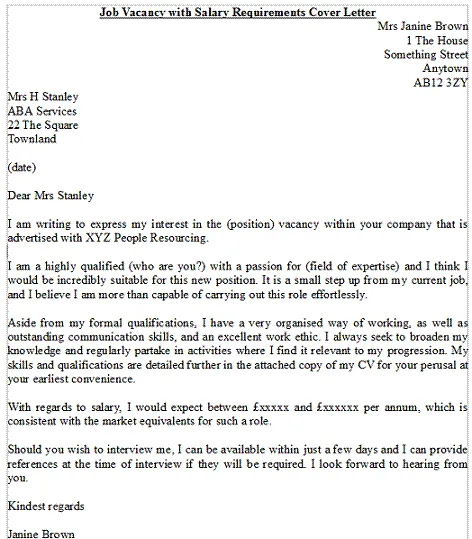
The salutation sets the tone for the entire letter. If possible, address the hiring manager by name. Research the company and find out who the hiring manager is for the specific role. This personal touch demonstrates your initiative. If you cannot find a specific name, use a professional salutation like “Dear Hiring Manager.” Avoid generic greetings such as “To Whom It May Concern” as they lack personalization and can make your application seem less tailored to the role and company.
Opening Paragraph
Your opening paragraph should immediately capture the reader’s attention and clearly state your purpose. Mention the specific position you are applying for and where you saw the job posting. Briefly express your enthusiasm for the role and the company. Focus on the role, your value, and how you can contribute. A concise and engaging opening sets a positive tone and encourages the hiring manager to read further. Make sure your opening reflects your understanding of the company’s mission or values.
Body Paragraphs
The body paragraphs are where you showcase your qualifications and skills, linking them directly to the job requirements. Highlight relevant experiences, skills, and achievements. Demonstrate how your background aligns with the company’s needs. Support your claims with specific examples and quantifiable results whenever possible. This section is your opportunity to convince the employer that you are the best candidate for the job.
Highlighting Relevant Skills and Experience

In your body paragraphs, focus on the skills and experiences that are most relevant to the job. Carefully review the job description and identify the key requirements. Then, provide specific examples of how you have demonstrated these skills in your previous roles. Use keywords from the job posting to ensure your application is easily searchable by applicant tracking systems (ATS). Tailor each cover letter to the specific job you are applying for, showcasing the value you bring to the role.
Quantifying Achievements
Whenever possible, quantify your achievements. Use numbers and data to demonstrate your impact in previous roles. For example, instead of saying “Improved sales,” say “Increased sales by 15% in one quarter.” Quantifiable achievements provide concrete evidence of your capabilities and make your application more compelling. Providing measurable results adds credibility to your claims and helps the hiring manager understand the value you can bring to their team. Make sure the metrics you use align with the job responsibilities.
Expressing Enthusiasm for the Role
Throughout your cover letter, express your genuine enthusiasm for the role and the company. Show that you have researched the company and are excited about the opportunity to contribute to its success. Mention specific aspects of the job or company that particularly interest you. This enthusiasm will help you stand out from other candidates and make a positive impression on the hiring manager. A genuine passion for the role and company will make your application more memorable and compelling.
The Salary Expectations Section

The salary expectations section is critical. Clearly state your desired salary or salary range. Be prepared to justify your expectations based on your skills, experience, and the industry standards. Provide a concise and confident statement of your salary requirements. The way you approach this section can significantly influence the direction of the negotiation process. Make sure you align your expectations with the current market.
Stating Your Desired Salary or Range
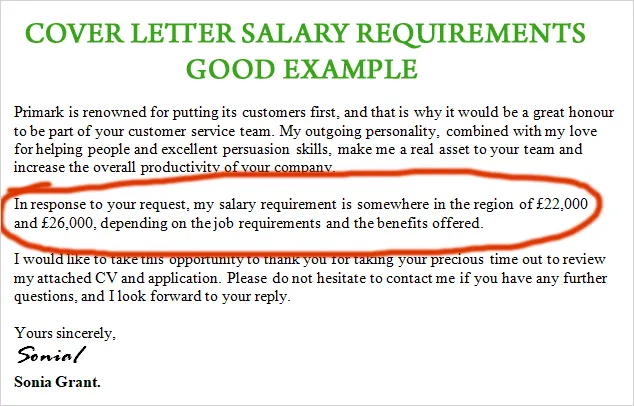
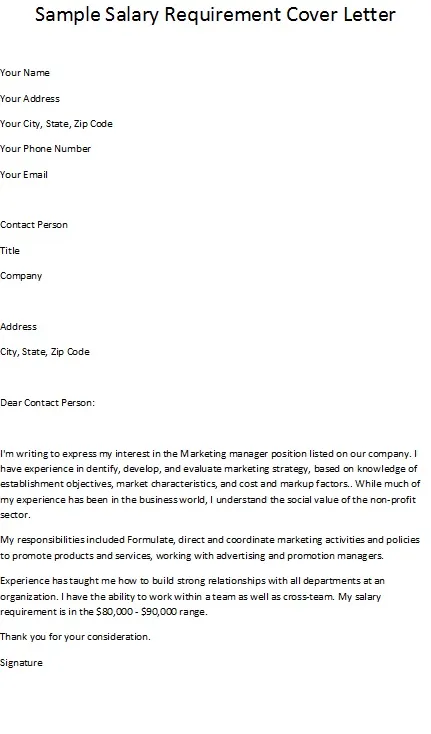
When stating your desired salary, you can either provide a specific figure or a salary range. A salary range can offer some flexibility during negotiations. However, be realistic and research the market rate for similar positions. Consider stating, “I am seeking a salary in the range of $X to $Y, commensurate with my experience and qualifications.” Be prepared to justify your range based on industry benchmarks and your experience.
Being Realistic and Researching Market Rates
Before stating your salary expectations, research the market rates for the position and your experience level. Use online salary tools, such as Glassdoor, Salary.com, and Payscale, to get an idea of the industry standards. Consider factors like location, company size, and the specific responsibilities of the role. Being realistic about your salary expectations can help you avoid being underpaid or eliminated from consideration. Research is crucial in making a strong argument in your favor.
The Closing Paragraph
In your closing paragraph, reiterate your interest in the position and thank the hiring manager for their time and consideration. Express your enthusiasm for the opportunity and your willingness to discuss your qualifications further. The closing is your final chance to leave a positive impression. Your closing paragraph should reflect your eagerness to move forward in the hiring process. Consider adding a call to action by indicating you look forward to hearing from them soon.
The Complimentary Close
Choose a professional complimentary close, such as “Sincerely,” “Best regards,” or “Thank you.” Avoid casual closings like “Cheers” or “Best.” Ensure the closing aligns with the tone of your letter. Your closing should sound polite and formal. Your signature is an important addition, especially if you’re printing and mailing the letter. This small detail gives a professional finish.
Proofreading and Editing
Proofreading and editing are essential steps in ensuring your salary request cover letter is polished and professional. Errors in grammar, spelling, and punctuation can create a negative impression and undermine your credibility. Carefully review your letter multiple times. Consider having a friend or colleague review it as well to catch any mistakes you might have missed. Ensuring accuracy in every detail of your letter is crucial for making a strong impact. The goal is to present yourself as a detail-oriented and competent professional.
Ensuring Accuracy and Professionalism
Pay close attention to the details. Check for correct grammar, spelling, and punctuation. Ensure the formatting is consistent and easy to read. Use a professional font and layout. Always proofread carefully, and don’t rely solely on spellcheck. Misspelled words or grammatical errors can instantly diminish the impact of your letter. Always consider the tone and style. Maintain a professional tone throughout your letter.
Common Mistakes to Avoid
Several common mistakes can undermine your salary request cover letter. Avoid generic templates and tailor each letter to the specific job. Never include irrelevant information or ramble. Do not focus solely on your needs; emphasize your value. Be careful about being overly aggressive or demanding in your salary request. Avoid typos and grammatical errors. Always research the company and the role. Never exaggerate your accomplishments or lie.
Salary Request Cover Letter Examples
To better understand how to write a salary request cover letter, consider the following examples. Each example illustrates a different scenario, such as an entry-level position, an experienced professional seeking a new opportunity, or a career change. These examples provide a practical guide on how to structure your cover letter.
Example 1 Entry-Level Position
This example is tailored for someone entering the workforce or with minimal work experience. The focus is on education, internships, volunteer work, and transferable skills. Highlight your enthusiasm and willingness to learn and contribute. Emphasize your achievements and the value you can offer. Example sentence “I am seeking an entry-level salary commensurate with my recent degree and internship experience, with a range between $X and $Y.” This example focuses on demonstrating potential and a strong work ethic.
Example 2 Experienced Professional
This example is designed for experienced professionals with a solid work history. The focus is on highlighting past accomplishments, quantifying achievements, and demonstrating how your skills align with the job requirements. Example sentence “Based on my experience in [field] and my proven ability to [achievements], I am seeking a salary in the range of $X to $Y.” This type of cover letter should clearly communicate your expertise and value. Show the benefits of your experience to the employer.
Example 3 Career Change
For those undergoing a career change, the cover letter needs to emphasize transferable skills and explain why you are switching fields. Focus on how your skills and experience can be adapted to the new role. Example sentence: “My skills in [transferable skills] have prepared me to succeed in this new role. I am seeking a salary in the range of $X to $Y, based on my experience and the market rate for this position.” This letter should clearly articulate your transferable skills and demonstrate a passion for the new industry.