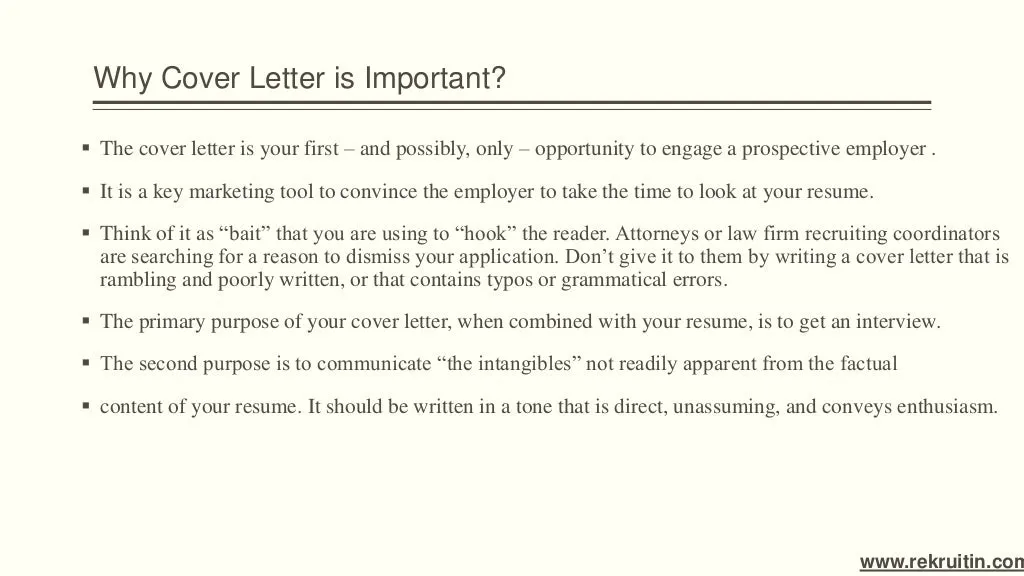
Why a Resume and Cover Letter are Crucial
In the competitive landscape of job searching, a well-crafted resume and cover letter are not merely optional documents they are indispensable tools. They serve as your initial introduction to a potential employer, offering a glimpse into your professional background, skills, and aspirations. These documents are often the first impression you make, and they can significantly influence whether or not you’re invited for an interview. A compelling resume showcases your qualifications, while a tailored cover letter articulates your interest in a specific role and company, demonstrating why you’re the ideal candidate. Failing to provide these documents can mean missing out on fantastic opportunities. The importance of resume and cover letter is the most basic but important point. Therefore, a resume and cover letter are not just necessities; they are your first steps toward securing your dream job, and they must be approached with care, attention, and strategic planning.
Understanding the Role of a Resume
Your resume is a concise summary of your professional journey, acting as a roadmap of your career. Its primary function is to provide potential employers with a quick overview of your skills, experiences, and achievements. A well-structured resume is easy to read, highlights relevant information, and immediately showcases your suitability for the job. It should be tailored to each position, emphasizing the experiences and skills that align with the job requirements. Think of your resume as an advertisement for yourself, a marketing tool designed to capture the hiring manager’s attention and entice them to learn more about you. Proper formatting, clear language, and a focus on accomplishments are key elements to ensure your resume stands out from the crowd. Moreover, a well-crafted resume can also help you during interviews by refreshing your memory of your relevant accomplishments and experiences.
Highlighting Skills and Experience

A significant part of a compelling resume involves showcasing your relevant skills and experience. It’s not enough to just list your past job titles; you need to demonstrate what you achieved in each role and how your skills translate into value for the prospective employer. This means quantifying your accomplishments whenever possible, using metrics and data to illustrate your impact. For example, instead of saying ‘Managed social media,’ you could write ‘Increased social media engagement by 30% within six months.’ When describing your skills, use keywords from the job description to show that you have the specific qualifications the employer is looking for. Grouping similar skills into categories, such as ‘Technical Skills’ or ‘Communication Skills,’ makes your resume easier to scan. Emphasize your key strengths and tailor your descriptions to the specific requirements of the job you’re applying for, ensuring your experience aligns with the employer’s needs.
Formatting Your Resume for Success
The format of your resume significantly influences its readability and the initial impression it creates. A well-formatted resume is easy on the eyes, making it simpler for hiring managers to quickly grasp your qualifications. Choose a clean, professional font like Arial, Calibri, or Times New Roman, and maintain consistent font sizes throughout the document. Use clear headings and subheadings to organize information logically, allowing recruiters to find what they are looking for quickly. Employ bullet points to highlight key accomplishments and responsibilities, making the content scannable. Avoid excessive use of colors, graphics, or complex layouts, as these can be distracting and may not translate well when printed or viewed on different devices. Ensure your resume is well-spaced and free from clutter, with ample white space to enhance readability. A format that’s visually appealing and organized demonstrates your attention to detail, a critical attribute valued by potential employers.
Crafting a Strong Cover Letter
A cover letter serves as your personalized introduction, providing an opportunity to expand on your resume and express your genuine interest in a specific position. It allows you to highlight why you’re a good fit for the role and the company, going beyond a simple list of qualifications. Start by addressing the hiring manager by name, if possible, and clearly state the position you’re applying for. In the body of the letter, explain how your skills and experiences align with the job requirements, providing specific examples to support your claims. Showcase your knowledge of the company and its industry, demonstrating that you’ve done your research. A strong cover letter should convey your enthusiasm and personality, setting you apart from other applicants. Always proofread it carefully, ensuring it is free of errors, and tailor each letter to the specific job and company, as a generic letter is often ineffective.
Personalizing Your Cover Letter

Personalization is a critical element in cover letters. Generic cover letters are easily recognizable and often discarded. Instead, tailor each letter to the specific job and company to demonstrate your sincere interest and understanding of their needs. Research the company’s values, mission, and current projects. Use this information to explain why you’re interested in working there and how your skills align with their goals. Mention specific projects or achievements that make you the ideal candidate for the role. Addressing the hiring manager by name also adds a personal touch, showing that you’ve taken the time to research and connect with the company. Customizing your cover letter shows you’re more than just a qualified applicant; you are a thoughtful individual genuinely invested in the opportunity.
Demonstrating Value
In both your resume and cover letter, demonstrating the value you bring to a potential employer is crucial. Instead of simply listing your responsibilities, focus on showcasing your accomplishments and the positive outcomes you have achieved in previous roles. Quantify your successes whenever possible; use numbers to illustrate your impact. For example, if you improved sales, state the percentage or the dollar amount by which you increased revenue. If you streamlined a process, mention the time or cost savings. Use action verbs to describe your actions and accomplishments. Examples include “Managed,” “Implemented,” “Increased,” “Led,” and “Achieved.” When you focus on results and how your skills have contributed to success, you demonstrate your ability to add value to a new organization, increasing your appeal to hiring managers.
Matching Your Resume and Cover Letter
Consistency between your resume and cover letter is essential for making a strong impression. Both documents should work together to tell a cohesive story of your qualifications, skills, and experience. Avoid any contradictions or conflicting information between the two documents. If you highlight a skill or achievement in your resume, make sure you mention it in your cover letter and provide further context. Use similar language and keywords in both documents, aligning them with the job description. This consistency demonstrates your attention to detail and shows that you have carefully considered how to present yourself as the ideal candidate. Ensure your contact information matches and that the overall tone and style align. This coordinated approach strengthens your application and increases your chances of success.
Proofreading and Editing

Before submitting your resume and cover letter, proofreading and editing are non-negotiable steps. Errors in grammar, spelling, or punctuation can undermine your credibility and give the impression that you lack attention to detail. Read each document carefully, looking for any mistakes. It is often helpful to have a friend or career advisor review your documents as well, as they can catch errors you might miss. Ensure that the formatting is consistent throughout and that all information is accurate. Pay close attention to the use of proper sentence structure and the overall clarity of your writing. Consider using grammar and spell-checking tools, but don’t rely on them entirely; always review the documents yourself. A polished, error-free resume and cover letter demonstrate professionalism and increase your chances of securing an interview.
Maximizing Your Chances
Maximizing your chances in the job search goes beyond simply having a resume and cover letter. Tailor each document to the specific job you’re applying for, highlighting the skills and experiences that align with the requirements. Use keywords from the job description to ensure your application gets noticed by applicant tracking systems (ATS). Proofread and edit both documents carefully to eliminate any errors. Keep your resume concise, ideally one to two pages, and format it for easy readability. Make sure your cover letter is well-written and expresses your genuine interest in the role and the company. Consider using a professional template to create a polished look. By following these steps, you increase your chances of making a positive first impression and advancing to the next stage of the hiring process. The importance of resume and cover letter is further highlighted by these steps.