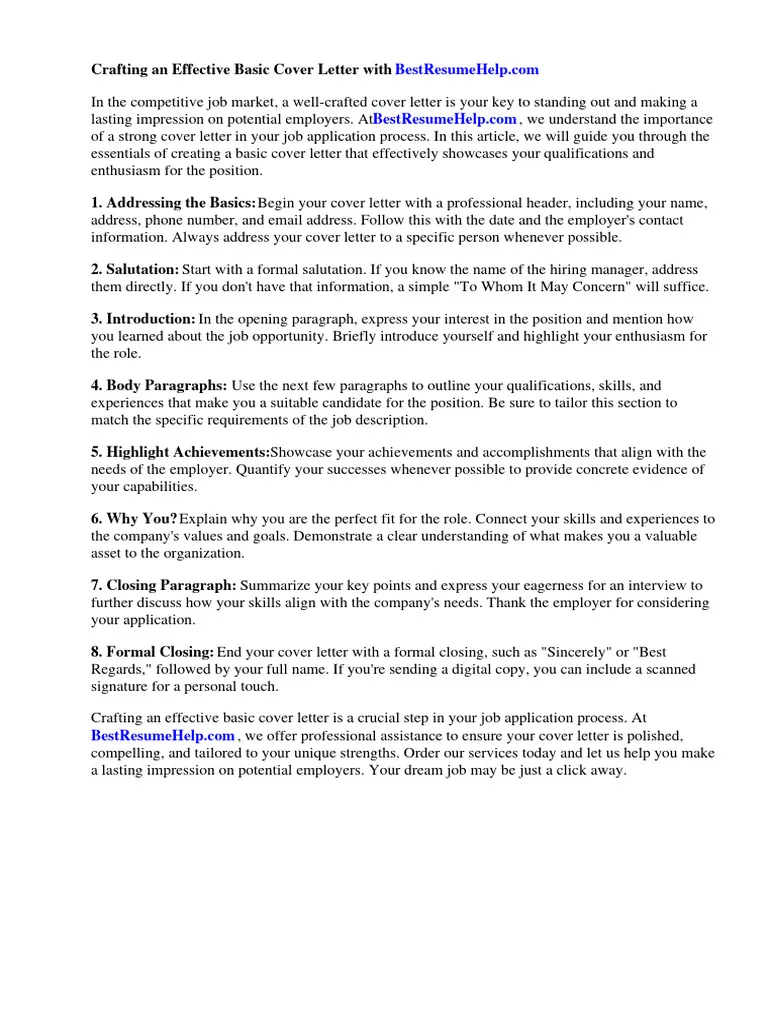
Why Resume Cover Letters Matter
In the competitive landscape of job applications, a resume cover letter serves as your personal introduction, providing a crucial opportunity to make a strong first impression. It’s more than just a formality; it’s a chance to showcase your personality, enthusiasm, and relevant skills beyond what your resume can convey. A well-crafted cover letter can significantly increase your chances of landing an interview by demonstrating to potential employers why you’re the perfect fit for their specific needs. It’s your chance to tell a story, connecting your past experiences to the job requirements and illustrating your potential contributions to the company. In a world where every detail counts, a compelling cover letter can set you apart from the crowd and make a lasting impact on the hiring manager.
Understanding the Basics
The foundation of any effective cover letter lies in understanding its core purpose: to introduce yourself, highlight your key qualifications, and express your interest in the specific role. The basics include a professional tone, clear language, and a concise format. The letter should be tailored to each job application, emphasizing the skills and experiences most relevant to the position. Researching the company and demonstrating your understanding of their values and goals is also essential. Always address the hiring manager by name whenever possible, and proofread meticulously to eliminate any errors that could undermine your credibility. The best cover letters are those that strike a balance between professionalism and personality, allowing your unique qualities to shine through.
Tip 1 Tailor It to the Job

One of the most critical resume cover letter basics is tailoring your letter to each job. Generic cover letters are easily spotted and often discarded. Instead, meticulously review the job description, identify the key requirements, and align your skills and experiences accordingly. This involves selecting specific examples from your past roles that directly address the employer’s needs. Use the same keywords and phrases that are used in the job description to demonstrate a clear understanding of what the company is looking for. This level of personalization not only shows that you’ve taken the time to understand the role but also increases your chances of being noticed by the hiring manager. The goal is to demonstrate that you’re not just sending out a generic application, but that you’re genuinely interested and qualified for the specific position.
Highlight Relevant Skills
When highlighting relevant skills, focus on those that are explicitly mentioned in the job description. Don’t just list your skills; provide concise examples of how you’ve used them to achieve results. Quantify your achievements whenever possible, using numbers and data to demonstrate the impact of your skills. For example, instead of saying ‘Managed social media campaigns,’ say ‘Managed social media campaigns, increasing follower engagement by 30% in six months.’ This level of detail and specificity proves your capabilities and provides concrete evidence of your ability to contribute to the company’s success. Focus on the skills that are most in demand for the specific job you’re applying for, rather than listing every skill you possess.
Showcase Your Achievements
Showcasing your achievements goes beyond listing your responsibilities; it’s about demonstrating the value you brought to previous roles. Use the STAR method (Situation, Task, Action, Result) to structure your examples. Describe the situation you were in, the task you were assigned, the actions you took, and the positive results you achieved. Focus on quantifiable results to make your achievements more compelling. For instance, ‘Increased sales by 15% through the implementation of a new customer relationship management system.’ Highlighting your achievements provides concrete evidence of your capabilities and demonstrates your potential to contribute to the new company’s objectives. Remember to keep your achievements relevant to the job you’re applying for, showcasing your capacity to add value to the role.
Tip 2 Research the Company

Before you start writing, research the company thoroughly. Understanding the company’s mission, values, and recent activities shows that you’re genuinely interested in the role and the organization. Visit their website, read news articles, and explore their social media profiles to gain insights into their culture, goals, and challenges. This information will help you tailor your cover letter to demonstrate how your skills and experiences align with their specific needs. Mentioning specific projects or initiatives the company is involved in demonstrates your attention to detail and your genuine interest in joining the team. This demonstrates that you’re not just looking for any job, but that you’re specifically interested in working for this particular company.
Demonstrate Company Alignment
Demonstrating company alignment involves showing how your values and goals align with the company’s mission and culture. Briefly mention how their values resonate with you and how your past experiences reflect a similar commitment. For example, if the company emphasizes innovation, highlight your experience with creative problem-solving. If they prioritize teamwork, mention your contributions to team projects. This alignment makes you appear more than just a qualified candidate; it suggests you’re a good fit for the team. It helps the hiring manager visualize you thriving in the company environment, making you a more attractive candidate. Authenticity is key, so ensure your statements are genuine and reflect your true beliefs and values.
Address Specific Needs
Address the company’s specific needs by identifying their challenges and suggesting how you can help solve them. This shows that you’ve taken the time to understand their business and that you’re prepared to contribute to their success. Use the job description and company research to identify areas where your skills can make a difference. For example, if the company is expanding into a new market, highlight your experience with market analysis or international sales. Tailor your examples to demonstrate how your capabilities can directly address their needs. By showing you’re proactive and results-oriented, you position yourself as a valuable asset to the team.
Tip 3 Structure Your Letter

The structure of your cover letter is just as important as its content. A well-organized letter is easy to read and highlights the most important information. The standard format includes an introduction, body paragraphs, and a conclusion. Each section should serve a clear purpose, guiding the reader through your qualifications and demonstrating your suitability for the role. Proper formatting, including clear headings, appropriate spacing, and a professional font, enhances readability. Maintain a consistent tone throughout the letter, ensuring a cohesive and professional presentation. A well-structured letter leaves a positive impression and makes it easier for the hiring manager to understand your value proposition.
Craft a Compelling Opening
Your opening paragraph should immediately grab the reader’s attention. Start by stating the position you’re applying for and where you saw the job posting. Briefly explain why you’re interested in the role and the company. If you have a direct connection to the company or a personal referral, mention it in the opening. Avoid generic opening lines like ‘I am writing to express my interest.’ Instead, aim for a hook that highlights your enthusiasm and aligns with the job’s requirements. Clearly articulate your understanding of the role and your value proposition from the very beginning. The goal is to encourage the hiring manager to keep reading and learn more about your qualifications.
Develop the Body Paragraphs
The body paragraphs are where you showcase your skills, experience, and achievements. Use concise, compelling language and avoid jargon. Each paragraph should focus on a specific skill or accomplishment relevant to the job. Use the STAR method to provide detailed examples that illustrate your capabilities. Quantify your achievements whenever possible to demonstrate the impact of your work. Link your past experiences to the specific requirements of the role, showing how your skills align with the company’s needs. Ensure that each paragraph contributes to the overall narrative of your qualifications and reinforces your suitability for the position. Keep your paragraphs focused, and ensure that each one conveys specific and relevant information.
Write a Strong Closing

Your closing paragraph should reiterate your interest in the role and the company. Express your enthusiasm for the opportunity and summarize why you are the ideal candidate. Include a call to action, such as ‘I look forward to the opportunity to discuss my qualifications further’ or ‘I am eager to learn more about this exciting opportunity.’ Always thank the hiring manager for their time and consideration. Proofread your closing paragraph for any errors and ensure it reflects the professional tone you’ve maintained throughout the letter. End on a positive note, reinforcing your eagerness to contribute to the company’s success and setting the stage for the next step in the hiring process.
Tip 4 Focus on Value
Focusing on the value you bring to the company is a crucial element of effective cover letter writing. Frame your skills and experiences in terms of the benefits they will bring to the employer. Instead of simply listing your responsibilities, emphasize what you achieved and the positive outcomes of your work. This approach requires a deep understanding of the company’s needs and the specific requirements of the role. When describing your skills, explain how they will contribute to the company’s goals. This value-driven approach makes you a more compelling candidate. Demonstrate how your contributions have enhanced efficiency, increased revenue, improved customer satisfaction, or solved problems. Focusing on value transforms your cover letter from a list of qualifications into a compelling narrative of your ability to make a positive impact.
Quantify Your Contributions
Quantifying your contributions adds credibility and impact to your cover letter. Use numbers, percentages, and specific data to demonstrate the tangible results you have achieved in previous roles. Instead of saying, ‘Improved customer service,’ say, ‘Improved customer satisfaction scores by 20%.’ Quantifiable metrics provide clear evidence of your abilities and the value you bring to an organization. Where possible, use data to show how you’ve increased sales, reduced costs, improved efficiency, or achieved other key performance indicators. These measurable results provide concrete evidence of your impact and make your application stand out. Always ensure that the data is accurate and relevant to the specific role and the company’s goals.
Emphasize Problem-Solving

Emphasizing your problem-solving skills showcases your ability to address challenges and contribute to solutions. Provide specific examples of how you’ve identified and resolved problems in past roles. Describe the situation, the steps you took, and the positive outcome. Focus on situations where you’ve demonstrated critical thinking, initiative, and resourcefulness. Show how you’ve used your skills to overcome obstacles and achieve goals. Highlight instances where you’ve identified and implemented solutions that improved efficiency, saved costs, or enhanced performance. Demonstrate that you can not only identify problems but also take action to address them effectively. Employers value problem-solving skills because they indicate the ability to navigate complexities and contribute to the company’s success.
Tip 5 Proofread and Polish
The final step in crafting a compelling cover letter is proofreading and polishing. Errors in grammar, spelling, and punctuation can undermine your credibility and create a negative impression. Carefully review your letter for any mistakes. Use a grammar checker, but don’t rely on it entirely; always read your letter carefully to identify any awkward phrasing or inconsistencies. Read your cover letter aloud to catch any errors that you might miss when reading silently. Ask a friend or family member to proofread your letter, as a fresh pair of eyes can often catch mistakes you might miss. Proofreading ensures that your cover letter is polished and professional and leaves a positive lasting impression on the hiring manager.
Check for Grammar and Spelling
Thoroughly check your cover letter for grammar and spelling errors. Even small mistakes can damage your credibility and make it appear that you’re not detail-oriented. Use a spell checker and grammar checker to identify potential errors. However, don’t rely solely on these tools. Manually proofread your letter to ensure that it is accurate and well-written. Pay close attention to punctuation, sentence structure, and word choice. Review the formatting of the letter to ensure that it is consistent and professional. A well-proofread cover letter demonstrates your attention to detail and commitment to quality, increasing your chances of making a positive impression.
Ensure a Professional Tone

Maintain a professional tone throughout your cover letter. Avoid slang, jargon, or overly casual language. Use formal language and a respectful tone when addressing the hiring manager. Keep the focus on your qualifications and your ability to contribute to the company. Avoid making negative statements about previous employers or colleagues. Instead, focus on your positive attributes and the value you can bring to the organization. Ensure that your cover letter reflects your professional demeanor and demonstrates your commitment to excellence. By maintaining a professional tone, you present yourself as a candidate who is serious, reliable, and capable of contributing to the company’s success.
In conclusion, mastering the basics of resume cover letters is crucial for job seekers. By tailoring your letter, researching the company, structuring your content effectively, focusing on value, and proofreading meticulously, you can significantly increase your chances of landing an interview. Remember to showcase your skills, achievements, and enthusiasm while maintaining a professional tone. Following these tips, you can create a cover letter that highlights your qualifications and demonstrates why you are the ideal candidate for the job. This approach will help you stand out in a competitive job market, and pave the way for your next career opportunity.