Understanding the Relocation Cover Letter
A relocation cover letter is a specialized document that accompanies your resume when you’re applying for a job that requires you to move. Unlike a standard cover letter, it specifically addresses your willingness and ability to relocate. It’s your opportunity to demonstrate your enthusiasm for the role and the location, while also reassuring the hiring manager that you’ve carefully considered the logistical aspects of relocating. A well-crafted relocation cover letter can significantly increase your chances of landing an interview, especially when you are competing with local candidates. It showcases your proactive approach and commitment to the opportunity, setting you apart from other applicants. Therefore, crafting a compelling relocation cover letter is a vital part of your job application strategy, especially if you’re planning a significant move to pursue your career goals.
Why a Relocation Cover Letter is Important
A relocation cover letter is your chance to proactively address a potential concern for employers: the logistics and costs associated with relocating a candidate. By explicitly stating your willingness to relocate, you alleviate any ambiguity and demonstrate your genuine interest in the position. This allows you to show that you’ve considered the practicalities of the move. Furthermore, a strong cover letter allows you to highlight your motivation behind the relocation. Whether it’s a desire for a better career opportunity, a change of scenery, or a personal connection to the area, expressing your reasons for relocating can strengthen your application. Employers are more likely to invest in a candidate who is enthusiastic about the job and the location. This enthusiasm assures them that you are committed to the role and more likely to stay with the company long-term. This proactive approach makes you a more attractive candidate and increases your chances of getting hired.
Highlighting Your Interest and Suitability

When writing your cover letter, clearly express your genuine interest in both the company and the specific role. Tailor your letter to demonstrate why you’re a good fit for the position, referencing the job description and highlighting the skills and experiences that align with the requirements. Show how your qualifications meet the company’s needs. This can include specific projects, accomplishments, or aspects of your background that make you a strong candidate. Your cover letter is your chance to make a compelling case for why you’re the best person for the job. Address the key requirements mentioned in the job description and illustrate with concrete examples how you meet each of those qualifications. Be enthusiastic about the opportunity, demonstrating that you are excited about the prospect of joining the company and contributing to its success.
Showcasing Relevant Skills and Experience
Use your cover letter to showcase your relevant skills and experience. Go beyond simply listing your qualifications; provide specific examples of how you’ve used your skills to achieve results in previous roles. This will show the hiring manager the value you can bring to their team. Quantify your accomplishments whenever possible. This can be achieved by using numbers, percentages, or other measurable data to illustrate the impact of your work. For instance, rather than saying “Improved sales,” you could say “Increased sales by 15% within six months.” This demonstrates your ability to make a tangible contribution. Also, align your skills and experience with the requirements outlined in the job description. This helps the hiring manager quickly understand how your background aligns with the company’s needs.
Addressing the Relocation
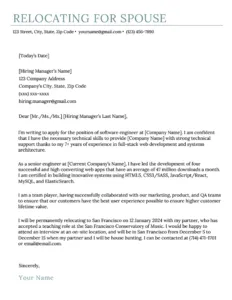
The core of your relocation cover letter is addressing your willingness and ability to relocate. Start by clearly stating that you are willing to relocate to the specified location. Be direct and straightforward. State your timeline for relocation, if you have one. This shows the hiring manager that you have considered the logistics. If you’re already in the process of relocating, mention that you are, or if you’re planning to move, specify your expected timeframe. If you have any specific plans in place, such as housing arrangements or a start date, include those details. This adds another layer of assurance that you’re serious about the move. If the company is offering relocation assistance, express your interest in learning more about it. If not, you can still state your readiness to handle the relocation process independently. This proves that you’re prepared and committed to making the move.
Emphasizing Your Commitment and Enthusiasm

Throughout your cover letter, consistently express your commitment to the company and the position. Show that you’re not just looking for a job, but a career opportunity. Be enthusiastic about the prospect of joining the team and contributing to the company’s goals. Your enthusiasm can be a differentiating factor and leaves a positive impression. Mention any research you’ve done on the company, highlighting aspects of their culture, values, or recent achievements that resonate with you. This shows the hiring manager that you are genuinely interested in the organization. Convey your excitement about living and working in the new location. This adds a personal touch and further reinforces your commitment to the opportunity. Remember, a cover letter isn’t just a formality; it’s your chance to make a strong first impression.
Structuring Your Relocation Cover Letter
A well-structured cover letter is easy to read and effectively conveys your message. Use a professional and clear format. Make sure it’s well-organized, with a logical flow. Use a standard business letter format. This typically includes your contact information, the date, and the hiring manager’s contact information. Keep your letter concise, ideally no more than one page. This shows respect for the hiring manager’s time and ensures they will read your entire letter. Proofread meticulously to eliminate any grammatical errors or typos. Errors can undermine your professionalism and credibility. A well-structured and error-free cover letter makes a positive impression and shows attention to detail.
Header and Contact Information
Start with your contact information at the top of the letter. This should include your full name, address, phone number, and email address. Following this, include the date and the hiring manager’s name, title, and company address. Ensure you have the correct information for the recipient. If you can’t find the hiring manager’s name, use a general salutation such as “Dear Hiring Manager.” This is important as it provides the recruiter with a way to contact you. Make sure your contact details are up-to-date and professional. Use a professional email address and ensure your voicemail message is also professional.
Salutation

Address the hiring manager by name if possible. This shows you’ve done your research and are attentive to detail. Use a formal salutation like “Dear Mr./Ms. [Last Name]”. If the hiring manager’s name is not available, use a general salutation like “Dear Hiring Manager.” Avoid informal greetings like “Hi” or “Hello.” The salutation sets the tone for the letter, so a professional approach is always best.
Body Paragraphs
The body of your cover letter should consist of several paragraphs. The first paragraph should state the position you’re applying for and how you found the job posting. It also needs to mention your interest in the role. The following paragraphs should highlight your qualifications, skills, and experiences relevant to the job. Use specific examples to demonstrate your capabilities. Be sure to include a paragraph addressing your willingness to relocate. Clearly state your plans, timeline, and any other pertinent information. Keep each paragraph focused and concise, ensuring they collectively communicate your qualifications. Each paragraph should serve a clear purpose, leading the reader through a logical presentation of your value.
Closing and Call to Action
In your closing paragraph, reiterate your interest in the position and express your enthusiasm for the opportunity. Include a call to action. Encourage the hiring manager to contact you for an interview. Thank the hiring manager for their time and consideration. Use a professional closing such as “Sincerely,” or “Best regards,” followed by your typed name. If you’re submitting a physical copy, leave space for your signature above your typed name.
Tailoring Your Cover Letter to the Job
Avoid sending a generic cover letter to every job application. Tailor your letter to each specific job and company you’re applying to. Research the company and the role thoroughly to ensure your letter is relevant. This shows that you are genuinely interested in the opportunity. Highlight the skills and experiences that are most relevant to the job requirements. Customize your letter to meet the specific needs. By doing this, you will set yourself apart from other candidates. Your letter should be unique to each application.
Researching the Company and the Role
Before you begin writing, conduct thorough research on the company. Understand their mission, values, and recent achievements. Visit their website, review their social media profiles, and read any recent news articles about the company. This information will help you tailor your cover letter to align with their specific needs and goals. Carefully review the job description. Identify the key requirements, skills, and qualifications the employer is seeking. This will guide you in highlighting the most relevant aspects of your background and experience. Demonstrate you’ve done your homework by mentioning specific company initiatives, projects, or values. This shows your genuine interest. Researching the company helps you demonstrate your enthusiasm for the position.
Using Keywords from the Job Description
Carefully analyze the job description and identify the key keywords and phrases used by the employer. Integrate these keywords naturally throughout your cover letter. This helps the hiring manager quickly see that your skills and experience align with their requirements. Keywords should be integrated naturally. Avoid stuffing your letter with keywords. Focus on using them in a way that enhances the clarity and relevance of your message. Ensure that your skills and qualifications match the requirements. When incorporating the keywords, match them to specific skills, experiences, and achievements. This strategy ensures your cover letter stands out.
Showcasing Your Enthusiasm for the Location

Express your excitement about the prospect of living and working in the new location. Share your reasons for wanting to relocate to this area. This can be a personal connection, career opportunity, or the lifestyle of the location. Make sure your enthusiasm is genuine and sincere. Research the location to show your familiarity. You can mention local attractions, cultural activities, or community events that interest you. This shows you’re interested in more than just the job. Consider mentioning any steps you have taken to learn more about the area. This could include visiting the location, talking to people who live there, or researching neighborhoods and housing options. Highlighting your genuine interest in the new location can set you apart from other candidates. This will help to improve your chances of landing an interview.
Common Mistakes to Avoid
Avoiding common mistakes can significantly improve the effectiveness of your relocation cover letter. Be careful to avoid generic language and a lack of personalization. It is also important to avoid focusing too much on the move itself and ignoring the job requirements. These common errors can undermine your application. By carefully avoiding these errors, you can make a strong impression on the hiring manager. A well-crafted, error-free cover letter will increase your chances of getting an interview.
Generic Language and Lack of Personalization
Avoid using a generic cover letter that could be sent to any company or position. This demonstrates a lack of genuine interest. Tailor your letter to each specific job and company. Use the company’s name, address the hiring manager by name (if known), and reference the specific job title. Generic phrases such as “To whom it may concern” or using the same letter for multiple positions show a lack of effort. This can leave a negative impression. Make sure your letter reflects your specific skills and experiences as they relate to the job description. A well-tailored, personalized cover letter is more likely to get you an interview.
Focusing Too Much on the Move

While addressing the relocation is important, avoid making it the primary focus of your cover letter. The primary purpose is to showcase your qualifications for the job. Keep the discussion about your relocation concise and relevant. Briefly state your willingness to move, your timeline, and any arrangements you have made. The emphasis of your letter should be on how your skills and experiences align with the job requirements. The hiring manager wants to know why you are the best fit for the role, not just that you are willing to relocate. Demonstrate your value to the company. Focus on your accomplishments and how you can contribute to their success.
Ignoring the Job Requirements
Do not make the mistake of overlooking the specific requirements outlined in the job description. Carefully read the job posting and identify the key skills, qualifications, and experiences the employer is seeking. Tailor your cover letter to address these requirements directly. Highlight how your background aligns with the company’s needs. Ensure your cover letter clearly illustrates how your skills and experiences make you a strong candidate for the position. Provide specific examples and quantifiable results whenever possible. Failing to address the job requirements will make it difficult for the hiring manager to see how you fit into the role. Your cover letter should address all aspects of the job description.
Relocation Cover Letter Example
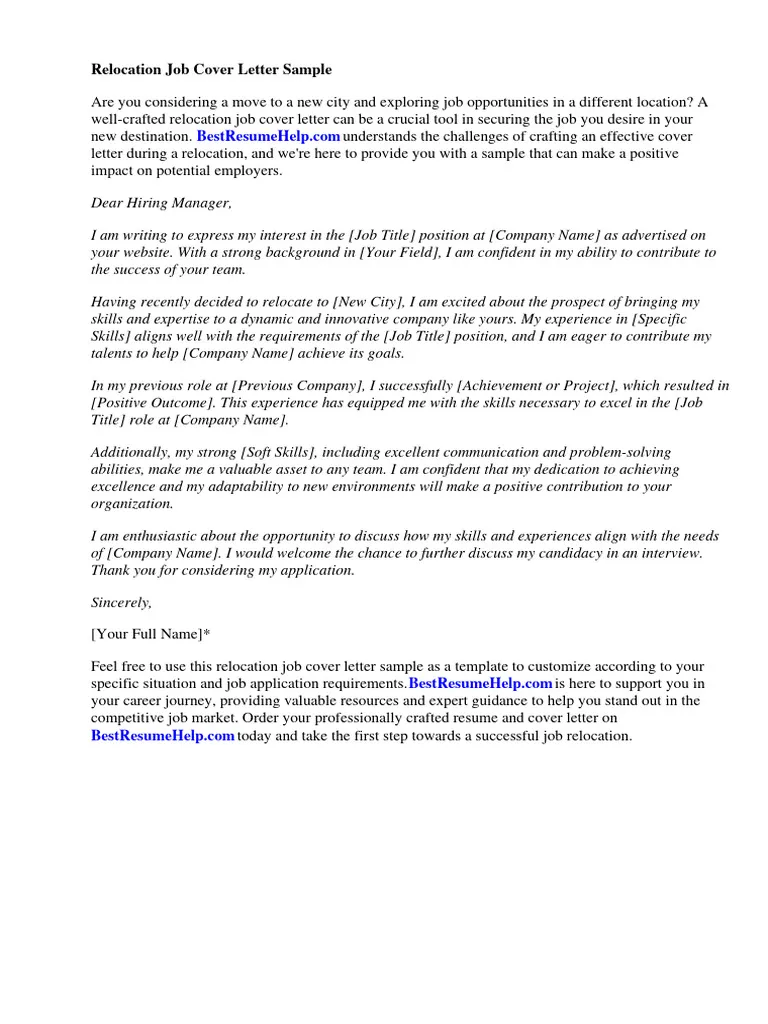
To illustrate the principles discussed, here’s a sample relocation cover letter. This provides a practical example of how to structure your letter and convey your message effectively. The example will cover the format and address the key elements, including the contact information, salutation, body paragraphs, and closing. The example will demonstrate how to integrate keywords from the job description, highlight relevant skills, and address the relocation. This sample is an invaluable resource for crafting your own cover letter.
Sample Cover Letter
Here is a sample cover letter:
[Your Name] [Your Address] [Your Phone Number] [Your Email]
[Date]
[Hiring Manager Name] [Hiring Manager Title] [Company Name] [Company Address]
Dear [Mr./Ms. Last Name],
I am writing to express my enthusiastic interest in the [Job Title] position at [Company Name], as advertised on [Platform]. With my [Number] years of experience in [Industry/Field] and a strong track record in [Skill 1], [Skill 2], and [Skill 3], I am confident that I possess the skills and qualifications to excel in this role and contribute significantly to your team.
I am particularly drawn to [Company Name] because of [Mention specific reasons, e.g., company culture, values, recent achievements]. I am eager to contribute to [Specific project/goal], and I am impressed by [Mention a specific aspect of the company or its work]. I have carefully reviewed the job description and my skills directly align with the requirements.
In addition to my professional qualifications, I am planning to relocate to [City, State] by [Date or timeframe]. I am eager to begin this new chapter. I will be available for an interview at your earliest convenience. I will make the arrangements to get to [City, State].
Thank you for your time and consideration. I look forward to the opportunity to discuss my application further.
Sincerely, [Your Typed Name]
Key Takeaways for a Successful Relocation Cover Letter
Crafting a compelling relocation cover letter requires careful attention to detail and a strategic approach. Start by expressing your interest in the role and the company. Be sure to showcase your relevant skills and experiences with concrete examples. Clearly and confidently address your willingness to relocate, including your timeline and any arrangements you have made. Customize your cover letter to each job application. Avoid generic language and personalize your message. Avoid focusing too much on the move itself. Demonstrate your value by focusing on your accomplishments and how you can contribute to the company. By following these key takeaways, you’ll increase your chances of landing an interview. Good luck.