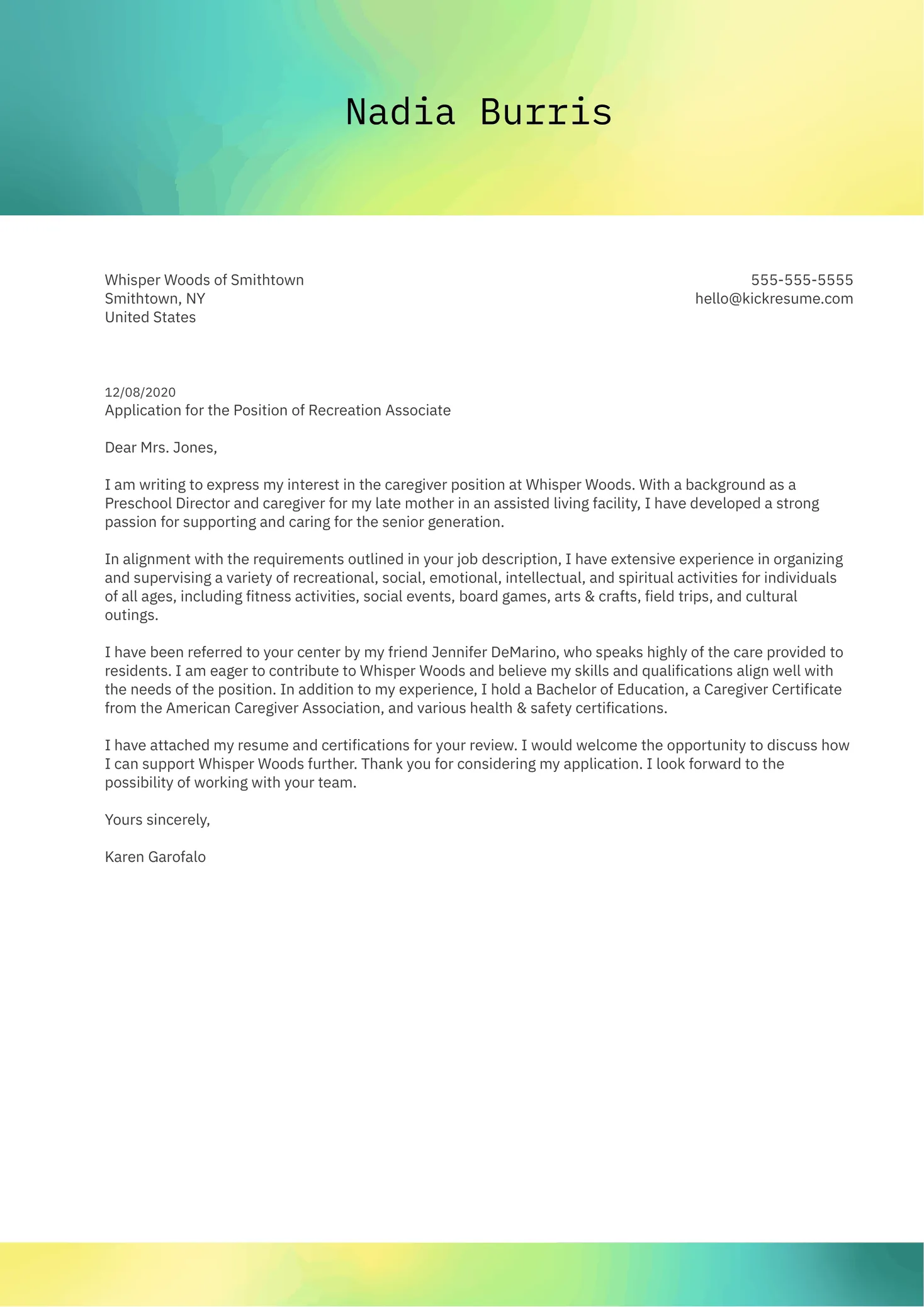
Crafting a Winning Recreation Cover Letter
In the competitive field of recreation, a well-crafted cover letter can be your key to unlocking the door to your dream job. A compelling cover letter is more than just a formality; it is your opportunity to showcase your passion, skills, and experience in a way that a resume alone cannot. It is your first introduction to a potential employer, and it sets the tone for how you will be perceived. A cover letter is your chance to make a lasting impression and differentiate yourself from other applicants. This guide provides a roadmap to creating a recreation cover letter that not only gets noticed but also wins you the job.
Understanding the Importance of a Cover Letter
Many job seekers underestimate the power of a well-written cover letter. In the recreation industry, where enthusiasm and personality are highly valued, a cover letter can be the deciding factor. It allows you to expand on your resume, providing context and depth to your qualifications. A strong cover letter demonstrates your communication skills, your understanding of the role, and your genuine interest in the organization. It allows you to connect your skills and experience with the specific requirements of the job, which makes you a more appealing candidate. By showing your personality, you can create a narrative and captivate the reader, which is not something your resume will do.
Highlighting Your Skills and Experience

Your cover letter should prominently feature your relevant skills and experience. Don’t just list them; demonstrate how you have used them to achieve positive results. This is where you can tell a story, providing examples of past achievements. Whenever possible, quantify your accomplishments. This could include the number of programs you managed, the size of the team you supervised, or the amount of money you raised. Highlighting the skills and experience can give you a competitive edge. Your goal is to show the hiring manager why you are the best person for the job.
Key Skills to Showcase
In the recreation field, certain skills are highly sought after. These include: communication, leadership, program development, event planning, customer service, conflict resolution, and first aid/CPR certification. When writing your cover letter, identify which of these skills are most relevant to the specific job and provide concrete examples of how you have demonstrated them in the past. For instance, if you are applying for a leadership role, describe how you have successfully motivated and managed a team, or if you’re going for a program development position, describe a program you created and its impact.
Demonstrating Experience
Your experience is crucial, but the way you present it can significantly impact its effectiveness. Rather than simply listing your past roles, provide details about your responsibilities and accomplishments. For example, instead of saying “Managed recreational programs,” explain how you “Managed a team of 10 staff members and successfully planned and executed over 50 recreational programs, resulting in a 20% increase in program participation.” Use the STAR method (Situation, Task, Action, Result) to structure your examples, highlighting the challenge, the steps you took, and the outcome. Make sure your experiences align with the job description, and emphasize any achievements.
Tailoring Your Letter to the Job

A generic cover letter is easily spotted and often discarded. Customize each cover letter for the specific job you are applying for. This requires careful attention to detail and a thorough understanding of the job requirements and the organization’s mission. Tailoring your cover letter shows the employer that you have invested time and effort in the application process and are genuinely interested in the position. This customization can significantly improve your chances of getting an interview and landing the job. Always customize the cover letter to suit the job description and company culture.
Researching the Organization
Before you start writing, research the organization. Understand its mission, values, and the specific programs or services it offers. This information will enable you to tailor your cover letter to align with their goals and demonstrate your genuine interest. Visit the organization’s website, read their mission statement, and review their social media profiles. This shows you have put in the effort, which is what every hiring manager wants to see. If possible, try to find out the name of the hiring manager and address your letter to them directly, as this can make your cover letter more personal and show that you pay attention to detail.
Matching Your Skills to the Job Description
Carefully review the job description and identify the key skills and qualifications the employer is seeking. Then, in your cover letter, highlight how your skills and experience align with these requirements. Use the same keywords and phrases from the job description, but do not simply copy and paste. Instead, incorporate the keywords naturally into your narrative, providing specific examples of how you have demonstrated the skills. This not only shows that you meet the requirements but also helps your application get noticed by Applicant Tracking Systems (ATS) that scan for these keywords. Use the job description as your template to ensure your application is top-notch.
Formatting and Structure

The format and structure of your cover letter are crucial for readability and professionalism. A well-formatted letter is easy to read and makes a positive first impression. Use a clear, professional font such as Times New Roman, Arial, or Calibri, and ensure that your letter is free of grammatical errors and typos. Pay attention to the layout and ensure that the text is well-organized. A proper format shows that you pay attention to detail, and a well-formatted cover letter will make your application stand out from the crowd.
Effective Opening and Closing
Your opening and closing paragraphs are critical for capturing the reader’s attention and leaving a lasting impression. Start with a strong opening that grabs the reader’s attention, such as a brief anecdote or a statement of your enthusiasm for the position. The opening can also express your value and what you can bring to the company. In your closing, reiterate your interest in the position, and thank the reader for their time and consideration. Include a call to action, such as stating that you are available for an interview, and provide your contact information.
Writing a Compelling Body
The body of your cover letter is where you showcase your skills and experience. Use the STAR method to provide concrete examples of your achievements. Structure your body paragraphs logically, focusing on your most relevant qualifications. Keep each paragraph focused on a single idea, and use concise, active language. Avoid jargon and clichés. Show that you have a clear understanding of the job requirements and how you will use your skills to meet the needs of the organization. This will allow the reader to learn more about you and see if you will be a good fit for the role.
Proofreading and Editing

Proofreading and editing are essential steps in the cover letter writing process. Errors in grammar and spelling can make you appear unprofessional and damage your chances of getting an interview. Always proofread your letter multiple times, and consider having a friend or career advisor review it for you. Check for clarity, conciseness, and accuracy. Ensure that your cover letter flows well and that your ideas are presented in a logical and coherent manner. Correct any mistakes that may be present and make sure your cover letter is the best representation of you.
Common Mistakes to Avoid
Several common mistakes can undermine your recreation cover letter. Avoid generic letters that are not tailored to the specific job or organization. Do not simply restate your resume; provide additional information and context. Avoid using jargon, clichés, and overly formal language. Do not include irrelevant information or exceed the recommended length of one page. Always tailor each cover letter to fit each job application. A cover letter is an excellent way to stand out to the hiring managers.