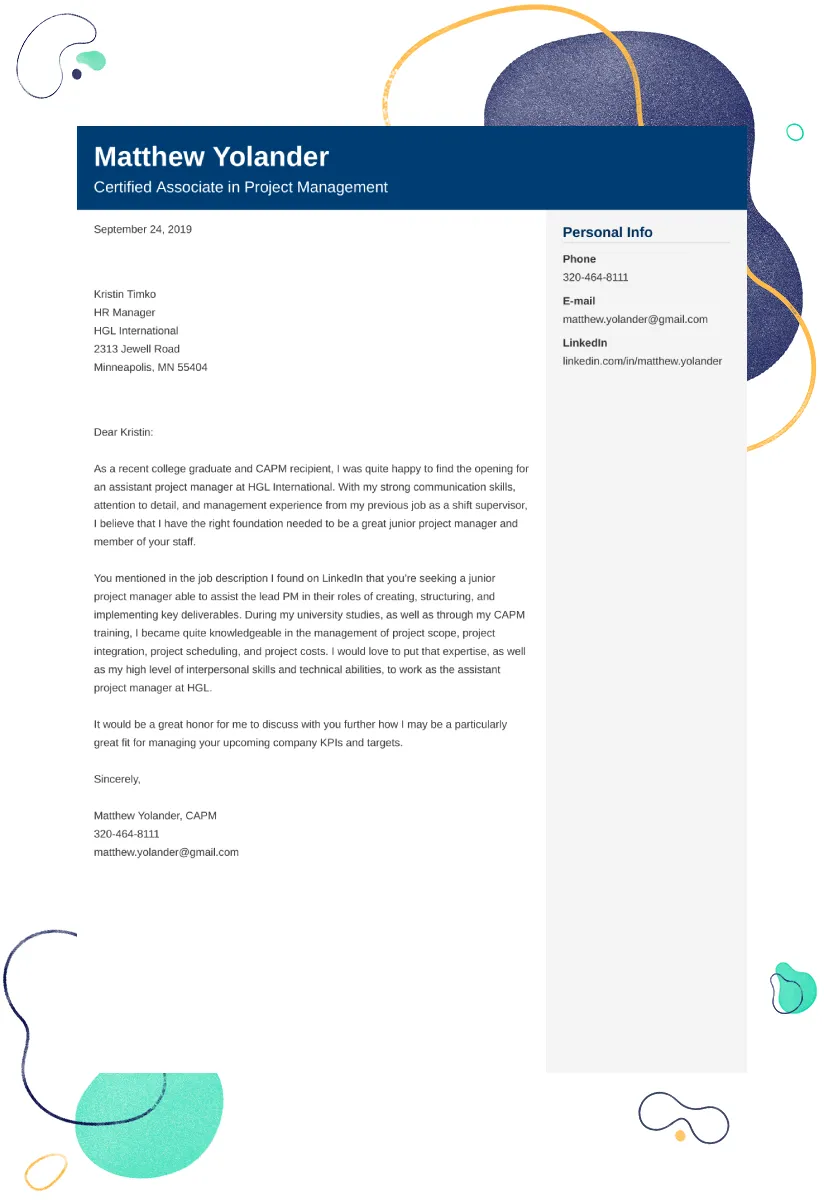
What is a Project Manager Cover Letter
A Project Manager cover letter is a crucial document that accompanies your resume when applying for project management positions. It serves as a personalized introduction, showcasing your relevant skills, experience, and enthusiasm for the role. Unlike a resume, which provides a concise overview of your qualifications, a cover letter allows you to elaborate on your accomplishments and demonstrate how your expertise aligns with the specific requirements of the job. A well-crafted cover letter can significantly increase your chances of landing an interview by making a strong first impression on potential employers. It is your opportunity to highlight your personality, passion for project management, and the unique value you bring to a team. A cover letter should always be tailored to each specific job application, reflecting your understanding of the company and the project management challenges they face. By addressing the company’s needs directly, you can demonstrate your genuine interest in the position and increase your chances of getting hired.
Importance of a Project Manager Cover Letter
The importance of a project manager cover letter cannot be overstated in the job application process. It’s your first real chance to make a positive impression on a potential employer, setting the stage for a more in-depth look at your qualifications. A strong cover letter can differentiate you from other candidates, especially when your resume alone might not fully capture the nuances of your experience or the depth of your skills. It shows that you’ve taken the time to research the company, understand the specific role, and tailor your application to their needs. This attention to detail demonstrates your commitment and professionalism. In the competitive field of project management, where communication and organization are paramount, a well-written cover letter can highlight these skills immediately. A compelling letter also gives you the opportunity to explain any gaps in your employment history, career transitions, or reasons for applying, offering context that a resume alone cannot provide. It allows you to connect with the hiring manager on a personal level, showing your genuine interest in the company and the project.
Key Components of a Project Manager Cover Letter

A strong project manager cover letter consists of several key components, each playing a vital role in conveying your suitability for the position. Ensuring that each part is thoughtfully constructed and relevant to the job requirements is vital for your application’s success. Your project management cover letter should be structured in a way that is both easy to read and informative, giving the hiring manager a clear picture of your skills and qualifications. Let’s break down the key components to consider when crafting your cover letter. By understanding these essential parts, you can create a persuasive and effective cover letter that makes a strong first impression and increases your chances of securing an interview for the project management position.
Header and Contact Information
The header of your project manager cover letter should begin with your full name, address, phone number, and email address. This information ensures that the hiring manager can easily contact you if they are interested in your application. Following this, include the date and the name and address of the hiring manager (if you know it), or the company’s HR department. Make sure that your contact details are up-to-date and professional. A clean, well-formatted header sets a professional tone from the outset and makes it easy for recruiters to reach out to you. Always double-check that all of this information is accurate. This attention to detail indicates your organizational skills, a key trait for any project manager. If you are applying online, ensure that your contact information in the cover letter matches your resume to maintain consistency.
Greeting and Introduction
Start your cover letter with a professional greeting. If you know the hiring manager’s name, address them directly; otherwise, use a general greeting such as “Dear Hiring Manager.” Your introduction should immediately capture the reader’s attention and clearly state the position you are applying for. Briefly mention where you saw the job posting and express your interest in the role and the company. This section should set the tone for the rest of your letter, highlighting your enthusiasm and making a strong first impression. Avoid generic phrases. Instead, personalize your introduction by showing that you understand the company’s mission and values. A compelling introduction sets the stage for the body of your letter and encourages the hiring manager to read on, making them want to know more about you and your qualifications.
Body Paragraphs Highlighting Skills and Experience

The body of your cover letter is where you elaborate on your skills and experience, aligning them with the job requirements. Structure these paragraphs to highlight your most relevant accomplishments and skills. Provide specific examples of how you’ve successfully managed projects, mentioning the methodologies you’ve used (e.g., Agile, Scrum, Waterfall), the size and scope of the projects, and the outcomes achieved. Demonstrate your proficiency in project management software, such as Jira, Asana, or Microsoft Project, if mentioned in the job description. Use action verbs to describe your responsibilities and achievements, and quantify your results whenever possible. For example, instead of saying you “managed projects,” say you “managed a portfolio of projects, resulting in a 15% reduction in project delivery time.” These paragraphs should show a clear narrative of your capabilities and your ability to contribute to the company’s success.
Quantifiable Achievements
Quantifiable achievements are key to making your cover letter stand out. Instead of simply listing your responsibilities, highlight your accomplishments with specific, measurable results. Use numbers, percentages, and data to demonstrate the impact you’ve made in previous roles. For instance, instead of saying you “improved project efficiency,” state that you “increased project completion rates by 20% within six months.” Include details about the project budgets you managed, the teams you led, and the results you achieved. Quantifying your achievements not only validates your skills but also provides concrete evidence of your ability to deliver results. This data-driven approach helps the hiring manager understand the value you bring to the table and shows your ability to drive positive change.
Tailoring to the Job Description
Always tailor your cover letter to the specific job description. Review the requirements outlined in the job posting and ensure that your letter addresses them directly. Highlight the skills and experiences that are most relevant to the position. Use keywords from the job description throughout your letter to show that you understand the role and the company’s needs. This targeted approach shows that you’ve done your research and that you’re a good fit for the position. Customizing your cover letter demonstrates your attention to detail and your willingness to go the extra mile. By aligning your skills and experiences with the job requirements, you demonstrate your genuine interest and your understanding of what the company is looking for in a candidate.
Call to Action and Closing

End your cover letter with a clear call to action and a professional closing. Reiterate your interest in the position and express your enthusiasm for the opportunity. State that you are available for an interview and provide your contact information again. Thank the hiring manager for their time and consideration. Avoid overly casual language. A professional closing statement, such as “Sincerely” or “Best regards,” is appropriate. This final section should leave the hiring manager with a positive impression, reinforcing your interest in the role and encouraging them to contact you for an interview. Make sure your contact information is accurate and easy to find.
Cover Letter Format and Structure
The format and structure of your cover letter are essential for making it easy to read and professional in appearance. Use a standard business letter format with single-spaced paragraphs and consistent formatting throughout. Choose a readable font, such as Arial or Times New Roman, with a font size of 11 or 12 points. Ensure that there is ample white space to prevent the document from looking cluttered. Start with a professional header that includes your contact information and the date, followed by the hiring manager’s information. The body of the letter should be divided into logical paragraphs, each focusing on a specific aspect of your qualifications and experiences. The structure should be clear and concise. Use bullet points where appropriate to highlight key skills or achievements, but avoid making the entire letter a list. A well-formatted cover letter demonstrates your attention to detail and your ability to communicate effectively.
Best Practices for Writing a Cover Letter
Adhering to best practices is crucial for writing a successful cover letter. Keep it concise, aiming for one page in length, unless the job posting specifically requests more. Focus on quality over quantity, highlighting your most relevant skills and experiences. Tailor each letter to the specific job and company. Research the company and the role to understand their needs and address them directly. Proofread carefully for any grammatical errors or typos. Use a professional tone and avoid slang or overly casual language. Include keywords from the job description, but avoid keyword stuffing. Demonstrate your understanding of project management methodologies and software. Showcase your ability to communicate effectively, organize and prioritize tasks, and lead teams. By following these best practices, you can create a cover letter that impresses potential employers and increases your chances of getting hired. These practices are crucial for highlighting your skills and experiences effectively.
Proofreading and Editing

Proofreading and editing are crucial steps in the cover letter writing process. Always proofread your cover letter multiple times to catch any spelling, grammar, or punctuation errors. Errors can create a negative impression and undermine your professionalism. Read your letter aloud to catch any awkward phrasing or grammatical mistakes. It’s also a good idea to have someone else proofread your letter. Fresh eyes can often spot errors that you might have missed. Ensure your cover letter is free of typos and grammatical errors. By taking the time to proofread and edit, you demonstrate your attention to detail and your commitment to presenting yourself in the best possible light. Carefully check all dates, names, and contact information for accuracy. This step is important to ensure a flawless and professional document.
Using Action Verbs
Using strong action verbs is an effective way to make your cover letter more engaging and impactful. Action verbs help to vividly describe your accomplishments and responsibilities. They bring your experience to life and make your statements more dynamic. Start your sentences with action verbs such as “Managed,” “Led,” “Developed,” “Implemented,” “Coordinated,” and “Achieved.” Avoid weak verbs. Instead of saying “Responsible for,” say “Directed.” Instead of “Worked on,” say “Collaborated on.” This will help you to create a cover letter that showcases your skills and abilities. This technique makes your cover letter more compelling and shows the reader what you have done. Incorporate a variety of verbs to avoid sounding repetitive. Action verbs give your letter a sense of energy and make it more likely that the hiring manager will read and remember the details of your experience.
Maintaining a Professional Tone
Maintaining a professional tone is essential when writing a project manager cover letter. Your cover letter is a reflection of your professional demeanor and your ability to communicate effectively. Avoid using slang, informal language, or excessive jargon. Keep your writing concise and focused, avoiding unnecessary details. Use a formal greeting and closing, such as “Dear Mr./Ms. [Last Name]” and “Sincerely.” Ensure that your writing is clear and straightforward, and that your sentences are well-structured. Maintain a respectful and courteous tone throughout the letter. Avoid being overly casual or familiar. By adhering to a professional tone, you demonstrate your professionalism, your respect for the company, and your ability to communicate effectively in a business setting. Remember that your goal is to make a positive impression and to showcase your qualifications in the best possible light.
Cover Letter Examples

Reviewing cover letter examples can provide valuable insights and guidance when writing your own. Look for examples of cover letters for project management positions to get ideas on how to structure your letter, highlight your skills, and tailor your content. Pay attention to the language used, the tone, and the overall presentation. Analyze how the candidates present their experience, quantify their achievements, and address the job requirements. Adapt the successful elements of these examples to your own cover letter. Consider using online templates or cover letter builders as starting points, but always customize the content to reflect your unique skills and experiences. Remember, the examples are meant to provide guidance. Your cover letter should be unique and reflect your personality and skills. By studying various examples, you can create a more compelling and effective cover letter that helps you stand out from the competition.
Common Mistakes to Avoid
Avoiding common mistakes can significantly improve the quality of your project manager cover letter. One common mistake is sending a generic cover letter that isn’t tailored to the specific job. Always customize your letter to match the job requirements. Another mistake is including too much irrelevant information or rehashing your resume without adding value. Keep your letter concise and focus on your most relevant skills and accomplishments. Grammatical errors and typos can create a negative impression. Always proofread carefully. Another mistake is using a casual or unprofessional tone. Keep your tone professional and appropriate. Avoid overly long paragraphs or overly complex sentences. Make sure your letter is easy to read. These are the most common mistakes. By avoiding these common errors, you will be able to create a compelling cover letter that maximizes your chances of success.