Why a Project Manager Cover Letter is Essential
In the competitive world of project management, a well-crafted cover letter is not just a formality; it’s your first opportunity to make a lasting impression on potential employers. A cover letter acts as a crucial bridge, connecting your skills and experience to the specific requirements of the job you’re applying for. It offers a personalized introduction that goes beyond the static information presented in your resume. Think of it as a narrative, a story that highlights your accomplishments and demonstrates how you align with the company’s needs and values. This initial communication provides the hiring manager with insights into your personality, work ethic, and communication abilities, elements often missing from a resume. Therefore, investing time and effort into a cover letter is a strategic move that significantly increases your chances of securing an interview. A compelling cover letter can differentiate you from other applicants and illustrate your genuine interest in the role and the organization.
Understanding the Purpose of a Cover Letter
The primary purpose of a project manager cover letter is to introduce you and highlight your key qualifications, experiences, and achievements. It’s a concise document that explains why you are the ideal candidate for the specific project manager position. Unlike a resume, which provides a summary of your career history, a cover letter allows you to connect the dots for the hiring manager. It offers the opportunity to elaborate on your skills, such as project planning, risk management, and stakeholder communication, providing concrete examples of how you’ve applied these skills in previous roles. Furthermore, a well-written cover letter showcases your personality, enthusiasm, and passion for project management. It allows you to articulate your career goals and explain why you are interested in the company and the specific project. This personalized approach is crucial for setting yourself apart and demonstrating a deeper level of engagement than a standard resume can convey. Ultimately, a cover letter is a tool to persuade the hiring manager to read your resume and consider you for an interview.
Highlighting Relevant Skills and Experience
When writing a cover letter for a project manager position, it’s essential to highlight the skills and experiences that are most relevant to the specific job requirements. Begin by carefully reviewing the job description and identifying the key skills and qualifications the employer is seeking. These might include project planning, budget management, risk assessment, team leadership, and communication skills. In your cover letter, provide concrete examples of how you’ve successfully applied these skills in previous projects. For instance, if the job description emphasizes budget management, describe a project where you successfully managed a budget, staying within financial constraints and delivering the project on time. This shows your ability to translate skills into tangible results. Moreover, quantifying your achievements with data, such as percentage improvements or cost savings, makes your claims more credible and impactful. This approach not only demonstrates your expertise but also provides evidence of your ability to deliver value.
Key Project Management Skills to Showcase
Project managers need a diverse set of skills to be successful, and it is critical to highlight the most relevant ones in your cover letter. This often includes planning, organization, and execution. Emphasize your proficiency in project planning methodologies, such as Agile or Waterfall, and demonstrate your ability to create realistic timelines, allocate resources effectively, and manage project scope. Risk management is another crucial skill; showcase your experience in identifying potential risks, developing mitigation strategies, and proactively addressing challenges. Strong problem-solving skills are a must-have for project managers. Describe your ability to analyze complex issues, identify root causes, and implement effective solutions. Furthermore, highlight your experience with project management software and tools, such as Jira, Asana, or Microsoft Project, demonstrating your technical proficiency. These are vital skills that contribute to a project’s success. Finally, do not forget to highlight skills in change management, quality assurance, and stakeholder management.
Communication and Leadership Skills
Effective communication and strong leadership are paramount for project managers. In your cover letter, emphasize your ability to communicate clearly and concisely with stakeholders at all levels, from team members to executive leadership. Highlight your experience in facilitating meetings, preparing project reports, and delivering presentations. Showcase your active listening skills and your ability to build strong relationships with stakeholders. Demonstrate your ability to motivate and inspire project teams, fostering a collaborative and productive work environment. Provide examples of how you’ve led teams to achieve project goals, resolving conflicts, and promoting teamwork. Illustrate your experience in delegating tasks, providing constructive feedback, and mentoring team members. This includes your leadership style and how you guide and support your team members. This shows your overall capability in motivating and driving the project’s success, and also your ability to create a positive and productive environment.
Technical Expertise and Tools Proficiency

Project managers often utilize various technical tools and software to manage projects efficiently. In your cover letter, specify your proficiency with relevant project management software such as Jira, Asana, Microsoft Project, or other tools mentioned in the job description. Highlight your experience in using these tools for project planning, task management, resource allocation, and progress tracking. Additionally, mention any other relevant technical skills, such as experience with data analysis, reporting tools, or software development methodologies, especially if they are mentioned in the job posting. Demonstrating your technical proficiency showcases your ability to use the right tools to enhance project efficiency and outcomes. If the role involves specific technical requirements, ensure your cover letter clearly states your experience and knowledge in those areas. Moreover, mention any certifications you possess, such as PMP or Agile certifications, as these demonstrate your commitment to professional development and your expertise in project management methodologies. Also, include familiarity with collaboration tools such as Slack and Microsoft Teams.
Structuring Your Project Manager Cover Letter
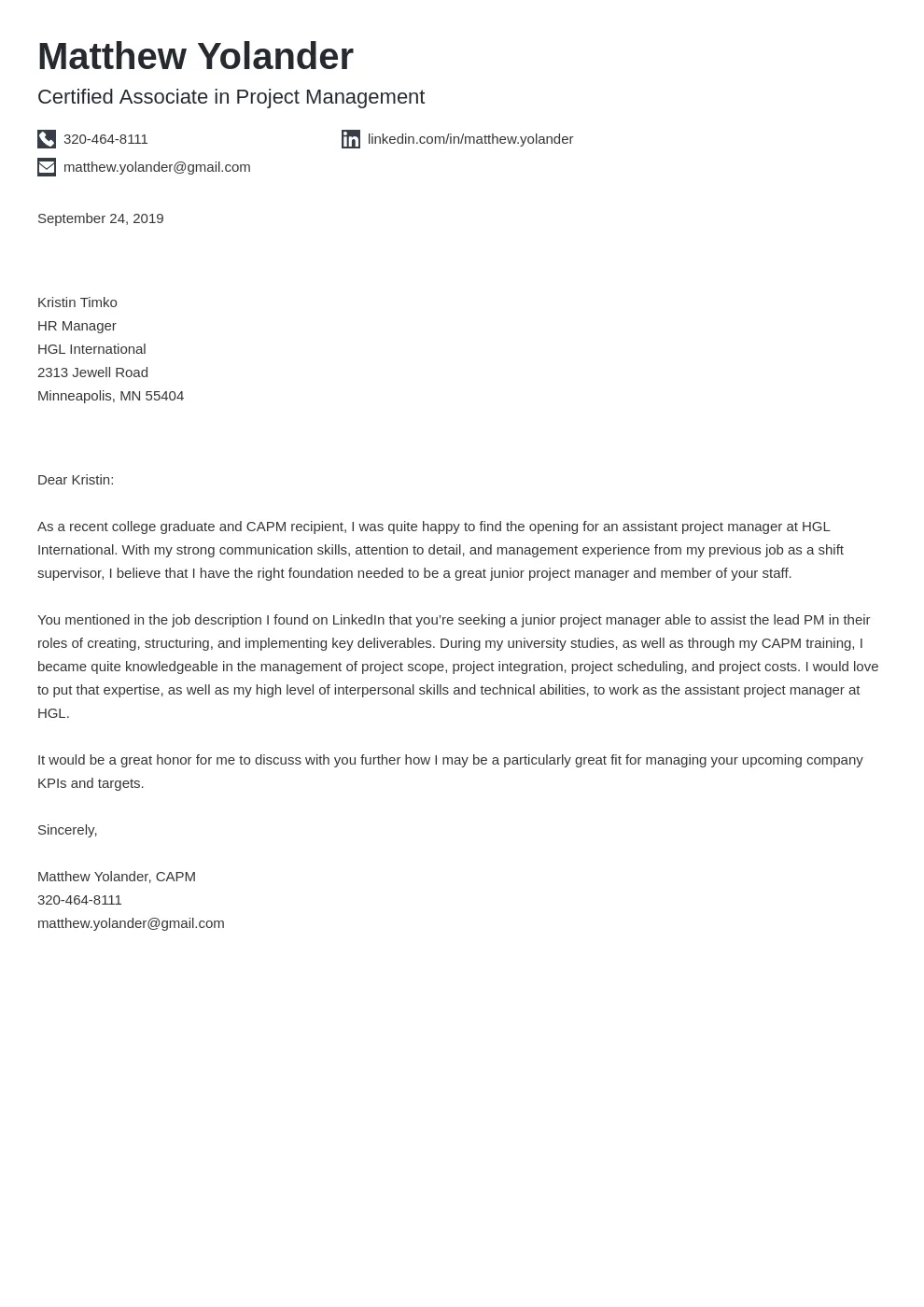
Structuring your project manager cover letter effectively is crucial for creating a positive first impression. Begin with your contact information, including your name, address, phone number, and email address. Then, include the date and the recipient’s contact information, such as the hiring manager’s name, title, and company address. Use a professional salutation, such as “Dear Mr./Ms. [Last Name],” if you know the hiring manager’s name, or “Dear Hiring Manager,” if you don’t. The body of your letter should consist of three to four paragraphs. The first paragraph should capture the reader’s attention and state the position you are applying for. The second paragraph should showcase your relevant skills and experience, providing concrete examples of your achievements. The third paragraph should explain why you are interested in the company and the specific project. In the closing paragraph, reiterate your interest, express your availability for an interview, and thank the hiring manager for their time and consideration. Keep it concise, well-organized, and tailored to the specific job you are applying for.
Contact Information and Salutation
Start your cover letter with your contact information. This should be clearly visible at the top of the letter and include your full name, address, phone number, and email address. Use a professional and easy-to-read font. Ensure that your email address is professional and appropriate. Following your contact information, include the date. Then, address the recipient by name, if possible. This shows you have taken the time to research the company and the role. If you are unsure of the hiring manager’s name, use a general salutation such as “Dear Hiring Manager.” Avoid generic greetings like “To Whom It May Concern.” This initial detail can make a difference in setting the tone for your letter. Always proofread your contact information to ensure it is accurate. A mistake here could lead to missed opportunities.
Crafting a Compelling Opening Paragraph

The opening paragraph of your cover letter is your opportunity to grab the hiring manager’s attention. State the specific position you are applying for and where you saw the job posting. Briefly mention your most relevant skill or experience to immediately capture their interest. Instead of a generic introduction, try something engaging. For example, start with a brief, impactful statement that reflects your enthusiasm for the position or the company. Consider mentioning something specific that excited you about the role or the company’s recent projects. Show genuine interest and immediately make it clear why you’re a great fit. The opening paragraph should set the tone for the rest of the letter, demonstrating your understanding of the job requirements and your passion for project management. This initial paragraph should encourage the hiring manager to continue reading and learn more about your qualifications.
Showcasing Your Achievements and Quantifiable Results
In the body of your cover letter, focus on showcasing your accomplishments. Instead of simply listing your responsibilities, provide specific examples of your achievements and quantify your results whenever possible. Use the STAR method (Situation, Task, Action, Result) to structure your examples and demonstrate your skills in action. Describe the situation or challenge you faced, the task you were assigned, the actions you took, and the positive results you achieved. For instance, you could describe a project where you successfully delivered on time and under budget, or where you improved team efficiency by a certain percentage. By providing quantifiable results, you provide concrete evidence of your capabilities. This will allow the hiring manager to see how you have delivered value in previous roles and how you can potentially bring value to their company. Always prioritize the most relevant accomplishments and tailor them to the specific requirements of the job description.
Providing Examples of Successful Projects
When describing your project management experience, it is crucial to provide specific examples of successful projects you have led or contributed to. For each project, provide a brief overview of the project, your role, and the key challenges you faced. Then, explain the actions you took to overcome those challenges and the positive outcomes you achieved. Quantify your results whenever possible, using metrics such as budget savings, on-time delivery rates, or improvements in team efficiency. For instance, describe a project where you implemented a new project management methodology that reduced project completion time by a specific percentage. If you led a team to deliver a project within budget, state the percentage you saved. This is critical to showcase your competency, as it shows what you have achieved in previous roles and allows potential employers to better assess your ability to deliver value.
Tailoring Your Cover Letter to the Job Description

Customizing your cover letter for each job application is essential. A generic cover letter rarely impresses hiring managers. Instead, carefully review the job description and identify the key skills, experiences, and qualifications the employer is seeking. Then, tailor your cover letter to address those specific requirements. Highlight the skills and experiences that align with the job description and provide concrete examples of how you’ve demonstrated those skills in previous roles. Use keywords from the job posting throughout your cover letter. Doing so will help your application get past applicant tracking systems (ATS) and ensure your letter is relevant to the hiring manager. Make sure that you modify the content based on what the company is searching for and highlight the experience that makes you the best fit. This personalized approach shows that you’ve taken the time to understand the role and are genuinely interested in the opportunity.
Matching Skills and Requirements
One of the most critical aspects of tailoring your cover letter is matching your skills and experience to the specific requirements of the job. Carefully analyze the job description and identify the skills and qualifications the employer is looking for. Then, in your cover letter, clearly state how your skills and experience align with those requirements. Provide concrete examples of how you’ve demonstrated those skills in past projects or roles. For instance, if the job description requires experience with Agile methodologies, describe your experience using Agile in your previous projects. Use the same terminology as the job description and clearly show that you have the skills they are seeking. Do not include irrelevant skills or experiences that are not applicable to the job requirements. By directly matching your skills and qualifications with the job description, you demonstrate that you are a good fit for the role and that you have the necessary expertise to succeed.
Using Keywords from the Job Posting
Using keywords from the job posting is a critical strategy for both applicant tracking systems (ATS) and the hiring manager. Review the job description and identify the key skills, qualifications, and technologies the employer is seeking. Then, incorporate those keywords naturally throughout your cover letter. This includes the opening and closing paragraphs, and the body paragraphs describing your experience. Use keywords to show that you possess the skills and experience they want. Avoid keyword stuffing. Your cover letter should be readable and engaging. By strategically incorporating keywords, you increase the chances of your application being selected by the ATS and seen by the hiring manager. In addition, using the same language as the job description demonstrates that you understand the role and the company’s needs. This shows that you have taken the time to read and understand the job description.
Formatting and Presentation Tips

Formatting and presentation are crucial aspects of your project manager cover letter. A well-formatted letter is easier to read and makes a positive impression on the hiring manager. Use a professional font such as Times New Roman, Arial, or Calibri, with a font size between 10 and 12 points. Choose a font that is clear and easy to read. Use appropriate spacing between paragraphs and sections to create a clean and organized layout. The document should be visually appealing and easy to follow. Ensure that the text is aligned to the left and avoid excessive use of bolding or italics. Consider using bullet points to highlight key skills or accomplishments, particularly when describing your experience. If you are submitting an online application, save your cover letter as a PDF file to preserve its formatting and ensure that it is readable on any device.
Font Selection and Readability
Selecting the right font is a detail that contributes to the overall professionalism and readability of your cover letter. Opt for a clean and easy-to-read font, avoiding overly decorative or unusual fonts. Some of the best choices include Times New Roman, Arial, Calibri, or Helvetica. These fonts are widely recognized, which makes them less distracting for the reader. The font size should be between 10 and 12 points. The goal is to make your cover letter easy to read without straining the hiring manager’s eyes. Use consistent formatting throughout your cover letter, including font style, size, and spacing. This consistency presents a professional image and makes your application visually more appealing. Avoid using multiple fonts in the same document. This can make your cover letter appear cluttered and unprofessional. A simple, clean font promotes readability and allows your content to take center stage.
Proofreading and Editing Your Cover Letter
Before submitting your cover letter, proofreading and editing are essential. Mistakes can undermine your credibility and leave a negative impression on the hiring manager. Carefully proofread your cover letter for grammatical errors, spelling mistakes, and punctuation errors. Use spell-check and grammar-check tools, but also manually review your letter, as these tools may not catch all errors. Make sure all of the company and recipient’s details are accurate. Check to see if any key information is missing. Ensure your formatting is consistent and professional. Have a trusted friend, family member, or career counselor review your cover letter before you submit it. A fresh pair of eyes can often catch errors that you may have missed. By taking the time to proofread and edit your cover letter, you demonstrate attention to detail and professionalism, which are crucial qualities for a project manager.
Common Mistakes to Avoid

Avoiding common mistakes in your cover letter is crucial for making a positive impression. One of the most common mistakes is using generic language and failing to tailor your letter to the specific job. Avoid sending a template cover letter. Generic cover letters show that you haven’t taken the time to learn about the role or the company. Another common mistake is including irrelevant information or repeating information from your resume. Your cover letter should complement your resume, highlighting your most relevant skills and experiences. Including too much information and making your letter too long is also a mistake. Keep your cover letter concise and to the point. Other common mistakes include grammatical errors, spelling mistakes, and poor formatting. These errors can make your cover letter appear unprofessional and can result in the recruiter rejecting your application. Ensure your cover letter is free of errors and carefully proofread and edited before submitting.
Overused Phrases and Clichés
Avoid overused phrases and clichés in your cover letter. These phrases can make your letter sound generic and unoriginal. Instead of using common phrases, such as “I am a team player” or “I am a hard worker,” use specific examples to demonstrate those qualities. Show, don’t tell. Avoid using clichés like “thinking outside the box” or “results-oriented.” Be specific and provide concrete examples of your achievements and how you contributed to the project’s success. Instead of saying you are passionate, show your enthusiasm by describing why you are interested in the company or the role. Instead of using the phrase “detail-oriented,” provide an example of your ability to pay attention to details. Replace generic terms with specific examples of your experience. By avoiding overused phrases and clichés, you can make your cover letter more unique and impactful, which will help you stand out from other candidates.
Generic Cover Letters
Generic cover letters are one of the biggest mistakes job seekers make. A generic cover letter is a template that is not tailored to the specific job or company. It often lacks the personalization and attention to detail that employers seek. Sending a generic letter is often an indication that you haven’t researched the job or the company. It also suggests a lack of interest in the role. To avoid writing a generic cover letter, always customize your cover letter for each job application. Carefully review the job description and identify the key skills, experiences, and qualifications the employer is seeking. Highlight your relevant skills and provide concrete examples of your accomplishments. Use keywords from the job description. Show genuine interest in the company and explain why you are a good fit for the role. Address the hiring manager by name, if possible. By customizing your cover letter, you can significantly increase your chances of getting an interview.
Call to Action and Closing Your Letter
The closing paragraph of your cover letter is a critical opportunity to leave a lasting impression. In the closing paragraph, reiterate your interest in the role and the company. Express your enthusiasm for the opportunity and what you can contribute to the organization. Be sure to clearly state your availability for an interview. Thank the hiring manager for their time and consideration. Provide the contact details for follow-up in the closing paragraph. In the closing paragraph, you can use a confident tone to express your eagerness to discuss the position further and to expand on your qualifications. Avoid using a passive closing. Make it clear that you are actively seeking an opportunity. A strong call to action and a professional closing paragraph can make a significant impact on your application and increase your chances of securing an interview. If you feel the need, follow up with an email or phone call a week after submitting your application.
Expressing Enthusiasm and Availability
Expressing enthusiasm and availability is a critical part of your cover letter’s closing. End your letter with a tone that clearly shows your excitement for the role and the opportunity to contribute to the company. Reiterate your interest in the specific position and what aspects of the role appeal to you most. State your availability for an interview and mention your flexibility, if applicable. Thank the hiring manager for their time and consideration. You can add a statement expressing your enthusiasm and a willingness to discuss your qualifications further. Do not leave the hiring manager guessing if you want the role or if you are available for an interview. Make sure to state your interest and highlight your readiness to discuss your qualifications in more detail. This will help to show your enthusiasm for the position.