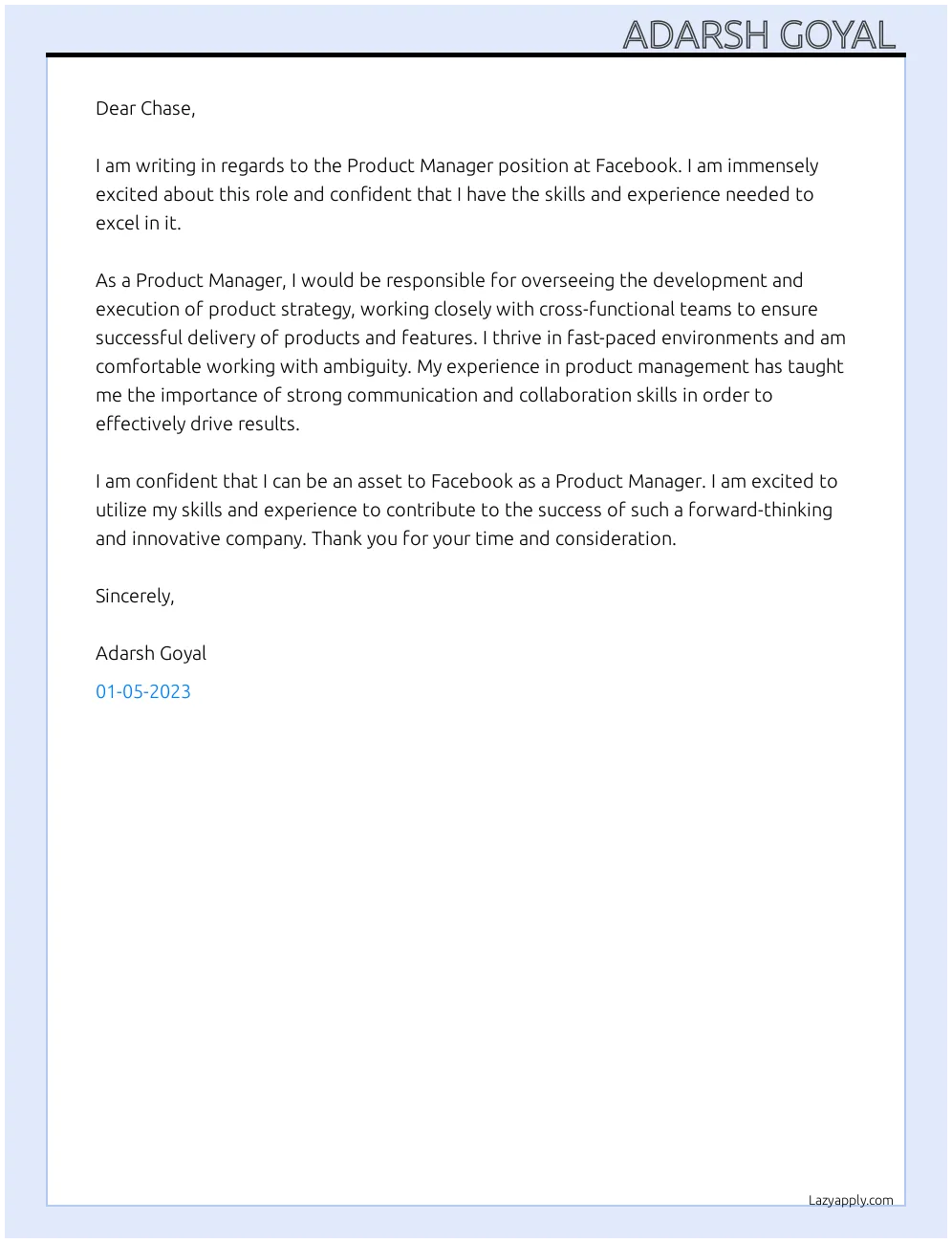
Cover Letter for Product Manager Why It Matters
A well-crafted cover letter is a crucial element of any product manager’s job application. It serves as your first introduction to potential employers, allowing you to showcase your skills, experiences, and enthusiasm for the role. Unlike a resume, which provides a factual overview of your career, a cover letter gives you the opportunity to tell your story, explain why you’re the perfect fit, and demonstrate your understanding of the company’s needs. It’s your chance to go beyond the bullet points and connect with the hiring manager on a more personal and impactful level. In the competitive world of product management, a strong cover letter can be the deciding factor that sets you apart from other candidates.
Highlighting Your Product Manager Skills
Product management is a multifaceted role that demands a diverse skill set. Your cover letter should highlight the skills that are most relevant to the specific job you’re applying for. These can include strategic thinking, market analysis, user research, product roadmapping, and execution. Be sure to also mention leadership, communication, and collaboration skills, as these are essential for working with cross-functional teams. Don’t just list your skills; provide concrete examples of how you’ve used them to achieve results in previous roles. This demonstrates your ability to translate your skills into tangible outcomes and adds credibility to your claims. A well-written cover letter doesn’t just state you have skills; it shows how you’ve applied them successfully.
Showcasing Your Achievements in the Cover Letter

Your cover letter is the perfect place to highlight your key achievements. Instead of simply describing your responsibilities, focus on the accomplishments that demonstrate your impact. Think about specific projects where you’ve driven significant results, such as launching successful products, increasing user engagement, or improving product revenue. Use the STAR method (Situation, Task, Action, Result) to structure your examples and provide context. Briefly describe the situation, explain your task, outline the actions you took, and most importantly, quantify the results. This approach provides a clear and concise narrative of your achievements and makes them more compelling to the reader. Always try to quantify your achievements with numbers, percentages, or other metrics to demonstrate the value you brought to your previous roles.
Quantifying Accomplishments for Impact
Numbers speak louder than words. When describing your accomplishments, always include quantifiable data to back up your claims. Instead of saying you ‘improved user engagement,’ state that you ‘increased user engagement by 20% in six months.’ Instead of saying you ’launched a successful product,’ specify that the product ‘generated $1 million in revenue in its first year.’ Use metrics like revenue growth, customer acquisition cost (CAC), customer lifetime value (CLTV), conversion rates, and user satisfaction scores to provide concrete evidence of your impact. Quantifying your achievements not only makes them more impressive but also demonstrates your ability to analyze and understand data, a crucial skill for any product manager. This practice underscores your results-oriented approach and your ability to deliver tangible value.
Tailoring the Cover Letter for Each Application
A generic cover letter will likely end up in the rejection pile. To make a strong impression, you must tailor your cover letter to each specific job you apply for. Carefully review the job description and identify the key requirements and desired skills. Then, customize your cover letter to address those specific needs. Highlight the experiences and skills that align with the job requirements, and provide examples that demonstrate your relevant expertise. Show the hiring manager that you’ve taken the time to understand their needs and that you’re genuinely interested in the role and the company. This level of personalization demonstrates your attention to detail and your commitment to the opportunity. Tailoring your cover letter shows that you’re not just sending out a mass application; you’re genuinely interested in the specific role and company.
Researching the Company and the Role

Before you start writing your cover letter, take the time to research the company and the specific role you’re applying for. Visit the company’s website, read their mission statement, and learn about their products, services, and target market. Understand the company’s culture and values, and try to align your cover letter with their ethos. Research the hiring manager or the team you’ll be working with, if possible. This information will help you tailor your cover letter more effectively. In your cover letter, demonstrate your understanding of the company’s needs and explain how your skills and experience can help them achieve their goals. This shows initiative and a genuine interest in the opportunity. Doing your homework shows that you’re proactive, engaged, and well-prepared.
Structuring Your Product Manager Cover Letter
A well-structured cover letter is essential for making a positive impression. It should be easy to read, well-organized, and free of grammatical errors. Your cover letter should follow a standard format, typically including a header with your contact information, an opening paragraph, body paragraphs that highlight your skills and experience, and a closing paragraph. Use clear and concise language, and keep the letter to one page. Use headings and bullet points to break up the text and make it more readable. Proofread your letter carefully before submitting it, paying close attention to grammar, spelling, and punctuation. A well-structured cover letter demonstrates your professionalism and attention to detail.
Header and Contact Information
Your header should include your name, contact information (phone number, email address, and LinkedIn profile URL), and the date. You may also include your professional title or a link to your online portfolio, if applicable. Ensure your contact information is up-to-date and professional. Use a professional email address and avoid using any nicknames or informal language. Your header should be clearly formatted and easy to read. This information allows the hiring manager to easily reach you if they’re interested in moving forward with your application. Always double-check the accuracy of your contact information to avoid any missed opportunities.
The Opening Paragraph

Your opening paragraph should grab the reader’s attention and immediately convey your interest in the role. State the position you’re applying for and where you found the job posting. Briefly mention why you’re excited about the opportunity and the company. Consider starting with a compelling statement or a brief overview of your relevant experience. Avoid generic opening lines; instead, tailor your opening to the specific job and company. This shows your enthusiasm and sets the tone for the rest of the letter. Keep the opening concise and focused on making a positive first impression. A strong opening paragraph sets the stage for a successful application.
The Body Paragraphs
The body paragraphs are the heart of your cover letter. Here, you’ll showcase your skills, experience, and achievements in more detail. Focus on the most relevant aspects of your background, and provide specific examples of how you’ve excelled in previous roles. Highlight your key accomplishments and quantify your results whenever possible. Use the STAR method to structure your examples, and tailor your content to match the job requirements. Demonstrate your understanding of the company’s needs and explain how you can contribute to their success. Use action verbs to make your descriptions more dynamic and engaging. Keep the body paragraphs concise, focused, and results-oriented. These paragraphs should convince the hiring manager that you’re the perfect fit for the role.
The Closing Paragraph
Your closing paragraph should reiterate your interest in the role and thank the hiring manager for their time and consideration. Express your enthusiasm for the opportunity and reiterate your desire to learn more about the position. Include a call to action, such as stating your availability for an interview or mentioning that you look forward to hearing from them soon. Keep the closing paragraph brief and professional. Proofread your entire cover letter before submitting to ensure accuracy and professionalism. A well-crafted closing paragraph leaves a positive lasting impression.
Product Manager Cover Letter Examples

Reviewing cover letter examples can provide valuable insights into formatting, content, and tone. Look for examples tailored to product management roles, and analyze how the candidates highlight their skills, achievements, and experiences. Pay attention to the language used, the structure of the paragraphs, and how the cover letter conveys a sense of personality. Use these examples as inspiration, but be sure to adapt them to your own experiences and the specific job requirements. Avoid simply copying and pasting from the examples. The goal is to learn from the examples and create a cover letter that reflects your unique qualifications. Study various examples to understand different approaches and find the style that best suits your needs.
Example 1 Successful Product Manager Cover Letter
This example showcases a candidate with experience in launching a new product. [Insert example of a cover letter that demonstrates the candidate’s ability to launch a successful product. Highlight quantifiable achievements, such as increased user engagement, revenue growth, and successful product launches. The cover letter should be tailored to the specific job requirements, demonstrating the candidate’s understanding of the company and the role. Include sections like: “Summary of Achievements,” “Product Launch Experience,” and “Skills and Qualifications”.] This approach shows a clear understanding of the responsibilities and requirements of a Product Manager role.
Example 2 Product Manager Cover Letter for Tech Roles
This example is tailored for tech-focused Product Manager roles. [Insert example of a cover letter that highlights the candidate’s technical skills and expertise. This cover letter emphasizes technical skills, experience with Agile methodologies, and proficiency with specific tools. Provide a concise introduction highlighting the candidate’s experience, specific experience with Agile, Scrum or other development methodology. Include sections such as: “Technical Skills and Experience,” “Agile Project Management,” and “Product Development and Innovation”.] Focus on specific tech skills and experience.
Example 3 Cover Letter Emphasizing Leadership

This example focuses on leadership qualities. [Insert an example that demonstrates leadership skills and experience in a product management context. Mention experiences leading and mentoring product teams, influencing cross-functional teams, and driving product strategy. Sections to include are: “Leadership Experience,” “Strategic Vision,” and “Team Management”.] The cover letter provides concrete examples of leading teams, making strategic decisions, and driving product vision. This highlights the ability to inspire and guide others towards a common goal.
Common Mistakes to Avoid
Avoiding common mistakes is essential for creating a compelling cover letter. These mistakes can undermine your application and decrease your chances of getting an interview. Be mindful of potential errors to ensure your cover letter makes a positive impression.
Generic Statements and Lack of Specificity
Avoid generic statements that could apply to any role. Be specific about your skills, experience, and accomplishments. Instead of saying you ‘have experience with product development,’ mention specific products or projects you’ve worked on and quantify your results. Avoid using vague language; provide concrete examples to demonstrate your value. Generic statements show a lack of genuine interest and detail.
Typos and Grammatical Errors

Typos and grammatical errors can damage your credibility and make you appear unprofessional. Always proofread your cover letter carefully before submitting it. Use a grammar checker and ask a friend or colleague to review it for you. Ensure your writing is clear, concise, and error-free. A polished cover letter shows attention to detail and professionalism.
Failing to Tailor the Letter
Sending a generic cover letter to every job application is a mistake. Tailor your cover letter to each specific job and company. Show that you’ve researched the company and understand the role. Customize your letter to address the specific requirements and highlight the skills and experiences that align with the job description. Failing to tailor your letter shows a lack of interest and effort.
Final Tips and Best Practices
Following best practices can significantly increase your chances of landing an interview. These tips will help you create a cover letter that effectively showcases your skills and experience.
Proofreading and Editing
Always proofread and edit your cover letter multiple times. Check for any errors in grammar, spelling, and punctuation. Read your cover letter aloud to catch any awkward phrasing or unclear sentences. Ask a friend or colleague to review your cover letter for you. Proofreading and editing demonstrate your attention to detail and ensure your cover letter is professional.
Seeking Feedback
Ask for feedback from trusted sources, such as career counselors, mentors, or experienced product managers. Share your cover letter with these individuals and ask for their honest opinions. Consider their suggestions and make any necessary revisions. Getting feedback can provide valuable insights and help you refine your cover letter. Seeking feedback shows that you’re open to improvement and committed to presenting your best self.
Following Up
If you haven’t heard back from an employer within a reasonable timeframe (usually a week or two), consider sending a brief follow-up email. Express your continued interest in the role and reiterate your qualifications. Keep the email concise and professional. Following up shows that you’re proactive and enthusiastic about the opportunity. It keeps you top-of-mind and demonstrates your commitment to the job.