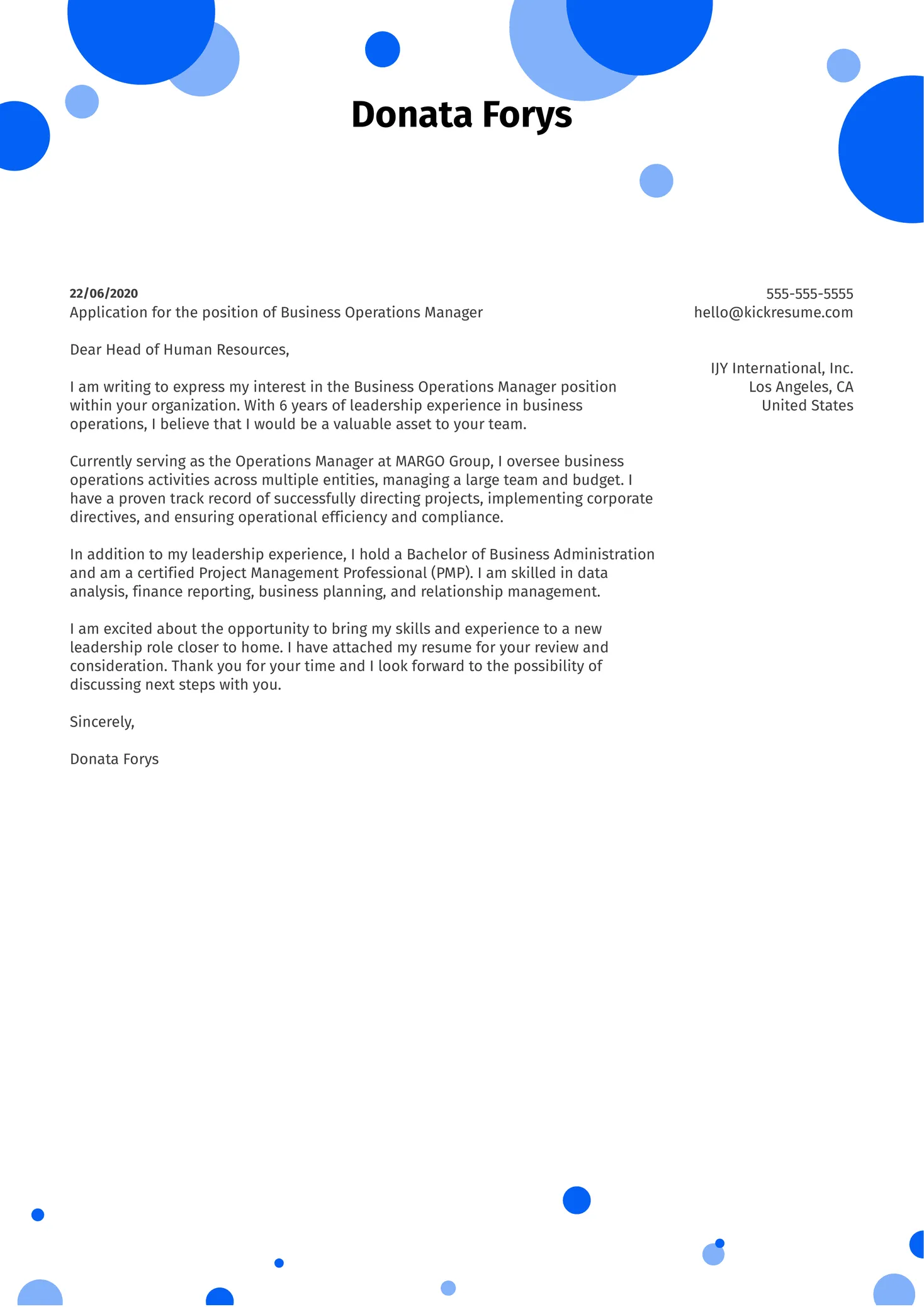
Crafting Your Operations Manager Cover Letter
Landing your dream job as an Operations Manager requires more than just a stellar resume. Your cover letter serves as your first introduction to a potential employer, offering you the opportunity to showcase your personality, passion, and the specific skills that make you the ideal candidate. This guide will walk you through the essential components of a compelling cover letter, offering tips and strategies to help you stand out from the competition and secure an interview. A well-crafted cover letter is not merely a formality; it’s a strategic tool that can significantly increase your chances of getting hired. It allows you to expand on your resume, provide context to your achievements, and demonstrate your genuine interest in the position and the company.
Understanding the Purpose of a Cover Letter
The primary purpose of a cover letter is to introduce you to the hiring manager and to provide a snapshot of your qualifications and your fit for the role. It is your opportunity to make a strong first impression and to persuade the reader that you are worth a closer look. The cover letter should complement your resume by highlighting specific skills and experiences that are directly relevant to the job description. It should also convey your enthusiasm for the position and your understanding of the company’s needs and objectives.
Why a Cover Letter is Crucial

In a competitive job market, a cover letter can be the deciding factor between getting an interview and being overlooked. It offers a chance to tell your story in your own words, to demonstrate your personality, and to explain why you are the best candidate for the role. It allows you to address any potential gaps in your resume or to elaborate on experiences that are particularly relevant. Moreover, a well-written cover letter demonstrates your communication skills, attention to detail, and your genuine interest in the specific opportunity. Many hiring managers appreciate a cover letter because it shows initiative and effort, indicating that you are truly invested in the position.
Key Elements of a Winning Cover Letter
A strong cover letter is more than just a rehash of your resume. It should be concise, well-structured, and tailored to the specific job you are applying for. It should also be free of errors and easy to read. There are several key elements that are essential for creating a winning cover letter, including a clear header, a professional salutation, a compelling opening paragraph, a detailed description of your skills and experience, an enthusiastic closing, and a final proofread.
Header and Contact Information
Your cover letter should begin with a professional header. Include your full name, address, phone number, and email address at the top left or right of the document. If you are applying for a job online, ensure that your email address is professional and that it reflects your name. Adding the date and the hiring manager’s name (if you know it) and the company’s address is best practice.
The Salutation

Always address the hiring manager by name if possible. If you are unsure of the name, research the company website, LinkedIn, or the job posting. If you are unable to find a name, a general salutation like “Dear Hiring Manager” is acceptable. Avoid generic salutations like “To Whom It May Concern” as they come across as impersonal.
The Opening Paragraph
The opening paragraph is your chance to grab the reader’s attention. State the position you are applying for and where you found the job posting. Briefly mention what excites you about the role and the company. Highlight a key achievement or skill that makes you stand out. This paragraph sets the tone for the rest of your cover letter and encourages the reader to continue reading.
Highlighting Your Skills and Experience
The body of your cover letter is where you demonstrate your qualifications. Focus on the skills and experiences that are most relevant to the job description. Use specific examples to illustrate your achievements and to quantify your impact whenever possible. Tailor your examples to the specific requirements of the role and avoid simply repeating what’s already in your resume.
Quantifying Your Achievements

Whenever possible, quantify your accomplishments. Use numbers and data to demonstrate the impact of your work. For example, instead of saying “Improved efficiency,” say “Improved operational efficiency by 15% through process optimization.” This approach gives the hiring manager a clear understanding of your accomplishments and the value you can bring to the company.
Showcasing Relevant Skills
Clearly articulate the skills that make you a strong candidate. Operations Manager roles require a variety of skills, including: process optimization, project management, problem-solving, leadership, communication, and data analysis. Provide specific examples of how you have utilized these skills to achieve positive results in previous roles. Align your skills with the requirements outlined in the job description to demonstrate that you are a good fit.
Demonstrating Leadership Abilities
Operations Managers often lead teams and are responsible for motivating and guiding others. Use your cover letter to highlight your leadership abilities. Describe situations where you have successfully led a team, resolved conflicts, or mentored others. Provide examples of how you have fostered a positive and productive work environment.
Expressing Your Interest and Enthusiasm

In the closing section of your cover letter, reiterate your interest in the position and the company. Explain why you are excited about the opportunity and what you can bring to the table. Demonstrate that you have researched the company and understand its values and goals. Express your eagerness to learn more about the role and to discuss your qualifications in an interview.
Closing the Letter
Conclude your cover letter with a call to action. Thank the hiring manager for their time and consideration. State that you are available for an interview and provide your contact information again. Close with a professional closing, such as “Sincerely” or “Best regards,” followed by your full name.
Proofreading and Formatting
Before submitting your cover letter, carefully proofread it for any grammatical errors, spelling mistakes, or typos. Ensure that your cover letter is well-formatted, with clear paragraphs and appropriate spacing. Consider asking a friend or colleague to review your cover letter for any mistakes you might have missed. A polished and error-free cover letter demonstrates your attention to detail and professionalism.