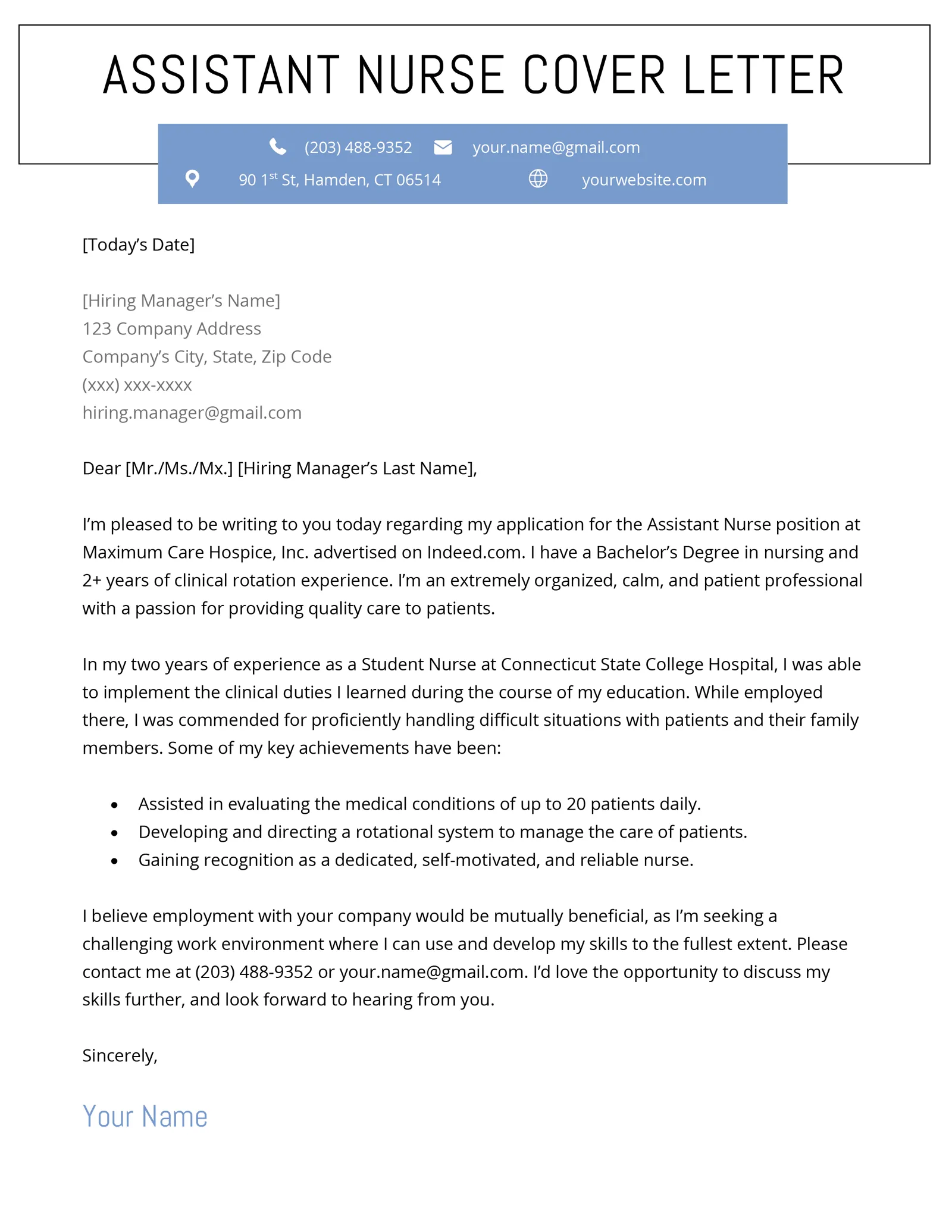
What is a Nursing Cover Letter
A nursing cover letter is a crucial document that accompanies your resume when applying for a nursing position. It’s your first opportunity to make a strong impression on a potential employer and showcase your qualifications, skills, and enthusiasm for the role. Unlike a resume, which provides a factual overview of your experience, a cover letter allows you to elaborate on your accomplishments and explain why you’re the perfect fit for the job. It helps you personalize your application, demonstrating your understanding of the specific requirements of the position and your passion for nursing. A well-crafted cover letter can significantly increase your chances of landing an interview and ultimately securing your desired nursing job. It serves as a tool to highlight your personality and unique qualities, going beyond the basic information provided in your resume.
Key Components of a Nursing Cover Letter
Your Contact Information

Start your cover letter with your full name, address, phone number, and email address. This ensures that the hiring manager can easily contact you. Ensure your email address is professional; avoid using nicknames or unprofessional phrasing. This section is usually placed at the top left or right corner of the document.
Date and Recipient Information
Below your contact information, include the date and the recipient’s information. Address the letter to the hiring manager or the specific person in charge of recruitment if you know their name. If you don’t know their name, use a general salutation like “Dear Hiring Manager.” Include the recipient’s title, the company’s name, and the address to ensure the letter is properly directed.
Professional Greeting
Begin your letter with a professional greeting, such as “Dear [Hiring Manager Name]” or “Dear Hiring Manager.” Ensure you use a formal tone to establish a professional relationship from the start. Avoid casual greetings and always use proper titles and names if available.
The Opening Paragraph

In the opening paragraph, clearly state the purpose of your letter: to apply for a specific nursing position. Mention where you found the job posting (e.g., online, referral). Briefly highlight your key qualifications and express your interest in the role and the organization. Your opening should be concise and engaging, capturing the reader’s attention immediately. This is your chance to make a great first impression.
Highlighting Your Skills and Experience
The body of your cover letter is where you elaborate on your skills, experience, and accomplishments. Tailor this section to the specific requirements of the job description. Use examples to demonstrate how your skills and experience align with the needs of the position. This is your opportunity to showcase your abilities and demonstrate your value to the potential employer. Focus on what makes you unique and how you can contribute to their team.
Quantifiable Achievements
Whenever possible, quantify your achievements. Use numbers to illustrate your impact. For example, state the percentage of patient satisfaction scores you improved or the number of patients you successfully managed daily. Quantifiable achievements provide concrete evidence of your skills and abilities, making your application more compelling. Use metrics to show the hiring manager your impact on previous roles.
Focus on Relevant Skills

Identify the key skills and qualifications the employer is seeking. Then, highlight your relevant skills, providing specific examples of how you have used these skills in previous roles. Tailor your letter to match the job requirements to show that you are the ideal candidate. If the job description mentions specific software or certifications, be sure to include them if you have them.
Expressing Enthusiasm
Demonstrate your enthusiasm for the position and the organization. Explain why you are interested in working at this particular hospital or clinic. Showing genuine interest will set you apart from other applicants. Research the organization to understand their mission, values, and recent achievements. This shows that you are committed and enthusiastic about the opportunity.
The Closing Paragraph
In your closing paragraph, reiterate your interest in the position. Thank the hiring manager for their time and consideration. Mention your availability for an interview and how they can reach you. Keep the tone professional and enthusiastic to leave a positive final impression.
Formal Closing and Signature

End your letter with a formal closing, such as “Sincerely” or “Respectfully.” Leave space for your handwritten signature if you are printing the letter, and type your full name below the signature. This concludes your cover letter in a professional manner. Make sure your signature is clear and easy to read.
Top 5 Nursing Cover Letter Samples
Sample 1 Registered Nurse (RN)
This sample showcases the skills of an RN, emphasizing experience in patient care, medication administration, and critical thinking. The letter highlights specific achievements, such as reducing patient readmission rates or improving patient satisfaction scores. It also mentions certifications and specializations relevant to the job description. For instance, if the job description mentions a need for experience in a specific area like cardiology or emergency medicine, the RN cover letter sample would highlight these experiences and qualifications. This sample is ideal for experienced RNs looking for positions in hospitals, clinics, or other healthcare settings. The sample focuses on demonstrating the candidate’s ability to manage patient care effectively.
Sample 2 Licensed Practical Nurse (LPN)

This sample emphasizes the LPN’s ability to provide basic patient care, assist RNs, and follow medical protocols. The letter highlights experience in vital sign monitoring, wound care, and assisting with daily living activities. It also mentions any certifications or special skills, such as experience with electronic medical records (EMR) systems. This sample is suitable for LPNs seeking positions in nursing homes, assisted living facilities, or clinics. The LPN cover letter sample would highlight the candidate’s ability to work under supervision and provide quality care.
Sample 3 Nurse Practitioner (NP)
This sample highlights the advanced practice skills of an NP, including diagnosis, treatment, and patient education. The letter showcases experience in managing patient populations, ordering diagnostic tests, and prescribing medications. It also mentions any specializations, such as family medicine or pediatrics, and relevant certifications. This sample is ideal for NPs seeking positions in clinics, hospitals, or private practices. The sample focuses on the NP’s ability to provide comprehensive care and manage patient health effectively. The NP cover letter sample would demonstrate the candidate’s leadership skills and ability to work independently.
Sample 4 New Graduate Nurse
This sample focuses on the new graduate nurse’s education, clinical experience, and skills gained during nursing school. The letter highlights any relevant clinical rotations, volunteer work, or extracurricular activities. It also emphasizes the candidate’s passion for nursing and eagerness to learn and grow. This sample is designed to showcase the potential of a new graduate nurse and help them secure their first nursing job. The new graduate nurse cover letter sample would emphasize the candidate’s clinical experience, even if limited, and any relevant coursework or projects completed during nursing school. The cover letter focuses on demonstrating the candidate’s foundational knowledge and willingness to learn.
Sample 5 Experienced Nurse

This sample highlights the experienced nurse’s extensive experience, leadership skills, and accomplishments. The letter showcases experience in various nursing roles, such as charge nurse or nurse manager. It also mentions certifications, specializations, and any achievements, such as improving patient outcomes or mentoring new nurses. This sample is ideal for experienced nurses seeking leadership positions or new challenges in their career. The experienced nurse cover letter sample demonstrates the candidate’s leadership and problem-solving abilities, and ability to manage complex cases. The focus is to show how the nurse has made a significant impact throughout their career, and is ready for new challenges.
Tips for Writing a Strong Nursing Cover Letter
Tailoring Your Letter
Always tailor your cover letter to each specific job application. Review the job description carefully and identify the key requirements and skills the employer is seeking. Then, customize your letter to highlight your relevant qualifications and experiences. Demonstrating that you understand the employer’s needs will significantly increase your chances of getting noticed. Generic cover letters are easily spotted and often discarded. Tailoring your letter ensures that it speaks directly to the employer’s needs and expectations. This shows the employer you’ve taken the time to understand their needs and that you are genuinely interested in the position.
Proofreading and Editing
Proofread your cover letter carefully for any grammatical errors, typos, or spelling mistakes. Errors can make a negative impression and suggest a lack of attention to detail. Consider having a friend or colleague review your letter as well. Fresh eyes can often catch mistakes you might have missed. Ensure the formatting is professional and easy to read. Proper grammar and formatting are essential for presenting a professional image. Before submitting your cover letter, always double-check it to ensure it is free of any errors.
Keywords and Phrases
Incorporate keywords and phrases from the job description into your cover letter. This helps your application get noticed by applicant tracking systems (ATS) and hiring managers. While it’s important to use keywords, ensure that your language is natural and not overly repetitive. Using keywords strategically helps your application get past ATS and ensures that hiring managers can easily identify your qualifications. Focus on the terms the employer uses in the job description to describe the position and its requirements.
Formatting and Presentation
Use a clean and professional format for your cover letter. Choose a standard font, such as Times New Roman or Arial, and use a font size of 11 or 12 points. Use clear headings and bullet points to make the letter easy to read and visually appealing. Ensure there is adequate spacing between paragraphs. A well-formatted cover letter is easy to read and showcases your professionalism. The overall presentation should be neat and organized to reflect your attention to detail and professionalism.
Mistakes to Avoid
Generic Letters
Avoid sending a generic cover letter that could be sent to any employer. Customize your letter to each specific job application, showing the hiring manager that you have researched their organization and understand their needs. Generic letters lack impact and demonstrate a lack of interest in the specific position. Tailoring your letter to the job is essential to show you have genuine interest in the role. The hiring manager wants to know that you have taken the time to learn about their specific needs.
Typos and Grammatical Errors
Typos and grammatical errors can damage your credibility and make you appear unprofessional. Always proofread your cover letter carefully before submitting it. Errors can be easily avoided with a little extra attention to detail. Proofreading helps to ensure that your letter reflects your professionalism and attention to detail. Double-check everything, including the recipient’s name and address.
Exaggerating Your Skills
Avoid exaggerating your skills or experience. Be honest and accurate in your descriptions. If you are caught exaggerating, it can damage your credibility and lead to the rejection of your application. Stick to the truth, and focus on your real accomplishments. Honesty is always the best policy when describing your abilities. Focus on demonstrating the real skills and experience you possess and on providing evidence of your impact in previous roles.
Ignoring the Job Description
Always read the job description carefully and address the specific requirements in your cover letter. Ignoring the job description shows that you have not taken the time to understand the employer’s needs. Make sure to highlight your relevant skills and experience. Tailoring your cover letter to the specific requirements of the job description is critical. This shows that you are a good fit for the role and that you have taken the time to understand the employer’s needs. Show that you are the ideal candidate by highlighting the skills and experience that are required for the position.