Understanding the New Teacher Cover Letter
A new teacher cover letter is a crucial document for anyone seeking their first teaching position. It’s your initial introduction to a potential employer, providing a glimpse into your personality, skills, and passion for education. Unlike a resume, which offers a factual overview of your experience, a cover letter allows you to articulate your unique qualities and connect with the hiring manager on a more personal level. A well-crafted cover letter can significantly increase your chances of securing an interview and ultimately, landing your dream teaching job. This guide will walk you through every step of creating a compelling cover letter that highlights your strengths and sets you apart from other applicants.
Why a Strong Cover Letter Matters
In a competitive job market, a strong cover letter can be the deciding factor in whether you get noticed. It’s your opportunity to make a positive first impression and demonstrate your enthusiasm for the specific teaching position and the school. A compelling cover letter showcases your understanding of the school’s mission, your ability to connect with students, and your commitment to fostering a positive learning environment. Moreover, it allows you to address any gaps in your resume or explain unique circumstances. By providing a narrative that complements your resume, you can create a cohesive picture of your qualifications and make a memorable impression on the hiring committee. Failing to include a cover letter, or submitting a poorly written one, can lead to your application being immediately rejected.
Highlighting Your Skills and Qualifications

Your cover letter should be a showcase of your skills and qualifications relevant to the teaching position. Start by carefully reviewing the job description and identifying the key requirements, such as classroom management, curriculum development, and student assessment. Then, highlight the skills and experiences that align with these requirements. For instance, if the job description emphasizes differentiated instruction, provide specific examples of how you have implemented this approach in your previous experiences, such as during student teaching or volunteer work. Use action verbs and quantifiable achievements to demonstrate your impact. For instance, instead of stating “assisted students,” say “implemented differentiated instruction strategies that improved student test scores by 15%.” This level of detail and specificity will make your qualifications more convincing and memorable.
Key Sections of a New Teacher Cover Letter
A well-structured cover letter typically includes several key sections, each serving a specific purpose. These sections work together to create a compelling narrative that captures the reader’s attention and effectively conveys your qualifications. A clear and organized structure makes it easier for the hiring manager to quickly understand your background, skills, and enthusiasm for the position. Each section should be concise, focused, and tailored to the specific job and school you are applying for. Remember to maintain a professional tone and ensure your letter is free of grammatical errors or typos.
Header Information
The header should include your contact information: your name, phone number, email address, and optionally, your LinkedIn profile URL. Always include the date and the hiring manager’s name, title, and the school’s address. Make sure you spell the hiring manager’s name correctly; if you are unsure, research the information on the school’s website or LinkedIn.
Greeting the Hiring Manager

Address the hiring manager by name if possible. This shows you have taken the time to research the school and the specific person who will be reading your application. Using a generic greeting like “To Whom It May Concern” makes it appear you haven’t made an effort. If you can’t find the name of the hiring manager, try a more specific greeting like “Dear Hiring Committee” or “Dear Principal [Last Name].” The greeting sets the tone for the entire letter, so make sure it’s professional and appropriate.
The Opening Paragraph: Making a Great First Impression
Your opening paragraph is your opportunity to immediately grab the hiring manager’s attention. State the position you are applying for and where you saw the job posting. Briefly mention your enthusiasm for the role and the school. Consider adding a sentence highlighting a key skill or experience that makes you an ideal candidate. Keep it concise and engaging. For example, “I am writing to express my enthusiastic interest in the [Position Name] position at [School Name], as advertised on [Platform]. With my passion for fostering a positive learning environment and experience in differentiated instruction, I am confident I can contribute to your students’ success.”
Highlighting Your Teaching Philosophy and Approach
The body of your cover letter is the most important part. Use it to articulate your teaching philosophy and approach. Describe your core beliefs about education, student learning, and classroom management. Provide specific examples of how you put these beliefs into practice. For example, do you believe in creating a student-centered classroom? Describe how you incorporate student choice, collaborative projects, or other methods to engage your students. Show that you are dedicated to creating a positive and inclusive learning environment where all students can thrive. This section should reflect your personal values and commitment to education.
Showcasing Your Relevant Skills and Experience
This is where you showcase your skills and experience relevant to the job description. Don’t just list your skills; provide concrete examples of how you have used them successfully. If the job description asks for experience with a specific curriculum, such as the Common Core, highlight your experience and provide specific examples. Mention any experience with technology integration, differentiated instruction, or classroom management. Quantify your achievements whenever possible. For example, “implemented a new classroom management system that reduced disciplinary referrals by 40%.” Focus on skills that align with the school’s needs and values.
Quantifying Your Achievements
Whenever possible, quantify your achievements to make them more impactful. Instead of saying you “improved student engagement,” state, “Increased student engagement in class by 25% through the implementation of interactive learning activities.” Use data and statistics to demonstrate your effectiveness. Include any awards, recognitions, or positive feedback you’ve received. Providing concrete numbers and metrics makes your accomplishments more tangible and shows potential employers the value you can bring to their school. Be specific and avoid vague language.
Addressing the Needs of the School
Demonstrate that you understand the school’s specific needs and goals. Research the school’s mission, values, and any recent initiatives. Tailor your cover letter to show how your skills and experience align with these needs. This demonstrates that you have taken the time to learn about the school and are genuinely interested in being a part of their team. If the school is known for a particular program or approach, mention your experience or interest in that area. This shows initiative and that you are a good fit for the school’s culture and direction.
Demonstrating Your Passion and Enthusiasm

Teaching is a profession that requires passion and enthusiasm. Let your personality shine through in your cover letter. Share your excitement for the opportunity and for the chance to make a difference in students’ lives. Use positive and energetic language. Show that you’re genuinely interested in the position and the school’s community. Let your enthusiasm be evident in every sentence. This can be done through anecdotes or expressing your personal connection to the school’s values. The goal is to convey your love for teaching.
The Closing Paragraph: Call to Action
In your closing paragraph, reiterate your interest in the position and express your eagerness to learn more. Thank the hiring manager for their time and consideration. Include a clear call to action, such as, “I am eager to discuss my qualifications further in an interview.” Provide your contact information once again and state your availability. Express confidence in your ability to make a positive contribution to the school community. A strong closing paragraph leaves the reader with a positive impression and prompts them to contact you.
Formatting and Design Best Practices
Formatting and design play a vital role in the readability and overall appeal of your cover letter. A well-formatted letter is easy to read and demonstrates professionalism. Use a standard, readable font, such as Times New Roman, Arial, or Calibri, in a size between 11 and 12 points. Use single-spaced lines with a space between each paragraph. Keep the letter concise, ideally one page in length. Use clear headings and bullet points to break up large blocks of text. Maintain consistent formatting throughout the entire document. A clean, professional design reflects your attention to detail and commitment to excellence.
Proofreading and Editing Your Cover Letter

Proofreading and editing are crucial steps to ensure your cover letter is polished and error-free. Carefully check for any grammatical errors, spelling mistakes, and typos. Read the letter aloud to catch any awkward phrasing or run-on sentences. Consider having a friend, mentor, or career counselor review your letter as a second set of eyes can often catch errors you might have missed. Pay close attention to details and make sure all information is accurate. A well-edited cover letter conveys professionalism and attention to detail. Small errors can make you look careless, so take the time to ensure your letter is perfect.
Using Keywords Strategically
Many employers use Applicant Tracking Systems (ATS) to scan resumes and cover letters for specific keywords. Review the job description and identify the key terms and phrases used. Incorporate these keywords naturally throughout your cover letter. For instance, if the job description mentions “differentiated instruction,” use that phrase in your letter. However, avoid keyword stuffing, which can make your letter sound unnatural. Integrate the keywords organically within the context of your sentences. Tailor your letter to each job application by customizing the keywords to the specific requirements of the position and school.
Customizing Your Cover Letter for Each Application
While it’s tempting to use a generic cover letter, tailoring your letter to each job application is essential. Customization shows the hiring manager that you have taken the time to understand the specific needs of the school and the position. Research the school, its mission, and its values. Modify your cover letter to demonstrate how your skills and experiences align with their specific requirements. Mention the school’s unique programs or initiatives, or reference a specific aspect of the school that interests you. Personalizing your cover letter increases your chances of standing out from the other candidates.
New Teacher Cover Letter Examples to Inspire You

Reviewing examples of successful new teacher cover letters can provide valuable guidance. Look for examples online that are tailored to your specific teaching subject or grade level. Pay attention to how the writers highlight their skills, experience, and enthusiasm. Analyze the structure, formatting, and language used. Adapt elements of the examples to create your own unique cover letter. Remember, the goal is to showcase your individuality and make a strong impression. Examples should serve as inspiration, not as templates to copy verbatim.
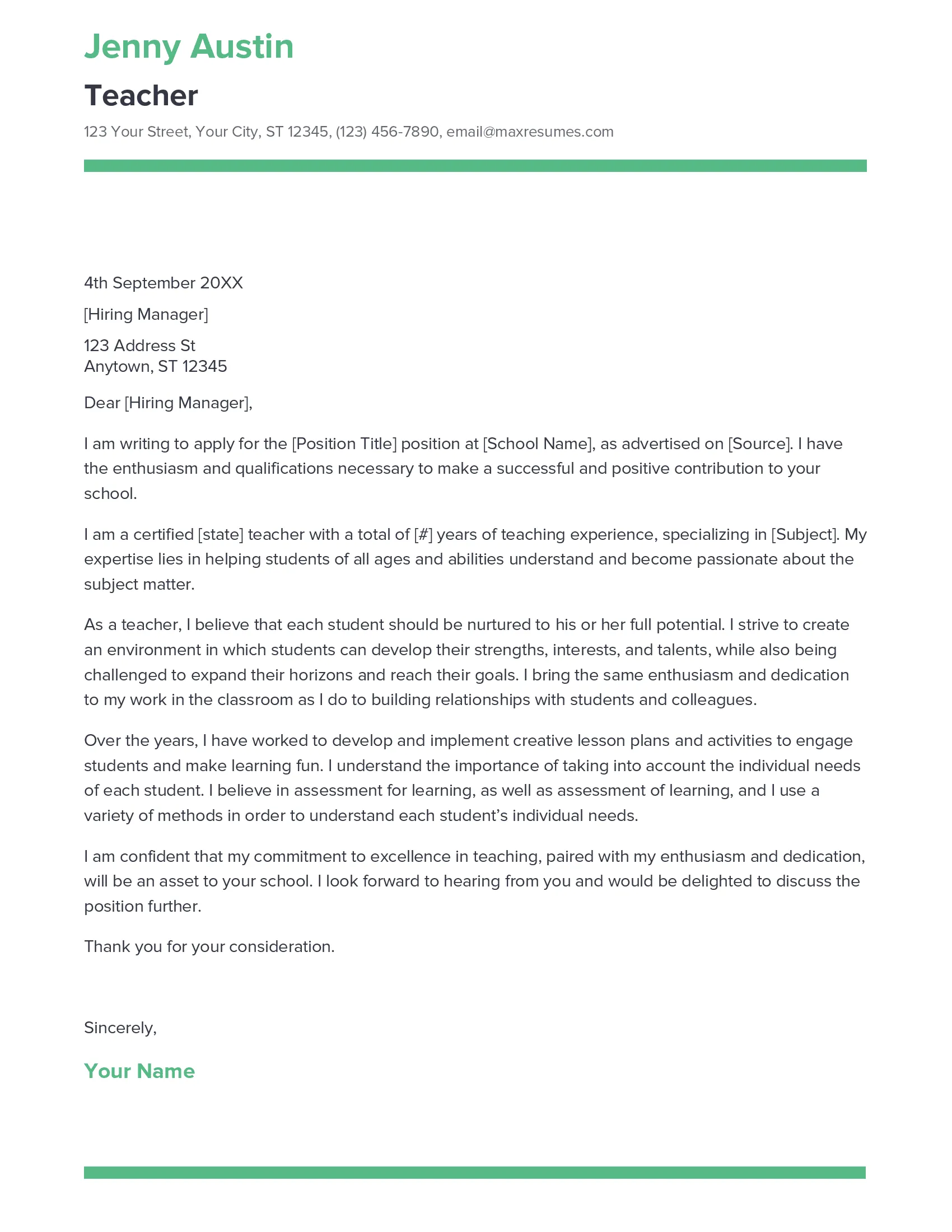
Example Cover Letter 1
This is an example cover letter demonstrating a clear structure and highlighting key skills. It showcases how a new teacher can effectively present their qualifications in a professional and compelling manner.
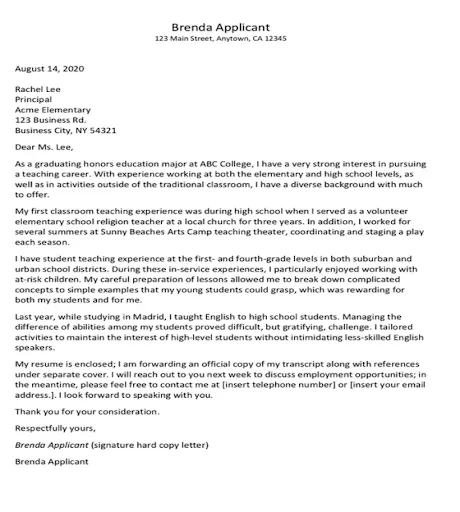
Example Cover Letter 2
This is another cover letter example, which emphasizes the candidate’s passion and commitment to creating a positive learning environment. This demonstrates how a new teacher can express their dedication and enthusiasm.
Example Cover Letter 3
This example demonstrates how to tailor a cover letter to a specific school. It highlights the applicant’s understanding of the school’s mission and values. By tailoring your letter, you show that you are a good fit for the school.
Common Mistakes to Avoid in Your Cover Letter
Avoiding common mistakes can significantly improve your chances of success. Avoid using generic language, as this can make your letter sound uninspired. Do not simply repeat your resume. Instead, provide additional context, explain your accomplishments in detail, and showcase your personality. Avoid grammatical errors, typos, and spelling mistakes, as they can create a negative impression. Don’t exceed one page in length unless explicitly requested. Be truthful and accurate, and never fabricate or exaggerate your experiences. Finally, avoid negativity. Focus on your strengths and enthusiasm rather than complaining about past experiences.
Ensuring Your Cover Letter Stands Out
To make your cover letter stand out, you need to go beyond the basics. Highlight your unique skills and experiences that align with the school’s specific needs. Show your personality and passion for teaching. Use vivid language and compelling storytelling to capture the reader’s attention. Tailor your letter to the specific school and position, demonstrating that you have done your research. Proofread and edit meticulously, ensuring that your letter is free of errors. Include specific achievements and quantify your accomplishments whenever possible. By following these tips, you can create a memorable cover letter that helps you stand out from the competition.
Final Tips for a Winning Cover Letter
Before submitting your cover letter, double-check every detail. Proofread carefully and ask a trusted friend or mentor to review it. Tailor each cover letter to the specific job and school, highlighting relevant skills and experiences. Use a professional tone and formatting. Let your passion and enthusiasm for teaching shine through. Remember that your cover letter is your first chance to make a positive impression. By following these guidelines and examples, you can craft a compelling cover letter that will help you land your dream teaching job.