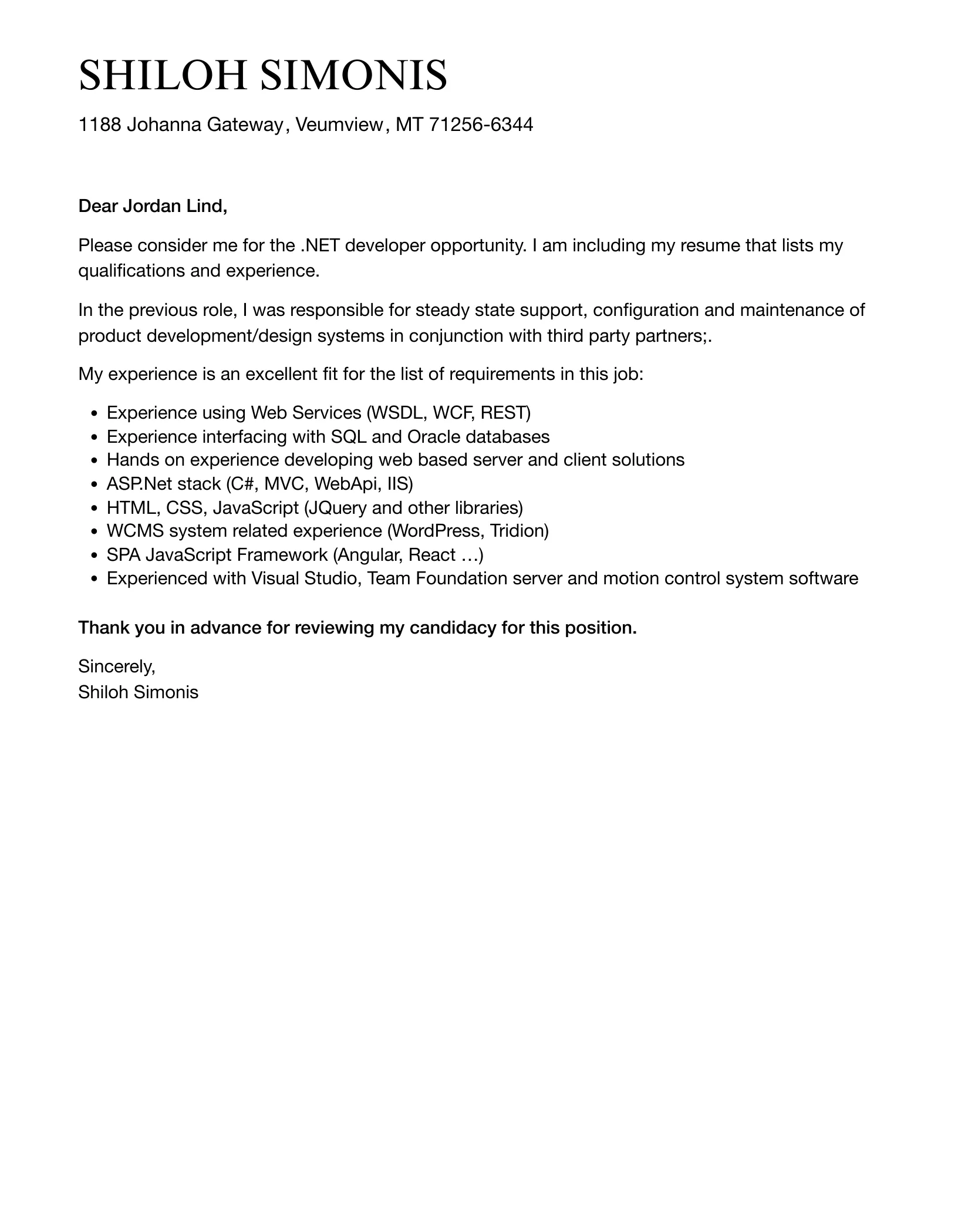
A well-crafted .NET developer cover letter is your first opportunity to make a strong impression and secure an interview. It provides a chance to highlight your skills, experience, and enthusiasm for the role. Many developers underestimate the importance of a cover letter, but it’s a crucial tool in showcasing your value and differentiating yourself from other candidates. This guide offers five essential tips to create a compelling .NET developer cover letter that grabs attention and gets you noticed.
Highlighting Your .NET Skills
Your cover letter should immediately demonstrate your proficiency in .NET technologies. Recruiters often scan cover letters quickly, so make sure your key skills are easily identifiable. Start by clearly stating your experience with the .NET framework and related technologies. This section should quickly and effectively convey your core competencies and give the hiring manager a clear idea of your skillset.
Technical Proficiency and Experience
Detail your experience with specific .NET technologies such as C#, ASP.NET, .NET Core, and .NET Framework. Mention any experience with related technologies, like SQL Server, Entity Framework, or any cloud platforms like Azure or AWS. Provide details about the tools and technologies that you are proficient in. The more specific you are about these technologies, the better. Include the number of years of experience you have with these technologies. This will show the potential employer that you are well-versed in the field.
Projects Showcasing .NET Expertise

Provide specific examples of projects you have worked on that showcase your .NET expertise. Focus on projects that are relevant to the job you are applying for, and emphasize your role and contributions. Discuss the challenges you faced and the solutions you implemented. This will demonstrate your ability to apply your skills in real-world scenarios. Mention any personal projects or open-source contributions. If you have the project on Github, then provide the URL to the hiring manager.
Quantifying Achievements with Data
Use quantifiable results to demonstrate the impact of your work. Instead of saying you ‘improved performance,’ state that you ‘reduced processing time by 30%’. When possible, back up your claims with specific numbers or metrics. This data-driven approach adds credibility to your application and helps the employer understand the value you can bring to their team. This will show how you have made an impact on the projects that you have been involved in.
Tailoring Your Letter to the Job
A generic cover letter is easily recognizable and often discarded. Instead, customize your cover letter for each job application. This shows that you’ve taken the time to understand the role and the company. This personalized approach can significantly increase your chances of getting noticed by the hiring manager.
Researching the Company and Role

Before writing your cover letter, research the company and the specific role. Understand the company’s mission, values, and recent projects. Tailor your letter to show how your skills and experience align with their needs. Review the job description carefully, paying attention to the required skills and qualifications. The better you understand the company’s requirements, the easier it will be to write a relevant and compelling cover letter. Look at the company’s website or social media to understand their culture.
Using Keywords from the Job Description
Incorporate keywords from the job description into your cover letter. This is not about stuffing your letter with keywords but rather using relevant terms naturally. This helps your cover letter pass through applicant tracking systems (ATS) and also demonstrates that you understand the role requirements. If the job description emphasizes specific technologies, tools, or skills, make sure to highlight your experience with these in your cover letter. The hiring manager will scan the cover letter and look for these key phrases to qualify candidates.
Formatting and Presentation
The appearance of your cover letter is just as important as its content. A well-formatted cover letter is easy to read and presents a professional image. It reflects your attention to detail and commitment to excellence. This is important for making a good impression on the hiring manager. Proper formatting is critical for making sure that your cover letter is easy to read and organized.
Professional Tone and Language

Use a professional tone throughout your cover letter. Avoid slang, jargon, or overly casual language. Write in a clear, concise, and confident manner. Be enthusiastic about the opportunity and express your genuine interest in the role and the company. The cover letter is an opportunity to show your personality, but always maintain a professional demeanor. Address the letter to the hiring manager by name, if possible, but if not, then use a general salutation.
Proofreading for Errors
Proofread your cover letter meticulously for any grammatical errors or typos. Errors can undermine your credibility and suggest a lack of attention to detail. Use spell check and grammar check tools, but also read your cover letter aloud to catch any mistakes. Ensure your contact information is correct and up-to-date. Consider asking a friend or colleague to review your cover letter for a fresh perspective. Always take the time to review the document. This is important.
By following these five tips, you can create a .NET developer cover letter that effectively highlights your skills, experience, and enthusiasm. Remember to tailor each letter to the specific job and company. This will significantly improve your chances of landing an interview and ultimately, securing your desired .NET developer position.