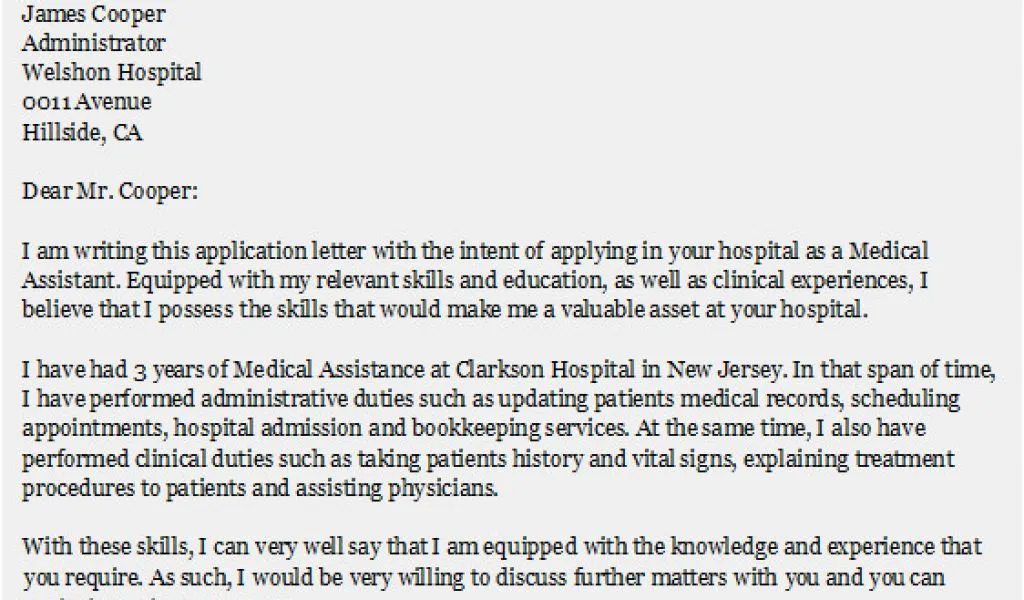
Highlighting Your Medical Assistant Skills
A compelling cover letter for a medical assistant position is your first opportunity to showcase your skills and qualifications to a potential employer. It’s not just a formality; it’s a crucial marketing tool. Your cover letter should highlight your most relevant skills and experiences, demonstrating why you are the perfect fit for the role. A well-crafted cover letter quickly grabs the reader’s attention, setting you apart from other applicants and making them want to learn more about you. Remember that this document is your chance to sell yourself, so make it count. Focus on what makes you unique, and illustrate your capabilities with concrete examples from your professional history. This shows you can do the job and that you understand what is expected of a medical assistant.
Key Skills to Showcase in Your Cover Letter
Medical assistants have a diverse set of responsibilities, and your cover letter should reflect this. Emphasize a range of skills including clinical, administrative, and patient care abilities. Tailoring your cover letter to the specific job description is vital; this shows the hiring manager that you’ve taken the time to understand the role and the clinic’s needs. Do not simply list your skills; provide specific examples of how you’ve used them to achieve positive outcomes. For example, if you mention your phlebotomy skills, briefly describe a time when you successfully drew blood from a difficult patient. Highlighting your skills in this way demonstrates not only your competence but also your ability to perform under pressure and deliver excellent results. Use action verbs to describe your accomplishments. These action words show your potential employer that you are a proactive and effective individual who will thrive in the position.
Clinical Skills

Clinical skills form the backbone of a medical assistant’s role. Your cover letter should highlight your proficiency in these areas. Mention your experience with taking vital signs, such as blood pressure, temperature, and pulse. Include any experience with assisting physicians during examinations or procedures. If you have experience with specific medical equipment like EKGs or X-ray machines, be sure to mention it. Also, any certifications or licenses, such as a Certified Clinical Medical Assistant (CCMA) or a Registered Medical Assistant (RMA), should be included prominently. Providing details about your specific expertise makes it easier for the hiring manager to envision you performing the tasks required.
Patient Care Skills
Patient care is at the heart of the medical assistant profession. Your cover letter must demonstrate your ability to interact compassionately with patients. Highlight any experience you have with patient education, explaining medical procedures, or providing emotional support. Describe your ability to create a welcoming and comfortable environment for patients. Mention your experience with scheduling appointments, managing patient records, and handling patient inquiries. Emphasize your communication skills and your ability to explain medical information clearly and concisely. Your capacity to put patients at ease and build trust is critical. You should highlight any experience in managing patient complaints or resolving conflicts.
Administrative Skills
Administrative duties are a significant component of a medical assistant’s job. Your cover letter should highlight your administrative skills. These skills include experience with managing patient records, scheduling appointments, and handling insurance claims. Specify which electronic health record (EHR) systems you are familiar with, as this can be a significant asset. If you have experience with billing, coding, or insurance verification, make sure to mention it. Include any experience with handling patient correspondence, managing phone calls, and coordinating referrals. Highlight any experience using office software, such as Microsoft Office or Google Workspace. These skills help your potential employer understand that you’re organized, efficient, and able to handle various administrative tasks essential for a smooth-running medical practice.
Emphasizing Relevant Experience

Your experience is your greatest asset. When you write your cover letter, prioritize experiences that directly relate to the job description. If the job posting highlights specific skills or responsibilities, be sure to include how you’ve demonstrated these in previous roles. Be clear and concise, avoiding jargon that could confuse the hiring manager. Instead, explain your responsibilities in easy-to-understand terms, and include examples of your accomplishments. Quantify your achievements whenever possible. For instance, if you’ve improved office efficiency, state the percentage or the number of procedures or appointments you managed. Highlighting your successes with concrete data makes a compelling case for your abilities and increases your chances of securing an interview.
Tailoring Your Cover Letter to the Job
Generic cover letters are easily recognized and often discarded. Tailor each cover letter to the specific job and clinic to which you are applying. Read the job description carefully and identify the key requirements. Then, highlight the skills and experiences that match those needs. If the job description mentions a specific EHR system, mention your experience with it. If the clinic values patient communication, provide examples of your patient care skills. Customizing your cover letter shows the hiring manager that you’ve taken the time to understand the role and the clinic’s needs. This attention to detail demonstrates your interest in the position. This customized approach increases your chances of standing out.
Researching the Clinic or Practice
Before you start writing, research the clinic or practice you are applying to. Visit their website and social media pages to understand their mission, values, and the services they offer. This research helps you tailor your cover letter to the clinic’s specific needs. Mentioning something you learned about the clinic in your cover letter shows that you’ve done your homework and are genuinely interested in working there. Tailor the language in your letter to mirror the clinic’s tone, but make sure your writing style is unique to you. This shows you’re more than just a qualified applicant; you are also a good cultural fit. Understanding the clinic’s values can give you an advantage when competing against other applicants.
Matching Your Skills to Requirements

Carefully compare your skills and experiences with the job requirements listed in the posting. Create a list of the key qualifications mentioned and then map your experiences to those requirements. Provide concrete examples of how you have demonstrated those skills in previous roles. Use keywords from the job description to help your application pass through applicant tracking systems (ATS). These systems scan resumes and cover letters for specific keywords. You also need to ensure that the skills you highlight match the clinic’s needs. This meticulous alignment shows your dedication to the role and increases your chances of getting an interview.
Formatting Your Medical Assistant Cover Letter
The formatting of your cover letter is crucial for creating a professional and polished impression. Use a clean and easy-to-read font, such as Arial or Times New Roman, with a font size between 10 and 12 points. Ensure your letter has a consistent style with standard one-inch margins. Divide your cover letter into logical sections. Keep the body of your letter concise, and aim for a maximum of one page. Use clear headings and bullet points to make the information easy to scan and digest. Make sure to include all the necessary information, such as your contact details, the date, the recipient’s information, a formal salutation, a well-crafted body, and a professional closing.
Contact Information and Salutation
Begin your cover letter by including your contact information, the date, and the recipient’s information. Your contact information should include your name, phone number, email address, and possibly a LinkedIn profile URL. The recipient’s information should include their name, job title, and the clinic’s address. Use a formal salutation such as “Dear Mr./Ms. [Last Name]” if you know the hiring manager’s name. If you don’t know the name, use a general greeting like “Dear Hiring Manager.” Avoid overly casual greetings. Ensuring this information is correct is important to your professionalism and attention to detail. Your contact information ensures the employer can reach you, while the correct recipient information shows respect and professionalism. It also helps avoid your cover letter getting lost.
Body Paragraphs that Impress

The body of your cover letter is where you showcase your skills and experiences. The first paragraph should state your interest in the position and where you found the job posting. In the following paragraphs, highlight your relevant skills and experiences. Use the STAR method (Situation, Task, Action, Result) to structure your examples. This involves describing the situation, the task you were assigned, the actions you took, and the results you achieved. This structure makes it easy to understand how you contributed to previous workplaces. Conclude the body with a brief summary of your qualifications and reiterate your interest in the role. Be concise and focused. This is where you sell yourself. The examples will highlight your previous experiences.
Closing Your Cover Letter Effectively
End your cover letter with a strong call to action. Express your enthusiasm for the opportunity and thank the hiring manager for their time and consideration. State your availability for an interview and how you can be reached. Include a professional closing such as “Sincerely” or “Respectfully.” Proofread your cover letter carefully to ensure there are no errors in grammar or spelling. A polished closing leaves a positive final impression. You want the employer to remember you, so this is your chance to leave a lasting positive impression. Make sure your tone is confident but not arrogant. Make it easy for the hiring manager to contact you for an interview.
Proofreading and Editing
Before submitting your cover letter, thoroughly proofread it for any errors in grammar, spelling, and punctuation. Errors can undermine your credibility and make you appear unprofessional. Have a friend, family member, or career counselor review your cover letter to get a fresh perspective. Use a grammar checker tool. Ensure your formatting is consistent and easy to read. Ensure all the necessary information is included. Proofreading and editing are important steps. A polished cover letter demonstrates attention to detail, which is a valuable trait for a medical assistant. It also shows respect for the hiring manager’s time and highlights your professionalism.
In conclusion, a successful medical assistant cover letter is a tailored and persuasive marketing tool. It highlights your skills, experiences, and qualifications and demonstrates your understanding of the job requirements. By following these tips, you can create a cover letter that impresses potential employers and increases your chances of landing an interview and securing your dream job.