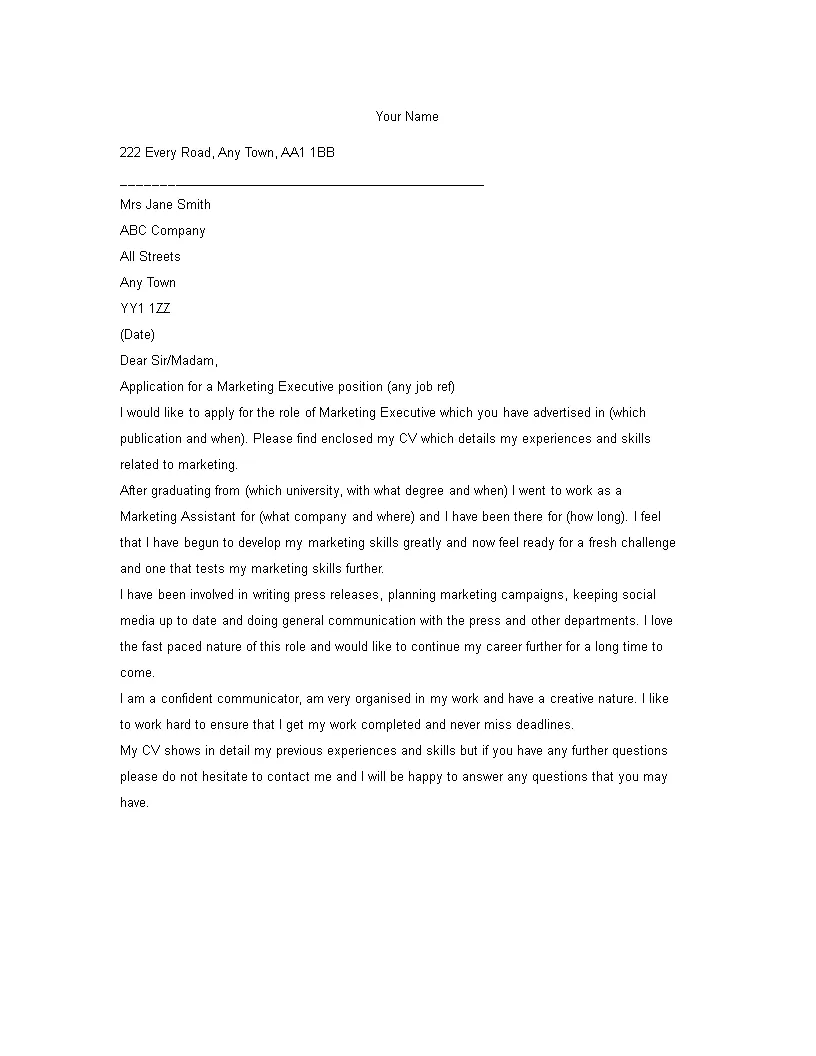
Understanding the Importance of a Marketing Resume Cover Letter
In the competitive world of marketing, a well-crafted cover letter is more than just a formality; it’s your opportunity to make a lasting impression and secure your dream job. While your resume provides a snapshot of your skills and experience, the cover letter allows you to tell your story, showcasing your personality, passion, and understanding of the role. It’s a chance to connect with the hiring manager on a personal level and demonstrate why you’re the perfect fit for the company and the position. A compelling cover letter can elevate your application, setting you apart from other candidates and increasing your chances of getting an interview. It’s the place where you demonstrate your communication skills, enthusiasm for the role, and your understanding of the company’s needs. By investing time and effort in crafting a strong cover letter, you significantly increase your chances of success in the job application process.
Why Is a Cover Letter Essential for Marketing?
The marketing field is all about communication, persuasion, and building relationships. A cover letter is a direct reflection of these skills. It is your chance to show the hiring manager that you understand the role, the company, and the industry. Marketing professionals need to be excellent communicators, and a well-written cover letter showcases your written communication abilities. Your cover letter allows you to highlight your most relevant skills and experiences in a way that a resume alone cannot. It provides context to your achievements and explains how your skills align with the specific requirements of the job. By demonstrating your understanding of the company’s marketing strategy and your ability to contribute to their goals, you set yourself apart from candidates who simply submit a resume without any additional context. Moreover, cover letters can address any potential weaknesses or gaps in your resume, providing a more complete picture of your qualifications.
What Makes a Strong Cover Letter for Marketing?

A strong cover letter is concise, engaging, and tailored to the specific job you’re applying for. It should immediately grab the reader’s attention and make them want to learn more about you. Start by clearly stating the position you’re applying for and where you saw the job posting. Demonstrate your understanding of the company’s mission, values, and target audience. A strong cover letter highlights your most relevant skills and experiences and provides concrete examples of your accomplishments. Instead of simply listing your responsibilities, use the STAR method (Situation, Task, Action, Result) to illustrate how you have made a positive impact in previous roles. Moreover, it should be free of grammatical errors and typos. Proofreading is essential. Always tailor your cover letter to match the tone and style of the company and the specific job description. A generic cover letter will not make the same impact as one that shows you’ve done your research and understand their needs.
Key Components of a Marketing Cover Letter
A well-structured cover letter includes several key components. It starts with a professional header, followed by a personalized greeting that addresses the hiring manager by name, if possible. The opening paragraph should capture the reader’s attention and state the position you are applying for. The body paragraphs are the core of your cover letter, where you showcase your skills and experiences and provide examples of your achievements. The closing paragraph should reiterate your interest in the position and include a call to action, such as requesting an interview. Finally, don’t forget to include a professional closing and your contact information. Ensure each section serves a purpose and contributes to the overall goal of persuading the hiring manager to consider your application. By including these elements and structuring your letter logically, you will ensure that it effectively communicates your qualifications and enthusiasm for the job.
Header Section Details
The header is the first thing a hiring manager sees, so make a good impression. Include your full name, address, phone number, and professional email address at the top of the cover letter. This information allows the hiring manager to quickly contact you. Also, add the date and the recipient’s information, including the name of the hiring manager, their title, and the company’s address. If you do not know the hiring manager’s name, research on LinkedIn or the company’s website is a good idea. If you can’t find their name, address the letter to ‘Hiring Manager’ or ‘Recruiting Team.’ Keeping the header clear, concise, and professional sets the tone for the rest of the cover letter and demonstrates your attention to detail.
Personalized Greeting

A personalized greeting shows you’ve done your research and are genuinely interested in the opportunity. If you know the hiring manager’s name, address them directly. Use ‘Dear Mr./Ms. [Last Name]’ to create a more personal connection. If you can’t find a specific name, a more generic approach like ‘Dear Hiring Manager’ or ‘Dear [Company Name] Recruiting Team’ is acceptable, but avoid using outdated or overly formal greetings. Always double-check the spelling of the name to avoid making a negative first impression. Personalizing your greeting demonstrates that you’ve taken the time to learn about the company and the people who work there. This shows you are serious about the position and shows respect for the hiring manager.
Body Paragraphs to Highlight Your Skills
The body paragraphs are where you sell yourself and highlight your skills and accomplishments. Start by explaining why you are a good fit for the role and the company. Connect your skills and experiences to the job requirements outlined in the job description. Avoid simply restating your resume; instead, provide specific examples of how you have demonstrated your skills in previous roles. Focus on the skills most relevant to the position, such as content creation, social media management, data analysis, or campaign development. Use the STAR method to describe situations where you’ve used these skills and the positive results. This will make your claims more credible and help the hiring manager understand your capabilities and contributions. Structure your paragraphs logically, with a clear topic sentence followed by supporting details.
Highlighting Your Marketing Accomplishments
When highlighting your accomplishments, focus on quantifiable results. Use metrics to demonstrate the impact of your work. For example, instead of saying ‘I increased website traffic,’ say ‘I increased website traffic by 30% in six months through targeted SEO strategies.’ Provide specific examples of successful marketing campaigns you’ve managed, detailing the strategies you used, the challenges you faced, and the results you achieved. This could involve increasing leads, boosting sales, improving brand awareness, or growing social media engagement. Showcase any awards, recognition, or positive feedback you received. Tailor the examples to the specific requirements of the job description to demonstrate your understanding of what the company needs. By quantifying your achievements, you provide concrete evidence of your value to the company.
Quantifiable Achievements for Your Cover Letter

Quantifiable achievements add significant weight to your cover letter. Whenever possible, use numbers and data to illustrate your successes. For example, ‘Managed a social media campaign that increased followers by 40% and engagement by 25%.’ Or, ‘Led a content marketing initiative that generated 1000+ leads within the first quarter.’ Provide specific details about the timeframe, the platforms used, and any tools or strategies implemented. This type of specific information makes your claims more credible and demonstrates your ability to measure and track results. Quantifiable achievements also show hiring managers that you are results-oriented and can contribute to the company’s bottom line. Use data to support your claims, and highlight the most impressive numbers that showcase your abilities.
Using Keywords to Optimize Your Cover Letter
Keywords are essential for helping your cover letter get noticed by both the hiring manager and applicant tracking systems (ATS). Carefully review the job description and identify the key skills, qualifications, and keywords mentioned. Incorporate these keywords naturally throughout your cover letter. This can include skills like ‘SEO,’ ‘content marketing,’ ‘social media management,’ or specific software proficiency. However, avoid keyword stuffing, which makes your letter sound unnatural. Use keywords strategically within the context of your sentences. Make sure to include them in your skills descriptions, examples of your accomplishments, and your summary. Optimizing your cover letter with relevant keywords ensures that it aligns with the job requirements and helps your application stand out from the crowd. This increases your chances of being noticed by both the hiring manager and any ATS software the company might be using.
Tailoring Your Cover Letter to the Job Description
Tailoring your cover letter to each job application is crucial for demonstrating your genuine interest and suitability. Don’t use a generic template. Customize your letter for each position by carefully reviewing the job description and identifying the specific requirements and skills. Address each point in the job description with relevant examples from your experience. Highlight the skills and experiences most closely aligned with the job requirements. Research the company and show how your skills and values align with their brand and mission. If the job description mentions specific projects, technologies, or skills, make sure to include how you’ve used them in the past. Tailoring your cover letter demonstrates that you’ve done your research and are genuinely interested in the specific role and company, making a strong impression on the hiring manager.
Closing Your Cover Letter Effectively

The closing paragraph is your final opportunity to leave a positive impression. Summarize your key qualifications and reiterate your enthusiasm for the position. Express your gratitude for the hiring manager’s time and consideration. Include a clear call to action, such as requesting an interview or indicating your availability for a follow-up call. Reiterate your interest in the company and the specific role, and make it clear that you are looking forward to the opportunity to discuss your qualifications further. Keep the tone professional and enthusiastic. Avoid sounding desperate or overly casual. By closing your cover letter effectively, you encourage the hiring manager to take the next step in the hiring process.
The Call to Action in a Cover Letter
A clear and concise call to action is crucial for prompting the hiring manager to take the next step. After summarizing your qualifications and expressing your interest, make a direct request. This could include a request for an interview, an offer to provide additional information, or a statement indicating your availability for a follow-up call. For example, you might write, ‘I am eager to discuss how my experience in content marketing can contribute to [Company Name]’s success. I am available for an interview at your earliest convenience.’ Or, ‘Thank you for considering my application. I welcome the opportunity to discuss my qualifications further and can be reached at [phone number] or [email address].’ Avoid vague statements and instead, specify what action you want the hiring manager to take. This will increase your chances of moving forward in the hiring process.
Proofreading and Formatting Your Cover Letter
Before submitting your cover letter, carefully proofread it for any errors in grammar, spelling, and punctuation. A polished and error-free cover letter demonstrates your attention to detail and professionalism. Use a grammar checker, but also manually proofread the document to catch any mistakes the software might miss. Ensure your formatting is consistent and easy to read. Use a professional font, such as Times New Roman, Arial, or Calibri, with a font size of 11 or 12 points. Maintain consistent spacing and margins. Keep your cover letter concise and avoid long paragraphs. Break up the text with bullet points and headings to make it visually appealing. Proofreading and formatting are crucial for making a strong impression on the hiring manager.
Common Mistakes to Avoid in a Marketing Cover Letter

Avoid common mistakes that can undermine your application. Avoid generic cover letters and instead, tailor each letter to the specific job. Do not use clichés or overly enthusiastic language. Avoid providing information that is irrelevant to the job requirements, as it can distract from your core qualifications. Be careful to avoid typos and grammatical errors, and always proofread your cover letter before submitting. Do not submit a cover letter that is too long; keep it concise and focused on your most relevant skills and experiences. Avoid sounding negative or critical of previous employers. Do not simply repeat information from your resume. The cover letter should provide additional context and showcase your personality and enthusiasm. By avoiding these common mistakes, you can increase your chances of making a positive impression on the hiring manager.
Examples of Cover Letter for Marketing positions
Several cover letter examples can guide you when crafting your own. Search online for templates tailored to marketing positions. Consider the specific type of marketing role you are applying for, such as content marketing, digital marketing, or social media marketing. Look for examples that highlight the applicant’s accomplishments using the STAR method. Analyze the language used and the structure of the cover letter. Pay attention to how the applicant conveys their enthusiasm and explains how they align with the company’s needs. Adapt the examples to your specific skills, experiences, and the requirements of the job you’re applying for. Examples can serve as inspiration, but always ensure your cover letter is unique and reflects your personality and qualifications.