Understanding Cover Letter Basics
A cover letter is a crucial document that accompanies your resume when applying for a job. It serves as your introduction to a potential employer, providing an opportunity to showcase your personality, skills, and enthusiasm for the role. Unlike a resume, which offers a factual overview of your experience, a cover letter allows you to tell a story and explain why you’re the perfect fit for the position. It’s your chance to make a strong first impression and convince the hiring manager to read your resume more closely. A well-crafted cover letter can significantly increase your chances of getting an interview, making it a vital tool in your job search arsenal.
The Purpose of a Cover Letter
The primary purpose of a cover letter is to highlight your qualifications and express your interest in a specific job. It bridges the gap between your resume and the job description, explaining how your skills and experience align with the employer’s needs. The cover letter allows you to elaborate on specific accomplishments, explain any gaps in your employment history, and demonstrate your understanding of the company and the role. Essentially, it’s a persuasive piece of writing designed to convince the hiring manager that you are worth considering for an interview.
Why a Cover Letter Matters

In today’s competitive job market, a cover letter can set you apart from other applicants. It allows you to personalize your application and demonstrate your genuine interest in the position. A well-written cover letter showcases your communication skills, attention to detail, and ability to tailor your message to a specific audience. Many hiring managers consider cover letters essential for evaluating a candidate’s writing abilities and assessing their fit with the company culture. Even if a job posting doesn’t explicitly require a cover letter, submitting one can show your initiative and increase your chances of success.
Cover Letter Format Essentials
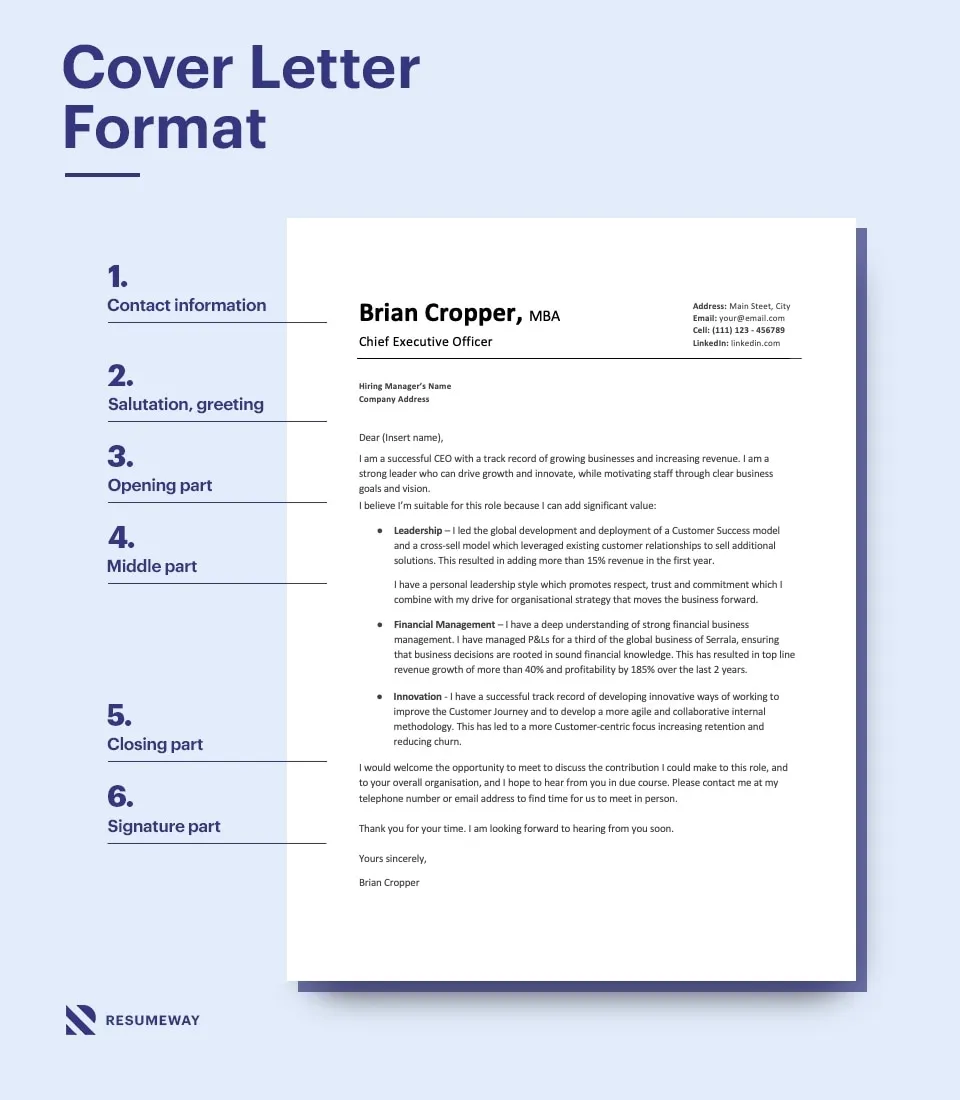
A well-structured cover letter follows a standard format that includes specific elements to convey your message effectively. Adhering to the proper format not only ensures that your letter is professional but also makes it easier for the hiring manager to read and understand your qualifications. Correct formatting demonstrates your attention to detail and respect for the employer’s time. Each section plays a vital role in presenting you as a serious candidate for the job.
Contact Information
At the top of your cover letter, include your contact information. This typically includes your full name, address, phone number, and email address. Ensure your email address is professional (e.g., firstname.lastname@email.com). It’s essential to provide accurate contact details so the hiring manager can easily reach you. Make sure all the information is current and the contact method you prefer is clearly indicated.
Date

Following your contact information, include the current date. This is crucial for tracking the date of your application. Write out the full date (e.g., October 26, 2023) rather than using numerals, as it adds a touch of professionalism.
Recipient Information
Next, include the recipient’s information. If possible, address the cover letter to a specific person (e.g., Mr. John Smith, Hiring Manager). This shows that you’ve done your research and are genuinely interested in the role. If you can’t find a specific name, use the title of the hiring manager or the department. Avoid using generic greetings like “To Whom It May Concern” when possible.
Salutation
Start your cover letter with a professional salutation. If you know the recipient’s name, use “Dear Mr./Ms./Mx. [Last Name]” If you don’t have a name, a good option is “Dear Hiring Manager” or “Dear [Department Name] Team.” Always use a formal greeting to set a professional tone. Avoid overly casual greetings.
Body Paragraphs

The body paragraphs are the core of your cover letter, where you persuade the hiring manager to consider your application. Each paragraph should serve a specific purpose, presenting a compelling narrative of your qualifications and enthusiasm. Focus on highlighting relevant skills, experiences, and accomplishments that align with the job requirements. Structure your paragraphs logically to create a clear and persuasive argument for why you are the best candidate for the role. Avoid simply restating your resume; instead, elaborate on your experiences and demonstrate how they make you a valuable asset.
First Paragraph: Grab Attention
The first paragraph should immediately grab the reader’s attention and clearly state the position you’re applying for. Mention where you found the job posting and briefly explain why you are interested in the company and the role. This is your opportunity to hook the reader and make them want to learn more. Avoid generic opening lines; instead, aim for a concise and engaging introduction that showcases your personality and enthusiasm.
Second Paragraph: Highlight Skills & Experience
In the second paragraph, highlight your most relevant skills and experiences. Use specific examples to demonstrate how you have successfully applied those skills in past roles. Focus on the requirements outlined in the job description and tailor your examples to match. Quantify your achievements whenever possible (e.g., “Increased sales by 15%,” “Managed a team of 10 employees”). This shows the hiring manager that you not only possess the skills but also have a proven track record of success.
Third Paragraph: Show Enthusiasm & Fit

The third paragraph should express your enthusiasm for the company and the role. Explain why you’re excited about the opportunity and how your values align with the company’s mission. Research the company’s culture and values to show that you’ve taken the time to understand their business. Explain what you bring to the table and how you can contribute to the company’s success. This paragraph is crucial for demonstrating your passion and commitment.
Call to Action & Closing
Conclude your cover letter with a call to action and a professional closing. Thank the hiring manager for their time and consideration. Reiterate your interest in the position and express your eagerness to discuss your qualifications further in an interview. Include a polite and formal closing, such as “Sincerely,” “Best regards,” or “Thank you.” Sign off with your full name.
Formatting & Design
The formatting and design of your cover letter are just as important as its content. A well-formatted letter is easy to read and conveys professionalism. The layout, font choice, spacing, and length all contribute to how your letter is received. It is essential that your cover letter appears polished and user-friendly, and conveys a sense of professionalism.
Font Choice

Choose a professional and easy-to-read font. Recommended fonts include Times New Roman, Arial, Calibri, and Georgia. The font should be a standard size (e.g., 11 or 12 points). Avoid using overly decorative fonts that can be distracting. Your font choice should present a clean and polished appearance.
Font Size & Spacing
Maintain a consistent font size throughout your cover letter. Use 11 or 12-point font size for the body text. Use single or 1.15 line spacing. Use a blank line between paragraphs to improve readability. Ensure there are adequate margins (typically 1 inch) on all sides of the page to prevent the text from appearing cramped. Appropriate spacing enhances the overall appearance of your cover letter and makes it easier for the reader to focus on your content.
Length & Layout
Keep your cover letter concise and to the point. Aim for one page in length, unless specifically requested otherwise. Structure your letter with clear headings and paragraphs to make it easy to scan. Avoid dense blocks of text. Use bullet points to highlight key accomplishments or skills if appropriate. A well-organized layout helps the hiring manager quickly grasp your key qualifications and understand your narrative.
Proofreading & Editing

Proofreading and editing are the most crucial steps in cover letter writing. Errors and typos can undermine your credibility and create a negative impression. Before sending your cover letter, meticulously proofread it for any mistakes in grammar, spelling, and punctuation. Ask a friend or family member to review your letter for a second opinion. This step will ensure that your cover letter presents you in the best possible light.
Common Mistakes to Avoid
Common mistakes to avoid include using generic language, repeating information from your resume, and not tailoring the letter to the specific job. Avoid using clichés and buzzwords. Ensure your letter is free of typos, grammatical errors, and formatting inconsistencies. Do not write a letter that is too long. Lastly, ensure you submit the correct letter for each specific job.
Proofreading Checklist
Use a proofreading checklist to ensure you haven’t missed anything. Check for spelling errors, grammatical mistakes, and punctuation errors. Verify that your contact information is correct and that the recipient’s details are accurate. Ensure that the formatting is consistent throughout the document. Make sure the language is clear, concise, and professional. Always proofread the letter at least twice, and ask another person to review it. Proper proofreading elevates your chances of getting your application considered.