What is a Science Cover Letter
A science cover letter is a crucial document that accompanies your resume when applying for a job in the scientific field. It serves as your introduction to the hiring manager, providing an opportunity to showcase your skills, experience, and enthusiasm for the specific role and the company. Unlike a resume, which provides a factual summary of your qualifications, a cover letter allows you to tell a story, explaining why you are the ideal candidate and how your unique abilities align with the job requirements. It is your chance to make a strong first impression and persuade the employer to invite you for an interview.
The Purpose of a Science Cover Letter
The primary purpose of a science cover letter is to persuade the hiring manager that you are the best fit for the position. It highlights your most relevant skills and experiences, emphasizing how they match the job’s needs. It also allows you to demonstrate your understanding of the company’s mission, values, and research, showing that you have done your homework and are genuinely interested in the opportunity. Moreover, a well-crafted cover letter shows your communication skills, attention to detail, and professionalism, which are highly valued in the scientific community. The purpose is to secure an interview.
Key Components of a Science Cover Letter

Contact Information
At the top of your cover letter, include your contact information. This should include your full name, phone number, email address, and professional LinkedIn profile URL (optional). Ensure that the contact information is accurate and up-to-date so that the hiring manager can easily reach you. If you are applying for a position in a specific location, you can also include your address. This section ensures that the employer knows how to contact you for an interview or further communication.
The Introduction
Your introduction should immediately grab the reader’s attention. Start by stating the specific position you are applying for and where you saw the job posting. Briefly mention how your skills and experience align with the job requirements. You can also include a brief statement about your enthusiasm for the company or the research they conduct. The introduction sets the tone for the rest of the letter and should encourage the hiring manager to continue reading. Be concise and compelling.
Highlighting Your Skills and Experience

This is the core of your cover letter. Describe your relevant skills and experiences, emphasizing how they match the job description’s requirements. Use specific examples to illustrate your capabilities. Quantify your achievements whenever possible. Explain how your past experiences have prepared you for the role and what you can bring to the team. Use keywords from the job description to demonstrate that you understand the position and the company’s needs. Focus on your key accomplishments and how they align with the company’s goals. For instance, if the job requires strong data analysis skills, provide examples of projects where you successfully analyzed and interpreted complex data sets. See image named science-cover-letter-skills.webp.
Quantifiable Achievements
Whenever possible, quantify your achievements. Use numbers and data to demonstrate the impact of your work. For example, instead of saying “Improved lab efficiency,” say “Improved lab efficiency by 15% through the implementation of a new protocol.” Use specific metrics, such as the number of publications, grants awarded, or projects completed. Quantifiable achievements make your claims more credible and demonstrate your ability to deliver results. Quantifying your accomplishments, such as the percentage of time saved, or the number of people managed, will make your achievements more impactful. See image named science-cover-letter-achievements.webp.
Tailoring Your Cover Letter
Customize your cover letter for each job application. Research the company and the specific role to understand their needs and goals. Use the job description as a guide to identify the key skills and experiences the employer is seeking. Address each requirement in your letter, providing relevant examples from your past experiences. Tailoring demonstrates your genuine interest in the position and your understanding of the company’s needs. Generic cover letters are easily recognizable and are often discarded. The key is to personalize your letter to make it stand out.
Expressing Enthusiasm
Show genuine enthusiasm for the position and the company. Explain why you are interested in the role and what motivates you. Mention specific aspects of the company’s work or research that appeal to you. Your enthusiasm demonstrates your passion for science and your commitment to the job. Expressing enthusiasm is crucial. This can include referencing specific research projects or initiatives that resonate with your interests and career goals. A sincere and enthusiastic tone will make your cover letter more engaging and memorable. Make sure the enthusiasm is genuine and not overly flattering.
The Closing
In your closing paragraph, reiterate your interest in the position and thank the hiring manager for their time and consideration. Include a call to action, such as stating your availability for an interview. Provide your contact information again. Keep the closing concise and professional, and express your eagerness to discuss your qualifications further. A strong closing leaves a positive final impression. Also, include a professional closing such as “Sincerely” or “Best regards”, followed by your name.
Formatting and Style for Science Cover Letters
Choosing the Right Font and Layout

Use a professional and easy-to-read font, such as Times New Roman, Arial, or Calibri. Keep the font size between 10 and 12 points. Maintain consistent formatting throughout the document. Use a clear layout with sufficient white space to avoid a cluttered appearance. Proper formatting enhances readability and makes your cover letter more professional. Use single spacing within paragraphs and double spacing between paragraphs. Use a standard business letter format. Consider using bullet points to highlight key skills or achievements. See image named science-cover-letter-formatting.webp.
Proofreading and Editing
Thoroughly proofread and edit your cover letter before submitting it. Check for grammar, spelling, punctuation, and formatting errors. Ask a friend or colleague to review your letter for clarity and accuracy. Errors can undermine your credibility and make you appear unprofessional. Proofreading is a critical step in the application process. Consider using grammar and spell-check tools, but always review the document manually. Pay close attention to the details, as errors can make the hiring manager dismiss your application immediately. Ensure that your language is clear and concise. The goal is to demonstrate your attention to detail.
Common Mistakes to Avoid
Generic Content

Avoid using generic content that could apply to any job. Tailor your cover letter to each position, highlighting your specific skills and experiences that align with the job requirements. Generic cover letters show a lack of interest and effort. Demonstrate your knowledge of the company, and the specific role. Research the company’s mission, values, and current projects. Show the hiring manager that you understand the company’s needs and goals. Customize your letter for the specific role you’re applying for, ensuring that each sentence addresses the requirements outlined in the job description.
Typos and Grammatical Errors
Typos and grammatical errors can damage your credibility and make you appear unprofessional. Always proofread your cover letter carefully before submitting it. Consider having a friend or colleague review your letter for errors. Errors make a negative impression, reflecting a lack of attention to detail. Use grammar and spell-check tools, but also proofread manually. Pay attention to details such as sentence structure, punctuation, and capitalization. Be sure to double-check your email address and the company’s name. See image named science-cover-letter-mistakes.webp.
Ignoring the Job Description
Ignoring the job description is a common mistake. Your cover letter should directly address the requirements and qualifications listed in the job description. Highlight the skills and experiences that are most relevant to the position. Tailor your letter to match the job description, including the keywords used in the posting. Referencing the job description shows the hiring manager that you understand the requirements of the position. Customize your letter. Focus on what the employer is looking for. Make sure your cover letter reflects the responsibilities and expectations outlined in the job posting.
Science Cover Letter Examples

Example Cover Letter Structure
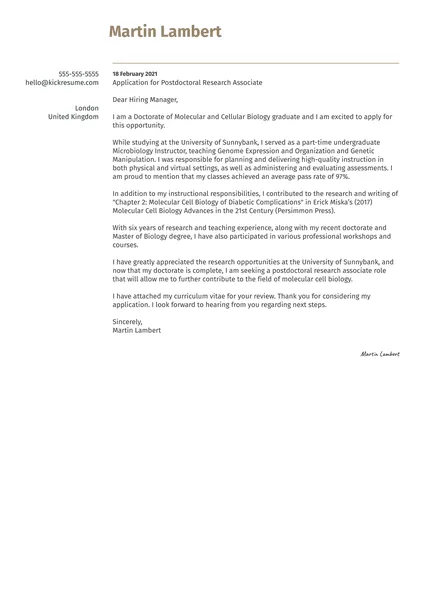
A standard science cover letter typically follows this structure: Contact information, the introduction, the body paragraphs (highlighting skills and experience), the closing paragraph, and your name. The contact information includes your name, address, phone number, email, and LinkedIn profile URL. The introduction specifies the position you are applying for and how you found the job opening. The body paragraphs demonstrate your skills and experience and explain how they relate to the job requirements. The closing paragraph reiterates your interest and includes a call to action. See image named science-cover-letter-example.webp.
Example Cover Letter Content
The content should be tailored to the specific job and your qualifications. In the introduction, mention the position and where you found the job posting. The body paragraphs should highlight your relevant skills and experiences with quantifiable achievements, such as publications, grants awarded, or projects completed. Reference the job description and use keywords from the posting. The closing should reiterate your interest and include a call to action.
Tips for Different Science Fields

Tips for Biology Cover Letters
For biology cover letters, emphasize your research experience, laboratory skills, and knowledge of biological principles. If the job involves specific techniques, highlight your proficiency with those techniques. Be specific about the organisms or systems you have studied. Tailor your letter to the specific area of biology you are applying for. Mention relevant coursework, publications, and presentations. Focus on how your research interests align with the company’s work. Use keywords from the job description. Demonstrate your knowledge of biological principles and research methodologies. For instance, if the job requires knowledge of molecular biology techniques, highlight your experience with PCR, cloning, and sequencing. See image named science-cover-letter-biology.webp.
Tips for Chemistry Cover Letters
In chemistry cover letters, highlight your laboratory skills, knowledge of chemical principles, and experience with specific instruments or techniques. Emphasize your experience with chemical synthesis, analysis, or research methodologies. Specify the types of chemicals or materials you have worked with. Mention relevant coursework, publications, and presentations. Highlight your knowledge of safety protocols and regulations. Tailor your letter to the specific area of chemistry you are applying for. Highlight your experience with analytical techniques like chromatography, spectroscopy, or mass spectrometry. Be specific about the instrumentation. Be sure to highlight your experience with chemical synthesis, analysis, or research methodologies. See image named science-cover-letter-chemistry.webp.
Tips for Physics Cover Letters
For physics cover letters, emphasize your analytical skills, problem-solving abilities, and experience with specific physics concepts and methodologies. Highlight your knowledge of relevant software, instruments, and techniques. Specify the types of experiments or projects you have worked on. Mention relevant coursework, publications, and presentations. Focus on your ability to analyze data and interpret results. Tailor your letter to the specific area of physics you are applying for. Highlight your understanding of the job description. Be specific about the type of research you’ve been involved with and highlight your understanding of physics principles.
Conclusion
Writing a compelling science cover letter is an essential step in the job application process. By following these guidelines, you can create a cover letter that highlights your skills, experience, and enthusiasm for the position. Remember to tailor your letter to each job, proofread carefully, and express your genuine interest in the opportunity. Your cover letter is your chance to make a great first impression and secure an interview. Good luck with your job search!