Crafting a Compelling Paper Submission Cover Letter
Submitting a research paper to a journal is a significant undertaking, and the cover letter is your first opportunity to make a strong impression. A well-crafted cover letter is not merely a formality; it’s a crucial tool that can significantly influence the editor’s and reviewers’ perceptions of your work. It should succinctly and persuasively convey the essence of your research, its importance, and why it’s a good fit for the target journal. This guide will walk you through the essential components of a powerful cover letter, helping you increase your chances of acceptance and successful publication. Mastering this skill is an investment in your academic career, opening doors to wider recognition and impact for your research.
Understanding the Purpose of a Cover Letter
The primary function of a cover letter is to introduce your manuscript to the journal editor and explain why your research is suitable for publication in their journal. Think of it as a concise summary of your paper’s main arguments, significance, and contributions to the field. Moreover, a cover letter provides an opportunity to establish a rapport with the editor, demonstrating your understanding of the journal’s scope and audience. It allows you to highlight the novelty of your work, emphasizing its originality and potential impact. This initial communication sets the tone for the review process and showcases your professionalism and attention to detail.
Highlighting Your Research’s Significance

One of the most critical aspects of a cover letter is to clearly articulate the significance of your research. Explain the problem your study addresses, why it’s important, and how your findings contribute to the existing body of knowledge. Emphasize the novelty of your work – what new insights or perspectives does your research offer? What are the practical implications or applications of your findings? Convincing the editor of your research’s importance is essential for capturing their interest and prompting them to consider your manuscript seriously. Use strong, persuasive language to highlight the value and impact of your work on your field. Consider including a brief statement about how your findings can potentially change the way people think or act in the relevant area.
Tailoring Your Letter to the Target Journal
Each journal has its own specific scope, audience, and publishing guidelines. A generic cover letter won’t cut it. Tailoring your letter to the target journal is a must. Start by thoroughly reviewing the journal’s aims and scope to ensure your research aligns with its focus. Mention specific articles published in the journal that relate to your work, demonstrating that you understand and respect the journal’s content. This shows that you’ve done your homework and are genuinely interested in publishing your research in that particular journal. Referencing the journal’s style and guidelines for manuscript preparation in the letter also shows that you’re prepared to follow their instructions. Using the journal’s preferred terminology demonstrates that you understand their language.
Key Components of an Effective Cover Letter
A well-structured cover letter consists of several key components that work together to present your manuscript effectively. These elements should be clear, concise, and professionally presented. Each section serves a specific purpose, from introducing your work to addressing the reviewers and concluding with a note of gratitude. Carefully crafting each part of the letter can make the difference between a rejection and an invitation to publish. A well-composed letter will make your submission shine in the crowded landscape of academic journals, leading to the success of your paper. Here’s a breakdown of the key parts and how to approach them effectively.
Introduction and Opening Statement

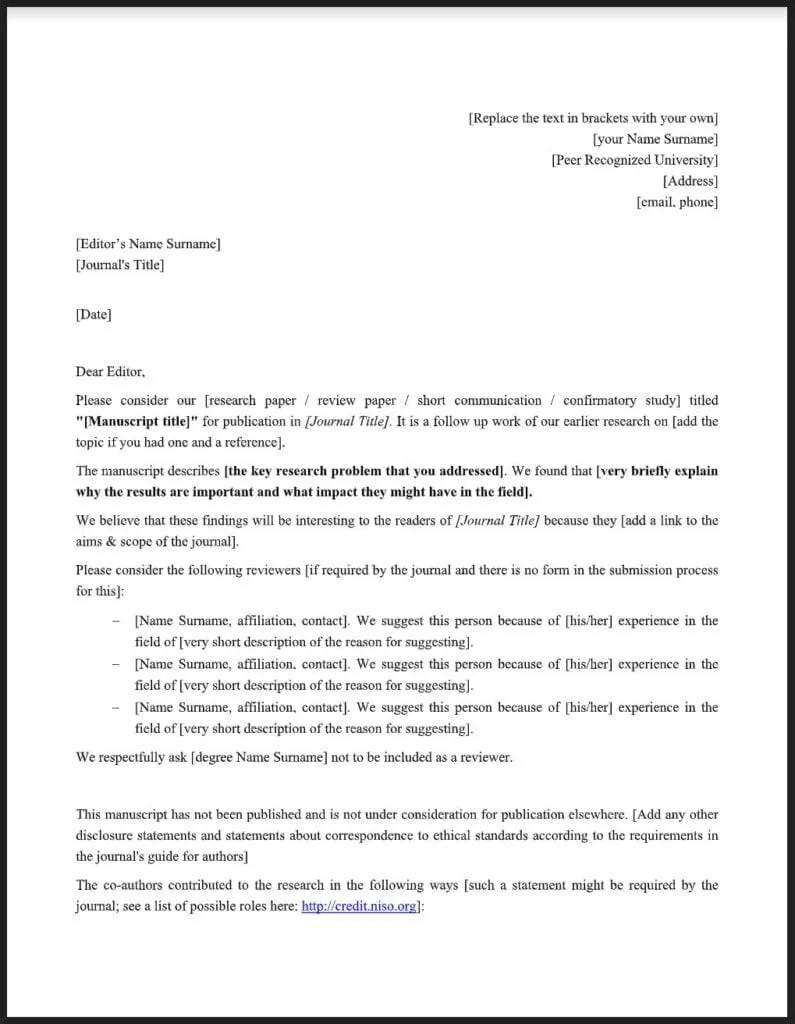
Begin with a formal greeting and a clear statement of the manuscript’s title and the journal you are submitting to. State the type of manuscript (e.g., original research, review article) and briefly mention your research’s general topic. Keep this part concise but make sure it clearly identifies the submission. Indicate that you are submitting the manuscript for consideration for publication. Use this opening to establish your professional tone and grab the editor’s attention right away, as this will be the first impression of your submission. Make sure the title and the journal name are correct; this is a basic but crucial step.
Summarizing Your Research and Findings
Provide a brief, compelling summary of your research, including the main objectives, methods, key findings, and conclusions. This section should be clear enough for someone to understand the core of your study without reading the entire paper. Focus on the most important results and their implications. Avoid technical jargon that might alienate readers outside your specific niche. The goal is to provide a concise overview that highlights the most important aspects of your research. Keep this summary to a few sentences, focusing on the novelty and impact of the work. Be certain the summary accurately reflects the content of the manuscript and leaves the reader with a strong sense of the importance of your work.
Emphasizing Originality and Impact
Clearly articulate the originality of your work and its potential impact on the field. Explain how your research advances knowledge, provides new insights, or addresses gaps in the current literature. Emphasize the novelty of your approach, methods, or findings. If your research has practical implications, mention them. For example, does it offer new solutions or approaches to a common problem? Indicate why the journal’s audience will find your research valuable and relevant. It’s the key to persuading the editor that your work is a good fit for their journal. The greater the potential impact, the better the chance of publication.
Matching the Journal’s Scope and Guidelines

Demonstrate that your manuscript aligns with the journal’s scope and publishing guidelines. Mention why you believe your research is a good fit for the journal’s audience. Cite any relevant articles published in the journal that relate to your work. This shows that you’ve researched the journal and understand its focus. Highlight how your research complements or expands upon the topics typically covered in the journal. Explain, if necessary, how your study aligns with the journal’s specific criteria for publication. You should mention any specific formatting guidelines that you have adhered to.
Addressing the Reviewers
If the journal provides guidance on addressing the reviewers in the cover letter, be sure to follow their instructions. If not, you can include a brief statement expressing your openness to feedback and revisions. Show that you are willing to work with the reviewers to improve your manuscript. This demonstrates a professional attitude and a commitment to producing high-quality research. You might mention any specific considerations you want the reviewers to keep in mind. Be prepared to revise and resubmit your work. You can also suggest potential reviewers if the journal allows it; however, make sure these are individuals without conflicts of interest.
Highlighting Your Team and Contributions
Briefly mention the key members of your research team and their contributions to the work, especially if the contributions are not obvious from the author list. Be clear about who did what in the project. This shows who to thank for the various aspects of the research. This is an excellent opportunity to highlight the collective expertise and collaboration that went into the research. Provide a statement of each author’s roles and contributions. This is a simple step to guarantee proper credit to all those involved in the work.
Authorship and Contributions

Clearly state the authorship and contributions of each author. This is essential to ensure ethical conduct and avoid any ambiguity regarding who is responsible for what parts of the research. Define each author’s contribution to the project. Follow the journal’s guidelines regarding authorship. This section ensures everyone involved gets credit. Ensure your manuscript is properly formatted following the journal’s authorship guidelines.
Acknowledging Funding and Support
If your research was funded by any organization, be sure to acknowledge the funding source in your cover letter. Include the name of the funding agency and the grant number (if applicable). This is a standard practice that demonstrates transparency and compliance with ethical guidelines. If you received any other forms of support, such as assistance with data collection or analysis, also acknowledge this support. This highlights all contributions. Funding acknowledgment is a standard practice in scholarly publications.
Concluding Your Cover Letter
Conclude your cover letter with a professional closing. Express your gratitude to the editor for their time and consideration. Reiterate your enthusiasm for publishing in their journal, and mention that you look forward to their response. This shows respect and professionalism. Keep the tone positive and enthusiastic. End with a formal closing, such as “Sincerely” or “Best regards,” followed by your name and contact information.
Expressing Gratitude and Professionalism

Always express your gratitude to the editor for considering your manuscript. This is a sign of respect and professionalism. Maintain a professional tone throughout the letter. Make sure that the tone is consistent. End with a positive and hopeful note. It leaves a lasting impression. Thanking the editor shows your appreciation for their efforts.
Providing Contact Information
Provide your contact information, including your email address, phone number, and affiliation. Ensure the contact information is up-to-date and easily accessible. This allows the editor to reach you quickly. This also ensures that all communications are easy and straightforward.
Formatting and Proofreading Your Cover Letter
Before you submit your cover letter, make sure it’s well-formatted and free of errors. Poorly formatted or error-filled letters can undermine your credibility and decrease your chances of publication. Take the time to review your cover letter thoroughly, ensuring it meets the journal’s standards and represents your work in the best possible light. This step is critical, and this will showcase that you pay attention to detail.
Formatting Best Practices

Follow the journal’s formatting guidelines for the cover letter. Use a clear, professional font (e.g., Times New Roman, Arial) and maintain consistent formatting throughout the document. Use appropriate margins and spacing. Proofread the letter carefully to check for formatting errors and inconsistencies. Formatting consistency shows that you’re a professional and that you take your work seriously. Adhering to guidelines makes the letter easy to read.
Proofreading for Accuracy and Clarity
Proofread your cover letter meticulously for grammatical errors, spelling mistakes, and typos. Incorrect grammar can make the author appear unprofessional. Have a colleague or mentor review your letter. This will help you catch mistakes you might have missed. Ensure that the language is clear, concise, and easy to understand. Accuracy is important in research and writing.
Common Mistakes to Avoid
Avoid common pitfalls that can weaken your cover letter and diminish your chances of publication. Being aware of these errors will help you to improve the quality of your cover letter. Avoid these common mistakes, as doing so improves your chances of acceptance. Focusing on these issues helps you submit a professional document.
Using Generic Language

Avoid using generic, cookie-cutter language that could apply to any manuscript. Instead, tailor the letter to your specific research and the target journal. Be specific about why your research is important. Generic language can make the letter sound insincere or that it doesn’t fit with the target journal. Show the editor that you are genuinely interested in their journal and have carefully considered their audience.
Failing to Tailor Your Letter
As mentioned, don’t use a generic cover letter. Tailor it to the specific journal and the requirements of your manuscript. Showing that you understand the journal’s scope is crucial. Highlight how your research aligns with the journal’s focus. Tailoring the letter demonstrates that you have researched the journal and that you understand their readership and that you are submitting it to the right venue.
Neglecting Proofreading
Always proofread your cover letter carefully. Errors can make your letter look unprofessional and may lower your chances of acceptance. Read and reread the letter, and ask someone else to review it. This is a very simple yet impactful step. Errors can distract from the content of your research.
Example Cover Letter Template
Here is an example that you can use as a template to write your cover letter. Remember, the best cover letter is one that is tailored to your manuscript, the journal and to the guidelines, so use this as a starting point, and adjust it according to your needs. To make sure your submission meets your standards, modify the template as needed.
Adapting the Template to Your Needs
Adapt the template to fit your specific needs, modifying sections of the cover letter to describe your particular research work and the journal in question. Add detail, and be sure to follow the guidelines for your manuscript. Make sure that the final letter is tailored to the journal. The more you tailor the letter, the more your chances of acceptance will increase. Customize the template to your work and your target journal.