Why Cover Letters Matter
In today’s competitive job market, a well-crafted cover letter can be the key to unlocking your dream career. It serves as your first impression, providing a unique opportunity to showcase your personality, skills, and enthusiasm beyond your resume. Think of it as your personal sales pitch, designed to capture the hiring manager’s attention and persuade them to delve deeper into your qualifications. This guide will walk you through the essentials of writing a powerful cover letter that gets results.
Explain the Importance of Cover Letters
Cover letters are more than just a formality they provide crucial context to your application. They offer a space to explain gaps in your employment history, demonstrate your understanding of the role, and highlight how your skills align with the company’s needs. Furthermore, a strong cover letter showcases your communication skills and attention to detail, key qualities that employers seek. Without a cover letter, you risk being just another resume in a pile of applicants, overlooked and forgotten. Your cover letter allows you to stand out from the crowd.
How Cover Letters Enhance Your Application

A cover letter allows you to personalize your application and speak directly to the hiring manager. It’s your chance to articulate your passion for the position and the company. By connecting your skills and experiences to the specific requirements of the job, you demonstrate that you’ve taken the time to understand the role and are genuinely interested. A compelling cover letter can significantly increase your chances of landing an interview, even if your resume isn’t perfect. It’s your opportunity to sell yourself.
Essential Components of a Cover Letter
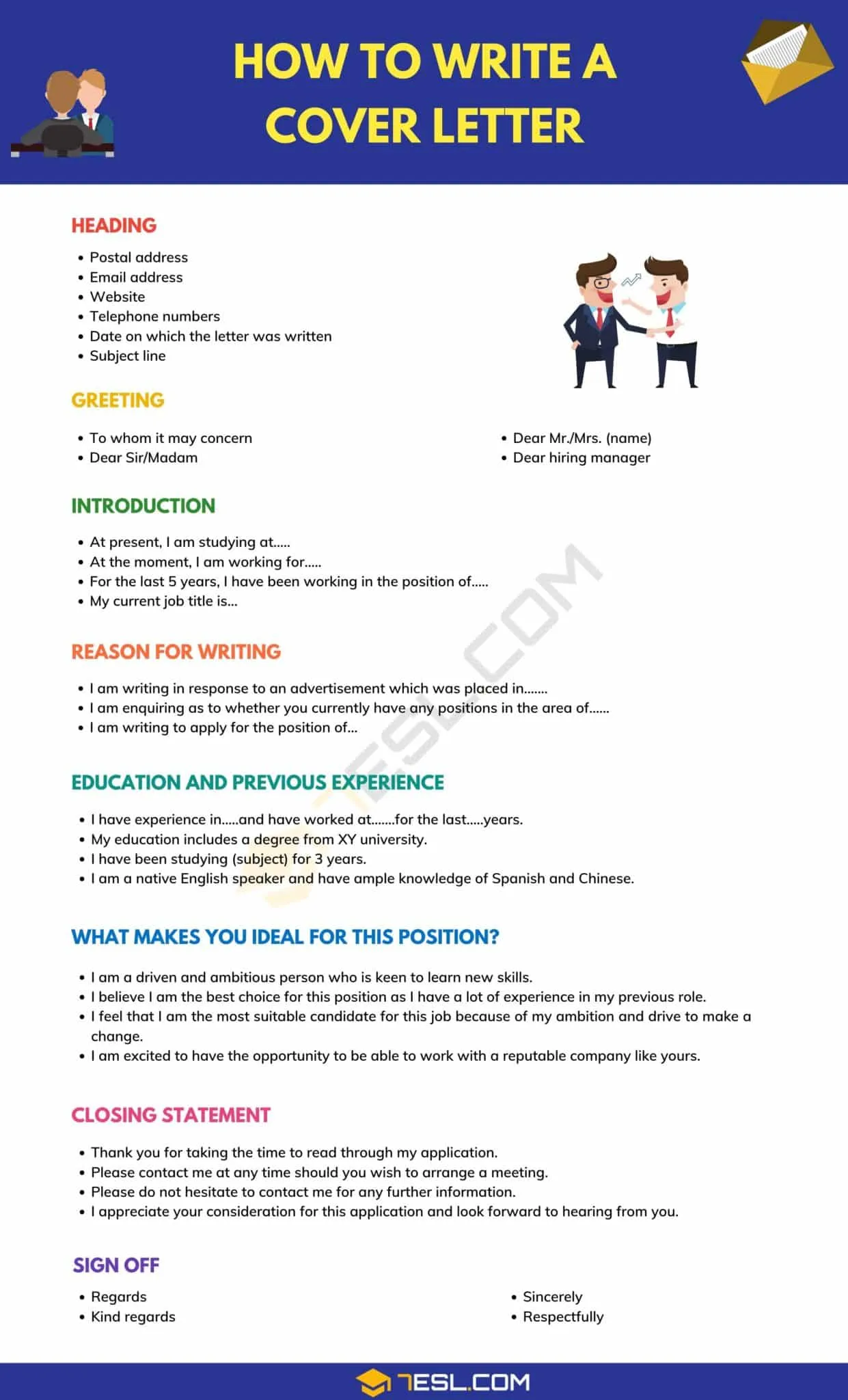
A well-structured cover letter has several essential components that work together to create a compelling narrative. These elements are critical to ensure your letter is professional, easy to read, and effective in conveying your qualifications and interest. Each component plays a specific role in capturing the reader’s attention and persuading them to invite you for an interview. This section will guide you through each of these key elements.
Your Contact Information
At the top of your cover letter, include your contact information. This includes your full name, address, phone number, and email address. This ensures that the hiring manager can easily reach you if they are interested in inviting you for an interview. It’s essential to provide accurate and up-to-date information. Make sure your email address sounds professional. Use a format such as firstname.lastname@email.com, not a silly nickname or an outdated email address.
Formatting Your Contact Information

Format your contact information in a clear and concise manner. You can align it to the left or right, but consistency is key. Choose a legible font, such as Times New Roman, Arial, or Calibri, and use a font size between 10 and 12 points. Ensure the information is easy to read at a glance. Avoid using a cluttered or overly stylized format that might distract from the content of your letter. Clarity is essential.
The Hiring Manager’s Contact Information
If possible, address your cover letter to a specific person, such as the hiring manager or the recruiter. This demonstrates that you’ve done your research and taken the time to find out who will be reviewing your application. If you can’t find a specific name, try to address it to the hiring team or the department manager. This personal touch can make a significant difference.
Address the Hiring Manager Directly
Using the hiring manager’s name shows respect and demonstrates your attention to detail. Start with “Dear Mr./Ms./Mx. [Last Name],” if you know the person’s name. If you don’t know the name, use a professional salutation such as “Dear Hiring Manager” or “Dear [Department Name] Team.” Avoid generic greetings like “To Whom It May Concern” or “Dear Sir/Madam,” as they can make your letter seem impersonal.
The Opening Paragraph

The opening paragraph is your first chance to capture the reader’s attention. It should be concise, engaging, and clearly state the purpose of your letter. This is where you make your initial impression and set the tone for the rest of the letter. It’s critical to demonstrate your enthusiasm for the opportunity and explain why you are writing.
Grab the Reader’s Attention
Start with a compelling hook. This could be a brief statement about your enthusiasm for the position, a mention of a mutual connection, or a noteworthy achievement. Avoid generic opening lines such as “I am writing to apply for the position of…” Instead, aim to spark the reader’s curiosity and make them want to read more. Use power words and show excitement.
State Your Purpose for Writing
Clearly state the specific position you are applying for and how you found the job listing. Be explicit about your intentions. Briefly explain why you are interested in the role and the company. This establishes the purpose of your letter and gives the reader context for the information that follows.
Highlight Relevant Skills and Experiences

The body of your cover letter is where you showcase your skills and experience and make a strong case for why you are the best candidate for the job. Focus on the most relevant aspects of your background that align with the job requirements. Use specific examples to demonstrate your abilities and achievements.
Showcase Your Achievements
Don’t just list your responsibilities; instead, highlight your accomplishments. Describe specific achievements that demonstrate your capabilities and the value you can bring to the company. Use the STAR method (Situation, Task, Action, Result) to structure your examples. This helps you provide clear, concise, and impactful information. What did you achieve, and how did you achieve it?
Quantify Your Accomplishments
Whenever possible, quantify your accomplishments with numbers and data. This adds credibility to your claims and provides concrete evidence of your skills. For example, instead of saying “Increased sales,” say “Increased sales by 15% in one quarter.” Metrics make your accomplishments more impressive and easier to understand. Quantifiable results speak volumes about your impact.
Tailor Your Letter to the Job Description

Carefully review the job description and tailor your cover letter to match the specific requirements and keywords mentioned. Address each of the key qualifications and skills the employer is seeking. This demonstrates that you have the skills necessary to excel in the role. This targeted approach shows that you understand the job and that you’re a great match for the position.
Express Your Enthusiasm and Fit
Throughout your cover letter, express your genuine enthusiasm for the position and the company. This shows that you’re not just looking for a job but that you’re excited about the opportunity to contribute to their success. Explain why you’re a good fit for the company culture and how your values align with their mission.
Demonstrate Your Knowledge of the Company
Show that you’ve done your research by mentioning specific aspects of the company that resonate with you. This might include their mission, values, products, or recent achievements. Highlighting this shows the hiring manager that you are genuinely interested in working for their organization and that you understand their goals. Demonstrate a deep interest.
Explain Why You’re a Good Fit
Clearly articulate how your skills, experience, and personality make you a great fit for the role and the company culture. Explain how your qualifications align with the job requirements and what you can contribute to the team. Make a strong, persuasive case that you are the ideal candidate. Show, don’t just tell.
The Closing Paragraph
The closing paragraph is your last opportunity to leave a positive impression. It should be concise, professional, and emphasize your interest in the position. Use this section to reiterate your interest and state your call to action.
Reiterate Your Interest and Call to Action
Reiterate your enthusiasm for the position and the company. Express your eagerness to discuss your qualifications further. Include a clear call to action, such as requesting an interview or inviting them to contact you with any questions. Make it easy for them to take the next step.
Include a Professional Closing and Signature
End your cover letter with a professional closing, such as “Sincerely,” “Regards,” or “Best regards.” Sign your name above your typed name. If submitting your application electronically, you may use a digital signature. This is standard in a professional setting. Ensure a polite and professional tone.
Proofread and Edit Your Cover Letter
Before submitting your cover letter, carefully proofread and edit it to eliminate any errors. A polished and error-free letter demonstrates your attention to detail and professionalism. Don’t rely solely on spell-check; read your letter carefully to catch any mistakes that it might have missed.
Check for Grammatical Errors and Typos
Thoroughly check for grammatical errors, spelling mistakes, and typos. These errors can detract from your credibility and make you appear unprofessional. Use a grammar checker to identify potential issues, but don’t rely on it entirely. Reading the letter out loud can help you catch errors you might miss otherwise. Be meticulous.
Ensure a Professional Tone
Maintain a professional and respectful tone throughout your cover letter. Avoid using slang, jargon, or overly casual language. The tone should be appropriate for the specific company and industry. Ensure that your letter is well-structured, easy to read, and conveys your message clearly and concisely. Show the hiring manager your writing capabilities.
Cover Letter Examples and Templates
Reviewing cover letter examples and using templates can be an excellent way to gain inspiration and structure your own letter. There are many online resources that offer templates for various industries and roles. However, remember to personalize the templates to reflect your unique skills and experience and the specific job requirements. Ensure your letter is unique and tailored to you. Adapt the examples to match your needs.