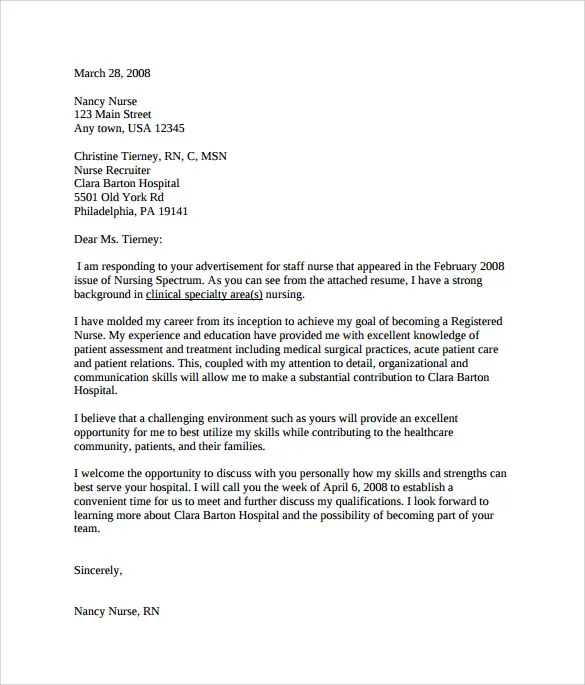
Understanding the Purpose of a Nursing Cover Letter
A nursing cover letter is your first opportunity to make a strong impression on a potential employer. It serves as a personal introduction and a showcase of your qualifications, skills, and passion for the nursing profession. Unlike a resume, which provides a factual summary of your experience, the cover letter allows you to express your personality, demonstrate your understanding of the role, and explain why you’re the ideal candidate. It’s a crucial tool in your job application package, providing context and highlighting the most relevant aspects of your background to the specific position you’re applying for. It is where you get to tell the employer about yourself, what you’re looking for, and why you’re a good fit for the job. Make sure to take advantage of this opportunity and highlight your key accomplishments, skills, and the value you can bring to the organization. Remember that a well-written cover letter can significantly increase your chances of securing an interview and ultimately landing your dream nursing job.
Key Elements of a Nursing Cover Letter
Contact Information

Begin your cover letter with your contact information. This should include your full name, phone number, email address, and optionally, your LinkedIn profile URL. Ensure this information is accurate and up-to-date, as it’s how the hiring manager will reach you. The format is simple and professional; usually, it is left-aligned at the top of the document. Double-check all details for any errors before submitting your application. It’s also wise to use a professional email address (e.g., firstname.lastname@email.com) instead of one that might seem informal or unprofessional.
Date
Following your contact information, include the date you are writing the cover letter. This helps in tracking when the application was submitted. The date is typically placed directly below your contact details, either aligned to the left or the right. Always use the correct and current date to demonstrate that your application is recent and active. The date may be formatted in various ways, but ensure it remains consistent throughout any additional documents submitted.
Hiring Manager’s Information
If possible, address your cover letter to a specific person. Researching the hiring manager’s name (e.g., the Nurse Manager or Director of Nursing) demonstrates initiative and attention to detail. Use the correct title (e.g., Mr., Ms., Dr.) and spell the name accurately. If you can’t find a specific name, use a professional title such as ‘Hiring Manager’ or ‘Recruitment Team’. This adds a personal touch to your application and shows that you have put in the effort to learn about the organization and the position.
Professional Greeting

Start your cover letter with a professional greeting, such as ‘Dear Mr./Ms./Dr. [Last Name]’ or ‘Dear Hiring Manager’. Avoid overly casual greetings like ‘Hi’ or ‘Hello’. The greeting sets the tone for your letter and shows respect for the recipient. If you do not know the hiring manager’s name, ‘Dear Hiring Manager’ or ‘Dear Recruitment Team’ are acceptable alternatives. Make sure to spell the name correctly and use the appropriate title.
Opening Paragraph
Your opening paragraph should immediately capture the reader’s attention and state the purpose of your letter. Clearly mention the specific position you are applying for and how you found the job posting. Briefly introduce yourself and express your enthusiasm for the role. Highlight one or two key qualifications that make you a strong candidate. This paragraph sets the stage for the rest of your letter and encourages the hiring manager to continue reading. Keep it concise and focused on the job requirements and your alignment with the company’s mission.
Highlighting Your Skills and Experience
Showcasing Relevant Skills

In the body of your cover letter, demonstrate how your skills align with the job description. Identify the key skills the employer is seeking and provide specific examples of how you’ve utilized those skills in previous roles. Nursing is a multifaceted profession that involves a variety of skills, including clinical skills, communication skills, critical thinking, and compassion. Tailor your cover letter to the specific requirements of the job. Use action verbs to describe your responsibilities and accomplishments, such as ‘assessed’, ‘managed’, ‘coordinated’, and ’educated’. By showing you’ve applied these skills, you prove that you have the capabilities required to succeed in the position.
Quantifying Your Accomplishments
Whenever possible, quantify your achievements to provide concrete evidence of your success. Use numbers and data to demonstrate the impact you’ve made in previous roles. For example, instead of saying ‘Improved patient satisfaction’, you could say ‘Increased patient satisfaction scores by 15%’. This makes your accomplishments more impactful and provides the hiring manager with a clear understanding of your abilities. Providing these specific details paints a clearer picture of your abilities. It also helps showcase your value to the organization. Quantifiable achievements make you stand out from other applicants.
Tailoring Your Cover Letter
Customize your cover letter for each job application. Review the job description carefully and highlight the skills and experiences that are most relevant. Avoid using a generic cover letter template. Instead, take the time to tailor it to the specific requirements of the role and the needs of the employer. This demonstrates that you have a genuine interest in the position and have taken the time to understand the organization. Research the healthcare facility, its values, and mission. Then, align your skills and experiences with those elements, which shows the hiring manager you’ve gone the extra mile.
Expressing Your Interest and Enthusiasm

Throughout your cover letter, express your interest and enthusiasm for the position and the organization. Demonstrate your passion for nursing and your commitment to providing excellent patient care. Show that you understand the mission and values of the healthcare facility and that you are eager to contribute. This can be done by highlighting what draws you to the role and organization. This makes the cover letter more personal and engaging for the hiring manager. Your enthusiasm will help you make a memorable impression and show them why you are the right fit.
Closing the Cover Letter
In your closing paragraph, reiterate your interest in the position and thank the hiring manager for their time and consideration. State that you look forward to hearing from them soon and are available for an interview. Provide a clear call to action, such as stating that you have attached your resume for their review or that you will follow up within a specific timeframe. End with a professional closing, such as ‘Sincerely’ or ‘Best regards’, followed by your full name. Be polite and respectful while showing confidence in your abilities and the value you can bring to the role. Proofread it before submitting.
Proofreading and Formatting
Proofread your cover letter carefully for any grammatical errors, spelling mistakes, or typos. Errors can detract from your professionalism and make a negative impression on the hiring manager. Use a clean and professional font, such as Times New Roman, Arial, or Calibri. Maintain consistent formatting throughout the document, including margins, spacing, and font size. Ensure that your cover letter is easy to read and visually appealing. Ask a friend or family member to proofread your letter before submitting it to catch any errors you might have missed.
Common Mistakes to Avoid

Using Generic Language
Avoid using generic phrases and clichés. Tailor your cover letter to the specific job and highlight your unique qualifications. Use specific examples and details to demonstrate your skills and experiences. Avoid repeating information found in your resume; instead, use the cover letter to expand on your accomplishments and show your personality. Using generic language is a common mistake that can make your cover letter appear uninspired and unoriginal. The more specific and detailed you are, the more compelling your application will be. Show the employer why you, specifically, are the right fit.
Focusing on Yourself Too Much
While it’s important to highlight your skills and experiences, avoid making your cover letter solely about yourself. Show how your skills and experiences align with the needs of the employer and the role. Demonstrate that you understand the organization’s mission and values and that you are eager to contribute. Focus on how you can solve their problems and add value to the team. Frame your accomplishments in a way that shows the positive impact you’ve had on past employers. By doing so, you can show the hiring manager that you’re thinking of their needs. It shows them why you are the ideal choice for their organization.
Ignoring the Job Description

One of the biggest mistakes is not tailoring your cover letter to the job description. Carefully review the job requirements and highlight the skills and experiences that are most relevant to the position. Use the same keywords and phrases that the employer uses in the job description. Failing to do so suggests that you’re not a good fit for the role. Adapt and customize your cover letter for each job application to maximize your chances of success. This demonstrates to the hiring manager that you are a keen applicant.
Seeking Nursing Cover Letter Templates and Examples
Leverage nursing cover letter templates and examples as guides to help you structure your own cover letter. While these templates offer a framework, ensure you personalize each letter with your unique skills and experiences. There are many resources online, including websites and career services, that provide sample nursing cover letters. These examples can offer insights into formatting, language, and content. But remember, your cover letter should always be an original document that showcases your unique qualifications and expresses your personality. Use templates to learn but don’t copy; make sure your letter stands out by being authentic to you and your experiences. Customize it to show your personality.