Understanding the Importance of a Healthcare Cover Letter
In the competitive field of healthcare, a well-crafted cover letter is not just a formality; it’s your first impression. It’s the initial opportunity to showcase your personality, skills, and genuine interest in the role and the healthcare organization. A compelling cover letter complements your resume, providing a narrative that brings your qualifications to life. It allows you to connect your experiences and aspirations directly to the specific requirements of the job. Employers in the healthcare sector often receive numerous applications, making it crucial for your cover letter to stand out. It’s your chance to make a strong case for why you are the ideal candidate, highlighting your unique value proposition and demonstrating your understanding of the healthcare landscape. A well-written cover letter can be the deciding factor in securing an interview and ultimately landing your dream job.
Key Components of a Healthcare Cover Letter
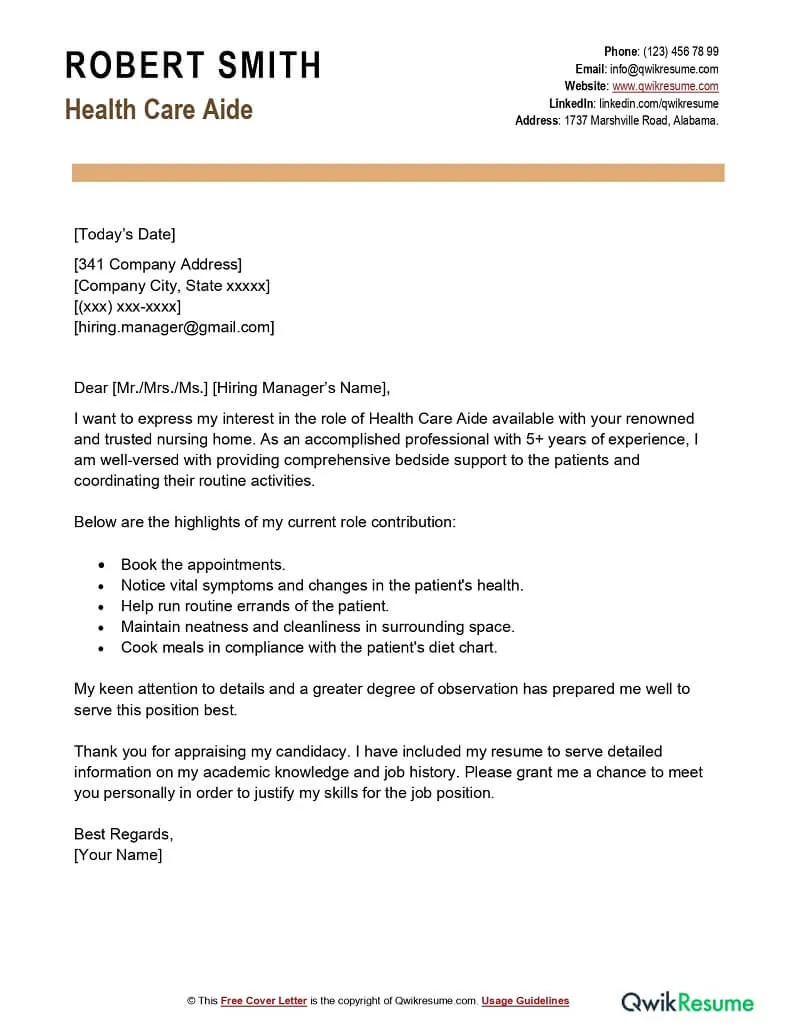
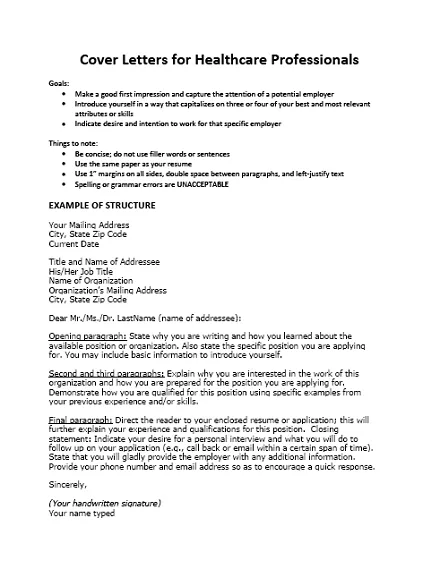
A successful healthcare cover letter includes several key components. First, you need clear and accurate contact information, including your name, phone number, email address, and professional online profiles, such as LinkedIn. The opening section should immediately grab the reader’s attention with a compelling hook. Next, the body of the letter should highlight your skills and experience, quantifying your achievements with measurable results whenever possible. Furthermore, demonstrate your passion for healthcare by explaining why you are drawn to this field and this specific opportunity. The letter must then address the specific job requirements, directly referencing the skills and qualifications mentioned in the job description. Finally, the letter should close with a call to action, encouraging the hiring manager to contact you for an interview, and your signature.
Contact Information

Begin your cover letter by providing clear and concise contact information. This section should be at the top, either left-aligned or centered. Include your full name, professional phone number, and a professional email address. It’s essential to ensure that your email address is appropriate and reflects your professional image. Consider including a link to your LinkedIn profile to provide the employer with a more detailed view of your professional background and network. This information should be easy to find and read, allowing the hiring manager to quickly reach out to you if they are interested in your application. Accuracy is key; double-check all details to avoid any errors that could hinder communication. A professional presentation of your contact information sets the tone for the rest of your cover letter and demonstrates your attention to detail.
The Opening Section Grab Attention
The opening of your healthcare cover letter is critical; it’s your first chance to make a memorable impression. Start with a strong hook that captures the reader’s attention. This could be a concise statement of your interest in the specific role and healthcare organization, a brief overview of your relevant skills, or a compelling anecdote related to your experience. Show that you have researched the healthcare organization and understand its mission, values, and recent accomplishments. Tailor your opening to the job description, clearly explaining why you’re excited about this opportunity. Avoid generic phrases, such as “I am writing to express my interest.” Instead, aim to create an immediate connection with the hiring manager. Make it clear what you can offer the organization. Demonstrate enthusiasm and professionalism in a few concise sentences, setting a positive tone for the rest of your cover letter.
Highlight Your Skills and Experience
The body of your cover letter should provide a detailed overview of your skills and experiences relevant to the healthcare job. Refer to the job description and identify the key requirements. Provide specific examples of how you’ve demonstrated those skills in previous roles. Use action verbs to describe your responsibilities and achievements. Emphasize your qualifications and how they align with the needs of the position. Mention your relevant certifications, licenses, and any specialized training. Focus on experiences that demonstrate your ability to collaborate with teams, communicate effectively with patients and colleagues, and handle stressful situations. This is where you showcase your ability to perform the duties outlined in the job description and add value to the healthcare organization.
Quantify Your Achievements
To make your cover letter truly impactful, quantify your achievements whenever possible. Use numbers, statistics, and data to demonstrate your accomplishments. Instead of saying, “Improved patient satisfaction,” specify by how much, such as “Increased patient satisfaction scores by 15%.” Similarly, if you reduced wait times or streamlined processes, provide measurable results. For example, “Reduced patient wait times by an average of 20 minutes.” Quantifying your achievements provides concrete evidence of your capabilities and the value you bring to a healthcare setting. This makes it easier for the hiring manager to understand the impact you’ve made in previous roles and how you can contribute to their organization. Use data to showcase your effectiveness and impress the reader.
Demonstrate Your Passion for Healthcare
Expressing your passion for healthcare is crucial. Show that you are genuinely interested in this field and committed to providing excellent patient care. Describe why you are drawn to healthcare and what motivates you. Share any personal experiences or insights that demonstrate your empathy, compassion, and dedication to helping others. This can include volunteer work, personal experiences, or any involvement in healthcare initiatives. Explain why you are interested in this specific role and healthcare organization. Demonstrate that you understand the organization’s mission and values and how you can contribute to its goals. A genuine passion for healthcare will resonate with the hiring manager and show them that you are a dedicated and caring professional.
Address the Specific Job Requirements
Carefully review the job description and tailor your cover letter to address the specific requirements. Use the job description as a guide to highlight the skills, experience, and qualifications most relevant to the role. Reference the keywords used in the job posting and show how your skills match their needs. Provide specific examples of how you have met similar requirements in previous roles. Explain your understanding of the healthcare organization’s mission, values, and recent accomplishments. If the job posting mentions a specific software, skill, or experience, be sure to include it in your cover letter. Customize each cover letter for the specific job you are applying for, and show the hiring manager that you have carefully considered their needs and requirements.
Proofread and Edit Your Cover Letter

Before submitting your healthcare cover letter, proofread and edit it carefully to ensure it is free of errors. Errors in grammar, spelling, or punctuation can damage your credibility and make you appear unprofessional. Read your cover letter multiple times, checking for any mistakes. Consider asking a friend, family member, or career counselor to review it for you. Pay attention to the tone and style of your writing. Ensure that it is professional, clear, and concise. Check that the formatting is consistent and easy to read. A polished, error-free cover letter demonstrates your attention to detail and professionalism. Make sure that your name and contact information are accurate.
Formatting and Design
The formatting and design of your healthcare cover letter also matter. Use a professional font, such as Times New Roman, Arial, or Calibri, in a readable size (11 or 12 points). Maintain consistent formatting throughout your letter. Use clear headings and subheadings to organize the information. Ensure adequate white space to make the text easy to read. Keep your cover letter concise, ideally no more than one page long. Choose a simple, clean layout that is easy on the eyes. Avoid using excessive colors, graphics, or unconventional formatting that might distract the reader. Your cover letter should look professional and well-organized to leave a positive impression. Consider using a template but customize it to reflect your unique skills and experiences.
Call to Action and Closing
End your cover letter with a strong call to action. Express your interest in an interview and indicate your availability. Provide your contact information again, making it easy for the hiring manager to reach you. Thank the hiring manager for their time and consideration. Use a professional closing, such as “Sincerely” or “Best regards,” followed by your typed name. If sending a physical copy, sign your name above your typed name. This final step reinforces your enthusiasm and makes a lasting impression, increasing the likelihood of an interview.