Understanding the Address Dilemma
Navigating the job application process can sometimes feel like a maze, and one of the common questions that arises is how to format a cover letter when you don’t have a physical address to include. The traditional format of a cover letter often starts with your address, the date, and the recipient’s address. However, in today’s digital world and with various reasons for not wanting to include your address, it’s perfectly acceptable, and sometimes even preferable, to omit it. This section will help you understand the reasons why this dilemma exists and set the stage for providing alternatives that maintain professionalism and still get your application read.
Why Address Omission is Sometimes Necessary
There are several compelling reasons why you might choose to exclude your address from your cover letter. Privacy concerns are at the forefront for many. In an age where personal information can be vulnerable, providing a physical address can feel like an unnecessary risk. Security is another factor especially if you are actively job searching and are worried about information falling into the wrong hands. Additionally, if you are constantly on the move, providing an address that quickly becomes outdated is counterproductive. Lastly, for remote workers who don’t have a fixed office location, or if the job is in a location far from you, an address might not be relevant and can be easily omitted. These factors underscore the need for updated cover letter guidelines in the modern job market.
When is it Okay to Skip the Address?

Determining when to omit your address is more straightforward than you might think. If the job application specifically doesn’t request it, or the application is entirely online, omitting the address is generally fine. If you are concerned about privacy, or if you’re in a situation where you are looking for a job in a location far from your current location, skipping the address is perfectly reasonable. If you use a digital resume platform, the address is often integrated, removing the need to repeat it in your cover letter. If any of these situations apply to you, feel free to omit your address without worry. In these cases, focusing on providing sufficient contact details for immediate contact is important.
Formatting Your Cover Letter Without an Address
The absence of an address on a cover letter doesn’t necessitate a complete overhaul of your application format. The goal is to ensure that your letter looks professional and is easily readable. Keeping the rest of your cover letter well-formatted is very important. Maintain standard margins, use a legible font like Times New Roman, Arial, or Calibri, and ensure your text is single-spaced with a space between paragraphs. The date should be placed directly below the header, which contains your name. Then you can skip your address and proceed to the greeting and the body of your letter. The key is to create a document that is clean, organized, and focused on communicating your qualifications.
Header Alternatives for Your Cover Letter
If you decide to omit your address, the header section of your cover letter is still essential, but will need to be adjusted to contain the information that’s most important. Instead of the full address block, your header should ideally include your name, your phone number, and your email address. Your name should be prominently displayed, usually at the top of the page. The other contact details should be arranged neatly, so that the recruiter or hiring manager can easily reach out to you. This information allows potential employers to contact you quickly, which is critical for follow-up and scheduling interviews. Make sure the contact information is accurate and up-to-date to avoid missing any opportunities.
Using Contact Information Effectively

The contact information you provide should be professional and easy to access. When listing your phone number, ensure that the voicemail is set up and ready to take messages. For your email address, use a professional-sounding email address such as your name@email.com and check it regularly. It’s essential to present yourself as someone who is easy to contact and can respond quickly to any inquiries. Providing a link to your LinkedIn profile is an excellent way to give the employer a more detailed view of your career history and the connections you’ve made. Keeping your LinkedIn profile up-to-date can be highly beneficial in these situations.
Placement of Contact Details
Deciding where to place your contact details is critical to make them easily accessible to the hiring manager. Generally, your contact information is presented in your header, located at the top of the cover letter, before the date and the recipient’s information. It should be neat and easy to read, helping the reader easily identify how to contact you without having to search through the document. The format can vary a bit, but it’s common to put your name in bold, followed by your phone number and email address on a separate line. If including your LinkedIn profile, you can add it on the same line or on a separate line below your email. The formatting you choose should be consistent throughout the document.
Alternatives to a Physical Address
While you might want to omit your physical address from your cover letter, there are other ways to provide context about your location, if you want to. For remote jobs, you don’t need to include any location detail. If you want to mention where you are in the country, you can simply state the city and state in your contact details. This offers a good balance of offering location information without giving out your personal address. Another great option is to use a link to your LinkedIn profile, where you can add your general location details. It is not mandatory to share your location at all, so the choice is yours.
Email and Phone Number Importance
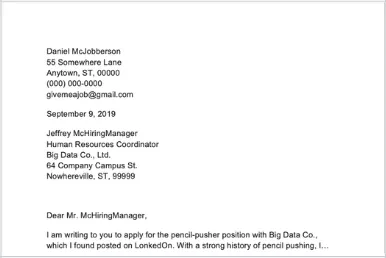
With the shift to digital communication, your email address and phone number are incredibly important. Make sure these are accurate and up-to-date, because they are the primary ways recruiters will contact you. Your email should be professional, use a service that is reliable (Gmail, Outlook etc.), and is frequently checked. Your phone number should have a voicemail setup, so recruiters can leave you a message if they cannot reach you immediately. These two contact details can make a big difference in your application, so make sure they are clear and easy to find in your header.
Cover Letter Body and Address Omission
The body of your cover letter is where you make the case for your application. The omission of an address has no direct impact on this section. The focus of your cover letter should remain on highlighting your skills, experience, and explaining why you are a good fit for the role. Your introduction should quickly state why you are writing and the position you’re interested in. The body should outline how your skills and experiences match the requirements. The conclusion should reiterate your interest, express your availability for an interview, and thank the hiring manager for their time. When the address is omitted, this allows you to place more emphasis on the information that truly matters: your qualifications and your enthusiasm for the job.
Addressing the Hiring Manager Directly
Whenever possible, addressing the hiring manager or the specific person who will be reviewing your application is a good idea. Using the hiring manager’s name personalizes your application and shows that you’ve taken the time to find out who will be reading it. If you are unable to find the hiring manager’s name, you can use a generic greeting. However, if you can, it’s always a better option to find the correct name. This shows your proactivity and demonstrates your interest in the specific opportunity. A personalized cover letter is much more likely to capture the reader’s attention.
Researching the Recipient for a Personal Touch

Taking the time to research the recipient of your cover letter is an essential step that can make your application stand out. Use LinkedIn, the company website, or other resources to find the name and title of the hiring manager or the person to whom you should address your letter. If you are lucky enough to find out more about their professional background or interests, you can subtly weave these details into your cover letter to show you have done your homework. This shows that you are not just sending a generic application, but you are genuinely interested in the specific job opportunity. This personal touch can have a positive impact on your application.
Highlighting Relevant Experience & Skills
In the absence of an address, it’s essential to make your cover letter content even more compelling. Focus on highlighting your most relevant experience and skills. Carefully review the job description and identify the key requirements. Then, craft your cover letter to show how your experience and skills directly align with those requirements. Use specific examples to illustrate your accomplishments and your ability to achieve results. Quantify your achievements whenever possible (e.g., “Increased sales by 20%”). Using relevant keywords from the job description can also help your application pass through applicant tracking systems and ensure that your application reaches the hiring manager. Make sure to customize each cover letter to match the specific job you are applying for.
Focusing on Your Qualifications
Your qualifications should be the central focus of your cover letter, regardless of whether you include an address or not. In addition to highlighting your specific skills and experiences, demonstrate your value to the company. Explain how your abilities and experiences will benefit the organization and help them achieve their goals. Showcase your understanding of the company’s mission, values, and the challenges they face. By focusing on your qualifications, your cover letter becomes a strong marketing tool that tells the employer what you can do for them. This approach will make your application more compelling.
Common Mistakes to Avoid

While omitting the address is perfectly acceptable, there are some common mistakes that you should avoid. One of the most crucial is to not leave out your contact details entirely. Make sure your email address and phone number are clearly visible in your header. Do not use an unprofessional email address. Avoid using language that is too casual or informal, and be sure to always maintain a professional tone. Proofreading your cover letter carefully before you submit it is also very important. Mistakes and typos can undermine your credibility. By avoiding these errors, you can improve the professionalism of your application.
Incorrect Format Errors
Incorrect formatting can make your cover letter difficult to read. Ensure your header is clean, and all of your contact details are formatted properly. Use a standard font, and maintain consistent spacing throughout the document. Align your text consistently, and ensure that your paragraphs are clearly separated. Check the document for any formatting errors and make sure the document is visually appealing and easy to navigate. Poor formatting makes a bad impression on hiring managers. This is the first chance to make a positive impression, so make sure it is neat and professional looking.
Missing Contact Details
A common and serious error is forgetting to include your contact information. Your email address and phone number are essential. Without these details, the recruiter will not be able to contact you to schedule an interview. Your email address and phone number should be prominently placed in your header, making it easy for the reader to find them. Make sure that the email address is professional-sounding and that your voicemail is set up and ready to receive messages. Always double-check your contact information to ensure accuracy. It is critical that the recruiter can easily contact you.
Finalizing & Submitting Your Cover Letter

Once you’ve completed the content of your cover letter, the next steps are to finalize it. Before you submit, take the time to proofread and review. Make sure you have followed all of the formatting guidelines. Review the entire document and make any necessary changes before submitting. Be sure that your cover letter pairs perfectly with your resume. Remember that the goal of your cover letter is to get you an interview, so you need to highlight the best aspects of your experience and skills. Once you are confident, prepare to submit your cover letter.
Proofreading for Accuracy
Proofreading your cover letter is a critical step, as it gives you one last chance to find and correct errors. Check the spelling, grammar, and punctuation. Read your cover letter carefully to make sure the content flows smoothly. Consider reading it aloud to identify any awkward phrasing. Sometimes, it is a good idea to have a friend or colleague review your letter. A fresh pair of eyes can catch errors you might miss. Proofreading ensures that you submit a polished and professional application.
Submitting as a PDF
When submitting your cover letter and resume, it is a good idea to save them as a PDF file. PDF files preserve the formatting and ensure that your document looks the same on any device. When saving your files as a PDF, make sure you have the correct name. Use a descriptive name, such as “Your Name – Cover Letter” or “Your Name – Resume”. This will make it easier for the employer to keep your application organized. You can also confirm that the PDF looks correct before submitting it. This is especially true for cover letters that have no address, to make sure all contact details have been included.
Follow-up After Submission
After submitting your application, a follow-up is a good way to show your interest in the position. Wait for a reasonable period, usually a week or two, and then send a brief email to the hiring manager or recruiter. In your follow-up email, politely reiterate your interest in the position, and restate your qualifications. This is also an opportunity to ask about the status of your application or to ask about the timeline. Your follow-up email should be professional and concise. Following up shows that you are very interested in the opportunity and increases your chances of getting an interview.