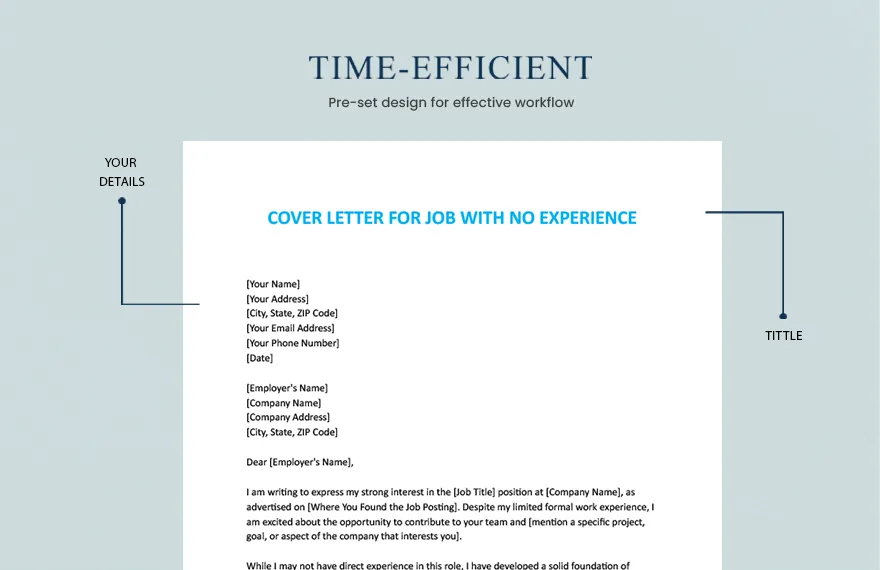
Understanding the Cover Letter’s Role
When applying for a job with no experience, the cover letter becomes your primary tool for making a positive first impression. It’s your chance to introduce yourself, explain why you’re interested in the position, and demonstrate your suitability for the role even without direct experience. The cover letter complements your resume by providing a narrative that connects your skills, education, and enthusiasm with the employer’s needs. It allows you to highlight your potential and personality, making you stand out from other applicants. A well-crafted cover letter shows that you’ve put in the effort to understand the company and the specific job requirements, setting the stage for a successful application. It is not just a formality, but a strategic document designed to persuade the hiring manager to read your resume and consider you for an interview. Therefore, treating the cover letter as a critical component of your job application is essential, particularly when you are starting out in your career or transitioning to a new field.
Highlighting Transferable Skills
One of the most effective strategies for writing a cover letter with no experience is to focus on transferable skills. These are the skills you’ve acquired through previous experiences, whether in school, volunteer work, or other activities, that can be applied to the new job. Think about the skills that are essential for the role you are applying for and identify your relevant skills. This approach helps bridge the gap between your lack of direct experience and the requirements of the job. Employers often seek candidates who can demonstrate skills like communication, problem-solving, teamwork, and time management, which can be developed in various settings. By strategically highlighting these transferable skills, you can show that you possess the abilities needed to succeed in the position, even if your background doesn’t precisely match the job description.
Identifying Your Skills

Begin by making a list of all the skills you possess. Think broadly and include skills from all areas of your life. Consider your academic achievements, extracurricular activities, volunteer work, and any part-time jobs you might have held. Common examples include communication skills, such as written and verbal communication. Identify your strengths in critical thinking, analytical skills, and problem-solving abilities. If you have any leadership experience from being a team captain or project manager, make note of it. Be sure to include technical skills. List any software programs you know, like Microsoft Office or more specialized software that might be relevant to the job, as well as any other skills that can be transferable to a new work environment.
Matching Skills to the Job Description
Once you’ve identified your skills, compare them with the job description. Identify the key skills and requirements mentioned by the employer. Then, review your list of skills to see which ones align with what the employer is looking for. Focus on the skills that are most relevant to the specific job. This is where you demonstrate that you understand the job’s needs and can fulfill them. Use the job description to guide your writing and make sure you address the key requirements directly. This targeted approach shows the hiring manager that you’ve carefully considered the role and are a good match, even without direct experience. The goal is to show how your skills and experience, no matter how seemingly unrelated, can contribute to the role’s success.
Showcasing Soft Skills
Soft skills are crucial when you have no direct experience. They are the personal attributes that enable you to interact effectively with others. Employers often value soft skills as much as hard skills because they contribute to overall team dynamics and work efficiency. Examples of soft skills include communication, teamwork, adaptability, problem-solving, and time management. Within your cover letter, provide specific examples of how you have demonstrated these soft skills. For example, if you claim to be a good communicator, provide an instance where you successfully explained a complex concept to a group, or if you claim to be a good problem solver, describe a time when you overcame an obstacle. Highlighting these soft skills creates a well-rounded picture of who you are and what you can bring to the role, and shows the employer that you are not only capable, but also a good fit for the company culture.
Emphasizing Education and Training

Since you may not have professional experience, your education and training become even more crucial in your cover letter. Education indicates your knowledge base, work ethic, and willingness to learn, which can make you a competitive candidate. Focus on your academic achievements, relevant coursework, and any training programs or certifications you have completed. Highlight any projects, internships, or group work that demonstrate practical skills. This strategy allows you to showcase what you have learned and how you can apply this knowledge to the job. It is a substitute for professional experience that tells employers you have the foundational skills and the discipline required to succeed. Tailor this section to match the job description. If the job requires specific knowledge or skills, emphasize your coursework or training that aligns with those requirements.
Formatting Your Education Section
When formatting your education section, clarity and conciseness are critical. Begin with your highest level of education first, including the degree earned, the name of the institution, and the graduation date (or expected graduation date). If you have multiple degrees, list them in reverse chronological order. Include relevant details, such as your GPA if it is high and any honors or awards you have received. Keep this section focused and easy to read. Use bullet points to highlight relevant coursework, projects, or activities. This format enables the hiring manager to quickly assess your educational background and identify key qualifications. Presenting your education clearly and professionally helps to create a positive impression and underscores your academic achievements.
Mentioning Relevant Coursework
Coursework can be an excellent way to demonstrate that you have acquired knowledge and skills that are directly relevant to the job you are applying for. Review the job description and identify the required skills or knowledge areas. Then, look through your course list and highlight any classes that covered these topics. Provide specific examples of projects, assignments, or presentations you completed that relate to the job responsibilities. This demonstrates that you have a practical understanding of the job’s requirements. For instance, if the job requires data analysis skills, highlight coursework in statistics or data science. Tailoring this section of your cover letter to match the job requirements shows the hiring manager that you possess the necessary skills.
Focusing on Enthusiasm and Passion

In the absence of experience, showing genuine enthusiasm and passion for the job and the company is essential. Your cover letter is the perfect place to demonstrate your interest and explain why you want to work for the company. Research the company and the role thoroughly. Then, use your cover letter to demonstrate your understanding of the company’s mission, values, and recent achievements. Explain why you are excited about the opportunity and how your skills and interests align with the company’s goals. Employers are looking for candidates who are motivated, proactive, and eager to learn. Your enthusiasm can make a significant impact on your application, especially when you lack direct experience. Expressing your passion is key to making a memorable impression.
Expressing Your Interest
Clearly state your interest in the job and the company. Avoid generic phrases; instead, be specific about why you are attracted to this particular role. Perhaps you are drawn to the company’s mission, its innovative culture, or the opportunity for professional growth. Explain what excites you about the position’s responsibilities and what you hope to achieve. Expressing your enthusiasm will help you stand out. Show the hiring manager that you have done your research and understand what the role entails. Mention any particular projects, initiatives, or values that resonate with you. Demonstrating your interest through specific details helps the hiring manager see how you can bring added value to their team. This personal touch shows your motivation and distinguishes you from other candidates.
Demonstrating Research on the Company
Before you start writing your cover letter, conduct thorough research on the company. Explore their website, read news articles about them, and check their social media profiles. Identify their recent achievements, projects, and values. This research is the foundation for expressing your genuine interest. Include specific details in your cover letter that show you understand the company’s work, mission, and culture. Mention any recent company initiatives or values that resonate with you. Referencing specific projects or achievements shows that you are actively interested in the organization and demonstrates your commitment. This level of preparation shows you’re proactive and genuinely interested in joining the team, which can leave a lasting impression.
Structuring Your Cover Letter

A well-structured cover letter is essential for making a positive impression. Your cover letter should follow a standard format, including an introduction, body paragraphs, and a closing. Each section should be concise, and all paragraphs should be clear and focused. Maintain a professional tone throughout. Ensure the letter is well-formatted, with easy-to-read fonts and spacing. The overall organization helps the hiring manager navigate your qualifications quickly. A well-structured cover letter ensures that your message is easy to understand, showcasing your key qualifications and leaving a positive lasting impression.
Crafting a Strong Opening
The opening paragraph of your cover letter is critical; it’s your chance to capture the reader’s attention. State the specific job you’re applying for and how you learned about the position. Immediately state your interest in the role and the company. Mention a key skill or experience that aligns with the job description. Make sure your introduction is concise and engaging to entice the reader to continue. The goal is to immediately hook the reader, emphasizing your enthusiasm and what you bring to the table. A strong opening sets the tone for the entire letter and creates a positive first impression. Remember, you want to set yourself apart from other candidates.
Developing the Body Paragraphs
The body paragraphs are where you provide detailed information about your qualifications. Address the job description’s requirements and highlight your skills and abilities. Use specific examples to demonstrate how you have used your skills in the past. For each key skill, explain how you’ve developed and applied that skill in an academic, volunteer, or personal context. Provide specific examples that showcase your achievements. Connect your skills and experiences to the job’s responsibilities. The goal is to create a compelling narrative, demonstrating you are a good fit for the role. Make sure each paragraph supports your main points, making your cover letter clear and easy to follow.
Writing a Compelling Closing

The closing paragraph should summarize your interest and reiterate your enthusiasm for the position. Thank the hiring manager for their time and consideration. Clearly state your availability for an interview. Include a call to action that prompts the reader to take the next step. For instance, you can express your excitement about the opportunity to discuss your qualifications further. The closing should be concise, professional, and leave a lasting positive impression. It’s your final opportunity to make a statement, so make sure it’s both persuasive and memorable. A strong conclusion reinforces your candidacy and encourages the hiring manager to reach out.
Proofreading and Editing Your Letter
Proofreading and editing are essential steps in the cover letter writing process. Errors in grammar, spelling, and punctuation can detract from your professional image and undermine your credibility. Always proofread your cover letter multiple times. It can be helpful to read your letter aloud or ask someone else to review it. Make sure the letter is clear, concise, and easy to read. Correct all errors before submitting your application. Proofreading demonstrates your attention to detail and commitment. Always ensure that you submit a polished and professional cover letter. Taking the time to proofread can significantly increase your chances of success and prevent your application from being overlooked.
Checking for Grammar and Spelling Errors
Before submitting your cover letter, meticulously check for grammar and spelling mistakes. Use a grammar checker and spell checker to identify errors. Carefully review each sentence to ensure it is grammatically correct. Check for common errors, such as subject-verb agreement, correct tense usage, and proper punctuation. If possible, have a friend, family member, or career advisor review your cover letter for errors. Mistakes can create a negative impression and indicate a lack of attention to detail. Correcting errors shows that you have a polished and professional cover letter. Thoroughly checking for errors is crucial for conveying professionalism and ensuring your application is taken seriously.
Ensuring a Professional Tone

The tone of your cover letter should be professional and respectful. Avoid using slang, informal language, or overly casual expressions. Maintain a formal tone throughout the letter, using professional language and a courteous style. Be polite and considerate in your phrasing, and address the hiring manager by name, if possible. Ensure the letter is written in a positive and confident tone, highlighting your skills and qualifications. Avoid negativity or any expressions of desperation. Ensure your letter conveys a positive and enthusiastic attitude about the opportunity and the company. Maintaining a professional tone makes a positive impression and increases the likelihood of your application being considered favorably.
Tailoring Your Letter to Each Job
Customize your cover letter for each job application. Do not use a generic cover letter for all jobs. Take the time to tailor the letter to the specific requirements of each position. Review the job description carefully and highlight the skills and experiences that align with the role. Customize your letter by mentioning the company’s specific projects, values, or initiatives. This level of personalization shows that you’ve researched the company and understand the job’s responsibilities. Tailoring your cover letter demonstrates that you are genuinely interested in the specific opportunity. It shows the hiring manager that you’ve put in the effort to align your qualifications with the role and that you are eager to learn more.