Cover Letter Fundamentals
A cover letter is a crucial component of your job application, serving as your first introduction to a potential employer. It’s your chance to make a positive impression and persuade them to read your resume. Unlike a resume, which provides a factual overview of your skills and experience, a cover letter allows you to showcase your personality, express your enthusiasm for the role, and explain why you’re the perfect fit for the company. A well-crafted cover letter can significantly increase your chances of getting an interview, making it an essential tool in your job search toolkit. Therefore, understanding its fundamental aspects is key to crafting a winning one.
The Purpose of a Cover Letter
The primary purpose of a cover letter is to introduce yourself and your qualifications to a prospective employer. It allows you to elaborate on your resume, highlighting specific skills and experiences that align with the job requirements. More importantly, it’s your opportunity to demonstrate your personality, passion for the role, and genuine interest in the company. The goal is to convince the hiring manager that you’re not just a qualified candidate but also a great fit for the company culture. The letter should clearly state your objective, explain why you’re interested in the specific position and company, and summarize your key qualifications.
Key Components of a Cover Letter

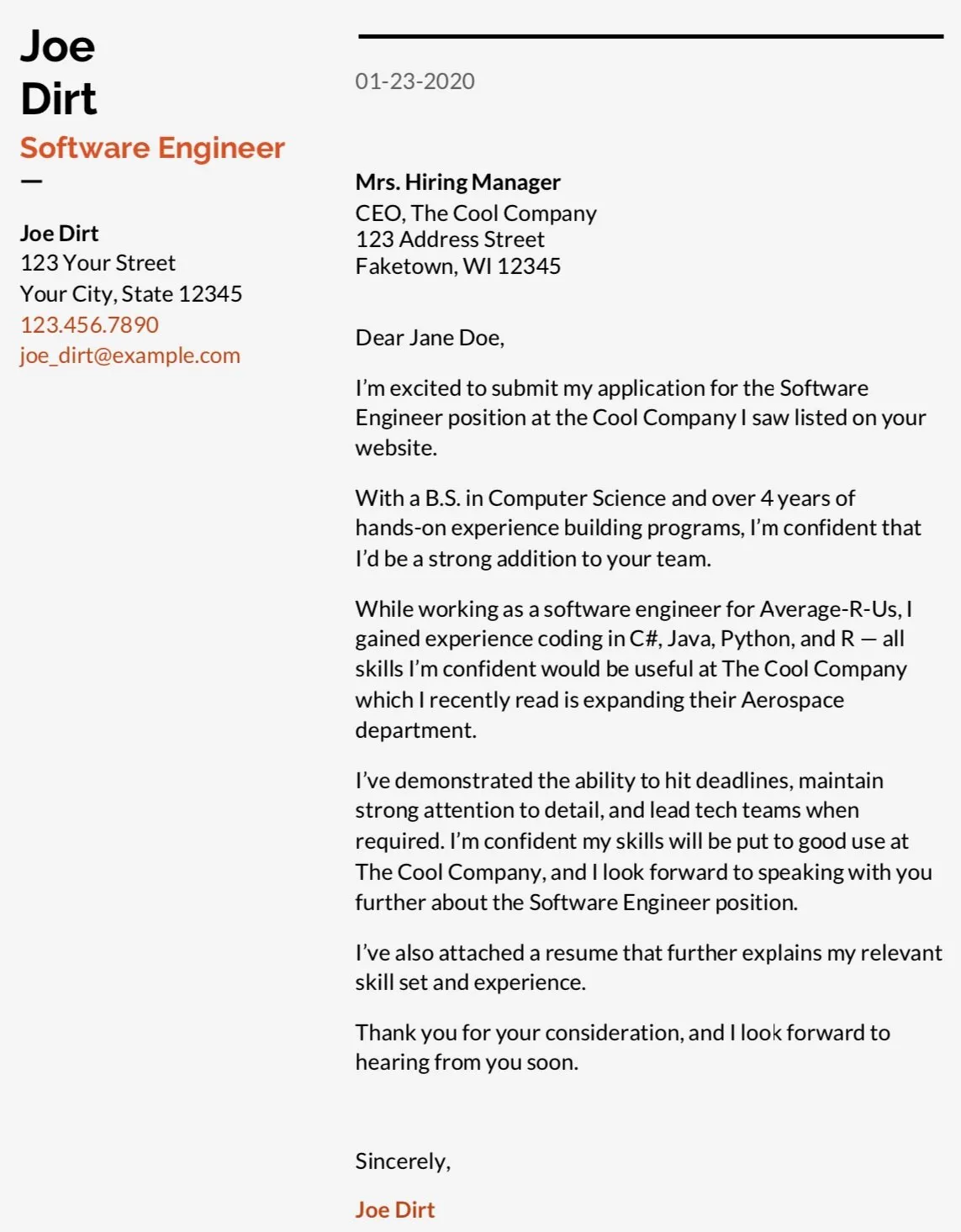
A well-structured cover letter typically includes several key components. Begin with your contact information, the date, and the recipient’s information. Follow this with a compelling opening paragraph that grabs the reader’s attention. The body of the letter should highlight your relevant skills and experiences, providing specific examples to support your claims. It is also important to show how you have made use of those skills in the past and what the results were. Use a strong closing paragraph to reiterate your interest and include a call to action, such as requesting an interview. Finally, ensure you include a professional closing, such as “Sincerely” or “Best regards”, followed by your typed name. Remember to tailor each component to the specific job and company.
Formatting Your Cover Letter
Proper formatting is critical to ensure your cover letter is easy to read and visually appealing. Use a standard font like Times New Roman, Arial, or Calibri, and maintain a font size of 11 or 12 points. Keep your letter concise, ideally within one page, and use single-spacing with a space between paragraphs. Use clear headings and subheadings to organize your content and make it scannable. Use bullet points to highlight key skills or accomplishments where appropriate, making it simple to read. Always ensure your letter is free of grammatical errors and typos. Save your cover letter as a PDF file to preserve the formatting and ensure it looks consistent across different devices.
Crafting a Compelling Opening
The opening paragraph is your first and often only chance to capture the hiring manager’s attention. It should immediately convey your enthusiasm for the position and company. A strong opening can make the reader want to continue reading. Avoid generic openings like “I am writing to apply for the position.” Instead, try a hook that showcases your understanding of the company or the role. You can mention a recent achievement or a skill that directly aligns with the job requirements. Consider referring to a specific project you admire or the company’s values that resonate with you. A well-crafted opening sets the tone for the rest of your letter and compels the reader to learn more about you.
Grabbing Attention Immediately

To grab immediate attention, start with a powerful statement that highlights a key accomplishment or a relevant skill. If you have a connection to the company or someone who referred you, mention it in the opening. You can also show your knowledge of the company by referencing a recent news item or a specific project you admire. Using a strong, confident tone conveys your professional demeanor. Tailor your opening to the specific job and company, demonstrating that you’ve done your research. The goal is to make the reader want to learn more about you right from the first sentence. Avoid clichés and generic phrases; instead, be unique and memorable.
Highlighting Relevant Skills
In the body of your cover letter, focus on highlighting the skills most relevant to the job requirements. Carefully review the job description and identify the key skills the employer is seeking. Provide specific examples of how you’ve used these skills in the past, detailing your accomplishments and the results you achieved. Use keywords from the job description to demonstrate that you understand the role and are a good fit. Don’t just list skills; provide context by explaining how you applied them in previous roles or projects. This will help the hiring manager easily connect your skills to the requirements of the job.
Showcasing Your Achievements
Instead of simply listing your responsibilities, use your cover letter to showcase your achievements. Quantify your accomplishments whenever possible using numbers, percentages, or specific data. For example, instead of saying “Managed social media accounts,” say “Increased social media engagement by 30% within six months.” Use the STAR method (Situation, Task, Action, Result) to structure your examples, providing a clear and concise overview of your achievements. Focus on accomplishments that demonstrate your ability to perform the job effectively. Highlighting achievements proves your capabilities and provides concrete evidence of your value to a potential employer.
Writing a Powerful Body

The body of your cover letter should expand on your qualifications and showcase your personality. Focus on two or three key experiences or skills that are most relevant to the job. Use the body to explain how your skills align with the job requirements and how you can contribute to the company’s success. Use strong action verbs to describe your accomplishments, such as “managed,” “led,” “achieved,” and “developed.” Avoid simply repeating the information from your resume; instead, elaborate on your experiences and provide context. The goal is to convince the hiring manager that you possess the skills and experience they need and that you are a perfect fit for the role.
Connecting Your Skills to the Job
Explicitly connect your skills and experiences to the specific requirements of the job description. For each skill or experience you highlight, explain how it relates to the responsibilities outlined in the job posting. Provide concrete examples of how you’ve used these skills in the past, demonstrating your ability to deliver results. Show how your skills can benefit the company by solving problems, improving processes, or achieving goals. The key is to make a clear and compelling case for why you’re the best candidate for the job by directly addressing the employer’s needs and concerns.
Using Action Verbs
Use strong action verbs to make your cover letter more engaging and impactful. Action verbs bring your accomplishments to life and demonstrate your capabilities. For example, instead of saying “Responsible for project management,” use “Managed projects, delivering them on time and within budget.” Use a variety of action verbs to avoid sounding repetitive. Choose verbs that accurately describe your actions and achievements. Consider using verbs that relate to the specific job requirements, such as “analyzed,” “developed,” “implemented,” or “negotiated.” This will make your letter more dynamic and demonstrate your skills. Using a variety of action verbs will create interest in the readers.
Quantifying Your Accomplishments

Whenever possible, quantify your accomplishments to make your cover letter more persuasive. Use numbers, percentages, or specific data to demonstrate the impact of your work. For example, instead of saying “Increased sales,” say “Increased sales by 15% in one quarter.” Quantifying your achievements provides concrete evidence of your value and helps the hiring manager understand your capabilities. It also shows that you are results-oriented and focused on achieving goals. When writing your cover letter, think about the specific results you’ve achieved in previous roles and find ways to quantify them. This will make your accomplishments more impressive and memorable.
Concluding Your Cover Letter
The concluding paragraph is your last chance to make a strong impression, so you should express your enthusiasm for the position and reiterate your interest in the company. Summarize your key qualifications and reiterate why you’re a good fit for the job. Avoid generic phrases and tailor your closing to the specific role and company. You can mention what you hope to achieve if you’re hired. Keep your conclusion concise and professional, leaving the reader with a positive impression. A well-crafted conclusion reinforces your message and increases your chances of securing an interview.
Expressing Your Enthusiasm
Expressing your enthusiasm for the position and the company is crucial. It shows the hiring manager that you’re genuinely interested in the opportunity. Be specific about what excites you about the role and the organization. Refer to something you admire about the company or its mission. This shows you’ve done your research and are genuinely interested. Use positive and energetic language to convey your excitement. Reiterate your key skills and experiences and how they align with the job requirements. Expressing your enthusiasm can make you stand out from other candidates who may not show the same level of interest.
Including a Call to Action

Include a clear call to action in your closing paragraph. This prompts the hiring manager to take the next step, such as scheduling an interview. Make it easy for them by suggesting a specific action, such as “I am eager to discuss how my skills can benefit your team” or “I am available for an interview at your earliest convenience.” Thank the hiring manager for their time and consideration. Make sure to provide your contact information again. A well-defined call to action increases your chances of receiving a positive response and moving forward in the hiring process. Always make sure the call to action is professional.
Proofreading and Editing
Proofreading and editing your cover letter is essential to ensure it is error-free and professional. Errors can detract from your credibility and undermine your chances of landing an interview. Take the time to carefully review your letter for any grammatical errors, typos, or formatting inconsistencies. Consider having someone else review your cover letter, as a fresh pair of eyes can often catch mistakes you might miss. A polished cover letter demonstrates attention to detail and professionalism, increasing your chances of making a positive impression. Make sure you read it and edit it multiple times.
Checking for Grammatical Errors
Thoroughly check your cover letter for grammatical errors, including spelling, punctuation, and sentence structure. Run your letter through a spell checker and grammar checker, but don’t rely on them entirely. These tools can miss subtle errors. Carefully read your letter aloud to catch any awkward phrasing or mistakes. Pay close attention to subject-verb agreement, tense consistency, and the correct use of commas and other punctuation marks. Grammatical errors can make you appear unprofessional. A well-edited cover letter demonstrates your attention to detail and commitment to quality.
Ensuring Proper Formatting

Ensure your cover letter is properly formatted, using a clear and consistent style throughout. Pay attention to the font, font size, spacing, and alignment. Use a standard font like Times New Roman, Arial, or Calibri, and maintain a font size of 11 or 12 points. Use single-spacing with a space between paragraphs. The letter should be easy to read and visually appealing. Consistent formatting demonstrates your attention to detail and professionalism. Double-check the layout to ensure all elements are properly aligned. A well-formatted cover letter reflects positively on your professionalism and attention to detail.
Tailoring Your Cover Letter
Tailoring your cover letter to each job application is crucial to demonstrate your genuine interest and relevance to the specific role. Generic cover letters are easily recognizable and often dismissed. Carefully review the job description and customize your letter to address the specific requirements and keywords. Highlight the skills and experiences that align with the job requirements. Tailoring also means personalizing your opening to show that you’ve done your research and understand the company’s needs. The effort you put into tailoring your letter shows your dedication to the job and will increase your chances of getting noticed.
Researching the Company
Researching the company is a critical step in tailoring your cover letter. Visit the company’s website, review their social media profiles, and read news articles to learn about their mission, values, and recent achievements. Use this information to personalize your opening and show the hiring manager that you understand their business and culture. Identify the company’s key goals and challenges and explain how your skills and experience can help them. Refer to specific projects or initiatives that align with the company’s values. This will demonstrate that you have a genuine interest in the company and are not simply sending a generic application. Showing that you’ve done your homework can set you apart from other candidates.
Customizing for Each Application
Customize your cover letter for each job application. Even if you are applying for similar roles, each company and job description will have different requirements. Highlight the most relevant skills and experiences that match the specific job description. Use keywords from the job posting to demonstrate that you understand the role. Personalize your opening paragraph to address the hiring manager and the company’s specific needs. Tailoring your cover letter will show that you’ve taken the time to understand the role and the company, increasing your chances of getting an interview. Every aspect should be tailored to the specific opportunity.