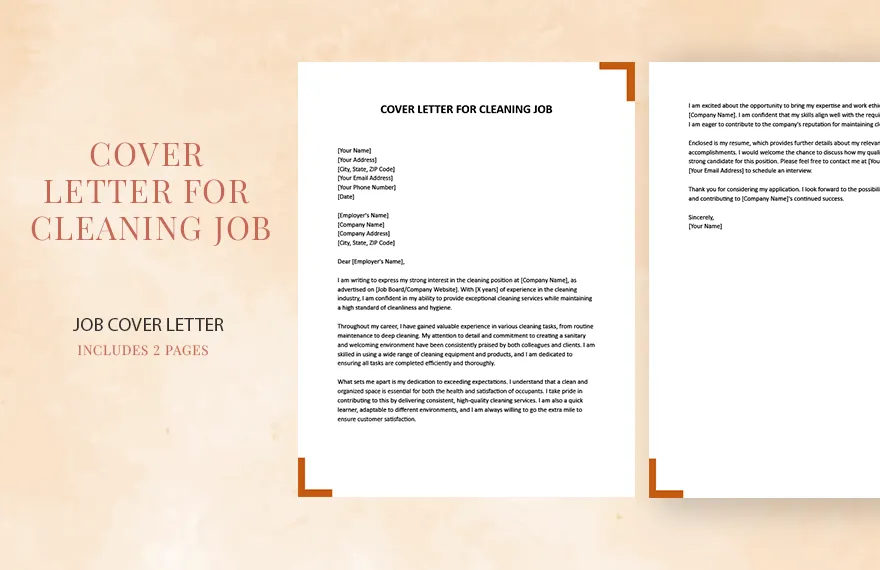
What is a Cover Letter and Why Is It Important?
A cover letter is a crucial document that accompanies your resume when you apply for a job. It serves as your introduction to a potential employer, offering an opportunity to highlight your qualifications, skills, and enthusiasm for the position. Unlike a resume, which provides a factual summary of your experience, a cover letter allows you to tell a story, explaining why you’re the ideal candidate for the specific cleaning position. It’s your chance to make a strong first impression and convince the hiring manager to read your resume and consider you for an interview. A well-crafted cover letter demonstrates your professionalism, attention to detail, and genuine interest in the role, setting you apart from other applicants.
In the competitive job market, a cover letter can be the deciding factor. It shows you’ve put in extra effort, demonstrating your commitment to the job and the company. This proactive approach is often what employers are looking for, setting you apart from those who only submit a resume. Consider the cover letter as your personal marketing pitch. It allows you to frame your experience and skills in a way that directly addresses the employer’s needs. By tailoring your letter to the specific requirements of the cleaning position, you increase your chances of getting noticed and landing an interview.
Cover Letter Basics Key Elements
To create a compelling cover letter for a cleaning position, you need to master the essential elements. These include a professional header, a personalized greeting, engaging body paragraphs, a strong closing, and a clear call to action. Each element plays a vital role in communicating your qualifications and enthusiasm. A well-structured cover letter is easy to read and highlights the key information employers are looking for. Attention to detail in each section shows you care and are likely to pay attention to detail on the job. Let’s break down the important elements and how to incorporate them effectively.
Header Information

Your header should be the first thing the hiring manager sees. It should include your contact information and the date. This section ensures the employer knows how to reach you and when the letter was written. Your contact information should include your full name, phone number, email address, and mailing address. Ensure all information is accurate and up-to-date. Also include the date you are submitting the letter. This shows the recruiter that the document is current and demonstrates you pay attention to detail.
When crafting your header, consider using a clean and professional format. This section sets the tone for the rest of the document. Avoid anything distracting or overly stylized. It’s about presenting essential information clearly and concisely. Also, the header provides context and is easily accessible if the employer needs to reach you. This basic setup is crucial for any cover letter and gives the initial impression of your professionalism. Always double-check the details to avoid errors that could negatively affect your application.
Greeting the Hiring Manager
Addressing your cover letter correctly sets a professional tone and shows you have paid attention to detail. If you know the hiring manager’s name, use it! Address them directly with ‘Dear Mr./Ms. [Last Name]’. This personalized approach shows you’ve done your research and are genuinely interested in the position. You can often find this information on the company’s website, LinkedIn, or the job posting. If you cannot find a name, use a professional greeting like ‘Dear Hiring Manager’ or ‘Dear [Company Name] Team’. Avoid generic greetings like ‘To Whom It May Concern,’ as they can seem impersonal.
Making sure to use the correct greeting can give you a leg up on other applicants. A well-chosen salutation creates a more personal connection and makes the employer more likely to keep reading. Showing you’re willing to do the extra research to make a good impression can be a positive signal. Whether you use a direct name or a general greeting, it is important to keep it professional and friendly, setting the right tone for your letter and ensuring a positive first impression. Getting this detail right will help you appear polished and professional.
Body Paragraphs
The body paragraphs are where you highlight your relevant skills and experience. This section is the heart of your cover letter. It’s your chance to showcase how your qualifications align with the job requirements. Use these paragraphs to tell your story, demonstrating how you can excel in the cleaning position. Break down the body into three key parts a compelling introduction to grab their attention, a section to display your skills, and an expression of your enthusiasm for the role.
First Paragraph Hook the Reader

Your first paragraph should immediately grab the reader’s attention. Start with a strong hook that shows your enthusiasm for the position and the company. Mention the specific cleaning position you’re applying for and where you saw the job posting. You might also include a brief statement about your understanding of the company’s values or mission, showing that you’ve done your research. It should create a positive first impression and encourage the hiring manager to read the rest of your letter.
Consider using a brief anecdote that relates to your cleaning experience or skills. This could be something like, ‘In my previous role, I consistently exceeded expectations in maintaining spotless environments.’ Alternatively, you could state your key skills or your commitment to cleanliness. Whatever approach you choose, ensure that your first paragraph is engaging and relevant to the role, making the hiring manager want to learn more about you. Make your introduction direct and get right to the point of why you are the ideal candidate.
Second Paragraph Showcase Your Skills
This paragraph is the core of your cover letter. It’s where you highlight your relevant skills and experience for the cleaning position. Review the job description carefully and identify the key skills and qualifications the employer is looking for. Then, provide specific examples from your work history that demonstrate those skills. Focus on tasks such as cleaning various surfaces, using cleaning equipment, and adhering to safety protocols. Be specific about the tasks you performed and the positive outcomes you achieved. For example, instead of saying ‘I cleaned offices,’ you could say, ‘I maintained the cleanliness of a 5,000-square-foot office space, ensuring all surfaces were sanitized and presentable for daily operations.’
When describing your skills, use action verbs to create a vivid and compelling narrative. Instead of saying ‘responsible for cleaning,’ try ‘managed and executed cleaning tasks, ensuring high standards of cleanliness.’ Also, include examples of any special skills or training you have, such as experience with specific cleaning products, equipment, or certifications. Show your accomplishments, not just your responsibilities. If you’ve received positive feedback or awards, mention those as well. The aim is to provide concrete evidence that you can excel in the position.
Third Paragraph Express Enthusiasm
In this paragraph, show your enthusiasm for the company and the specific cleaning position. Explain why you are interested in working for this particular organization. Mention anything that has interested you about the company, whether it is their values, their reputation, or their commitment to a clean environment. Show the hiring manager that you have researched the company and understand their mission. Highlight what makes you excited to be a part of their team.
This is also the ideal place to describe your career goals and how this position aligns with them. Explain how this role fits into your long-term career aspirations, demonstrating your commitment to the job and the company’s future. Express your eagerness to contribute to the company’s success and grow within the organization. Close with a forward-looking statement that shows your positive attitude and eagerness to take the next step in the hiring process. By expressing your interest, you are leaving the reader with a positive impression of your dedication.
Concluding Paragraph

Your concluding paragraph should summarize your interest in the position and reiterate your qualifications. Thank the hiring manager for their time and consideration. Briefly restate your key skills and why you are a good fit for the role. Be clear and concise, reinforcing the key message of your cover letter. You want the hiring manager to remember why you are the ideal candidate, making sure to highlight your relevant experience one last time.
Call to Action
Include a clear call to action in your concluding paragraph. State your availability for an interview and provide your contact information. The purpose is to make it easy for the hiring manager to take the next step. Express your availability for an interview and how they can reach you. For example, you might say, ‘I am available for an interview at your earliest convenience and can be reached at [phone number] or [email address].’ Make it as easy as possible for the hiring manager to contact you. A well-crafted call to action signals your professionalism and your willingness to take the next step in the hiring process.
Formatting and Design
Formatting and design are important elements for a professional-looking cover letter. Use a clear and readable font, such as Times New Roman, Arial, or Calibri. Keep the font size between 10 and 12 points for easy reading. Ensure the text is well-spaced with consistent margins to avoid a cramped appearance. Choose a font that is easy on the eyes and professional. A well-formatted cover letter is easier to read and reflects your attention to detail, making a positive impression on the hiring manager. Proper formatting enhances readability, which improves your chances of making a positive impression.
Use clear headings, bullet points, and short paragraphs to break up the text and make it easier to read. Use a simple, uncluttered layout. Avoid using complex designs or excessive colors. Focus on a clean and professional look that highlights your qualifications. Make sure your cover letter is visually appealing and easy to navigate. A well-designed cover letter is an indication of your professionalism, making it more likely that your application will be taken seriously. Make the document accessible and easy to read.
Proofreading and Editing

Proofreading and editing are essential steps in ensuring your cover letter is free of errors. Before sending your cover letter, carefully review it for any typos, grammatical errors, or inconsistencies. Errors can give the impression you don’t pay attention to detail. Proofread your cover letter multiple times. Read it aloud to catch any awkward phrasing or sentences that don’t flow well. Have a friend, family member, or career counselor review it. A fresh pair of eyes can catch mistakes you might have missed.
Check all the details, including the company name, the hiring manager’s name, and the job title, to ensure they are accurate. Review your cover letter on different devices, such as a computer, tablet, and phone, to ensure the formatting is consistent and there are no display issues. Use a grammar and spell-checking tool, but don’t rely on it entirely. These tools can identify errors but may not catch all issues. A thoroughly proofread and edited cover letter shows your professionalism and attention to detail, increasing your chances of making a positive impression. Make sure it’s free of errors so you can make a great first impression!
Cover Letter Examples for Cleaning Positions
Reviewing cover letter examples for cleaning positions can give you inspiration. You can use examples for formatting, phrasing, and demonstrating your experience. You can find samples online, on career websites, or through your network. Analyze different examples to see how other applicants highlight their skills, experience, and enthusiasm. Pay attention to how they tailor their letters to specific job requirements. This analysis will help you develop your cover letter.
When reviewing examples, tailor them to fit your experience and the specific cleaning position. Do not copy a cover letter, but use it as a guide. Focus on the parts that you can include in your application. Identify key phrases, action verbs, and skill descriptions that best represent you and your qualifications. By combining these elements with your personal details, you can craft a unique cover letter that stands out.
Cleaning Position Cover Letter Mistakes
Avoiding common cover letter mistakes is important for your job search. One mistake is using a generic cover letter that is not tailored to the specific job and company. Always customize your cover letter to the specific requirements of the cleaning position and the company’s values. Another mistake is including irrelevant information or skills. Keep your focus on what is relevant to the job. Use concise and direct language to emphasize your strengths. Additionally, be sure to double-check your letter for typos or grammatical errors. These errors give the impression of carelessness, which can undermine your application.
Focus on what the employer is looking for and how you meet the requirements. You also need to avoid negativity. Emphasize your positive qualities and experience, highlighting the value you can bring to the company. By avoiding these mistakes, you can ensure your cover letter is impactful and highlights your qualifications for the cleaning position, making you a more attractive candidate. Show the employer that you are a good fit for the job.
Sending Your Cover Letter

The last step involves sending your cover letter to the employer. Follow the application instructions. If the instructions indicate to submit your cover letter as an attachment, make sure the file is in a professional format, such as PDF or Word document. Always use a professional email address and include a clear and concise subject line. For example, use something like ‘Application for Cleaning Position - [Your Name].’ This makes it easy for the hiring manager to identify your email.
Before sending your cover letter, recheck the contact information and attachments to ensure everything is correct. You can also send a follow-up email a week or two after submitting your application. This will give the hiring manager a reminder of your interest in the position. By following these steps, you ensure a professional and effective application that showcases your qualifications and enthusiasm for the cleaning position.