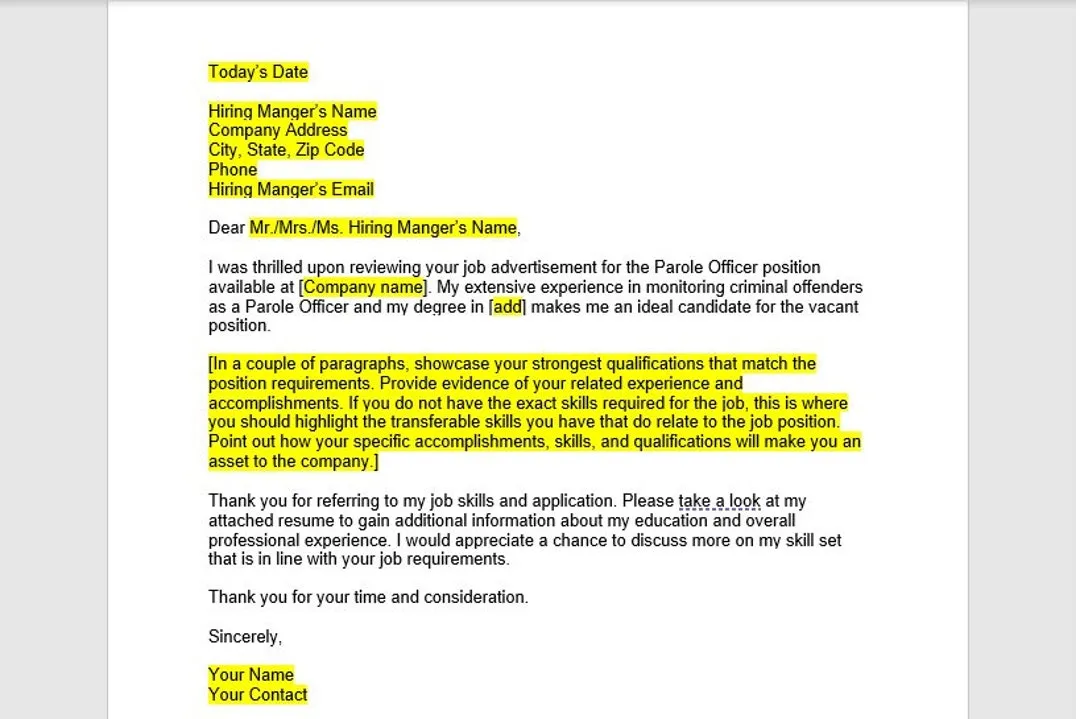
Crafting Your Entry Level Probation Officer Cover Letter
Landing an entry-level probation officer position requires a strong cover letter. This crucial document is your first chance to impress potential employers and showcase your qualifications. A well-written cover letter goes beyond simply listing your skills and experience; it demonstrates your understanding of the role, your enthusiasm for the profession, and your ability to communicate effectively. This guide will walk you through the essential steps of crafting a compelling cover letter that grabs attention and increases your chances of getting an interview. Remember, your cover letter is a reflection of your professionalism and attention to detail, qualities highly valued in the field of probation.
Understanding the Role of a Probation Officer
Key Responsibilities of Probation Officers

Before you start writing, understanding the core responsibilities is critical. Probation officers supervise individuals on probation, ensuring they comply with court-ordered conditions. They conduct assessments, investigate violations, and prepare reports for the court. They also provide support and guidance to help probationers rehabilitate and reintegrate into society. This involves regular contact with probationers, conducting home visits, and working with various community resources. Knowledge of these responsibilities allows you to tailor your cover letter to highlight relevant skills and experiences that align with the job’s demands.
Essential Skills for Probation Officers
Probation officers need a diverse skill set to succeed. Strong communication skills, both written and verbal, are paramount. They must be able to effectively interview, counsel, and write detailed reports. Critical thinking and problem-solving abilities are essential for assessing situations and making sound judgments. Interpersonal skills, including empathy and the ability to build rapport, are crucial for establishing trust and motivating probationers. Additionally, officers must possess organizational skills to manage caseloads and adhere to deadlines. Highlight these skills in your cover letter, providing specific examples of how you’ve demonstrated them in the past.
Researching the Probation Department
Researching the specific probation department you’re applying to is a vital step. This demonstrates your genuine interest and allows you to tailor your cover letter to their needs. Visit their website to learn about their mission, values, and programs. If possible, review recent news articles or reports related to the department. This information provides valuable insights into their priorities and challenges. Showing that you understand the department’s context demonstrates your preparedness and increases the likelihood of your application standing out.
Finding Contact Information

Locating the correct contact person is important. Address your cover letter to the hiring manager if possible, as it demonstrates initiative. If a specific name isn’t available, research the department’s organizational chart or use LinkedIn to identify the appropriate contact. Always verify the contact information to avoid sending your application to an incorrect or outdated address. A well-addressed cover letter shows that you have paid attention to detail and are proactive in your job search.
Customizing Your Cover Letter
Header and Salutation Best Practices
Your cover letter header should include your contact information, such as your name, address, phone number, and email address. This ensures that the hiring manager can easily reach you. The salutation should be formal and professional, using ‘Dear Mr./Ms./Mx. [Last Name]’ if you know the hiring manager’s name. If you don’t know the name, ‘Dear Hiring Manager’ is an acceptable alternative. Avoid generic greetings like ‘To Whom It May Concern,’ as they indicate a lack of effort.
Writing a Compelling Opening
The opening paragraph is your first chance to make a strong impression. State the position you’re applying for and where you saw the job posting. Briefly express your interest and highlight one or two key qualifications that make you a good fit. Avoid generic opening lines; instead, demonstrate your enthusiasm for the role and the organization. A strong opening will immediately capture the reader’s attention and motivate them to continue reading your cover letter. For instance, you could mention a specific program or initiative that resonates with you.
Highlighting Relevant Skills and Experience
The body of your cover letter should highlight the skills and experiences that align with the job requirements. Use the job description as a guide and provide specific examples of how you’ve demonstrated those skills in the past. If you have experience in related fields, such as social work, criminal justice, or counseling, describe your responsibilities and achievements. Quantify your accomplishments whenever possible. For example, instead of saying ‘Managed a caseload,’ state ‘Managed a caseload of 30 clients, resulting in a 15% decrease in recidivism rates.’ This demonstrates your ability to achieve results.
Showcasing Education and Certifications
Clearly state your educational background, including your degree(s), major, and the name of the institution. If your degree is in criminal justice, social work, or a related field, make sure to mention it. Also, mention any relevant certifications or licenses, such as those related to counseling or crisis intervention. If you’re currently pursuing a degree, indicate the expected graduation date. Education and certifications are crucial for demonstrating your preparedness for the probation officer role and your commitment to professional development.
Quantifying Achievements

Use numbers and data to quantify your achievements and show your impact. Instead of stating you improved client outcomes, specify by what percentage. When describing your experience, use metrics such as the number of clients you’ve worked with, the number of programs you’ve facilitated, or the positive results you achieved. Quantifiable achievements provide concrete evidence of your abilities and make your cover letter more persuasive. They showcase your ability to deliver results and highlight your value as a potential employee.
Expressing Your Enthusiasm and Fit
Demonstrate your genuine interest in the probation officer role and the specific department. Explain why you’re drawn to the profession and what motivates you to work with individuals on probation. Highlight how your values align with the department’s mission and culture. Researching the department and mentioning their specific programs or initiatives demonstrates your genuine interest and shows that you have taken the time to learn about them. This personal connection can significantly increase your chances of getting an interview.
Proofreading and Formatting
Thoroughly proofread your cover letter for any grammatical errors, spelling mistakes, and typos. These errors can undermine your credibility and make you appear unprofessional. Use a professional and easy-to-read font, such as Times New Roman or Arial, and maintain consistent formatting throughout the document. Ensure your cover letter is well-organized and concise. Aim for a maximum of one page, as hiring managers often have limited time to review applications. Consider having a friend or family member review your cover letter as a fresh set of eyes can catch errors you may have missed.
Writing a Strong Closing

In your closing paragraph, reiterate your interest in the position and express your gratitude for the hiring manager’s time and consideration. State your availability for an interview and provide your contact information again. End with a professional closing, such as ‘Sincerely’ or ‘Respectfully,’ followed by your name. A well-crafted closing paragraph leaves a positive impression and encourages the hiring manager to take the next step in the hiring process.
Tailoring Your Letter to Each Application
Address Specific Job Requirements
Customize your cover letter for each job application. Read the job description carefully and address the specific requirements and qualifications outlined. Highlight your relevant skills and experiences in a way that directly responds to the employer’s needs. Avoid using a generic cover letter; tailor it to match the specific requirements of each position you apply for. This demonstrates your attention to detail and shows that you are seriously interested in the opportunity.
Highlighting Relevant Experiences

Even if you lack direct experience as a probation officer, highlight relevant experiences from other roles. This could include experience in social work, counseling, law enforcement, or volunteer work. Emphasize skills such as communication, conflict resolution, crisis intervention, and case management. Explain how your previous experiences have prepared you for the responsibilities of a probation officer. Show the hiring manager how your skills and experience align with the job requirements, even if they are not directly related.
Follow Up After Submission
Checking Application Status
After submitting your cover letter and resume, check the application status. Many online application systems provide updates on the progress of your application. If you haven’t heard back within a reasonable timeframe, usually a couple of weeks, consider following up with the hiring manager. A brief and polite email asking about the status of your application shows your continued interest and initiative. Keep your email concise and avoid being overly persistent.
Preparing for Interviews
If you’re invited for an interview, prepare thoroughly. Research common interview questions for probation officer positions, such as questions about your understanding of the role, your approach to working with offenders, and your ability to handle difficult situations. Prepare thoughtful answers to these questions, providing specific examples from your experiences. Practice answering these questions out loud, and consider doing a mock interview with a friend or career counselor. Dressing professionally, being punctual, and demonstrating your enthusiasm can increase your chances of success.