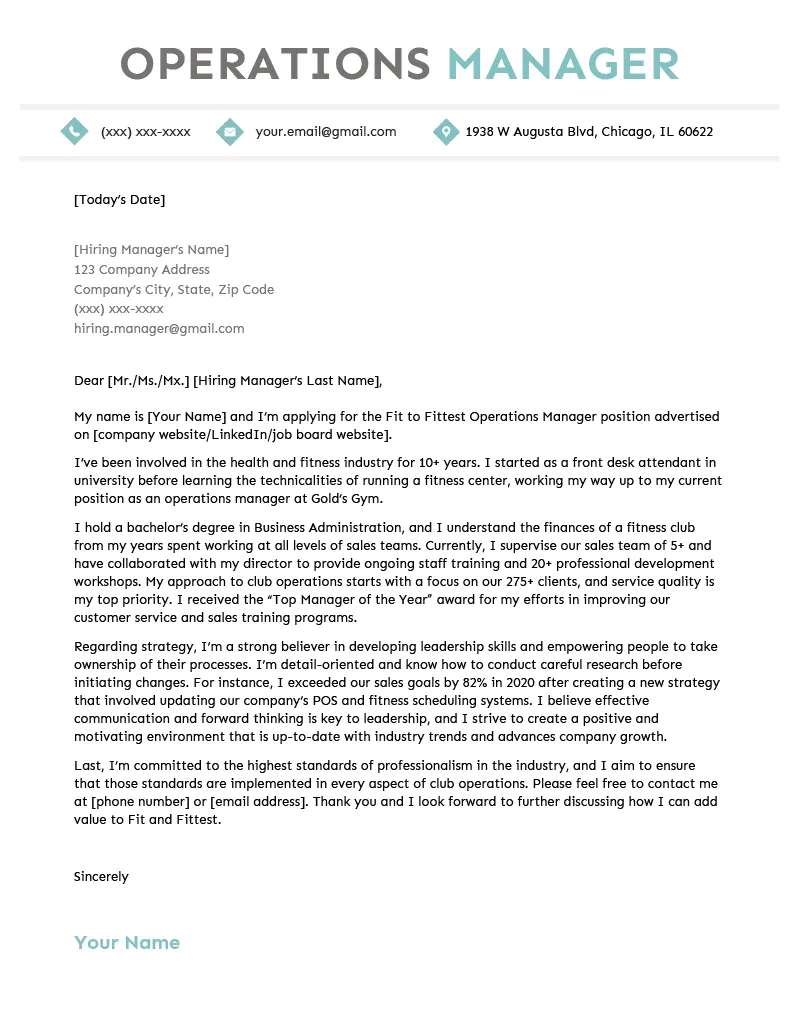
7 Tips for Entry-Level Operations Manager Cover Letters
Landing an entry-level operations manager position requires a compelling cover letter. This crucial document is your first impression, so it needs to showcase your skills, enthusiasm, and potential. Stand out from the competition with these seven essential tips. These tips go beyond just listing your qualifications; they help you craft a narrative that captures the hiring manager’s attention and highlights why you are the perfect fit for the role and company. Preparing a tailored cover letter is an investment that can yield significant returns in your job search.
Highlighting Relevant Skills
The core of your cover letter should revolve around the skills that make you a strong candidate. Since you’re at an entry level, it’s crucial to identify and highlight the skills that are most relevant to operations management. Think of this section as a skills-based resume in short format, and consider highlighting specific skills in a way that aligns with the job description.
Quantify Your Achievements

Whenever possible, quantify your achievements. Instead of simply stating you improved efficiency, mention the percentage increase in productivity or the reduction in costs you achieved in a previous role. Even if your experience is from internships or volunteer work, find ways to showcase the positive impact you made. Providing numbers adds credibility and demonstrates your ability to deliver results.
Emphasizing Transferable Skills
If you lack direct operations management experience, emphasize transferable skills. These are skills you’ve developed in other roles or activities that are applicable to operations. For example, project management, problem-solving, communication, and leadership skills are all highly valuable in operations. Use action verbs to describe how you’ve applied these skills in past situations.
Tailoring to the Job Description
A generic cover letter is a quick path to the rejection pile. Instead, take the time to tailor each cover letter to the specific job description. This shows that you’ve carefully reviewed the requirements and are genuinely interested in the role. Analyze the job description for keywords, skills, and responsibilities, and then weave these elements into your letter.
Researching the Company

Before you start writing, research the company. Understanding its mission, values, and recent achievements will allow you to tailor your letter to its specific needs. Show that you’re not just looking for any job, but that you’re interested in this particular company and its culture. Showing interest in the company helps create a positive first impression.
Understanding the Company’s Needs
Once you understand the company, identify its specific needs. What challenges is it facing? How can your skills and experience help solve those problems? Addressing these needs directly in your cover letter shows that you understand the role and are ready to contribute. Showcasing this type of understanding positions you as a thoughtful and proactive candidate.
Showcasing Your Enthusiasm
Your cover letter should convey your genuine enthusiasm for the position and the company. Hiring managers want to see that you’re passionate about operations and excited about the opportunity to contribute. This means your cover letter will be filled with positive language and a confident tone, making the recruiter read with interest.
Expressing Passion for Operations

Clearly express your passion for operations management. Explain what interests you about the field and what motivates you to excel. This could be your interest in the areas like optimizing processes, improving efficiency, or managing teams. The passion gives a window to the hiring manager that you are serious about working in the field.
Demonstrating a Proactive Attitude
Show that you have a proactive attitude by discussing how you approach problem-solving and take initiative. Provide examples of situations where you went above and beyond to achieve a goal or overcome a challenge. Highlight your willingness to learn and take on new responsibilities to show that you have a proactive attitude.
Formatting and Structure
The format and structure of your cover letter are just as important as its content. A well-organized and easy-to-read letter makes a positive impression and demonstrates your attention to detail. Proper formatting also helps the reader scan for keywords or highlights.
Choosing the Right Tone

Maintain a professional yet enthusiastic tone throughout your cover letter. Avoid overly casual language or jargon. Write in a clear and concise style, and use positive and action-oriented language. The ideal tone is confident, respectful, and engaging. You want the hiring manager to feel confident in you after reading your cover letter.
Keeping It Concise
Hiring managers are busy, so keep your cover letter concise. Aim for a single page, and use brief paragraphs that get straight to the point. This ensures the reader can quickly grasp the key information. Edit out any unnecessary information to create a focused message.
Proofreading Meticulously
Before you submit your cover letter, proofread it meticulously. Errors in grammar or spelling can undermine your credibility and give the impression that you’re not detail-oriented. Reviewing your work is also important because it can give a peek into your character.
Checking for Grammatical Errors

Use spell-check and grammar-check tools, but don’t rely on them completely. Read your cover letter aloud to catch errors that automated tools might miss. Ask a friend or mentor to proofread it as well. Fresh eyes can often spot mistakes more easily. This is crucial for entry-level positions, as it shows your dedication to the details.
Ensuring Clarity and Professionalism
Ensure your writing is clear, concise, and professional. Avoid slang, contractions, and informal language. Use proper punctuation and formatting. Your cover letter should reflect your professionalism and attention to detail. This creates a first impression that you’ll be taken seriously as a potential employee.
Showcasing Leadership Potential
Operations management often involves leading teams and making decisions. Show that you possess leadership potential, even if you don’t have direct management experience. Highlight instances where you have taken initiative and motivated others.
Providing Examples of Leadership

Give specific examples of your leadership skills. This could be from previous experiences in volunteer roles, academic projects, or extracurricular activities. Describe the situation, your actions, and the positive outcomes. This helps demonstrate that you have the capabilities to lead teams and manage processes.
Highlighting Teamwork Abilities
Operations management relies on teamwork. Highlight your ability to work effectively with others, communicate clearly, and contribute to a team environment. Showcase your skills in collaboration, conflict resolution, and supporting team goals. You want to highlight the strengths that will bring positive results.
Closing with a Strong Call to Action
Your cover letter should conclude with a strong call to action. This encourages the hiring manager to take the next step and increases your chances of getting an interview. The call to action can be as simple as the suggestions listed below.
Expressing Your Interest

Reiterate your interest in the position and the company. Mention why you believe you would be a good fit and what you are looking forward to. This solidifies your enthusiasm and reinforces your desire to join the team. The goal is to make them think of you while reviewing the rest of the applications.
Offering to Provide Additional Information
Offer to provide any additional information or answer any questions they may have. This shows your willingness to engage and provides an opportunity for further communication. Provide your contact information and make it easy for the hiring manager to reach you. The final step is to encourage contact, this is the last step and is also most important.
Common Mistakes to Avoid
While crafting your cover letter, be mindful of the common mistakes that can hurt your chances. Avoiding these pitfalls can significantly improve your application. It’s important to showcase that you have taken the time to prepare the application meticulously and professionally. This also shows that you pay attention to the details.
Generic Cover Letters
Avoid sending generic cover letters. These letters lack personalization and fail to show genuine interest in the specific role or company. Tailor your cover letter to each job application. This will show that you are serious about the position, and you have taken the time to do your research.
Focusing Solely on Responsibilities
Don’t just list your past responsibilities. Highlight your achievements and the impact you made in previous roles. Quantify your accomplishments whenever possible, and demonstrate the value you brought to your previous companies. It is about what you can do for them, and not the other way around.
Ignoring the Company’s Values
Failing to align your cover letter with the company’s values is a missed opportunity. Research the company’s mission, culture, and goals, and then emphasize how your skills and experience align with their values. Show them you share their values and how you can help them achieve their business goals. The ultimate goal is to fit the company’s requirements.
Lacking Enthusiasm
A lack of enthusiasm can make your cover letter seem uninspired and unmemorable. Write with energy and passion. Show that you’re genuinely excited about the opportunity. Highlight what excites you about operations, what motivates you to excel, and why you believe you are a perfect fit.