Why a Cover Letter is Crucial for Engineering Internships
In the competitive world of engineering, securing an internship is a crucial step towards launching your career. While your resume showcases your qualifications, a well-crafted cover letter provides the opportunity to distinguish yourself from other applicants. It is your chance to go beyond a list of skills and experiences, allowing you to express your personality, enthusiasm, and how your unique experiences align with the specific internship. The cover letter bridges the gap, adding a personal touch and a narrative to your application, which the resume alone cannot accomplish. It demonstrates your communication skills, attention to detail, and your genuine interest in the company and the role. By effectively conveying your passion for engineering and explaining why you are the ideal candidate, your cover letter significantly increases your chances of getting noticed and securing an interview.
Highlighting Your Engineering Skills & Knowledge
Your cover letter should be a showcase of your relevant skills and knowledge. Start by identifying the key skills mentioned in the job description and pinpointing which of these you possess. Then, use specific examples from your academic projects, coursework, or previous experiences to illustrate how you have utilized these skills. Instead of just listing skills, explain how you applied them to solve problems or achieve results. For instance, if the job description mentions experience with CAD software, describe a project where you used it and what you accomplished. If you have experience with data analysis, describe the type of data you worked with, what tools you used, and any insights you derived. This approach allows the hiring manager to envision you applying your skills to their projects and demonstrates your practical understanding of engineering principles.
Technical Skills to Showcase

Highlighting technical skills is paramount. Mention specific software and tools you are proficient in, such as AutoCAD, SolidWorks, MATLAB, or programming languages relevant to your field. Be sure to demonstrate how you’ve used these tools in projects, quantifying your accomplishments wherever possible. For instance, state the efficiency improvements achieved or the specific problems solved using these skills. If you have experience with specific lab equipment or testing procedures, describe these and any results you achieved. Keep your focus on the technical skills most pertinent to the internship requirements, emphasizing practical application and demonstrable results.
Software Proficiency
Software proficiency is a key requirement in modern engineering. Detail the software you are proficient in, such as CAD, CAE, or simulation tools. Provide examples of how you used these in projects, detailing your design and analysis capabilities. Mention any certifications or training you’ve completed for these software. Describe the scale of projects you’ve worked on, the specific design challenges you faced, and how your proficiency in software helped you overcome them. Mention any coding languages relevant to engineering like Python, C++, or Java and how they contributed to your projects.
Project Experience Demonstration
Your project experience provides concrete evidence of your abilities. Describe your role in each project and the tasks you undertook. Detail the technical challenges you faced and how you tackled them. Emphasize your contribution to the project’s success. Mention any specific designs, analyses, or tests you performed. Include the project’s outcome or any positive results you achieved. Projects should be relevant to the internship, with a focus on showing that you have the skills necessary to make a meaningful contribution to a team and achieve the projects goals. This shows your capacity to apply theoretical knowledge to real-world problems.
Quantifying Achievements in your Cover Letter

Whenever possible, quantify your achievements to make your cover letter more impactful. This involves using numbers, percentages, and specific metrics to illustrate your accomplishments. This will add a level of credibility and clarity to your claims. For instance, instead of saying ‘improved efficiency,’ specify by how much, such as ‘improved process efficiency by 15%.’ If you worked on a project, mention the scope, budget, and the outcomes. If you have experience with cost-saving or time-saving activities, include these details as well. Using numerical data shows that you can achieve tangible results and gives the employer more insight into your value.
Using Numbers to Impress
Numbers help demonstrate the impact of your work. Use metrics to quantify your achievements, such as project budget, time saved, or efficiency gains. For example, ‘Reduced project costs by 10%’ is more impactful than ‘reduced costs’. When describing projects, include the size of the team, the duration of the project, and the outcomes. If you have received any awards or recognitions, be sure to mention them, including any relevant statistics. This helps the hiring manager to understand the scale of your accomplishments and to determine the value that you can bring to their organization. Numbers show you have a data-driven approach to problem-solving.
Formatting your Engineering Internship Cover Letter
Your cover letter must be easy to read and visually appealing, as it reflects your professionalism. Use a standard, readable font like Times New Roman, Arial, or Calibri, with a size between 11 and 12 points. Ensure your letter is well-structured, with clear paragraphs, headings, and ample white space to break up the text. A well-formatted cover letter is easy to read and demonstrates your attention to detail. Use a professional-looking letterhead or include your contact information at the top. Align your text to the left and avoid using justified text, which can make the spacing uneven. Use a consistent format throughout the document and proofread it carefully to eliminate errors.
Choosing the Right Font and Style

Choose a font and style that is both professional and easy to read. Avoid overly stylized fonts. Times New Roman, Arial, and Calibri are excellent choices. The font size should be between 11 and 12 points. Maintain consistency in your font style, size, and formatting throughout the document. Use bold or italic sparingly to highlight important information, and ensure all formatting is clean and uncluttered. Use a standard template for your letter, making sure the layout is consistent and the text is well-spaced. The objective is to deliver your message clearly, so make sure your formatting complements your content without distracting the reader.
Contact Information and Professionalism
Your contact information should be at the top of your cover letter. Include your full name, phone number, email address, and, optionally, your LinkedIn profile URL. Use a professional-sounding email address. Make sure your cover letter and resume are formatted consistently and that your contact information matches. Double-check that all information is accurate and up-to-date. Ensure your cover letter reflects the same level of professionalism you would demonstrate in a face-to-face meeting. Always proofread and edit to ensure that the tone is appropriate for a professional context, and that you are using correct grammar and spelling. This showcases your attention to detail and commitment to presenting yourself in the best possible light.
Key Sections to Include
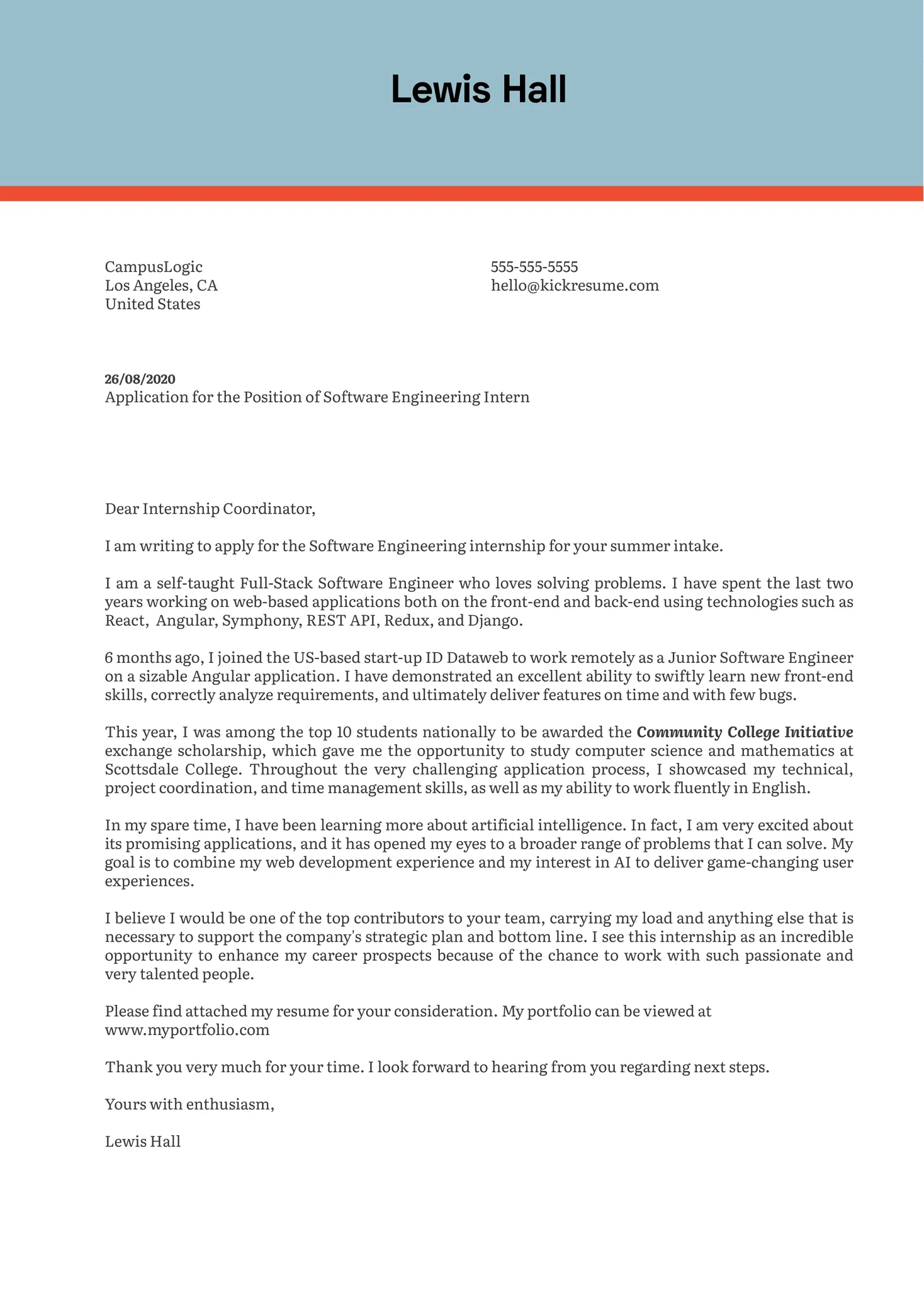
A well-structured cover letter will guide the reader through your qualifications in a logical and compelling manner. Typically, this involves several key sections: a header, a personalized introduction, paragraphs highlighting your relevant skills and experiences, and a concise closing with a call to action. Each section plays a vital role in conveying your capabilities and your interest in the internship. The cover letter is not just a formality; it is a strategic tool that allows you to narrate your story and convince the employer that you are the best choice.
Header and Introduction

The header of your cover letter should include your contact information and the date. The introduction is your chance to make a strong first impression. Address the hiring manager by name if possible, and clearly state the position you are applying for. Briefly explain why you are interested in the internship and what you bring to the table. Keep your introduction concise and focused, setting the tone for the rest of your letter. Highlight your strongest skill or accomplishment and express your enthusiasm for the opportunity. This opening section should immediately grab the reader’s attention and make them want to continue reading.
Body Paragraphs Highlighting Skills
The body paragraphs should provide detailed evidence of your skills and experience. Use these paragraphs to showcase how your qualifications match the requirements outlined in the job description. Provide specific examples of projects, coursework, or previous experiences where you demonstrated the required skills. Quantify your achievements whenever possible, using numbers and metrics to show the impact of your work. Focus on skills and experiences most relevant to the internship. Emphasize your technical abilities, software proficiency, and project experience, and tailor the content to the specific requirements of the internship. Each paragraph should focus on a specific skill or achievement and should link it back to the company’s needs.
Closing and Call to Action
The closing of your cover letter should reiterate your interest in the internship and thank the hiring manager for their time and consideration. Include a call to action, such as expressing your availability for an interview and providing your contact information. Reiterate your enthusiasm and reiterate your fit for the position. Make sure you clearly state how to contact you for the next steps. Keep your closing concise and confident, leaving a positive and lasting impression. Proofread the entire letter once again to check for errors before submitting your application.
Tailoring Your Cover Letter for Each Application

A generic cover letter is unlikely to make a lasting impression. Tailoring your letter for each application is crucial. Research the company and the specific role to understand their values, mission, and requirements. Use the job description to identify the key skills and experiences that the employer is seeking, and then adjust your letter to reflect these. Mention specific projects or initiatives undertaken by the company, demonstrating your knowledge and genuine interest. Avoid using a template without customizing it, and show the hiring manager why you are the best candidate for the role. This personalized approach will make your application stand out and significantly increase your chances of getting an interview.
Researching the Company
Researching the company is essential for tailoring your cover letter. Visit the company’s website to learn about their mission, values, and recent projects. Review their social media profiles and news articles to gain a deeper understanding of their work culture and industry standing. Identify what makes the company unique and integrate this information into your cover letter. Address the hiring manager or the person in charge of recruitment by name. Mention the company’s recent accomplishments or values and explain how your skills align with their goals. This approach shows your genuine interest in the company and your capacity to contribute to their success.
Addressing Specific Requirements
Carefully read the job description and identify the specific requirements, then use your cover letter to directly address them. Highlight the skills and experiences most relevant to the position. If the job description mentions specific software, tools, or technologies, make sure to include your proficiency in those areas. Provide examples of how you have used these skills in your projects or coursework. Tailor your cover letter to the language and terminology used in the job posting. The goal is to demonstrate that you meet all the requirements. Use the job description as a checklist to make sure you are covering all the key points. By aligning your qualifications with their needs, you will show that you are a good fit for the role.
Common Mistakes to Avoid

Avoiding common mistakes can significantly improve your cover letter. One of the biggest mistakes is sending a generic cover letter. Tailor each letter to the specific job and company to show you are serious about the opportunity. Other mistakes to avoid include typos, grammatical errors, and overly long paragraphs. Make sure to highlight relevant skills and experiences and clearly state why you are interested in the internship. Do not use jargon that the hiring manager might not understand and provide specific examples of how you have used your skills. Proofreading is very important. Your cover letter should be a reflection of your skills and your attention to detail.
Typos and Grammatical Errors
Typos and grammatical errors can damage your credibility. Always proofread your cover letter multiple times before submitting it. Use a grammar checker and have a friend or family member review it. Errors show a lack of attention to detail and may lead to rejection. Double-check all names, titles, and company information. Make sure your sentences are well-structured and easy to understand. Typos can undermine all the work that you have put into creating a professional cover letter. Attention to detail is crucial. Ensure every word is accurately spelled and that your grammar is correct.
Generic Cover Letters
Using a generic cover letter is a major mistake. Each cover letter should be tailored to the specific job and company you are applying for. A generic letter shows a lack of effort and interest. Research the company to learn about their values, mission, and recent projects. Customize your letter to reflect the requirements outlined in the job description. Mention the company by name and show your understanding of their work. Demonstrate your genuine interest in the role by describing why you are enthusiastic about the opportunity. Tailoring your cover letter increases your chances of getting noticed. This shows you took the time to understand the role and are genuinely interested.
Cover Letter Samples for Engineering Internships
Reviewing cover letter samples can provide you with a useful template to emulate and adapt. These samples can serve as guides to format and structure your cover letter effectively. You can use these samples to understand the language, tone, and level of detail required for different engineering fields. However, always remember to customize the sample to fit your unique skills, experiences, and the specific requirements of each job. Use them as a starting point, not a replacement for your personalized cover letter, adapting them to reflect your individual accomplishments and ambitions. Always remember that the most effective cover letter is one that is tailored and unique to you.
Mechanical Engineering Cover Letter Sample
A Mechanical Engineering cover letter should emphasize relevant technical skills, like CAD, FEA, or manufacturing processes. Include any project experience related to design, analysis, or prototyping. Show a clear understanding of mechanical engineering principles and how you have applied them in the past. If the internship involves specific tools or software, be sure to mention your experience with them. Describe how your skills and knowledge align with the company’s projects and requirements. Quantify your accomplishments. Mechanical Engineering roles often focus on practical application, so provide concrete examples of your ability to solve problems and deliver results. Ensure the tone is professional, reflecting your expertise and your enthusiasm for mechanical engineering.
Civil Engineering Cover Letter Sample
In a Civil Engineering cover letter, focus on your experience with structural analysis, design software, and construction management. Highlight any projects involving infrastructure, such as bridges, roads, or buildings. Showcase your understanding of civil engineering principles and standards. If you have experience with surveying or site inspection, mention it. Detail how you applied your skills to complete projects successfully. If possible, discuss your familiarity with relevant codes and regulations. Illustrate your ability to work in a team and collaborate on projects. The civil engineering cover letter should be detailed, highlighting practical knowledge and skills.
Electrical Engineering Cover Letter Sample
The Electrical Engineering cover letter should highlight your experience with circuits, electronics, and programming. Mention experience with relevant software, such as circuit simulation tools. Provide examples of projects that showcase your abilities to design, analyze, and implement electrical systems. Detail your experience with embedded systems, control systems, or power systems. Show how you have applied your skills to solve practical problems and achieve project goals. Include experience with specific technologies or hardware. The electrical engineering cover letter should show your technical knowledge and enthusiasm for electrical engineering.
Best Practices for Cover Letter Submission
Following the best practices for submitting your cover letter and resume will increase your chances of success. Always check the company’s application instructions and follow them carefully. Ensure that your cover letter is in a professional format, with clear fonts and proper spacing. Use a clear file name for your cover letter and resume. Proofread both documents carefully to catch any errors before submitting. The quality and professionalism of your submission reflects on your attention to detail. Always ensure that all submitted information is up-to-date. Double-check the contact information. By following these practices, you enhance your professionalism and increase your chances of getting an interview.
File Naming Conventions
Use a clear and professional file naming convention for your cover letter and resume. Include your name and the title of the document. For example, use “FirstName_LastName_CoverLetter.pdf” or “FirstName_LastName_Resume.pdf”. This allows the hiring manager to easily identify your documents. Avoid using spaces, special characters, or abbreviations that can cause errors when the documents are saved or viewed. Always save your documents as PDFs unless the application instructions specify a different file type. This ensures that your formatting remains consistent when opened by others. This attention to detail shows your professionalism and organizational skills.
Following Application Instructions
Always follow the application instructions provided by the company. If they specify how to submit your cover letter, resume, or any other materials, make sure that you follow those instructions to the letter. Read the application instructions carefully. If the company asks for a specific format, use that. Ensure all required documents are included. If you are applying online, verify that all documents have been successfully uploaded. Not following the instructions can lead to your application being immediately rejected. Demonstrating that you can adhere to instructions shows your ability to follow directions. It’s crucial for demonstrating your attention to detail and your commitment to the application process.