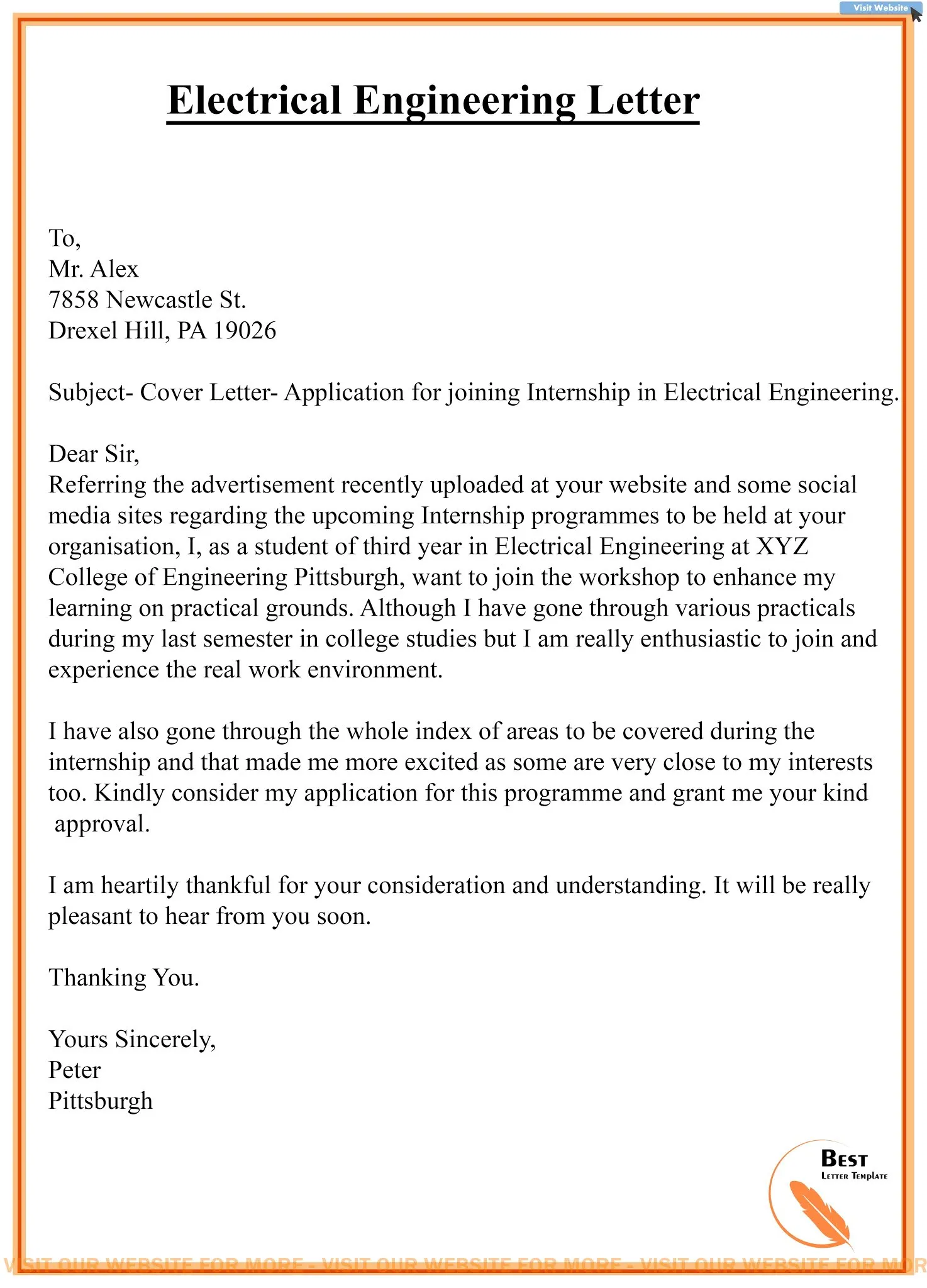
What is an Engineering Internship Cover Letter
An engineering internship cover letter is a crucial document that accompanies your resume when applying for engineering internships. Think of it as your first introduction to a potential employer, a chance to make a strong first impression, and a means to showcase why you’re the perfect fit for their internship program. Unlike a resume, which provides a factual overview of your skills and experience, the cover letter allows you to express your personality, enthusiasm, and specific interest in the opportunity. It’s a personalized narrative that complements your resume, providing context and highlighting the aspects of your background most relevant to the position. The cover letter should articulate your career goals and explain how the internship aligns with them.
Why is a Cover Letter Important for Engineering Internships
In the competitive landscape of engineering internships, a well-crafted cover letter can significantly boost your chances of securing an interview. It’s your opportunity to stand out from the crowd and demonstrate that you’ve gone the extra mile. A cover letter allows you to elaborate on the skills and experiences listed in your resume, providing specific examples and demonstrating how you’ve applied your knowledge. It shows that you have taken the time to research the company and understand the role, indicating genuine interest. Additionally, a cover letter allows you to address any potential gaps in your experience or explain unusual circumstances. It’s also a chance to express your enthusiasm and passion for engineering, which can leave a lasting positive impression on the hiring manager. By effectively communicating your value proposition, you increase your chances of getting your foot in the door.
Key Components of an Engineering Internship Cover Letter

A compelling engineering internship cover letter comprises several key elements that work together to create a persuasive narrative. Each section plays a vital role in conveying your qualifications, interest, and suitability for the internship. The following sections are essential for a successful cover letter that grabs the attention of the hiring manager. Remember, each part must be precise and well-formatted to ensure a cohesive and professional document.
Your Contact Information and Date
Start with your contact information at the top of the cover letter. Include your full name, address, phone number, and professional email address. Following this, add the date you are writing the letter. Ensure your email address sounds professional. Avoid using nicknames or informal addresses. Consistency in formatting across your resume and cover letter demonstrates attention to detail and professionalism, which are critical in the engineering field.
The Hiring Manager’s Information
Research the hiring manager’s name and title. Addressing the cover letter to a specific person shows that you have put in the effort to learn about the company and the opportunity. If you can’t find the specific name, use a professional title like “Hiring Manager” or “Recruiting Team.” This personalized approach immediately sets your cover letter apart from generic applications and shows that you are genuinely interested in the internship. This step is crucial because it helps personalize your application and shows initiative.
The Salutation

Use a professional salutation, such as “Dear Mr./Ms. [Last Name]” if you know the hiring manager’s name. If the name is unavailable, use a general but professional greeting, such as “Dear Hiring Manager.” Avoid overly casual greetings. A formal salutation sets a professional tone from the start. This initial greeting influences the reader’s first impression and sets the stage for the rest of your letter.
The Opening Paragraph
The opening paragraph should grab the reader’s attention and clearly state the purpose of your letter – to apply for the engineering internship. Mention where you found the internship posting. Briefly state your academic background, such as your major and the university you attend. Show enthusiasm. Your opening should immediately signal your interest and why you are a strong candidate. Make it concise and impactful to make sure the reader wants to continue reading your letter.
Highlighting Your Skills and Experience
This is the core of your cover letter. Align your skills and experiences with the internship requirements. Provide specific examples of your achievements and demonstrate how you have applied your engineering knowledge. Discuss any relevant coursework, projects, or extracurricular activities that showcase your abilities. Use action verbs to describe your accomplishments and quantify your achievements whenever possible. Tailor this section to the specific requirements mentioned in the job description.
Quantify Your Achievements

Quantify your achievements whenever possible. Instead of saying “improved efficiency,” state “improved efficiency by 15% by implementing [specific method].” Using numbers adds credibility and demonstrates the impact of your contributions. Providing measurable results helps the hiring manager understand the value you can bring to the role and provides a clear indication of your capabilities. The more specific you are, the more impressive your accomplishments will be.
Tailoring to the Specific Internship
Customize your cover letter for each internship you apply for. Show that you have researched the company and understand their mission, values, and projects. Highlight how your skills and interests align with the company’s goals and the specific requirements of the internship. Demonstrate that you have a genuine interest in their organization. This customization shows initiative and that you’re not just sending out a generic application, but that you are really interested in the company and the role.
Expressing Enthusiasm and Interest
Express your enthusiasm and genuine interest in the internship. Explain why you are excited about the opportunity and what you hope to gain from the experience. Show how the internship aligns with your career goals. Your passion and enthusiasm can make a significant impression. Let your personality shine through the cover letter, showing your eagerness to learn and contribute. Be genuine and let your excitement be evident in your writing.
The Closing and Call to Action

In the closing paragraph, reiterate your interest in the internship and thank the hiring manager for their time and consideration. Include a call to action by expressing your availability for an interview and providing your contact information again. End with a professional closing, such as “Sincerely” or “Respectfully,” followed by your typed name. A strong closing reinforces your interest and makes it easy for the employer to contact you. Remember to remain positive and enthusiastic until the end.
Proofreading and Formatting
Carefully proofread your cover letter for any typos, grammatical errors, and formatting inconsistencies. Ensure the layout is clean, readable, and professional. Use a standard font like Times New Roman or Arial. Use spell-check, but also read the letter carefully to catch any errors that spell-check might miss, especially regarding technical terms or names. Ask a friend, professor, or career counselor to review your cover letter for feedback. A polished and error-free cover letter demonstrates attention to detail, a critical skill in engineering.
Common Mistakes to Avoid
Avoiding common mistakes can greatly improve your chances of success. These mistakes can make your application look unprofessional and may lead to your application being discarded. Focus on these mistakes so you can avoid making them and therefore increase your chances of securing the role. By carefully reviewing your cover letter, you can significantly increase your chances of making a positive impression on the hiring manager.
Formatting errors

Poor formatting, such as inconsistent font sizes, spacing issues, and cluttered layouts, can make your cover letter difficult to read and give the impression that you lack attention to detail. Always use a professional and easy-to-read font. Ensure your cover letter has proper margins and spacing. A clean and organized layout demonstrates that you value clarity and professionalism. Poor formatting often signals a lack of professionalism, which is critical to demonstrate when applying for an engineering internship. Avoid using different font types or sizes throughout the document.
Generic Content
Using a generic cover letter that is not tailored to the specific internship can signal a lack of interest and initiative. Employers can easily spot generic cover letters, and they often disregard them. Customize your cover letter for each position, highlighting how your skills and experiences align with the company’s needs. Generic cover letters don’t show that you are genuinely interested in the role or the company. Always customize your cover letter to the specific requirements of the internship.
Typos and Grammatical Errors
Typos and grammatical errors can undermine your credibility and professionalism. Proofread your cover letter carefully and use spell-check. Ask someone else to review your letter before submitting it. Mistakes can create a negative impression, and in a field that requires precision, errors are viewed critically. Always double-check your writing to make sure it is perfect. Proofreading ensures your cover letter demonstrates attention to detail, which is crucial in engineering.
Tips for Making Your Cover Letter Stand Out

To significantly improve your cover letter, incorporate these tips. They can make your cover letter more appealing to the employer. By following these, you can increase your chances of getting noticed by the hiring manager. These tips will help you to make a strong impression and secure the engineering internship.
Use Action Verbs
Use strong action verbs to describe your skills and accomplishments. Verbs like “designed,” “developed,” “implemented,” “managed,” and “analyzed” can make your descriptions more dynamic and engaging. Action verbs show what you did rather than just what you know. Make your cover letter active and engaging. Avoid passive language, and make your achievements more impactful and demonstrate your abilities. Action verbs make your letter more active and show initiative.
Show, Don’t Tell
Instead of simply stating that you have a skill, provide specific examples that demonstrate your abilities. For instance, instead of saying “I am good at problem-solving,” describe a specific project where you solved a complex engineering challenge. This approach provides concrete evidence of your capabilities, increasing your credibility and making your cover letter more compelling. Providing examples and details makes the reader trust your claims. Showing your skills instead of just stating them will make your letter much more impressive.
Include a Portfolio or Links to Projects
If you have a portfolio of projects or links to your work, include them in your cover letter. This allows the hiring manager to see your skills and accomplishments firsthand. Include a link to your online portfolio or a website where they can see your work, which shows initiative and demonstrates your capabilities. This provides visual proof of your engineering abilities and makes a strong impression. This is particularly useful for projects that involve visual elements.
Engineering Internship Cover Letter Examples
Reviewing examples of successful engineering internship cover letters can provide valuable insights into structure, content, and tone. Search online for cover letter samples tailored to different engineering disciplines and company types. This will give you a better idea of how to present yourself effectively. Use these examples as inspiration. Remember to adapt them to your background, skills, and the specific internship you are applying for. Always personalize each cover letter to match the specific job requirements and company culture.