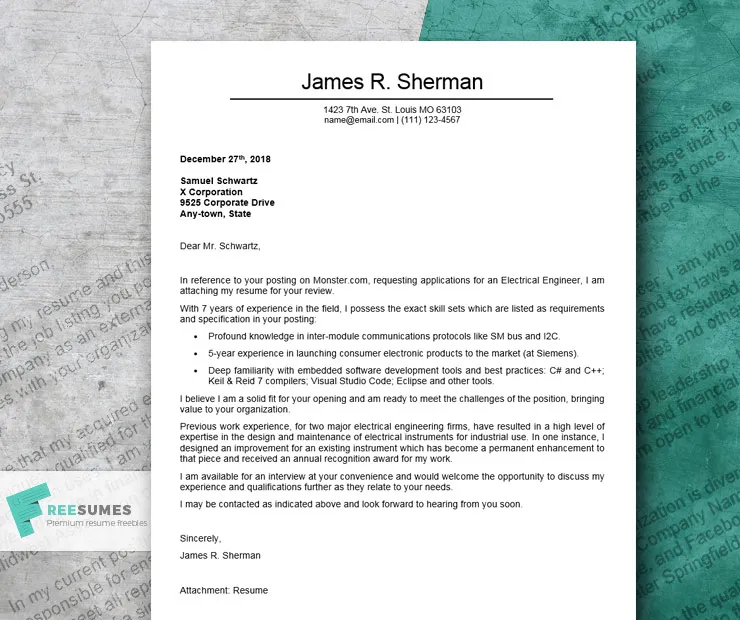
What is an Engineering Cover Letter
An engineering cover letter is a crucial document that accompanies your resume when applying for engineering jobs. It serves as your first introduction to a potential employer, providing a concise overview of your qualifications, skills, and experience. Unlike a resume, which is a factual summary, a cover letter allows you to express your personality, demonstrate your enthusiasm for the role, and highlight why you are the ideal candidate. It’s your chance to make a strong first impression and persuade the hiring manager to read your resume.
Why is a Cover Letter Important
In the competitive world of engineering, a cover letter can significantly increase your chances of landing an interview. It’s an opportunity to showcase your communication skills, explain your career goals, and connect your qualifications to the specific requirements of the job. Many employers consider a cover letter a mandatory part of the application process. Without one, your application might be overlooked. A well-crafted cover letter demonstrates your attention to detail, professionalism, and genuine interest in the position.
Key Components of an Engineering Cover Letter

A successful engineering cover letter follows a structured format. Each section plays a vital role in conveying your message effectively. Understanding the key components ensures you present yourself in the best possible light. Begin with your contact information, followed by the hiring manager’s details. The introduction grabs their attention, highlights your skills and experience, and expresses your enthusiasm for the job. The body of the letter should delve into your qualifications, quantifying your achievements whenever possible. The call to action invites the hiring manager to contact you.
Contact Information
At the top of your cover letter, include your full name, address, phone number, and professional email address. Ensure your email address is professional and appropriate. It’s essential to make it easy for the hiring manager to contact you.
Hiring Manager’s Information
If possible, address your cover letter to a specific person. Research the hiring manager’s name and title. Addressing the letter to a specific individual shows you’ve done your homework and are genuinely interested in the position. If you cannot find the name, use a professional greeting like ‘Dear Hiring Manager.’
Greeting

Start with a professional greeting. ‘Dear Mr./Ms./Mx. [Last Name]’ is a standard choice. Avoid generic greetings like ‘To Whom It May Concern’ unless you cannot find the hiring manager’s name. A personalized greeting immediately sets a positive tone.
The Introduction Paragraph
The introduction is your chance to grab the hiring manager’s attention. State the position you’re applying for and where you saw the job posting. Briefly highlight your most relevant skills and experience, and express your enthusiasm for the role and the company. Keep it concise and impactful.
Highlighting Your Skills and Experience
The body of your cover letter is where you demonstrate your value. Select 2-3 of your most relevant skills and experiences that align with the job description. Provide specific examples of how you’ve used these skills to achieve positive outcomes in previous roles. Use action verbs to describe your accomplishments and quantify your achievements whenever possible.
Quantify Your Accomplishments

Whenever possible, use numbers to demonstrate your achievements. For example, instead of saying ‘Managed projects,’ say ‘Managed projects, delivering them 15% under budget and 2 weeks ahead of schedule.’ Quantifiable results make your accomplishments more tangible and impressive. Use metrics to show the impact of your work.
Tailoring Your Letter to the Job Description
Each cover letter should be tailored to the specific job you’re applying for. Carefully review the job description and identify the key requirements and skills. Then, customize your cover letter to address these requirements directly. This shows the hiring manager that you understand the role and are a good fit for the company. Avoid sending generic cover letters.
Demonstrating Your Passion and Enthusiasm
Show your genuine interest in the role and the company. Research the company and mention something specific that excites you about their work or culture. Explain why you’re passionate about engineering and how this opportunity aligns with your career goals. This enthusiasm can set you apart from other candidates.
The Call to Action

End your cover letter with a clear call to action. Express your interest in an interview and thank the hiring manager for their time and consideration. Make it easy for them to take the next step by providing your contact information and expressing your availability.
Closing and Signature
Use a professional closing such as ‘Sincerely’ or ‘Best regards.’ Then, type your full name. If you are submitting a printed cover letter, leave space for your handwritten signature above your typed name.
Formatting and Design Tips
A well-formatted cover letter is easy to read and visually appealing. Use a professional font like Times New Roman, Arial, or Calibri in a size between 10 and 12 points. Use single-spacing and leave a space between paragraphs. Ensure your cover letter is free of grammatical errors and typos. Keep your cover letter concise, ideally within one page.
Proofreading and Editing Checklist

Before submitting your cover letter, carefully proofread it for any errors. Check for spelling mistakes, grammatical errors, and typos. Ensure your contact information is correct. Verify that your formatting is consistent and professional. Consider having a friend or career advisor review your cover letter for feedback.
Cover Letter Examples for Different Engineering Fields
While the fundamental principles of a cover letter remain the same, the content will vary depending on the specific field of engineering. Tailor your cover letter to the particular requirements and skills of the job and engineering discipline. Consider examples for different fields such as mechanical, civil, and electrical engineering, and tailor your content based on the job posting’s requirements.
Mechanical Engineering Cover Letter Example
A mechanical engineering cover letter should highlight your knowledge of mechanical systems, design, and analysis. Showcase your experience with specific software, tools, and equipment relevant to the job. Quantify your achievements whenever possible. Highlight your ability to work in teams and solve complex problems. Use action verbs to describe your accomplishments, such as ‘Designed,’ ‘Developed,’ ‘Analyzed,’ and ‘Implemented.’
Civil Engineering Cover Letter Example

A civil engineering cover letter should emphasize your skills in project management, structural analysis, and construction. Mention your experience with relevant codes, regulations, and software. Highlight your ability to work on large-scale projects and your attention to detail. Use action verbs to highlight your achievements, such as ‘Managed,’ ‘Supervised,’ ‘Engineered,’ and ‘Inspected.’
Electrical Engineering Cover Letter Example
An electrical engineering cover letter should showcase your expertise in circuit design, electrical systems, and power distribution. Highlight your experience with specific technologies and equipment relevant to the job. Mention your ability to troubleshoot and solve complex electrical problems. Use action verbs to describe your accomplishments, such as ‘Designed,’ ‘Developed,’ ‘Tested,’ and ‘Maintained.’
Common Mistakes to Avoid
Avoid these common mistakes to create a strong cover letter. Don’t simply repeat your resume. Avoid using generic language or clichés. Don’t include irrelevant information. Avoid typos and grammatical errors. Do not submit a cover letter that is too long. Do not use a negative tone or criticize previous employers. Ensure you tailor your cover letter to the specific job and company.
Sending Your Cover Letter

When sending your cover letter, follow the employer’s instructions. Attach your cover letter and resume as PDF files unless otherwise instructed. Use a professional email subject line, such as ‘Application for [Job Title] - [Your Name].’ Proofread your email before sending it. Ensure all attachments are correctly formatted and easy to open. If sending a physical copy, use high-quality paper and a professional envelope.
Following Up
After submitting your application, it’s appropriate to follow up with the hiring manager. Send a brief email expressing your continued interest and reiterating your qualifications. However, avoid being overly persistent. Wait a reasonable amount of time (e.g., 1-2 weeks) before sending a follow-up email. Thank the hiring manager for their time and consideration. If you don’t receive a response, consider it a closed opportunity and move on.