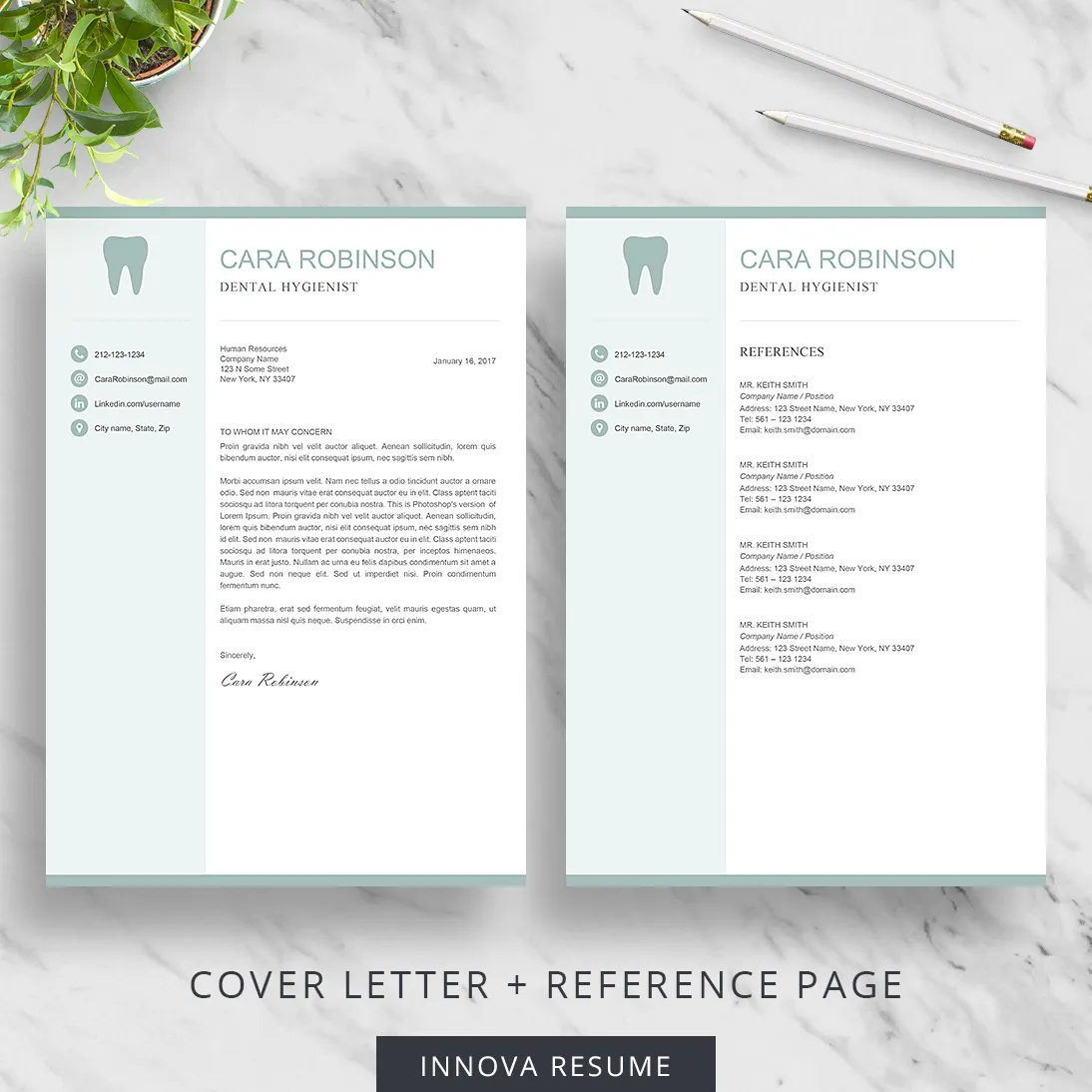
Understanding the Purpose of a Dental Assistant Cover Letter
A cover letter for a dental assistant resume serves as your introduction to a potential employer, providing an opportunity to showcase your personality, skills, and enthusiasm beyond what’s listed on your resume. It’s your chance to make a strong first impression and demonstrate why you’re the ideal candidate for the position. Unlike a resume, which offers a factual overview of your qualifications, a cover letter allows you to tell a story, connecting your experiences to the specific requirements of the job and highlighting your passion for dental assisting. A well-crafted cover letter increases your chances of getting noticed and securing an interview.
Key Components of a Dental Assistant Cover Letter
To write a compelling cover letter, you need to understand its essential parts. Each section plays a vital role in presenting you effectively. This section provides a detailed breakdown to help you construct a cover letter that will stand out to potential employers. From the introductory paragraph to the closing, you’ll be guided on how to highlight your unique value proposition and make a memorable impression. Keep your tone professional and your content focused on the prospective employer’s needs.
Contact Information and Date

Begin your cover letter by including your contact information at the top. This typically includes your full name, phone number, email address, and optionally, your LinkedIn profile URL. Following this, add the date you are sending the letter. This section ensures that the hiring manager can easily contact you. It also provides a professional starting point to the document. Make sure your contact details are up-to-date and that your email address is professional.
Recipient’s Information
If possible, address the cover letter to a specific person, such as the hiring manager or the practice owner. Researching the dental practice’s website or using LinkedIn can help you identify the correct contact person. Use their name and title, such as ‘Dear Dr. Smith,’. If you are unable to find a specific name, use a general greeting like ‘Dear Hiring Manager’. Tailoring the letter to a specific person shows that you have taken the initiative to learn about the practice and demonstrates your attention to detail.
Professional Salutation
Start your letter with a professional salutation. A standard greeting such as ‘Dear Mr./Ms. [Last Name]’ is appropriate if you know the recipient’s name. If you are uncertain, use ‘Dear Hiring Manager’ or ‘Dear [Dental Practice Name] Team’. Avoid informal greetings like ‘Hi’ or ‘Hello’. The salutation sets the tone for the entire letter, so it should be formal and respectful. This establishes your professionalism from the outset.
The Opening Paragraph Grab Attention

Your opening paragraph is the first impression you make. It should immediately grab the reader’s attention and state the purpose of your letter. Mention the specific position you are applying for and where you found the job posting. Briefly highlight your key qualifications or a unique skill that makes you a strong candidate. Express your enthusiasm for the role and the practice. A strong opening sets the stage for the rest of your cover letter.
Highlighting Your Dental Assistant Skills and Experience
This is where you showcase your skills and experience as a dental assistant. Focus on the skills and experiences that align with the job description and the needs of the dental practice. Use specific examples to demonstrate your abilities, rather than just listing them. Quantify your achievements whenever possible to show the impact you’ve had in previous roles. Ensure you tailor this section to each job you apply for, referencing specific requirements mentioned in the job posting.
Clinical Skills
Highlight your clinical skills relevant to dental assisting. Include your experience with taking and recording patient histories, assisting with various dental procedures, sterilizing instruments, and preparing treatment rooms. Mention specific procedures you’ve assisted with, such as fillings, crowns, root canals, or extractions. Detail your knowledge of dental instruments, equipment, and materials. For example, mention your proficiency in using X-ray machines or your experience with intraoral scanners. Demonstrating these skills assures the employer of your ability to perform essential job duties.
Patient Care Skills

Emphasize your patient care skills. Highlight your ability to communicate effectively with patients, explaining procedures, and alleviating anxieties. Describe your experience in creating a comfortable and welcoming environment for patients. Mention your ability to manage patient schedules, provide post-operative instructions, and build rapport. Provide examples of how you’ve handled difficult patient situations with empathy and professionalism. Patient care is a crucial element of the role, so providing strong examples strengthens your application.
Administrative Skills
Showcase your administrative skills, such as experience with scheduling appointments, managing patient records, and handling insurance claims. If you have experience with dental practice management software, mention the specific programs you’ve used. Highlight your organizational skills, attention to detail, and ability to multitask. Mention your experience with billing, insurance verification, and patient communication. Emphasizing these administrative skills demonstrates your capability to contribute to the smooth operation of the dental practice.
Quantifying Your Achievements
Whenever possible, quantify your achievements. Instead of saying, ‘Improved patient satisfaction,’ say, ‘Increased patient satisfaction scores by 15% through improved communication and follow-up.’ Use numbers, percentages, or specific examples to show the impact you’ve made in previous roles. For instance, mention the number of patients you assisted daily or the percentage by which you reduced errors in record-keeping. Quantifiable achievements provide concrete evidence of your skills and make your cover letter more compelling.
Expressing Enthusiasm and Fit
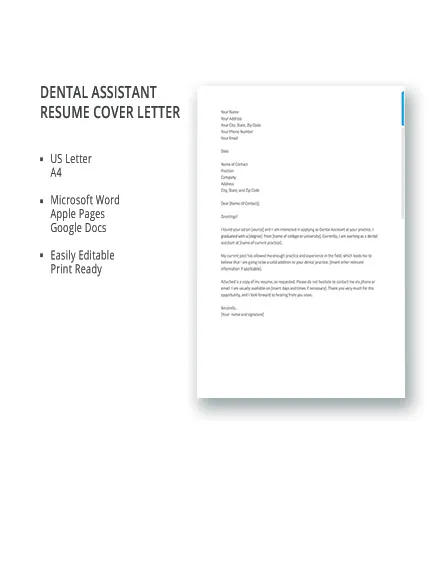
This section is about demonstrating your genuine interest in the dental practice and explaining why you’re a good fit. This shows that you’re not just looking for a job but are genuinely interested in being part of their team. It’s a chance to showcase how your values and career goals align with the practice’s culture and mission.
Researching the Practice
Show that you’ve researched the practice. Mention something specific you admire about their practice, such as their commitment to patient care, advanced technology, or community involvement. Referring to the practice’s mission, values, or recent achievements demonstrates that you’re truly interested in joining their team. Demonstrate you understand the practice’s goals, and highlight how your skills can contribute to their success. This shows initiative and that you are not simply sending out generic applications.
Connecting Your Values
Connect your values to the practice’s culture. Describe how your professional values, such as patient-focused care, teamwork, or continuous learning, align with the practice’s values. Share how your career goals align with the practice’s goals and vision. For example, if the practice is known for its commitment to continuing education, mention your eagerness to learn and grow professionally. Show that you envision a long-term fit within the practice.
The Closing

The closing paragraph should summarize your interest and reiterate your qualifications. It’s your final opportunity to leave a positive impression and encourage the employer to contact you. Make it concise, enthusiastic, and action-oriented.
Call to Action
Include a call to action. Express your availability for an interview and state how you can be reached. You can say something like, ‘I am eager to discuss how my skills and experience can benefit your practice. I am available for an interview at your earliest convenience and can be reached at [phone number] or [email address].’ This shows your initiative and makes it easy for the employer to take the next step.
Professional Closing and Signature
End your cover letter with a professional closing, such as ‘Sincerely,’ ‘Best regards,’ or ‘Thank you.’ Leave space for your handwritten signature if you are printing the letter and then type your full name below the closing. If you are sending the letter electronically, you can simply type your full name. Your signature adds a personal touch, and a professional closing shows respect.
Proofreading and Formatting

Proofreading and formatting are crucial steps in ensuring your cover letter looks polished and professional. This ensures that the hiring manager can easily read and comprehend your application. A well-formatted letter with no errors reflects professionalism.
Proofreading for Errors
Carefully proofread your cover letter for any errors in grammar, spelling, and punctuation. Errors can create a negative impression and may undermine your credibility. Read the letter multiple times and consider using a grammar checker tool. Have someone else review it as well, as a fresh pair of eyes can often catch mistakes you might have missed. Make sure all names, dates, and contact information are correct.
Formatting the Cover Letter
Format your cover letter in a clear and easy-to-read manner. Use a professional font, such as Times New Roman, Arial, or Calibri, and keep the font size between 10 and 12 points. Use standard 1-inch margins and single-space the body of the letter. Use consistent spacing and formatting throughout the document. Ensure that your cover letter aligns with your resume in terms of style and formatting. A well-formatted cover letter presents you professionally.