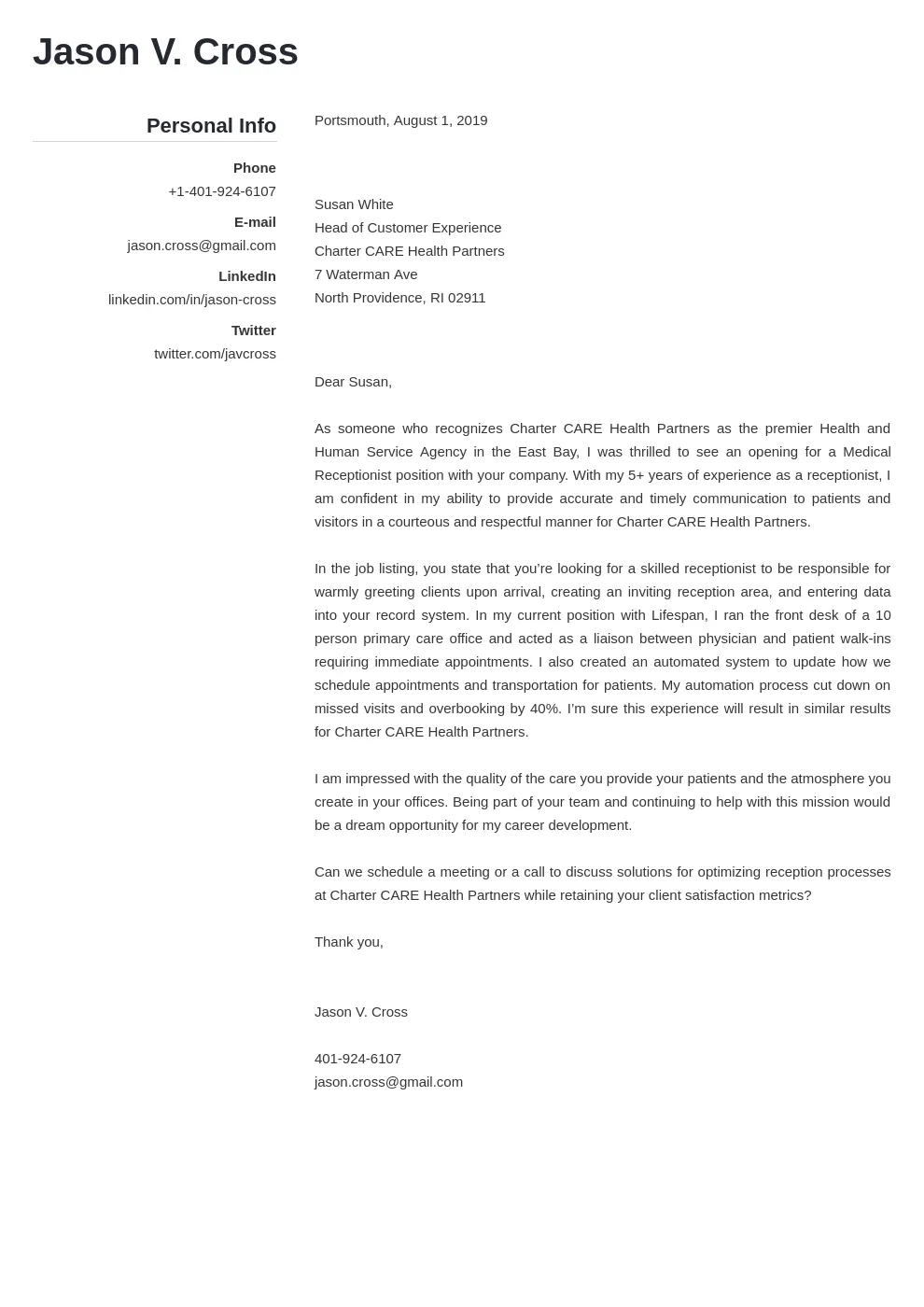
What to Address in a Cover Letter
A cover letter is your first opportunity to make a strong impression on a potential employer. It’s more than just a formality; it’s a critical document that allows you to introduce yourself, highlight your key skills and experiences, and express your enthusiasm for the role and the company. Unlike a resume, which provides a factual summary of your work history, a cover letter allows you to tell your story and demonstrate your personality. When writing a cover letter, you must go beyond simply restating the information in your resume. The best cover letters are tailored to each specific job application. This tailored approach shows the hiring manager that you’ve taken the time to understand their needs and are genuinely interested in the opportunity. Make sure you address your cover letter to the hiring manager by name. Thorough research is necessary for crafting a compelling cover letter that showcases your suitability for the position.
Highlight Your Enthusiasm
Enthusiasm is contagious, and a well-written cover letter can convey your genuine interest in the position and the company. Your passion and energy can set you apart from other candidates who might simply be going through the motions. Show that you’re excited about the role and the opportunity to contribute to the organization. This starts with expressing your genuine interest in the role and the company. This means that you have thoroughly researched the company, understand its mission, values, and goals, and how your skills and experience align with their needs. It is crucial to demonstrate how your professional aspirations align with the company’s objectives. A genuine connection with the company’s mission shows that you are enthusiastic and have taken the time to understand what they do. It also underscores your potential for long-term success within the organization.
Expressing Genuine Interest

In a cover letter, expressing genuine interest goes beyond simply saying “I am interested in this role.” It involves showing, not just telling, your enthusiasm for the position. This means going beyond the job description and demonstrating that you have researched the company, understand their recent projects or initiatives, and have a clear idea of how you can contribute. Instead of generic statements, use specific examples of why you are drawn to the company, the role, or the industry. Connect your skills and experiences to the company’s needs. This demonstrates that your interest is not just superficial. Tailor your letter to the specific requirements of the job. This shows you’ve read the job description carefully and understand what the employer is looking for. By expressing genuine interest, you’re more likely to capture the hiring manager’s attention and set yourself apart from other candidates.
Demonstrating a Strong Company Fit
Demonstrating a strong company fit involves showing how your personality, work style, and values align with the company’s culture and mission. Researching the company culture is essential; look at their website, social media, and employee reviews to understand their values and how they operate. Highlight any experiences that showcase your ability to thrive in a similar environment. Explain how your values align with the company’s mission and how you can contribute to a positive workplace. For example, if a company values teamwork, highlight your experience in collaborative projects. A well-crafted cover letter that demonstrates a strong company fit can greatly increase your chances of landing an interview and ultimately securing the job. A cover letter is a reflection of your research, so you should showcase your understanding of the company’s goals and mission. The more you understand what they need, the better the chance of landing a job.
Showcasing Relevant Skills and Experience
Your cover letter is your chance to bridge the gap between your resume and the specific requirements of the job. Highlighting relevant skills and experience is a crucial part of this. Select the skills and experiences that most closely match the job description. This shows the employer that you have the specific qualifications they are seeking. This is your opportunity to demonstrate the practical value of your skills. Instead of merely listing your qualifications, provide examples of how you have used those skills to achieve results in previous roles. This could include increasing sales, streamlining processes, or leading successful projects. Provide specific examples of your achievements whenever possible. Use quantifiable data to demonstrate the impact of your work, such as percentages, numbers, or dollar amounts. Always remember to tailor your letter to each application. This is particularly important when showcasing relevant skills and experiences. Customize the content to align with the specific requirements and preferences of each employer.
Matching Skills to Job Requirements

Matching your skills to job requirements is a strategic approach to writing a cover letter that significantly increases your chances of success. Start by carefully reviewing the job description and identifying the key skills and qualifications the employer is seeking. Make a list of the skills and experiences you have that align with these requirements. Instead of simply listing your skills, provide specific examples of how you have used those skills in the past. Describe the situations, the actions you took, and the results you achieved. Provide concrete examples of situations where you have demonstrated those skills. This could involve a project you led, a problem you solved, or a specific accomplishment that showcases your abilities. Use keywords from the job description throughout your cover letter to demonstrate that you understand what the employer is looking for and that you have the skills they need.
Quantifying Achievements
Quantifying your achievements in a cover letter is a powerful way to demonstrate your value to a potential employer. Instead of making general statements about your skills and experience, provide concrete, measurable results that showcase your impact in previous roles. Start by identifying your key accomplishments in past positions. Then, gather data and statistics to back up your claims. For instance, if you increased sales, mention the percentage increase or the total dollar amount. If you improved efficiency, quantify the time or resources you saved. Use numbers, percentages, and dollar amounts to showcase your achievements. Whenever possible, compare your results to previous performance or industry averages to provide context. It is all about using numbers to show your past success, allowing the hiring manager to easily understand your capabilities.
Explaining Your Motivation
Explaining your motivation in a cover letter is essential for connecting with the hiring manager on a deeper level. It demonstrates your genuine interest in the role, the company, and the industry. The best cover letters explain why you are applying for this specific job and what excites you about it. Be clear about why you want this particular role. What aspects of the job description, the company culture, or the company’s mission resonate with you? Highlight how the job aligns with your long-term career goals. Does this role provide opportunities for growth, learning, or making a meaningful impact? Explain why you are interested in working for this particular company. Have you followed their work, admired their values, or heard positive things from current or former employees? By clearly explaining your motivation, you can set yourself apart from other candidates. It shows the hiring manager that you are not just looking for a job, but that you are genuinely excited about the opportunity and its potential.
Why This Role and Company

Clearly articulating why you want this specific role and why you want to work for this particular company is one of the most critical elements of a cover letter. Showing this demonstrates to the hiring manager that you have given careful consideration to both the role and the organization. Start by researching the company’s mission, values, recent projects, and industry reputation. Identify aspects of the company that align with your own values and career aspirations. Explain how the role itself fits into your career goals. Is it a step towards a long-term objective? Does it offer opportunities for growth and learning? Tailor your cover letter to highlight specific aspects of the job description. Show that you understand what the company is looking for and how your skills and experience align with those needs. Emphasize your genuine enthusiasm for the opportunity. Show you’re excited about what the company does, and show them you want the job.
Addressing Any Gaps or Concerns
Addressing any gaps or potential concerns in your cover letter is a strategic way to proactively manage the hiring manager’s perceptions and demonstrate your self-awareness and professionalism. Be honest and upfront about any potential weaknesses or gaps in your resume. This could include career changes, employment gaps, or a lack of specific qualifications. Frame these issues positively. Explain how you are addressing the gap. If it is a skill, mention how you are learning it. If it is a career change, talk about your experience and transferable skills. Show that you are constantly growing and improving. By addressing these concerns head-on, you show that you’re honest and straightforward. You can demonstrate your maturity, resilience, and ability to learn from any challenges you have faced. Addressing the concerns directly removes any doubt from the hiring manager.
Proactively Addressing Potential Issues
Proactively addressing potential issues in your cover letter shows that you are aware of potential concerns and ready to provide context or clarification. It demonstrates your attention to detail and your proactive approach to communication. Think about what questions or concerns a hiring manager might have when reviewing your application. This could include gaps in your employment history, career changes, or a lack of specific qualifications. Instead of waiting for the hiring manager to bring up these issues, address them directly in your cover letter. Explain the reasons behind any gaps in your employment history. If you took time off for personal reasons, a career change, or further education, briefly explain the situation and how you have used that time. Focus on the positive aspects of the situation and how it has made you a stronger candidate. By proactively addressing these issues, you can control the narrative and present yourself in the best possible light.
Concluding with a Call to Action

Concluding your cover letter with a clear call to action is crucial for guiding the hiring manager and increasing your chances of moving forward in the hiring process. The call to action is your final opportunity to express your interest in the position and make it easy for the hiring manager to take the next step. Reiterate your interest in the role and the company. Briefly summarize why you are a good fit for the position and what you can bring to the team. Express your enthusiasm for the opportunity and let them know you are excited about the prospect of joining the company. Then, clearly state what you want the hiring manager to do next. Include your contact information, such as your phone number and email address. By ending your cover letter with a clear call to action, you make it easy for the hiring manager to contact you and advance your application.
Expressing Gratitude and Next Steps
Expressing gratitude and outlining the next steps in your cover letter is a professional and courteous way to conclude your application and leave a positive impression on the hiring manager. Thank the hiring manager for their time and consideration. Express your appreciation for the opportunity to apply for the position and for their attention to your application. Then, clearly state your availability for an interview or further discussion. Let them know that you are eager to discuss your qualifications in more detail and are available at their convenience. You can also mention how you will follow up. State that you will be following up in a week or so, and thank them once again for their time. Expressing gratitude and providing clear next steps demonstrates your professionalism, enthusiasm, and respect for the hiring manager’s time. It’s a small detail that can make a significant difference in your application.