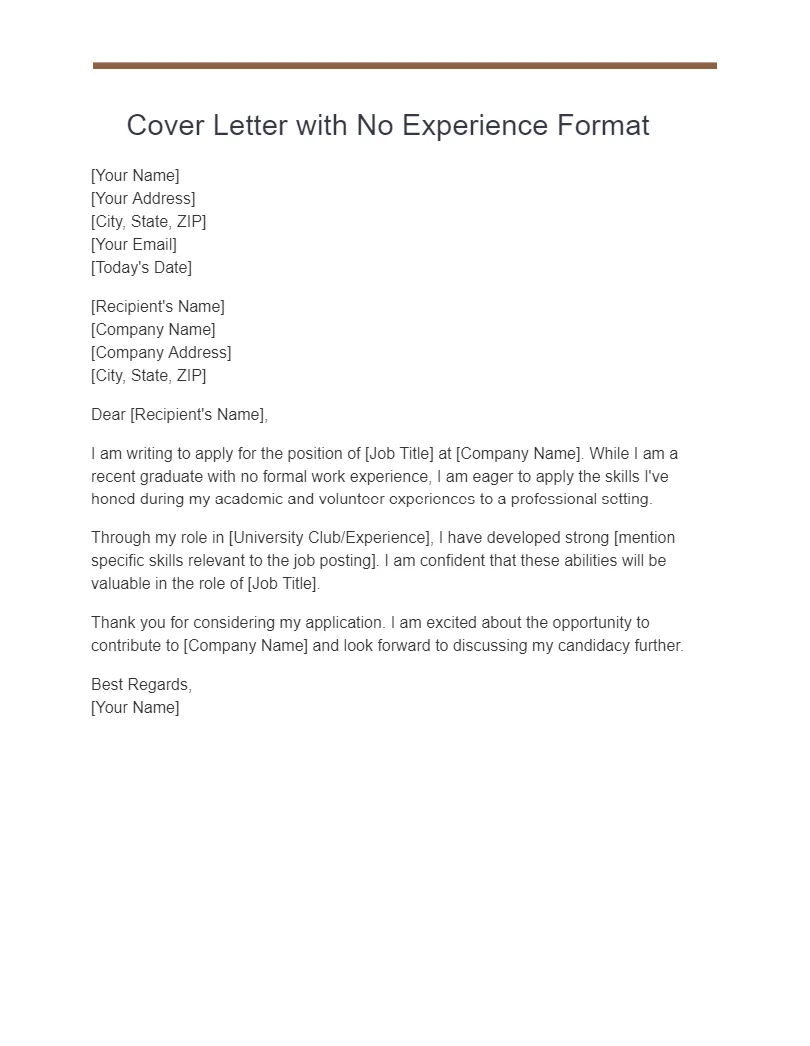
Why Your Cover Letter Matters (Even With No Experience)
In the competitive job market, a well-crafted cover letter is crucial, particularly when you’re applying with no prior work experience. This document is your opportunity to showcase your potential and convey why you’re the right fit. A cover letter helps you tell your unique story and highlight how your skills and experiences, even if they’re not from a traditional job, align with the role’s requirements. It’s your chance to make a strong first impression and demonstrate your enthusiasm. The cover letter lets you connect with the hiring manager on a more personal level, emphasizing your value beyond what’s listed on your resume. It addresses any potential concerns about the lack of experience by focusing on your eagerness to learn and your transferable skills, providing a more holistic picture of your capabilities and suitability for the position.
Highlighting Transferable Skills
When you have no direct work experience, emphasizing transferable skills is key. These are skills you’ve developed in various aspects of your life—from volunteer work, academic projects, extracurricular activities, to personal hobbies—that can be applied to a professional setting. Identify these skills and directly relate them to the job’s requirements. Common examples include communication, teamwork, problem-solving, time management, and leadership. Providing specific examples of how you’ve used these skills is essential. For example, if the job requires project management skills, and you coordinated a large student event, describe your role, the challenges you faced, and the successful outcome. Highlighting these skills is your best chance to demonstrate your value to a potential employer.
Identifying Relevant Skills

Carefully analyze the job description to pinpoint the skills the employer values. Look for keywords and phrases that describe the essential competencies. Think beyond the obvious; skills can be relevant in surprising ways. If the job requires organization, highlight instances where you’ve demonstrated this, such as organizing a club or managing a project. If communication is important, mention presentations you’ve given or reports you’ve written. The goal is to make direct connections between your past activities and the job’s needs, showing how your skills make you a strong candidate.
Showcasing Soft Skills
Soft skills, also known as interpersonal skills, are often just as, if not more, important than hard skills in many roles. These include communication, teamwork, adaptability, and problem-solving. In your cover letter, give specific examples of how you’ve demonstrated these soft skills. Instead of merely stating that you’re a team player, describe a situation where you collaborated effectively, how you resolved conflicts, and the successful outcomes of your teamwork. Showing evidence of your ability to work with others and navigate challenges is essential. These skills are incredibly valuable to employers because they indicate a well-rounded individual capable of thriving in a professional environment.
Understanding the Job Description
The job description is your guide to creating a compelling cover letter. Read the description carefully to understand the employer’s needs, the required skills, and the desired qualifications. Highlight all the keywords and phrases the employer uses to describe the ideal candidate. Use these keywords in your cover letter to show you understand what the company is seeking. Tailoring your letter to the specifics of the role is a critical step in the application process; it significantly increases your chances of making a positive impression.
Tailoring Your Cover Letter

A generic cover letter won’t cut it. Tailoring your letter to each job application is especially critical when you have no prior work experience. This involves customizing your letter to the specific requirements of the role and the values of the company. Demonstrate that you’ve researched the company and understand its mission and values. Highlight the specific skills and experiences that are relevant to their needs. Mention projects or achievements that demonstrate your abilities and align with their requirements. Showing genuine enthusiasm for the role is vital. By taking this approach, your application will undoubtedly stand out.
Researching the Company
Before writing, thoroughly research the company. Understand their mission, values, products, and services. Visit their website, read the “About Us” section, and browse their social media profiles. This will help you understand the company culture and what they seek in employees. Reference this information in your cover letter to show you’ve taken the initiative to learn about the organization and are genuinely interested in the role. Demonstrating this level of understanding elevates your application and makes you a more attractive candidate.
Analyzing the Job Requirements
Deconstruct the job description and identify the key skills and qualifications the employer is looking for. Then, evaluate your experience and determine how it aligns with the requirements. For instance, if the job requires excellent communication skills, provide examples of when you’ve communicated effectively in the past—leading a team, giving presentations, or writing reports. The goal is to show how your skills, even if gained outside a traditional work setting, make you a strong fit for the position and highlight your potential.
Structuring Your Cover Letter for Impact

The structure of your cover letter is as important as its content. It must be easy to read and visually appealing. A well-structured letter guides the reader through your qualifications and interests. Use clear paragraphs, bullet points, and headings to organize the information effectively. This helps the hiring manager quickly grasp your key skills and experiences.
The Opening Paragraph: Grabbing Attention
Your opening paragraph is your chance to immediately grab the reader’s attention. Start with a compelling statement that expresses your interest in the role and where you found the job posting. Briefly explain why you’re interested in the specific role and the company. Express your enthusiasm and make it clear that you understand the job’s requirements, and if possible, mention a key skill or experience. The goal is to capture the hiring manager’s interest from the beginning.
The Body Paragraphs: Making Your Case
The body paragraphs are where you elaborate on your qualifications and experiences. Provide specific examples that highlight your skills and achievements. Use the STAR method (Situation, Task, Action, Result) to describe your past experiences effectively. Begin by describing the situation, outline the task, then explain the action you took, and share the positive results. This structure provides detailed, easy-to-understand examples. Tailor each body paragraph to the specific requirements of the job, highlighting the most relevant skills and experiences.
Using Accomplishment-Based Language

Instead of simply listing your responsibilities, use accomplishment-based language to demonstrate your achievements. Focus on what you accomplished in past roles, even if they were volunteer positions or academic projects. Use strong action verbs to describe your actions, and quantify your achievements whenever possible. This approach effectively conveys your potential and highlights your understanding of workplace effectiveness.
Quantifying Your Achievements
Quantify your achievements to clearly demonstrate the impact of your skills and efforts. Use numbers, percentages, and specific data to illustrate your accomplishments. For example, instead of saying, ‘Improved customer service,’ say, ‘Increased customer satisfaction scores by 15% by implementing a new training program.’ These concrete numbers offer quantifiable evidence of your success and the value you can bring to the role.
The Closing Paragraph: Call to Action
Your closing paragraph is your final chance to leave a positive impression and prompt action. Reiterate your interest in the role, summarize your key qualifications, and express your enthusiasm for the opportunity. Include a clear call to action, such as, ‘I am eager to discuss how my skills and experiences can contribute to the success of your team. I am available for an interview at your earliest convenience.’ Provide your contact information and thank the hiring manager for their time and consideration, leaving a lasting impression.
Proofreading and Editing: Ensuring Perfection

Before submitting your cover letter, carefully proofread and edit it to eliminate any errors. Ensure your grammar, spelling, and punctuation are flawless. Read your letter aloud to check for awkward phrasing or unclear sentences. Ask a friend or family member to review your letter for a fresh perspective. A polished, error-free cover letter demonstrates your attention to detail and commitment to professionalism.
Using a Professional Tone
Maintain a professional tone throughout your cover letter. Use formal language and avoid slang, abbreviations, or overly casual language. While enthusiasm is important, maintain a respectful and appropriate tone for a professional setting. Use a professional email address and ensure your communication is clear, concise, and well-organized. The goal is to present yourself as a serious and capable candidate.
Avoiding Common Mistakes
Avoid common mistakes that can undermine your application. Don’t use a generic cover letter; always tailor it. Exclude any irrelevant information. Keep it concise and to the point, focusing on the most relevant details. Make sure you proofread your letter to avoid any errors that could deter the hiring manager.
Formatting for Readability

Use a clear, professional font such as Times New Roman, Arial, or Calibri. Use 1-inch margins and single-spacing. Break up your text into short, easy-to-read paragraphs. Use bullet points to highlight key skills or achievements. Ensure that your cover letter is well-organized and easy to navigate. A well-formatted cover letter is more likely to capture the hiring manager’s attention and make a positive first impression.
Where to Find Cover Letter Examples
You can find many cover letter examples online. Job search websites such as Indeed, LinkedIn, and Glassdoor offer templates and examples for various roles. Career advice websites and blogs also provide sample cover letters. Use the examples as a guide to craft your own; don’t copy and paste. Tailor the examples to your unique situation and the specific job requirements to create a compelling cover letter.
Resources for Cover Letter Writing
Various resources can help you write a strong cover letter. Consider using online cover letter builders, which guide you through the writing process. Career counselors and resume writers can offer personalized advice and feedback. Seek professional editing services to ensure your cover letter is error-free. By utilizing these resources, you can significantly improve the quality of your cover letter, boosting your chances of securing an interview.
Leveraging Your Network

Your network can be an invaluable resource in your job search. Inform your contacts about your job search and the specific roles you are targeting. Ask for referrals or introductions to hiring managers. Your network can offer insights into companies and roles and give feedback on your cover letter and resume. Attend industry events and connect with people in your field to expand your network.
Seeking Feedback on Your Cover Letter
Get feedback on your cover letter from friends, family, career counselors, or professional resume writers. Ask them to review your letter for clarity, accuracy, and effectiveness. Pay close attention to their suggestions and revise your cover letter accordingly. Having a second pair of eyes can help you identify areas for improvement and ensure your cover letter makes a strong, positive impression.