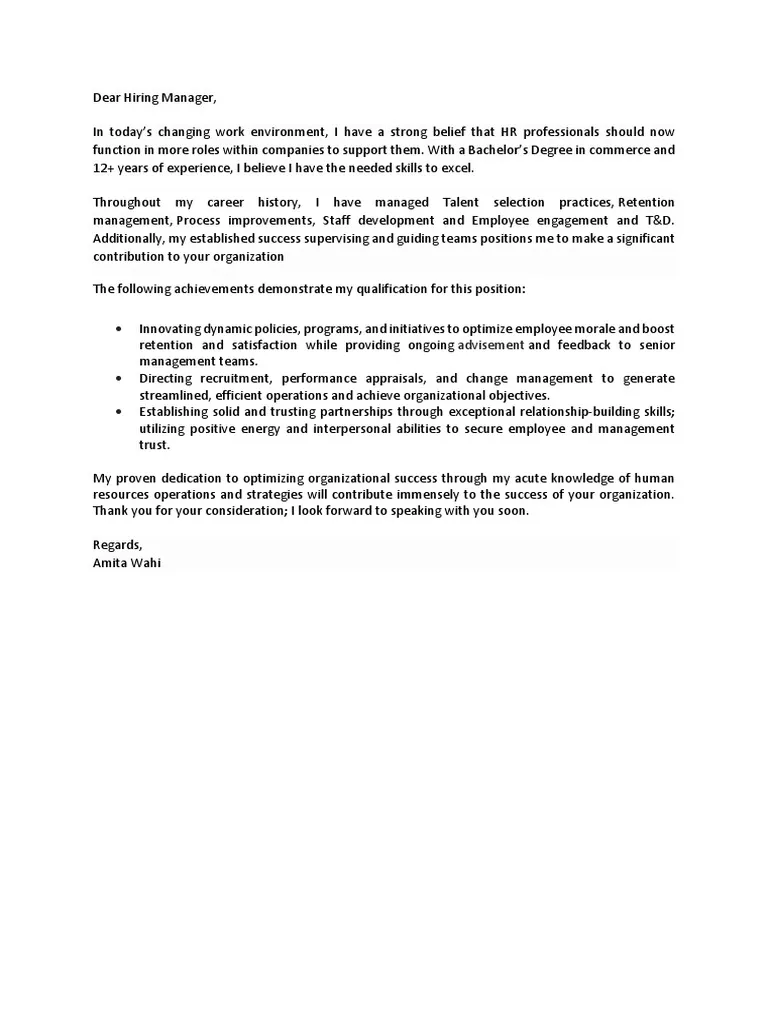
Why a Cover Letter Matters
In the competitive job market, a well-crafted cover letter can be your secret weapon. It’s your first opportunity to make a lasting impression on a potential employer, setting the stage for your application. Think of it as your personal introduction, where you can go beyond the confines of your resume to showcase your personality, passion, and qualifications. Many job seekers overlook the importance of a cover letter, but it’s an essential tool. It allows you to explain why you’re interested in the specific role and company, highlighting the value you bring to the table. By taking the time to write a compelling cover letter, you demonstrate your genuine interest and increase your chances of getting noticed by recruiters.
A cover letter isn’t just a formality; it’s a strategic document that provides context to your resume. It allows you to elaborate on your accomplishments, explain career gaps, and address any specific requirements outlined in the job description. Furthermore, a cover letter reflects your communication skills, showcasing your writing style and ability to articulate your thoughts effectively. It can also be a great differentiator. It gives you a platform to express your enthusiasm, share your career goals, and highlight how your skills and experience align with the company’s values. A well-written cover letter adds a human touch to your application, making you more memorable and increasing your chances of getting an interview.
Highlighting Your Skills and Experiences
When crafting your cover letter, focus on showcasing your relevant skills and experiences. Don’t just reiterate your resume; instead, provide specific examples of how you’ve applied your skills to achieve results. Start by carefully reviewing the job description and identifying the key requirements and qualifications. Then, select a few of your most relevant accomplishments that align with those requirements. Quantify your achievements whenever possible. Use numbers, percentages, or specific metrics to demonstrate the impact you’ve made in previous roles. For example, instead of saying “Improved customer satisfaction,” you could say “Increased customer satisfaction by 20% through implementing a new feedback system.” This level of detail adds credibility and demonstrates your ability to deliver results.
In addition to highlighting your accomplishments, make sure to emphasize the skills and experiences that make you a strong fit for the role. If the job description requires experience with a specific software or technology, mention your proficiency and provide examples of how you’ve used it in the past. Frame your experiences in a way that directly addresses the employer’s needs. For instance, if the role involves project management, describe a successful project you led and the outcomes you achieved. By tailoring your cover letter to the specific job, you demonstrate that you’ve carefully considered the requirements and possess the skills and experience the employer is seeking. This personalized approach increases your chances of making a positive impression.
Tailoring Your Cover Letter

Generic cover letters are easily spotted and often discarded. The most effective cover letters are tailored to each specific job application. This means taking the time to research the company, understand the role, and personalize your letter to demonstrate your genuine interest. Begin by researching the company’s mission, values, and recent projects. This information will help you understand their priorities and tailor your letter accordingly. In your cover letter, mention specific aspects of the company that resonate with you and explain why you’re excited about the opportunity.
Carefully review the job description and identify the key requirements and qualifications. Then, highlight the skills and experiences that directly align with those needs. Avoid simply listing your qualifications; instead, provide specific examples of how you’ve used your skills to achieve results in previous roles. By demonstrating that you understand the company’s needs and have the ability to contribute to their success, you significantly increase your chances of getting noticed. Consider addressing the hiring manager by name, if possible. A personalized approach shows that you’ve taken the time to research the company and are genuinely interested in the opportunity. If you cannot find the hiring manager’s name, address the letter to the hiring team or department.
Cover Letter Structure
A well-structured cover letter is easy to read and immediately conveys your key qualifications. Start with a strong introduction that grabs the reader’s attention and states the position you’re applying for. Briefly mention how you learned about the opportunity and express your enthusiasm. In the body paragraphs, highlight your most relevant skills and experiences, providing specific examples to support your claims. Tailor these examples to the job description, demonstrating how you can address the employer’s needs. Use a professional and concise tone throughout your letter, avoiding jargon or overly complex language. The goal is to make it easy for the hiring manager to quickly understand your qualifications.
The body of your cover letter should be structured logically, typically with two to three paragraphs. Each paragraph should focus on a specific aspect of your qualifications, such as your skills, experience, or achievements. Use strong action verbs to describe your accomplishments and avoid simply listing your responsibilities. Instead, explain what you did, how you did it, and the results you achieved. This adds impact and demonstrates your value. In the closing paragraph, reiterate your interest in the position and express your enthusiasm for the opportunity. Include a call to action, such as encouraging the reader to review your resume or offering to provide further information. End your letter with a professional closing, such as “Sincerely” or “Best regards.”
Formatting Your Cover Letter for Success
The appearance of your cover letter is just as important as its content. Use a clean and professional font, such as Arial, Times New Roman, or Calibri, and keep the font size between 10 and 12 points. Ensure your letter is easy to read and visually appealing. Maintain consistent margins (typically 1 inch on all sides) and use single-spacing. Use a professional layout, with your contact information at the top, the date, and the hiring manager’s name (if known) and company information below. The body of the letter should be well-organized, with clear paragraphs and appropriate spacing. Avoid large blocks of text; instead, break up your paragraphs to improve readability.
Choose a format that’s appropriate for the job you’re applying for. Most cover letters are one page in length, but in some cases, it may be appropriate to extend it to two pages if you have extensive experience. Use clear headings and subheadings to organize your content and make it easier for the reader to scan. Pay close attention to the visual presentation of your letter, as it reflects your attention to detail and professionalism. Avoid using unusual fonts, colors, or formatting that might distract the reader. Your cover letter should be visually consistent with your resume and reflect your overall brand.
Proofreading and Editing Your Cover Letter

Proofreading is a crucial step in the cover letter writing process. Before submitting your cover letter, carefully proofread it for any grammatical errors, spelling mistakes, and typos. These errors can create a negative impression and undermine your credibility. Read your cover letter multiple times, slowly and carefully. Consider reading it aloud to catch any awkward phrasing or sentence structure issues. Use spell-check and grammar-check tools, but don’t rely on them entirely. These tools can sometimes miss errors or suggest incorrect corrections. Having a fresh pair of eyes to review your letter can be extremely beneficial.
Ask a friend, family member, or career advisor to review your cover letter. They can provide valuable feedback on your writing style, clarity, and overall effectiveness. They may catch errors you’ve missed and offer suggestions for improvement. Make sure your cover letter is clear, concise, and free of any errors. A polished cover letter demonstrates your professionalism and attention to detail, increasing your chances of getting an interview. By taking the time to proofread and edit your cover letter, you ensure that it presents you in the best possible light and makes a strong impression on potential employers.