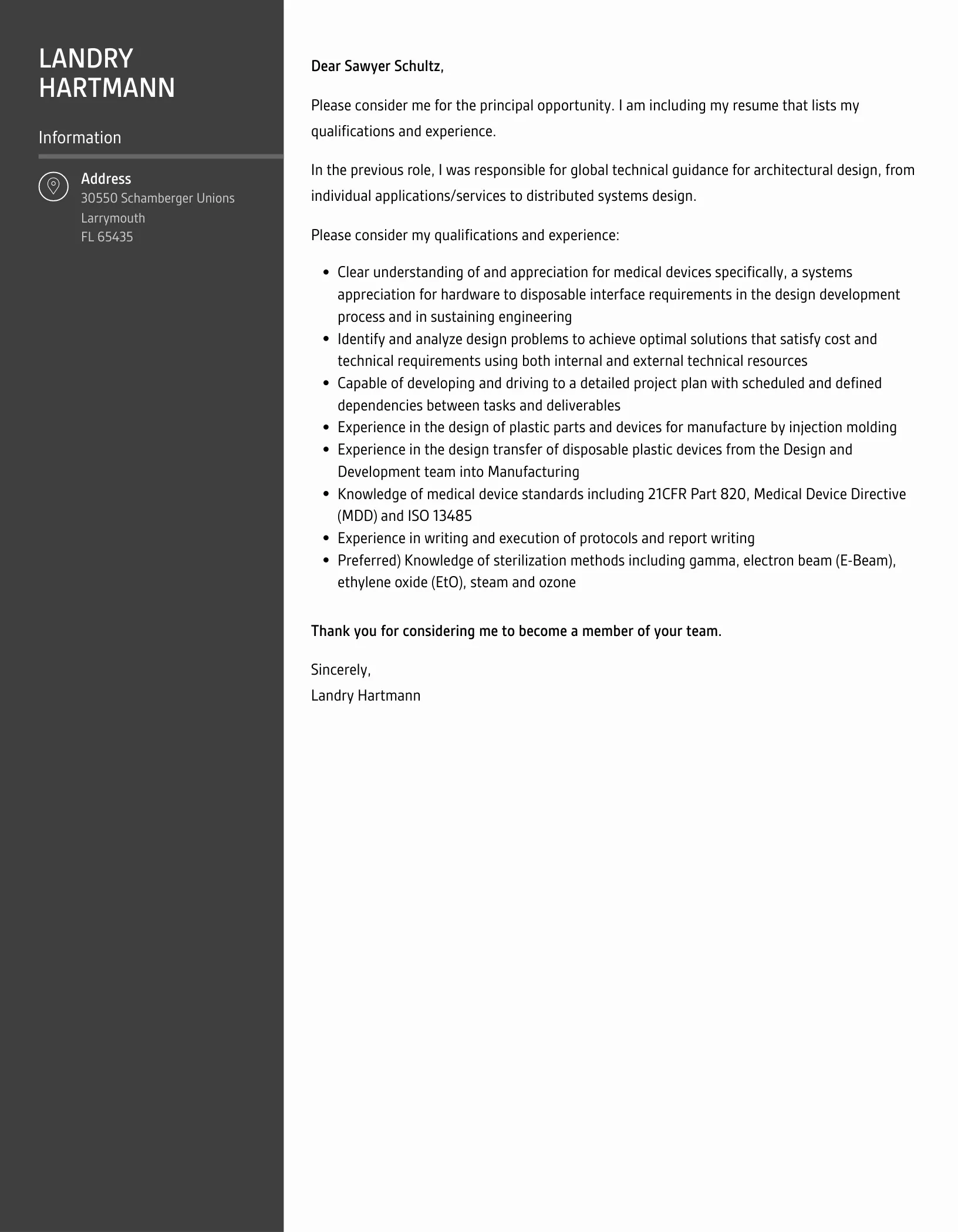
Understanding the Cover Letter Principal
The cover letter is often the first impression you make on a potential employer. It serves as your introduction, allowing you to showcase your personality, enthusiasm, and suitability for the role. The principal of a strong cover letter is to clearly communicate your value proposition and why you are the best fit for the job. It is not just a rehash of your resume; instead, it should provide context and demonstrate how your skills and experiences align with the specific requirements of the position and the needs of the company. A well-crafted cover letter goes beyond simply listing qualifications; it tells a compelling story about you, highlighting your achievements and expressing your genuine interest in the opportunity. Remember, the goal is to grab the reader’s attention and encourage them to delve deeper into your resume. This document should be tailored to each job application, showing employers that you have taken the time to understand their needs and are genuinely interested in the opportunity.
Focus on the Employer’s Needs
Successful cover letters are not about you; they are about the employer. Shift your focus to address their needs and show how you can solve their problems. Research the company and the specific role to understand their goals, challenges, and expectations. Then, highlight the skills and experiences that directly address those needs. Use the job description as your guide, identifying the key requirements and responsibilities. Provide specific examples of how you have successfully met similar challenges in the past, quantifying your achievements whenever possible. By demonstrating how you can contribute to their success, you immediately position yourself as a valuable asset. This approach is crucial in capturing the employer’s attention and differentiating yourself from other applicants. Moreover, showing that you understand the company’s culture and values further increases your chances of making a positive impression. Your cover letter should not only demonstrate your capabilities but also express a genuine interest in the organization and the specific role you are applying for.
Highlight Key Skills and Experience

Your cover letter is the perfect opportunity to showcase your most relevant skills and experiences. Carefully review the job description and identify the key skills and qualifications the employer is seeking. Then, highlight these skills and experiences, providing specific examples of how you have utilized them in the past. Use the STAR method (Situation, Task, Action, Result) to effectively demonstrate your achievements. Describe the situation you were in, the task you were assigned, the actions you took, and the positive results you achieved. Quantify your results whenever possible, using numbers and data to illustrate your impact. For example, instead of saying “Improved customer satisfaction,” you could say “Increased customer satisfaction scores by 15% through implementing a new feedback system.” This approach not only demonstrates your abilities but also provides concrete evidence of your value to the employer. Your aim is to show how your skills align with the role’s requirements and provide employers with a clear picture of your potential contributions.
Tailor Your Letter to the Job
One of the most significant secrets to writing a compelling cover letter is tailoring it to each specific job application. Generic cover letters that are sent to multiple employers are easily recognized and often discarded. Instead, take the time to customize your letter for each position. Research the company and the specific role to understand their needs, goals, and expectations. Use the job description as your guide, identifying the key skills and qualifications the employer is seeking. Then, highlight the experiences and skills that align with those requirements. Mention the company name and specific details from the job description to show you have done your homework and are genuinely interested in the opportunity. Also, address the hiring manager by name if possible. This level of personalization demonstrates your attention to detail and your commitment to the application process. Tailoring your cover letter shows the employer that you are not just sending out a generic application; you have carefully considered the role and are genuinely interested in the company’s needs.
Use Action Verbs and Strong Language
Your cover letter should be dynamic and engaging. One of the best ways to achieve this is by using action verbs and strong language. Action verbs bring your accomplishments to life and make your letter more compelling. Start each bullet point or sentence describing your achievements with a powerful verb like “Managed,” “Developed,” “Implemented,” “Led,” or “Achieved.” This creates a sense of energy and emphasizes your proactive approach. Avoid passive language and weak verbs like “helped” or “assisted.” Instead, choose words that demonstrate your skills, drive, and accomplishments. For instance, “Managed a team of five to successfully launch a new product” is much more impactful than “Helped with the launch of a new product.” Using strong language also means avoiding clichés and buzzwords. Be specific and concise, and choose words that accurately describe your skills and experiences. This not only makes your letter more engaging but also helps you stand out from other applicants. The goal is to make your cover letter as clear, concise, and impactful as possible.
Proofread and Edit Meticulously

A polished and error-free cover letter is critical. Before submitting your application, proofread and edit your letter meticulously. Errors in grammar, spelling, and punctuation can create a negative impression and undermine your credibility. Take the time to carefully review every sentence, checking for any mistakes. Read the letter aloud to catch awkward phrasing or unclear sentences. Ask a friend, family member, or career counselor to review your letter as well. A fresh pair of eyes can often catch errors that you might miss. Pay attention to the tone and style of your letter, ensuring that it is professional and engaging. Use a grammar and spell-checking tool, but don’t rely on them entirely. These tools can miss subtle errors that a human reader would easily recognize. Proofreading is one of the most important steps in the cover letter writing process. By taking the time to proofread and edit your letter carefully, you ensure that it reflects your attention to detail and your commitment to excellence.
Formatting for Maximum Impact
The formatting of your cover letter contributes significantly to its overall impact. A well-formatted letter is easy to read and visually appealing. Use a clear and professional font like Times New Roman, Arial, or Calibri, with a font size between 10 and 12 points. Maintain consistent formatting throughout the document, including margins, spacing, and headings. Use single-spacing within paragraphs and double-spacing between paragraphs to provide visual clarity. Keep your letter concise and to the point. Ideally, a cover letter should be no longer than one page. Avoid using large blocks of text. Break up paragraphs into smaller sections to make it easier for the reader to digest the information. Use bullet points to highlight key skills and achievements. Use headings and subheadings to organize your content and guide the reader through your qualifications. This attention to detail demonstrates your professionalism and makes your letter more appealing to potential employers, ensuring that your application stands out from the competition.