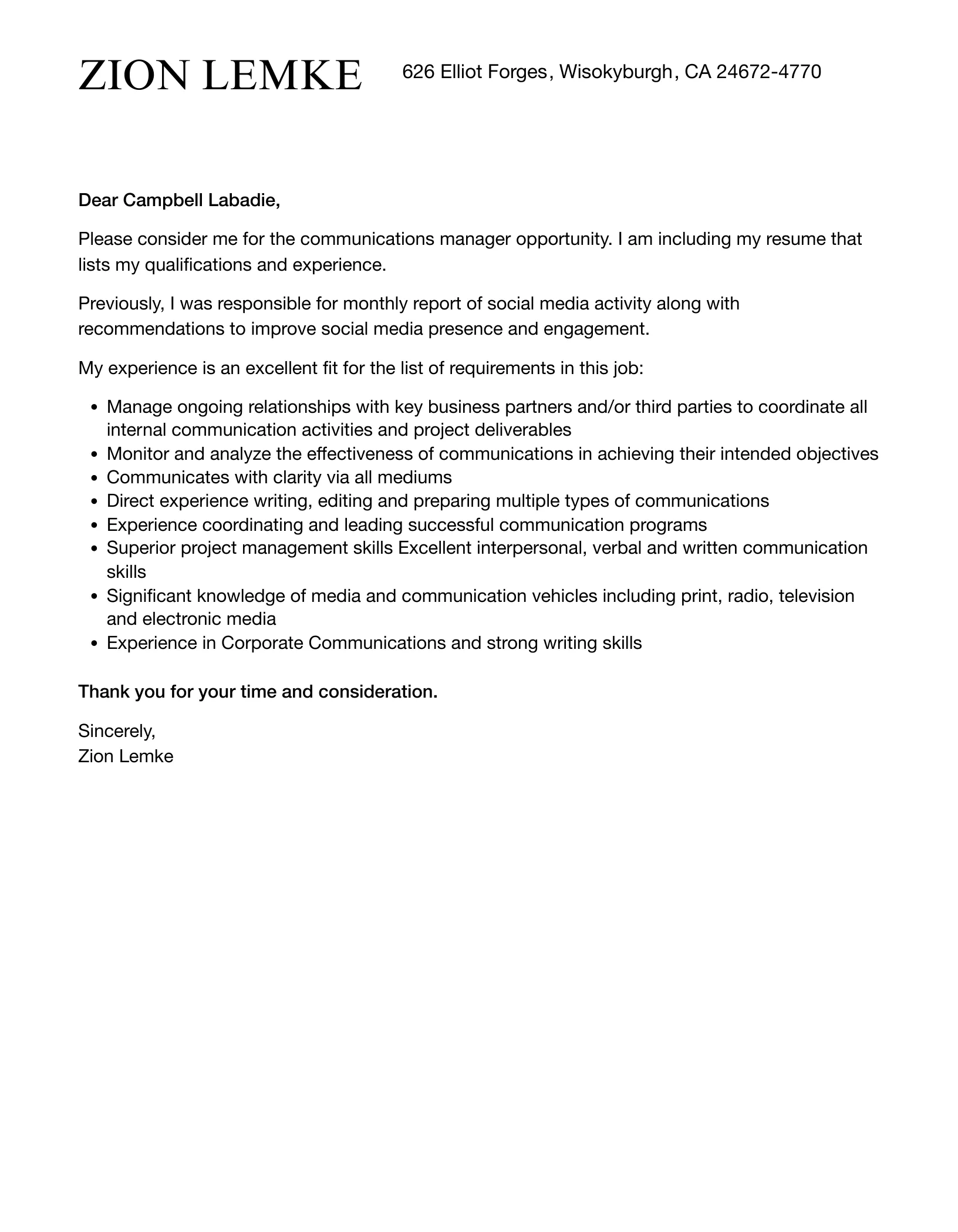
Crafting a Compelling Cover Letter
A well-crafted cover letter is your first opportunity to make a positive impression on a potential employer. It’s a crucial document that complements your resume, providing context and showcasing your personality, skills, and enthusiasm for the communications manager role. A compelling cover letter goes beyond simply listing your qualifications; it tells a story, demonstrating how your experience and expertise align with the specific needs of the organization. It should be engaging, concise, and tailored to the particular job you are applying for. A generic cover letter, on the other hand, often falls flat, failing to capture the hiring manager’s attention and leading to your application being overlooked. Remember, the cover letter is your chance to stand out from the crowd and secure an interview.
Understanding the Role of a Communications Manager
Before you begin writing your cover letter, it’s essential to understand the core responsibilities of a communications manager. This understanding will allow you to tailor your letter effectively, highlighting the skills and experiences that are most relevant to the position. Communications managers are typically responsible for developing and implementing communication strategies that enhance an organization’s brand, reputation, and relationships with key stakeholders. This may involve creating press releases, managing social media accounts, writing website content, preparing internal communications, and overseeing public relations efforts. They often work closely with other departments, such as marketing and sales, to ensure consistent messaging across all channels. Therefore, your cover letter should demonstrate your ability to understand these complex tasks.
Key Skills to Highlight in Your Cover Letter

Your cover letter is the perfect place to showcase the skills that make you a strong candidate. When it comes to a communications manager role, certain skills are highly valued by employers. Highlighting these in your cover letter can significantly increase your chances of landing an interview. Focus on both hard skills and soft skills to create a well-rounded impression. Don’t just list these skills; provide specific examples that demonstrate how you’ve used them in the past to achieve tangible results. For example, instead of simply stating “Excellent written communication skills,” describe a project where you successfully crafted a press release that generated significant media coverage.
Communication Skills
Exceptional written and verbal communication skills are fundamental for a communications manager. In your cover letter, emphasize your ability to write clear, concise, and engaging content for various audiences. This includes press releases, website copy, social media posts, and internal communications. Provide examples of how you’ve adapted your communication style to different channels and audiences. For verbal communication, highlight your presentation skills, your ability to deliver compelling speeches, and your proficiency in media relations. Showcase your ability to tailor your message for maximum impact. A great communications manager must be able to articulate complex ideas in a way that’s easily understood.
Leadership and Management Skills
Communications managers often lead teams, manage projects, and collaborate with various stakeholders. In your cover letter, emphasize your leadership abilities, including your experience in motivating teams, setting goals, and delegating tasks. If you have experience managing a communications team, describe your leadership style and the successes you achieved. Highlight your project management skills, including your ability to plan, organize, and execute communication campaigns on time and within budget. Showcase your ability to build strong relationships with colleagues, vendors, and media contacts.
Writing a Strong Opening that Grabs Attention

The opening of your cover letter is critical; it’s your first chance to capture the hiring manager’s attention and make them want to read more. Avoid generic openings such as “I am writing to express my interest…” Instead, start with a strong statement that highlights your most relevant skills or achievements, or express your understanding of the company’s mission and goals. You can also refer to something specific that sparked your interest in the role or the company. The goal is to create an immediate connection and demonstrate your enthusiasm. Consider starting with a compelling anecdote, a specific achievement, or a quote that showcases your understanding of the role.
Highlighting Your Relevant Experience
In the body of your cover letter, focus on the experience that is most relevant to the communications manager position. Don’t simply list your responsibilities from previous roles; instead, emphasize your accomplishments and the results you achieved. Quantify your achievements whenever possible, using data to demonstrate the impact of your work. For example, you could mention how you increased media coverage by a certain percentage or improved social media engagement by a specific number. Tailor your examples to match the requirements of the job description. If the job description emphasizes social media management, be sure to highlight your experience in this area.
Tailoring Your Cover Letter to the Job Description
One of the most common mistakes job seekers make is sending out a generic cover letter to multiple employers. To significantly increase your chances of success, customize each cover letter to the specific job description. Carefully review the job description and identify the key skills, experiences, and qualifications the employer is seeking. Then, tailor your cover letter to highlight the aspects of your background that align with those requirements. Use keywords and phrases from the job description to demonstrate that you understand the role and the needs of the company. This shows that you have taken the time to understand the position.
Keywords and Phrases to Include

Keywords are essential for both applicant tracking systems (ATS) and human readers. ATS are used by many companies to scan cover letters and resumes for relevant keywords. Incorporate keywords from the job description throughout your cover letter, especially in the skills section. This will help your application make it past the initial screening process. But be sure to use these keywords naturally. Don’t stuff your cover letter with keywords; it should still read well and feel authentic. Common keywords for communications manager roles include “public relations,” “media relations,” “social media management,” “content creation,” “strategic communications,” and “crisis communications.”
Quantifying Your Achievements
Numbers and data speak volumes when it comes to showcasing your accomplishments. Instead of simply stating that you improved social media engagement, provide specific metrics, such as “increased social media followers by 30% in one year.” Quantify your achievements whenever possible to demonstrate the impact of your work. Use metrics like website traffic, media mentions, or customer engagement rates to showcase your success. This adds credibility to your claims and helps the hiring manager understand the value you can bring to their organization. Numbers tell a story that words alone can’t always convey.
Showcasing Your Projects and Accomplishments
Your cover letter is the ideal place to showcase your most impressive projects and accomplishments. Provide brief descriptions of key projects you have led or contributed to, highlighting your role, the challenges you faced, and the results you achieved. For example, if you spearheaded a successful rebranding campaign, describe your role in the project, the strategies you implemented, and the positive outcomes, such as increased brand awareness or improved customer perception. Include specific details about the metrics that demonstrate your success. Choose projects that align with the requirements of the job description and that demonstrate your skills and expertise.
Formatting Your Cover Letter for Impact

The format of your cover letter is crucial to make a positive impression. A well-formatted cover letter is easy to read and visually appealing. Use a professional font such as Times New Roman, Arial, or Calibri in a standard size (11 or 12 points). Ensure proper spacing between paragraphs and use bullet points to highlight key achievements or skills. Use clear headings and subheadings to organize your content and make it easy for the hiring manager to scan and find the information they need. Keep your cover letter concise and focused; aim for one page if possible. Avoid long blocks of text that can be difficult to read.
Choosing the Right Font and Layout
The right font and layout contribute significantly to the readability and visual appeal of your cover letter. Select a professional font that is easy to read. Avoid using overly fancy or decorative fonts, as they can distract the reader. Ensure that the layout is clean and organized. Use consistent spacing, alignment, and margins. Divide your content into logical sections with clear headings and subheadings. This makes it easy for the hiring manager to scan your cover letter and quickly find the information they need. A well-formatted cover letter demonstrates attention to detail and professionalism.
Proofreading and Editing Your Cover Letter
Proofreading and editing are essential steps in the cover letter writing process. Even a single typo or grammatical error can undermine your credibility and make you appear unprofessional. Proofread your cover letter carefully for any errors in spelling, grammar, punctuation, and sentence structure. Read your cover letter aloud to catch any awkward phrasing or unclear sentences. It’s also helpful to have a friend or colleague review your cover letter for a second opinion. They may catch errors that you have overlooked. Taking these steps will help ensure that your cover letter is polished and error-free.
Common Mistakes to Avoid in Your Cover Letter

Certain mistakes can significantly hurt your chances of getting hired. Avoid these common pitfalls to improve your cover letter. Don’t send a generic cover letter; always customize it to the specific job. Avoid simply repeating your resume; use the cover letter to provide context and expand on your accomplishments. Steer clear of typos, grammatical errors, and unprofessional language. Avoid rambling or being too wordy; keep your cover letter concise and to the point. Never include negative information or criticize previous employers. Always focus on your strengths and your enthusiasm for the role. Do your research on the company before writing the cover letter.
Closing Your Cover Letter with Confidence
Your closing should be as impactful as your opening. Express your interest in the position and reiterate your enthusiasm for the opportunity. Clearly state your availability for an interview. Include a call to action, such as “I am eager to discuss how my skills and experience can benefit your organization.” Thank the hiring manager for their time and consideration. Use a professional closing such as “Sincerely” or “Best regards.” Ensure that your contact information is accurate and easy to find. A strong closing leaves the hiring manager with a positive impression and encourages them to take the next step.
Expressing Enthusiasm and Availability
The tone of your cover letter should be positive and enthusiastic. Express your genuine interest in the communications manager role and the company. Demonstrate your passion for communications and your desire to contribute to the organization’s success. In the closing of your cover letter, clearly state your availability for an interview. Make it easy for the hiring manager to contact you by providing your phone number and email address. Be prompt in responding to any inquiries from the employer. This will demonstrate your professionalism and your commitment to the job opportunity.