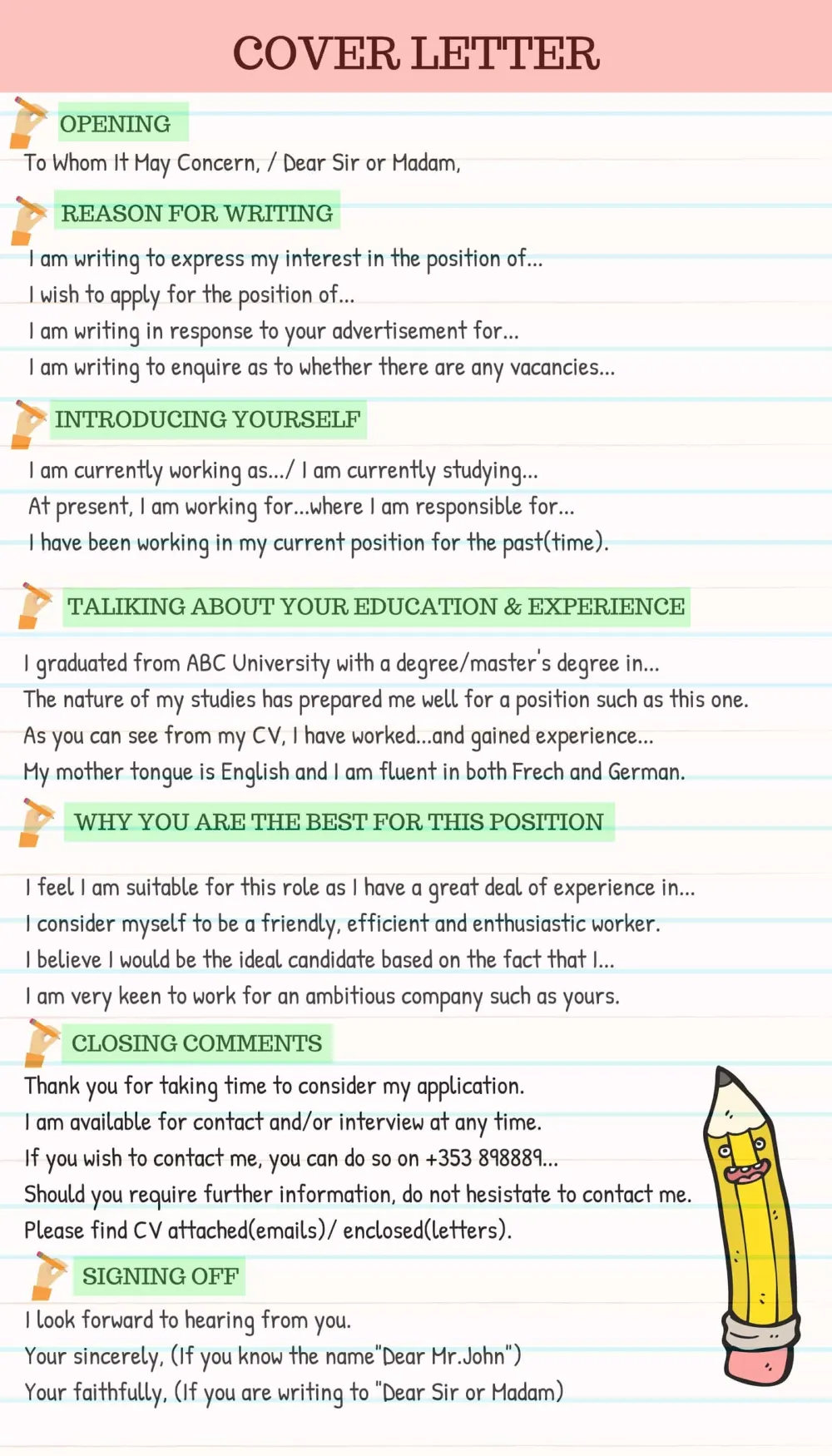
Cover Letter Secrets to Grab Attention
In the competitive world of job applications, a cover letter is your first opportunity to make a strong impression. It’s more than just a formality; it’s a strategic tool to showcase your personality, skills, and enthusiasm for the role. Writing an effective cover letter is an art, requiring careful consideration of content, structure, and presentation. This article unveils the secrets to crafting a cover letter that not only grabs attention but also secures you an interview. By understanding the nuances of cover letter writing, you can significantly increase your chances of landing your dream job.
Understanding the Importance of a Cover Letter
Why a Cover Letter Matters

A well-written cover letter provides context to your resume. It allows you to tell your story, explain your career goals, and highlight why you are the perfect fit for the position. Resumes are often a list of experiences, while cover letters allow you to connect the dots for the hiring manager. They provide insights into your communication skills, writing style, and how you approach a task. The cover letter is where you can exhibit your personality and enthusiasm, making you stand out from a pile of applicants. This is where your application truly comes to life, and you can show the employer who you are beyond the basic qualifications.
The Goals of a Cover Letter
The primary goals of a cover letter are to introduce yourself, express your interest in the position, and persuade the hiring manager to read your resume. It’s also a chance to demonstrate your understanding of the company and the specific role you are applying for. A good cover letter should be concise, clear, and tailored to each job application. You should also show the employer how your skills and experiences align with their needs. Ultimately, the cover letter’s goal is to secure you an interview by making a strong, positive first impression. Your goal should be to pique the employer’s interest and make them want to know more.
Crafting a Compelling Opening
The opening paragraph of your cover letter is crucial; it’s your first opportunity to capture the reader’s attention. It should be engaging and immediately establish your interest in the position and the company. A generic opening can be a missed opportunity. A great start often includes a personalized greeting, referencing a specific aspect of the job or company that caught your attention. Always avoid clichés and instead aim for a unique, memorable opening that sets the tone for the rest of your letter. Your opening should be carefully crafted to hook the reader and encourage them to continue reading.
Personalizing Your Introduction

Personalization is key to making your cover letter stand out. Address the hiring manager by name if possible, which shows you’ve done your research and are genuinely interested. If you know someone at the company, mention their name and how they influenced your interest. Tailor your opening to the specific role and company you’re applying for. Highlight something that specifically attracted you to the job description, such as a particular project or the company’s values. Avoid generic introductions that can be used for any job; instead, make it clear that this cover letter is specifically for this opportunity.
Highlighting Your Key Achievements
In your opening, briefly highlight one or two key achievements that are directly relevant to the job requirements. This immediately shows the hiring manager what value you can bring to the company. Instead of simply listing your responsibilities, focus on accomplishments that demonstrate results. Use action verbs and quantify your achievements whenever possible. For example, instead of saying “Managed social media accounts,” say “Increased social media engagement by 40% in six months.” This makes your achievements more tangible and impactful, making a lasting impression right from the start.
Showcasing Relevant Skills
Your introduction should also briefly mention the most relevant skills that align with the job description. This allows the hiring manager to quickly see that you possess the qualifications they’re looking for. Tailor your skills section to match the specific requirements of the job. Review the job description carefully and identify the key skills that the employer emphasizes. Make sure to use the same keywords from the job posting to demonstrate that you understand the role’s demands. Ensure you can demonstrate the skills you mention through your work experience and accomplishments.
Structuring Your Body Paragraphs

The body paragraphs of your cover letter are where you expand on your skills and experiences, providing specific examples to demonstrate your qualifications. Each paragraph should focus on a specific aspect of your background that is relevant to the job. Structure your paragraphs logically, using a clear and concise writing style. Avoid jargon or overly complex language. Instead, focus on making your points clear and easy to understand. This section is where you dive deep into your accomplishments and show the hiring manager the value you can bring to the team, providing concrete evidence of your capabilities.
Matching Skills with Job Requirements
Carefully match your skills and experiences with the requirements listed in the job description. For each skill or requirement, provide a brief example of how you have demonstrated it in the past. Use keywords from the job description throughout your body paragraphs to show that you understand the role’s expectations. Provide concrete examples and specific examples to prove your claims. This targeted approach helps the hiring manager see how your skills align perfectly with their needs. It shows that you have not just the skills but also the hands-on experience to thrive in the role.
Providing Concrete Examples
Instead of just listing your skills, provide concrete examples of how you’ve used them to achieve results. This helps the hiring manager understand the practical application of your abilities. Describe specific projects, challenges you overcame, and the outcomes of your actions. Use the STAR method (Situation, Task, Action, Result) to structure your examples. Describe the situation, the task you were assigned, the actions you took, and the results you achieved. This structured approach provides a clear and concise picture of your accomplishments, making them more impactful and memorable.
Quantifying Your Accomplishments

Whenever possible, quantify your accomplishments with numbers and data. This adds credibility and demonstrates the impact of your work. For example, instead of saying “Improved customer satisfaction,” say “Improved customer satisfaction by 20% through implementing a new feedback system.” Quantifying your achievements helps the hiring manager easily understand the value you brought to your previous roles. Use percentages, numbers, and specific metrics to illustrate your successes. This not only highlights your achievements but also shows that you are results-oriented and focused on performance.
Creating a Powerful Closing
The closing paragraph of your cover letter is your final chance to leave a lasting impression. It should be concise, enthusiastic, and reiterate your interest in the position and the company. Avoid generic phrases and instead aim for a strong, memorable conclusion. Your closing should summarize your key qualifications and clearly state your desire for an interview. This is where you can restate your enthusiasm and make sure the hiring manager remembers you.
Reiterating Your Interest
Reiterate your interest in the position and the company, showing that you are genuinely enthusiastic about the opportunity. Refer back to specific aspects of the job or company that resonate with you. Express your eagerness to learn more about the role and how your skills and experiences can contribute to the company’s success. Ensure that your final statement reflects your genuine excitement. This can be your last chance to persuade the hiring manager that you are truly the right person for the job.
Adding a Call to Action

Include a clear call to action, such as expressing your availability for an interview and providing your contact information. Make it easy for the hiring manager to take the next step in the hiring process. State your willingness to discuss your qualifications further and provide your phone number and email address. This helps the hiring manager know exactly what you expect and how to contact you. A well-defined call to action makes it easy for the hiring manager to take the next step and move your application forward.
Proofreading and Formatting
Before submitting your cover letter, proofread it carefully to ensure it’s free of errors and is well-formatted. A polished cover letter demonstrates professionalism and attention to detail, crucial qualities for any job applicant. Errors in spelling, grammar, and formatting can undermine your credibility and lead to your application being overlooked. This shows the hiring manager that you can produce high-quality work and that you care about the details, making your application stand out.
Ensuring Clarity and Conciseness
Make sure your cover letter is clear, concise, and easy to read. Use short paragraphs, clear sentences, and avoid jargon or complex language. The goal is to communicate your message quickly and effectively. Keep the letter to one page, and use a professional font and formatting. Ensure each sentence serves a purpose and contributes to the overall message. It’s a great idea to use simple language to ensure your ideas come across effectively to the reader.
Checking for Grammatical Errors

Carefully check your cover letter for any grammatical errors, typos, and spelling mistakes. Even minor errors can damage your credibility and make you appear unprofessional. Use a spell checker, grammar checker, and, most importantly, have another person proofread your letter. Fresh eyes can catch mistakes you might have missed. Read your cover letter out loud to hear how it flows and if it makes sense. Ensure that every sentence is perfect before submission; make sure it represents the best version of yourself.
Formatting for Readability
Use a professional format with a clear layout, easy-to-read font, and appropriate margins. The layout should be visually appealing and easy for the hiring manager to scan quickly. Use bullet points or lists to highlight key skills or achievements. Ensure that the layout is consistent and uncluttered. Proper formatting makes your letter look professional and easy to read, increasing the likelihood that it will be read thoroughly and that your key points will be understood.
Examples of Effective Cover Letters
Reviewing examples of effective cover letters can provide valuable insights into the best practices for cover letter writing. Look for letters that clearly showcase the candidate’s qualifications and enthusiasm. Pay attention to the structure, content, and language used in these examples. Learn how to tailor your cover letter to each job application. Use templates or samples as inspiration, but always customize them to fit your unique skills and experiences. By studying successful cover letters, you can gain a better understanding of what works and how to create a compelling cover letter.