Cover Letter Secrets Why You Need One
In the competitive world of job hunting, a well-crafted cover letter can be the key that unlocks your dream job. Far from being a mere formality, a cover letter is your first opportunity to make a strong impression on a potential employer. It’s a chance to go beyond the bullet points of your resume and tell your unique story, showcasing your personality, passion, and the value you bring to the table. By understanding the secrets of an effective cover letter, you can significantly increase your chances of getting noticed and landing an interview. The cover letter is the bridge between your qualifications and the job requirements, demonstrating how your skills and experience align with the specific needs of the employer.
Highlighting Your Strengths
Your cover letter should be a carefully curated highlight reel of your key strengths and relevant skills. Instead of simply listing your abilities, explain how these strengths have translated into tangible results in your past roles. Focus on qualities that align with the job description, such as leadership, communication, problem-solving, or technical expertise. For instance, if a job requires strong project management skills, you should provide specific examples of how you successfully managed projects, including the methodologies you used and the outcomes you achieved. Make sure to weave your strengths naturally into the narrative, showing rather than just telling the reader what you are capable of.
Quantify Your Achievements

One of the most impactful ways to make your cover letter stand out is by quantifying your achievements. Whenever possible, use numbers, percentages, and specific data to demonstrate the impact you’ve made in previous roles. Instead of saying you ‘increased sales’, mention by how much—‘increased sales by 15% in Q2’. If you ‘improved customer satisfaction’, state the percentage increase. Quantifiable results provide concrete evidence of your abilities and make a strong impression on hiring managers. By incorporating data and statistics, you move beyond general statements and showcase your real-world contributions in a compelling way.
Tailoring Your Cover Letter
A generic cover letter is a red flag for recruiters. It signals a lack of genuine interest and may lead to immediate dismissal. To ensure your cover letter makes a positive impression, tailor it to each specific job application. This involves carefully reviewing the job description and identifying the key requirements and expectations. Then, adjust your letter to directly address these points, highlighting the skills and experiences that align with the employer’s needs. Research the company, understand their values, and demonstrate how your goals align with theirs. Personalize the tone and style of your letter to match the company culture for a more impactful application.
Researching the Company
Before you even begin to write, spend some time researching the company and the specific role. This research serves several crucial purposes. First, it helps you understand the company’s mission, values, and current projects. Second, it allows you to tailor your cover letter and highlight how your skills and experiences align with the company’s needs. Use the company’s website, social media, and news articles to gather information. Mention specific company initiatives or projects that resonate with you. This level of detail demonstrates your genuine interest and that you’ve taken the time to understand the role and the organization. It shows the hiring manager that you are serious about the opportunity.
Formatting Your Cover Letter

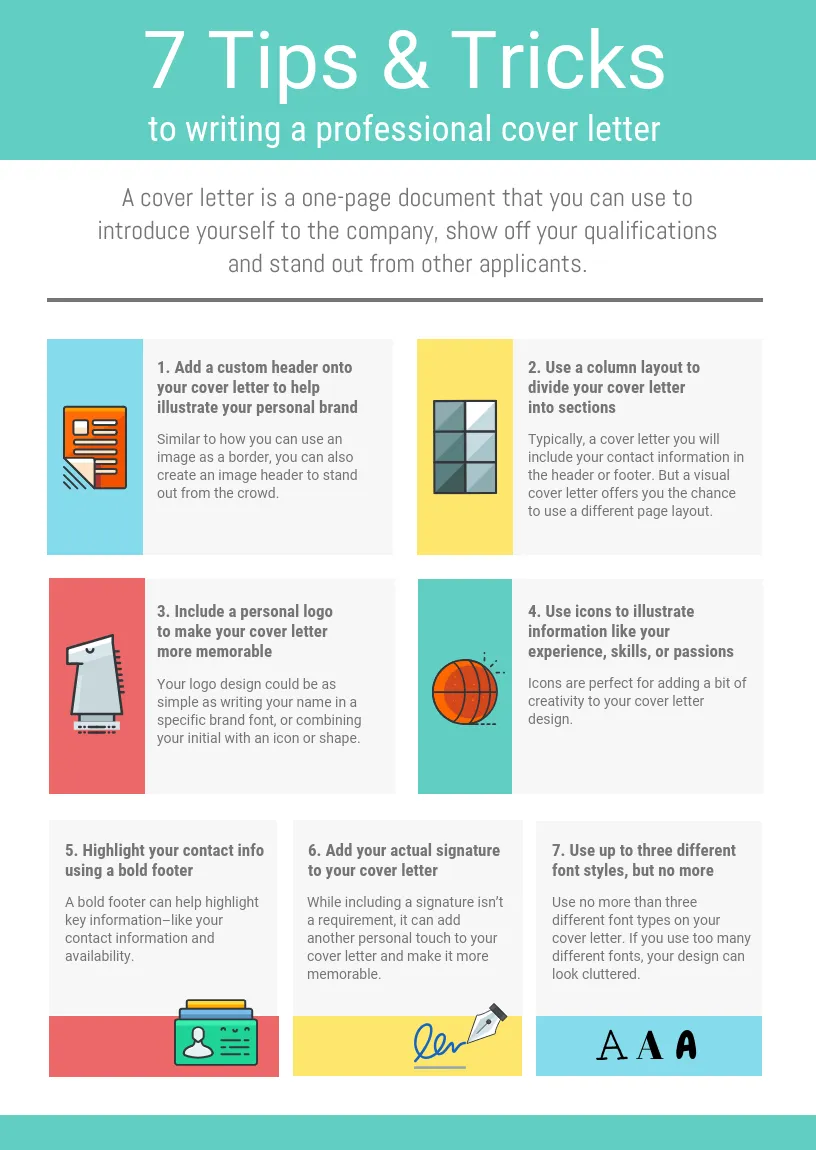
The format of your cover letter is as important as its content. A well-formatted letter is easy to read and makes a professional impression. Start with your contact information, followed by the date and the hiring manager’s information if you know it. Use a clear, professional font, such as Arial or Times New Roman, in a readable size (11 or 12 points). Maintain consistent spacing throughout your letter and use concise paragraphs to break up the text. Avoid lengthy blocks of text that can overwhelm the reader. Use bullet points to highlight key achievements and skills and ensure the overall presentation is clean, organized, and error-free.
Cover Letter Mistakes to Avoid
Several common mistakes can undermine the effectiveness of your cover letter. One of the biggest errors is simply restating your resume. A cover letter should complement your resume, not duplicate it. Another mistake is using generic language or templates without customization. Make sure to avoid typos and grammatical errors at all costs, as they can make you appear unprofessional. Furthermore, neglecting to proofread your letter can lead to costly blunders, potentially leading to a rejection. Finally, avoid writing a cover letter that is too long. Aim for a concise, one-page document that gets straight to the point.
Show, Don’t Tell
Rather than simply stating you possess certain skills, show the hiring manager how you’ve used those skills to achieve results. For instance, instead of saying you’re a good communicator, provide examples of how you successfully presented to a large audience, negotiated a contract, or resolved a conflict. Use the STAR method (Situation, Task, Action, Result) to describe specific situations where you demonstrated your abilities. This approach makes your claims more credible and provides concrete evidence of your competencies, which is far more convincing than vague assertions.
Proofreading Is Key

Proofreading is the final and critical step in writing a cover letter. A single typo or grammatical error can undermine your credibility and signal a lack of attention to detail. Carefully review your letter for any errors in grammar, spelling, punctuation, and sentence structure. Read your cover letter out loud, as this can help you catch mistakes that you might miss when reading silently. Use a spell checker and grammar checker, but don’t rely on them entirely. It’s also beneficial to have a trusted friend, family member, or career advisor review your letter for any errors or areas for improvement.
Call to Action Get the Interview
End your cover letter with a strong call to action. Express your enthusiasm for the position and the company, and clearly state your intention to follow up or request an interview. Provide your contact information again and thank the hiring manager for their time and consideration. A well-crafted call to action leaves a lasting impression and encourages the recruiter to move forward with your application. If you’re genuinely interested in the role, don’t be afraid to express your keenness to learn more and discuss your qualifications in detail. Your goal is to make it easy for the hiring manager to take the next step and invite you for an interview.