Cover Letter Secrets for Entry-Level Success!
Landing your first job can feel like navigating a maze. Without prior experience in your desired field, it’s easy to feel like you’re at a disadvantage. However, a well-crafted cover letter can be your secret weapon. It’s your opportunity to showcase your potential, highlight transferable skills, and express your genuine interest in the role and the company. This guide will unlock the secrets to writing a cover letter that grabs attention and increases your chances of securing an interview, even when you lack direct experience.
Understanding the Purpose of a Cover Letter
A cover letter serves as a personalized introduction to your resume. It’s more than just a formality; it’s your chance to tell your story, explain why you’re a good fit for the specific position, and demonstrate your enthusiasm. Unlike a resume, which provides a factual overview of your skills and experience, a cover letter allows you to connect with the hiring manager on a more personal level, showcasing your personality and communication skills.
Why a Cover Letter Matters Even Without Experience

When you lack direct experience, a cover letter becomes even more critical. It’s your chance to convince the hiring manager that your skills are transferable and your attitude is right for the role, even if you haven’t held a similar position before. It allows you to address the elephant in the room – the lack of experience – and proactively offer alternative examples of your abilities, such as projects, coursework, or volunteer work, that demonstrate your potential and eagerness to learn.
Key Components of a Cover Letter
Contact Information & Salutation
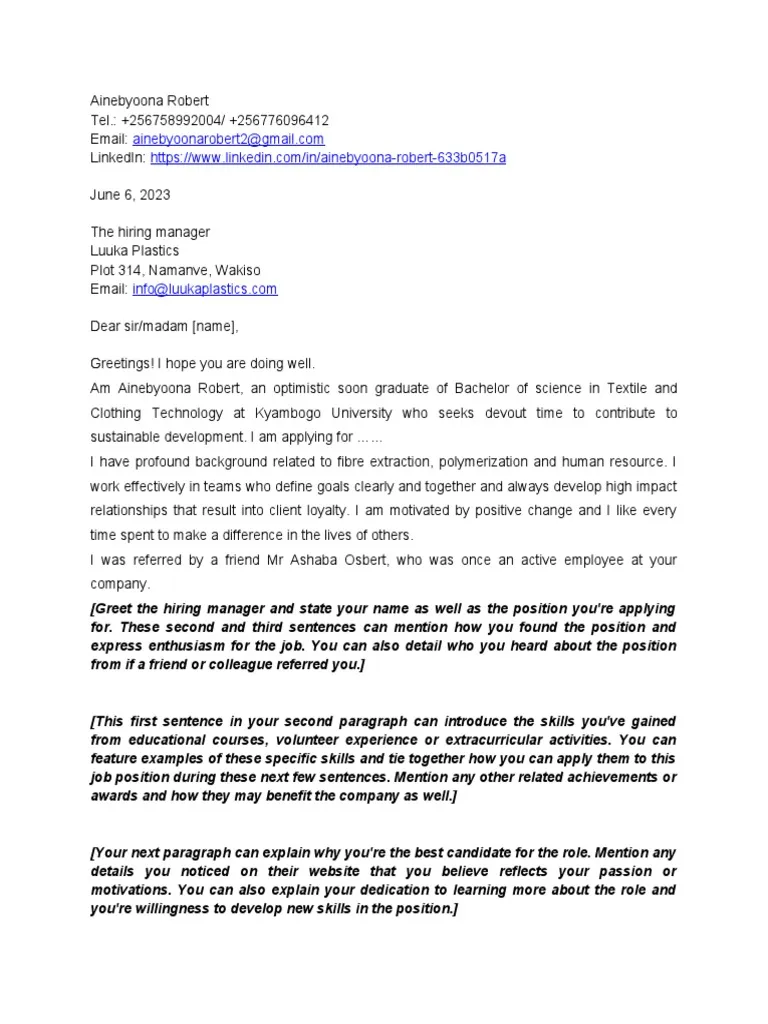
Start with your contact information (name, phone number, email address, and optionally, your LinkedIn profile URL) aligned to the left, followed by the date, and the hiring manager’s information (if known) aligned to the right. Always use a professional salutation, such as “Dear Mr./Ms. [Last Name],”. If you don’t know the hiring manager’s name, use “Dear Hiring Manager” or “Dear [Company Name] Team”. Avoid generic greetings like “To Whom It May Concern”.
The Introductory Paragraph Hooking the Reader

The first paragraph is crucial. It’s your chance to immediately grab the reader’s attention. State the position you’re applying for and how you found the job posting. Then, briefly express your enthusiasm for the opportunity and the company. Consider mentioning a specific aspect of the role or the company that excites you. For instance, you might say something like, “I am writing to express my enthusiastic interest in the Marketing Assistant position at [Company Name], as advertised on [Platform]. I am particularly drawn to [Company’s Mission/Values], and I am eager to contribute to your team’s success.”
Highlighting Transferable Skills
Focus on transferable skills – the skills you’ve gained through previous experiences (even if they’re not directly related to the job) that are relevant to the role. These might include communication, teamwork, problem-solving, time management, leadership, or technical skills. Provide specific examples of how you’ve utilized these skills. For example, “During my volunteer role at [Organization Name], I was responsible for coordinating events and managing a team of volunteers. This experience honed my organizational and leadership skills, which I believe will be valuable in managing project deadlines and collaborating effectively with the team.”
Showcasing Relevant Projects & Coursework
If you lack professional experience, highlight relevant projects or coursework. Describe these experiences in detail, emphasizing what you learned and the skills you developed. Quantify your accomplishments whenever possible. For instance, “In my university project, I developed a marketing campaign that increased student engagement by 20% through the use of social media marketing and targeted advertisements.” This demonstrates your initiative and ability to apply your knowledge in a practical setting.
Quantifying Achievements & Results

Whenever possible, quantify your achievements to demonstrate the impact of your actions. Use numbers, percentages, or other metrics to showcase your accomplishments. For example, instead of saying “Improved customer service,” say “Improved customer satisfaction scores by 15% through implementing a new customer feedback system.” Quantifying your achievements makes your cover letter more compelling and shows employers the tangible results you can deliver.
Expressing Enthusiasm & Company Research
Showcase your genuine interest in the company and the specific role. Demonstrate that you’ve done your research by mentioning specific aspects of the company that resonate with you, such as their mission, values, or recent projects. Explain why you are particularly drawn to this opportunity. For example, you could say, “I am particularly impressed by [Company Name]’s commitment to [Company Value], and I am eager to contribute to a team that shares these values.”
The Closing Paragraph & Call to Action
In your closing paragraph, reiterate your interest in the position and thank the hiring manager for their time and consideration. Include a clear call to action. For instance, “Thank you for considering my application. I am eager to learn more about this opportunity and discuss how my skills and enthusiasm can benefit your team. I am available for an interview at your earliest convenience.” End with a professional closing, such as “Sincerely” or “Best regards,” followed by your name.
Formatting & Presentation Tips

Choosing the Right Font & Size
Choose a professional and easy-to-read font, such as Times New Roman, Arial, Calibri, or Helvetica. Use a font size between 10 and 12 points. Ensure consistent formatting throughout the document. Use standard margins (1 inch on all sides) and single- or 1.15-line spacing. A clean and well-organized cover letter is more likely to make a positive impression.
Proofreading & Editing for Perfection
Proofread your cover letter carefully for any typos, grammatical errors, and spelling mistakes. Ask a friend, family member, or career advisor to review it as well. Errors can undermine your credibility and make you appear unprofessional. Ensure that your cover letter is free of any errors, no matter how small.
Tailoring Your Cover Letter to Each Job

Researching the Company & Role
Before writing your cover letter, thoroughly research the company and the specific role you’re applying for. Visit the company’s website, read their “About Us” section, and explore their social media profiles. Understand the company’s mission, values, and culture. Carefully review the job description to identify the key skills and qualifications the employer is seeking. This research will allow you to tailor your cover letter to the specific requirements of the job and demonstrate your genuine interest.
Identifying Specific Skills & Keywords
Identify the specific skills and keywords mentioned in the job description. Incorporate these keywords into your cover letter naturally. Highlight your relevant skills and provide examples of how you’ve used them. This will help your cover letter pass through applicant tracking systems (ATS) and catch the attention of the hiring manager. Tailoring your letter to the specific language and requirements of the job is crucial.
Showcasing Your Personality & Fit

Let your personality shine through. While maintaining a professional tone, express your enthusiasm for the role and the company. Show the hiring manager that you’re not just qualified but also a good fit for their team. This is your chance to sell yourself beyond just your skills. Share your passion for the industry or the type of work you want to do. Your cover letter is about demonstrating that you are also someone the team will want to work with.
Common Mistakes to Avoid
Generic Letters & Lack of Personalization
Avoid sending a generic cover letter that could be used for any job. Tailor each cover letter to the specific role and company you’re applying for. Personalize your letter by addressing the hiring manager by name (if possible) and mentioning specific details about the company and the role. Generic cover letters will be easily overlooked.
Focusing Solely on Lack of Experience
Don’t dwell on your lack of experience. While it’s important to acknowledge it, don’t make it the central theme of your cover letter. Instead, focus on your skills, enthusiasm, and potential. Frame your lack of experience positively by emphasizing what you can bring to the table, such as a fresh perspective, a strong work ethic, and a willingness to learn.
Typos, Grammatical Errors, and Poor Formatting
Proofread your cover letter meticulously for any errors. Typos, grammatical errors, and poor formatting can make you appear unprofessional and demonstrate a lack of attention to detail. Have someone else review your letter as well. A polished, error-free cover letter shows that you care about the details and are committed to presenting yourself in the best possible light.
Final Thoughts
Writing a compelling cover letter without experience is challenging, but not impossible. By focusing on your transferable skills, showcasing relevant projects, quantifying your achievements, and expressing your enthusiasm, you can significantly increase your chances of landing an interview. Remember to tailor your cover letter to each job, proofread carefully, and let your personality shine through. Good luck with your job search!