Crafting a Cover Letter Real Estate
In the competitive world of real estate, a well-crafted cover letter is your first opportunity to make a positive impression. It’s more than just a formality; it’s your chance to showcase your personality, skills, and enthusiasm for the role. A compelling cover letter grabs the hiring manager’s attention and sets you apart from other applicants. It must quickly and efficiently demonstrate your value and convince the reader to learn more about you. This guide will help you craft a winning cover letter that significantly increases your chances of landing your dream job in real estate.
Understanding the Purpose
The primary purpose of a real estate cover letter is to introduce yourself and highlight why you are a strong fit for the specific position. While your resume provides a detailed overview of your experience and qualifications, the cover letter allows you to provide context, share your career goals, and demonstrate your understanding of the real estate market. Think of your cover letter as a narrative – you are telling the story of how your skills and experiences align with the company’s needs. You should use the cover letter to explain any gaps in your resume, address specific requirements mentioned in the job description, and express your enthusiasm for the opportunity.
Highlighting Your Value Proposition

Your value proposition is what sets you apart from other candidates. Identify your key strengths and how they align with the needs of the real estate company. Are you a skilled negotiator? Do you have a strong network of contacts? Do you have experience in a specific niche of the market? Quantify your achievements whenever possible – for example, mention the number of deals you closed or the percentage by which you increased sales in a previous role. Show the potential employer the value you would bring to their company. If you’re new to the field, focus on transferable skills like customer service, communication, or sales, and explain how these skills will benefit you in your real estate career.
Researching the Real Estate Company
Before writing your cover letter, research the real estate company thoroughly. Visit their website, read about their mission, values, and recent achievements. Understand their target market, their areas of expertise, and their company culture. This information will help you tailor your cover letter to demonstrate how your skills and goals align with the company’s values and needs. If the company specializes in luxury properties, you might highlight your experience with high-end clients. If they are known for their community involvement, you could mention any relevant volunteer work or a desire to contribute to their initiatives. Doing your homework demonstrates genuine interest and initiative.
Structuring Your Real Estate Cover Letter
Header and Contact Information

Your header should include your name, address, phone number, and email address. Be sure to use a professional-looking email address. If you have a LinkedIn profile, include the link as well. This allows the hiring manager to quickly find your contact information and learn more about your professional background. The header should be clear, concise, and easy to read. Consider using a clean, simple font and layout. Always double-check the accuracy of your contact information to ensure the company can easily reach you.
The Opening Paragraph
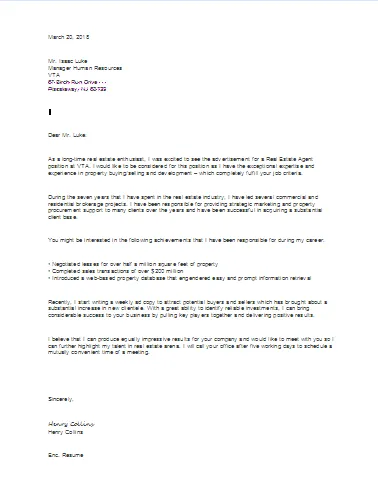
The opening paragraph is your first opportunity to capture the reader’s attention. Start by stating the position you are applying for and where you saw the job posting. Then, briefly introduce yourself and express your enthusiasm for the opportunity. Clearly state why you are interested in the role and the company. Try to personalize the opening; if you know the hiring manager’s name, address the letter to them directly. If not, use a general salutation like “Dear Hiring Manager.” A compelling opening will make the reader want to continue reading and learn more about your qualifications.
Body Paragraphs Showcase
The body paragraphs are where you showcase your relevant skills, experiences, and achievements. Use these paragraphs to highlight how your qualifications match the job requirements. Provide specific examples to illustrate your points. Quantify your accomplishments whenever possible – e.g., “Increased sales by 15% in one year.” Focus on the experiences that are most relevant to the position. If you are changing careers, emphasize transferable skills like communication, sales, or customer service. Demonstrate your understanding of the real estate market and explain how you can contribute to the company’s success. Show how your goals align with the company’s objectives.
The Closing

In your closing paragraph, reiterate your interest in the position and the company. Thank the hiring manager for their time and consideration. Express your eagerness to learn more and discuss how you can contribute to their team. Include a call to action, such as inviting the hiring manager to contact you for an interview. Reiterate your contact information if space allows. End with a professional closing, such as “Sincerely” or “Best regards,” followed by your full name.
Optimizing Content and Formatting
Keywords and Action Verbs
Use keywords from the job description throughout your cover letter. This helps your application pass through applicant tracking systems (ATS) and ensures that your letter highlights the key skills and qualifications the employer is seeking. Use action verbs such as “managed,” “negotiated,” “achieved,” “collaborated,” and “developed” to describe your accomplishments. These verbs make your letter more engaging and help you demonstrate your value. Ensure you use keywords naturally within the context of your sentences and avoid keyword stuffing, which can make your letter sound unnatural and decrease its readability.
Formatting for Readability

Format your cover letter for easy readability. Use a professional font like Times New Roman, Arial, or Calibri in a size between 10 and 12 points. Use one-inch margins on all sides. Keep your paragraphs concise and break up large blocks of text with bullet points or short sentences. Use bolding to highlight important information. Ensure your cover letter is visually appealing. Proofread carefully for any formatting issues, such as inconsistent spacing or alignment.
Reviewing and Editing
Before submitting your cover letter, carefully review and edit it. Check for any grammatical errors, spelling mistakes, or typos. Ensure that your letter is clear, concise, and error-free. Ask a friend, mentor, or career counselor to review your cover letter and provide feedback. They can identify areas that need improvement, such as awkward phrasing or unclear points. Proofread the letter multiple times, and read it aloud to catch any errors. A polished cover letter shows attention to detail and professionalism.
Tips for Success
Tailoring Your Cover Letter

Customize your cover letter for each job application. Don’t use a generic template; tailor your letter to the specific requirements of the role and the company. Highlight the skills and experiences that are most relevant to the job description. Reference the company’s values and mission in your letter to demonstrate your understanding and interest. Show the hiring manager that you have taken the time to research their company and that you genuinely want to work for them. A tailored cover letter demonstrates that you are serious about the opportunity and increases your chances of getting an interview.
Following Up
If you haven’t heard back within a reasonable timeframe (typically one to two weeks), follow up with the hiring manager. A polite email or phone call expressing your continued interest can help you stay top of mind. In your follow-up, reiterate your interest in the position and mention a few key qualifications. Avoid being overly persistent; a single follow-up is usually sufficient. Thank the hiring manager for their time and consideration. Following up demonstrates your initiative and enthusiasm for the opportunity. However, respect their response and move on if you are not selected.
Common Mistakes to Avoid
Avoid common mistakes that can hurt your chances of getting hired. These include typos, grammatical errors, and generic language. Don’t use clichés or jargon that might make your letter sound impersonal. Avoid exaggerating your skills or experience; be honest and authentic. Don’t focus on what you want (the job) without emphasizing what you can do for the company. Never send a cover letter without thoroughly proofreading it. Make sure you address it to the correct person. A well-crafted, error-free cover letter significantly increases your chances of getting an interview and ultimately landing your dream job in the real estate industry.