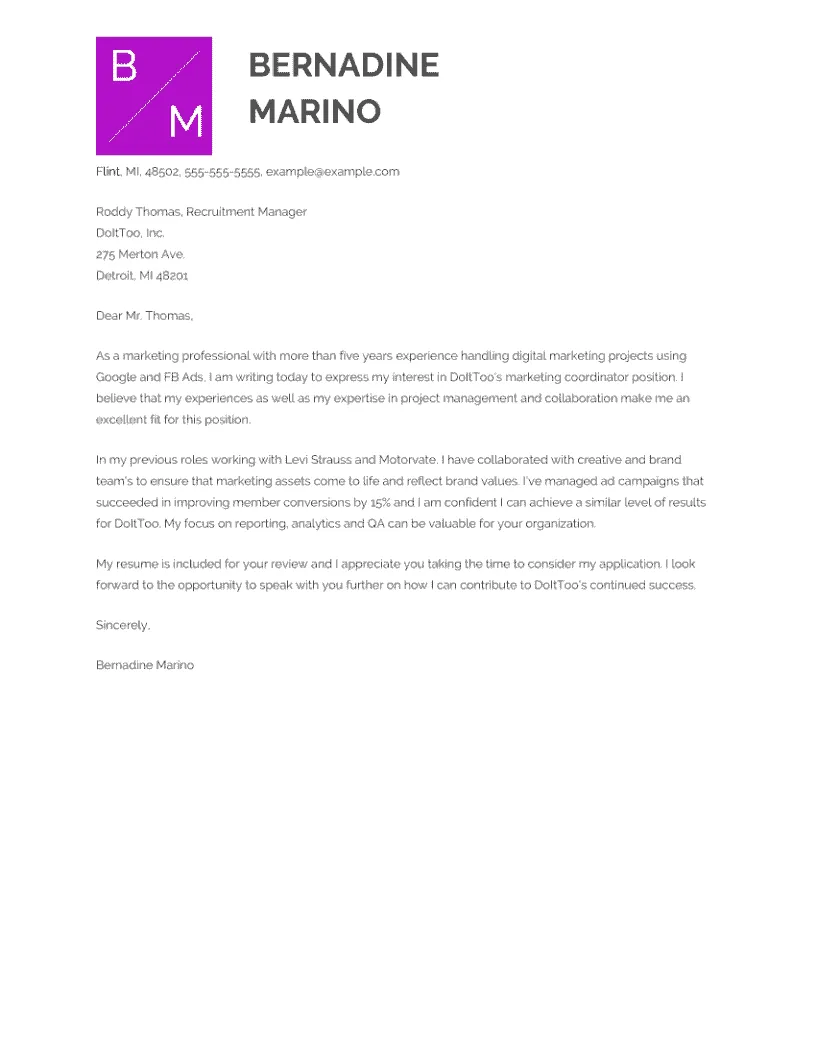
Cover Letter Marketing Top 5 Strategies
In the competitive world of marketing, a well-crafted cover letter is your first opportunity to make a lasting impression on potential employers. It’s not just a formality, it’s a powerful marketing tool. A cover letter acts as a personal pitch, allowing you to showcase your skills, experience, and enthusiasm in a way that a resume alone cannot. A strong cover letter can significantly increase your chances of landing an interview, ultimately leading to your desired marketing role. Mastering the art of the cover letter involves more than just listing your qualifications, it’s about strategically presenting yourself as the perfect fit for the specific job and company. This guide will help you to master this crucial skill by providing practical, actionable strategies.
Highlight Your Marketing Skills
Your cover letter is the ideal place to spotlight your relevant marketing skills. Begin by carefully reviewing the job description and identifying the key skills the employer is seeking. Then, weave those skills into your letter, providing specific examples of how you’ve demonstrated them in previous roles. For example, if the job requires social media management skills, share how you increased engagement or grew a follower base in a previous role. If the role emphasizes content creation, mention successful campaigns you’ve led and the results you achieved. The goal is to make it clear to the hiring manager that you possess the capabilities they need, and this is where you should be able to demonstrate it. Be specific and provide quantifiable results whenever possible to showcase your expertise and value.
Quantify Your Achievements

Numbers speak louder than words, especially in marketing. Instead of simply stating your responsibilities, quantify your accomplishments to provide concrete evidence of your impact. Use metrics to demonstrate your success in previous roles. Did you increase website traffic by a certain percentage? Did you generate a specific amount of leads or sales? Did you improve conversion rates? Provide specific figures to back up your claims, using percentages, numbers, and data to illustrate your achievements. For instance, you might write, ‘Increased lead generation by 25% through targeted email campaigns’ or ‘Boosted social media engagement by 40% in six months.’ These numbers provide tangible proof of your value and make your accomplishments more compelling to potential employers.
Tailor to the Job Description
A generic cover letter won’t cut it in today’s job market. It is essential to tailor each cover letter to the specific job you’re applying for. Carefully read the job description and identify the key requirements and qualifications. Then, customize your letter to address those specific needs. Highlight the skills and experience that align with the job’s demands. Explain how your background makes you an ideal candidate for the role. Research the company and show that you understand its mission, values, and target audience. Demonstrate how your skills can contribute to the company’s success. Customization demonstrates your genuine interest in the position and shows that you’ve taken the time to understand the company and the role you are applying for. This effort sets you apart from the candidates who use a one-size-fits-all approach.
Showcase Your Passion for Marketing
Marketing is a field that thrives on passion and enthusiasm. Your cover letter should convey your genuine interest in the industry and the specific role you’re applying for. Share why you’re excited about the company and its products or services. Discuss the aspects of marketing that you find most captivating. Explain how you stay up-to-date with the latest trends and technologies. Demonstrate your eagerness to learn and grow within the field. By expressing your passion, you can make a strong impression on the hiring manager. This shows you are not just looking for a job, but rather, you are eager to make a meaningful contribution to the company’s marketing efforts, this adds a layer of excitement and motivation to your application.
Proofread and Edit

Before submitting your cover letter, always proofread and edit it carefully. Errors in grammar, spelling, or punctuation can undermine your credibility and make a negative impression. Check for any typos, grammatical errors, or inconsistencies. Ensure your letter is clear, concise, and well-organized. Have a friend or colleague review your letter as well to catch any mistakes you might have missed. A polished cover letter reflects your attention to detail and professionalism. Make sure your formatting is consistent and easy to read. A well-edited cover letter will show the hiring manager that you’re meticulous and capable of producing high-quality work. It’s also a good idea to read your cover letter aloud to ensure it flows naturally and sounds professional.
Crafting a Compelling Opening
The opening of your cover letter is critical. It’s your chance to grab the reader’s attention and make them want to continue reading. Avoid generic opening lines such as ‘I am writing to express my interest…’ Instead, start with a strong hook that highlights your key skills, achievements, or your passion for the company. Immediately state the position you are applying for. This lets the hiring manager know exactly what you are after. Consider starting with a compelling anecdote that relates to the company or the role. Tailor your opening to the company and the specific role. This will capture the reader’s attention. Your goal is to make the hiring manager curious and interested in learning more about your qualifications and your suitability for the role.
The Importance of a Strong First Impression
The first few sentences of your cover letter set the tone for the rest of your application. A strong opening creates a positive first impression and encourages the reader to continue. Conversely, a weak or generic opening can make the hiring manager lose interest immediately. To make a good first impression, immediately state the position you are applying for, and then briefly summarize your most relevant qualifications or experiences. Make your opening specific to the company and the role. This demonstrates that you’ve researched the company and understand its needs. Remember, you are not just seeking a job, but showcasing how your skills and experience align with the company’s objectives, starting with a concise and compelling opening.
How to Grab the Reader’s Attention

To grab the reader’s attention, be creative and engaging. Consider starting with a question that relates to the role or the company’s mission. You might also start with a brief anecdote that demonstrates your relevant skills or experience. Avoid clichés and generic phrases. Instead, use dynamic and action-oriented language. Quantify your accomplishments whenever possible to make your claims more compelling. Show your enthusiasm for the company and the role by expressing your understanding of the company’s needs. Make it clear that you are the perfect fit for the job. The goal is to make the hiring manager eager to read the rest of your letter and learn more about you.
Writing a Powerful Body
The body of your cover letter is where you expand on your qualifications and demonstrate your value to the company. This section should be structured in a way that is easy to read and understand. Use concise paragraphs, clear language, and action verbs to convey your message effectively. Highlight your relevant skills and experiences, providing specific examples of your achievements. Tailor your letter to the job description, emphasizing the qualifications that align with the company’s needs. Connect your skills to the company’s goals. Explain how you can contribute to the company’s success. Show, don’t just tell. Provide specific examples that illustrate your ability to deliver results.
Structuring Your Letter Effectively
Structure your cover letter logically to make it easy to read and understand. Begin with a strong opening, followed by a body that highlights your key qualifications and experiences. Use concise paragraphs and clear headings to guide the reader. In the body, discuss your relevant skills, providing specific examples of your achievements. Be specific about your accomplishments. Quantify your successes whenever possible to show the impact of your work. For example, instead of writing, ‘Managed social media campaigns,’ you might write, ‘Managed social media campaigns that increased follower engagement by 30% in six months.’ This structure helps the hiring manager quickly understand your qualifications and why you’re a good fit for the role.
Emphasizing Relevant Experience

In the body of your cover letter, emphasize your relevant experience. Focus on the experiences that align with the job description and the company’s needs. Describe your responsibilities and achievements in each role, using action verbs to convey your accomplishments. Don’t just list your duties. Highlight the outcomes of your work and the impact you made. Provide specific examples that demonstrate your skills and expertise. For example, if the job requires experience with content marketing, describe a successful content campaign you led and the results you achieved. By emphasizing relevant experiences, you show the hiring manager that you are the perfect fit for the role and that you have the skills and knowledge to be successful.
Using Action Verbs
Action verbs make your cover letter more dynamic and engaging. Instead of passive language, use strong action verbs to describe your responsibilities and accomplishments. For example, use ‘managed,’ ‘developed,’ ‘implemented,’ ‘achieved,’ and ‘increased’ to convey your contributions. Action verbs make your letter more compelling. They paint a clear picture of your skills and experiences. They show the hiring manager that you are proactive, results-oriented, and capable of taking initiative. Here are some examples of action verbs to use: ‘Launched’, ‘Oversaw’, ‘Created’, ‘Implemented’, ‘Developed’, ‘Increased’, ‘Managed’, ‘Led’, ‘Generated’. Using action verbs helps you stand out from other candidates and makes your cover letter more memorable.
The Closing and Call to Action
The closing of your cover letter is your final opportunity to leave a lasting impression. End with a strong statement that reiterates your interest in the role and your qualifications. Include a clear call to action that encourages the hiring manager to contact you for an interview. Be confident and enthusiastic. Your closing should summarize your value proposition and leave the hiring manager with a positive impression of you. The closing should reaffirm your interest, highlight your key qualifications, and encourage further action. This demonstrates your professionalism and leaves a strong and lasting impression, while also facilitating the next step in the hiring process.
Ending with a Strong Statement

End your cover letter with a strong, confident statement that reinforces your interest in the position. Summarize your key qualifications and reiterate why you’re the ideal candidate. Show your enthusiasm for the company and the role. Express your confidence in your ability to contribute to their success. This closing statement should leave the hiring manager with a clear understanding of your value proposition. For example, you might write, ‘I am confident that my skills and experience make me an excellent fit for this role, and I am eager to contribute to [Company Name]’s continued success.’ This type of statement reinforces your value and enthusiasm, leaving a positive final impression.
Including Contact Information
Always include your contact information in your cover letter. Make it easy for the hiring manager to reach you. Include your name, phone number, email address, and professional networking profile (e.g., LinkedIn). Ensure your contact information is accurate and up-to-date. Use a professional-sounding email address. Make sure your voicemail greeting is professional and reflects well on you. By providing clear and accessible contact information, you make it easy for the hiring manager to schedule an interview or contact you with any questions. This final step demonstrates your professionalism and eagerness to move forward in the hiring process.