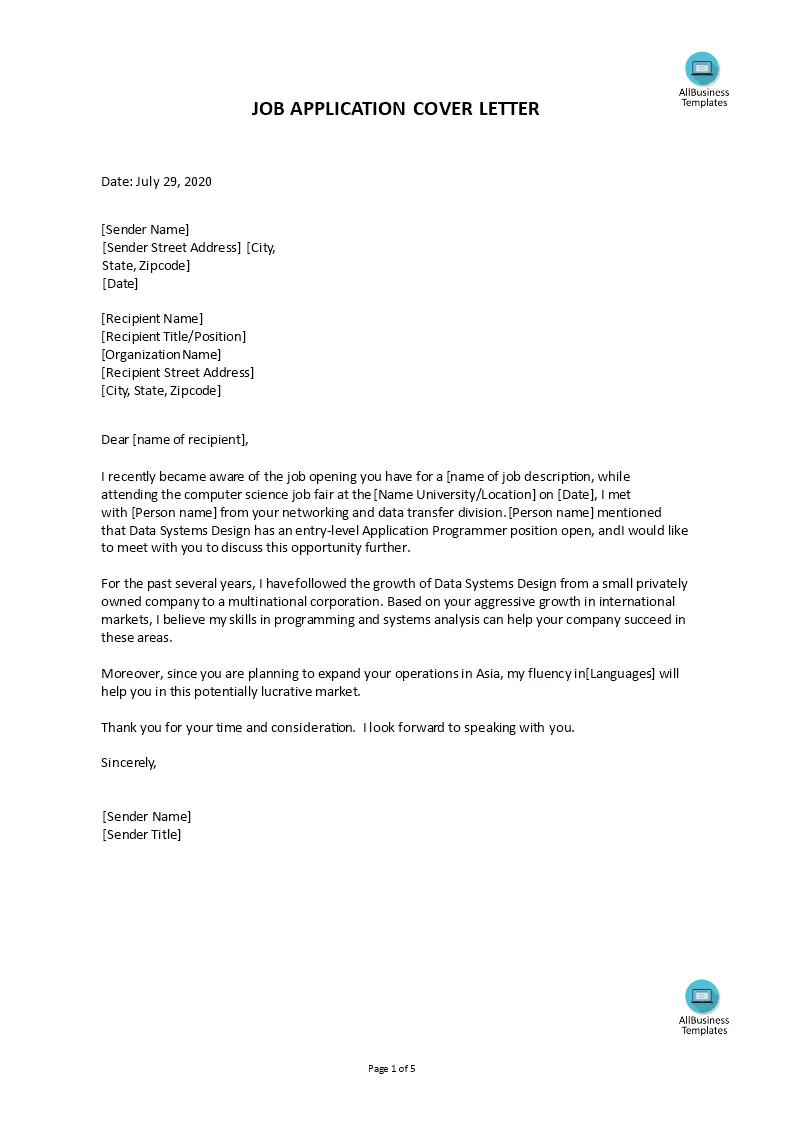
Cover Letter Basics
A cover letter is a crucial document that accompanies your resume when applying for a job. It serves as your personal introduction to the hiring manager, providing context and showcasing your qualifications in a more narrative format than a resume allows. Writing a compelling cover letter can significantly increase your chances of landing an interview. This guide will walk you through the essential steps of crafting an effective cover letter that highlights your skills, experience, and enthusiasm for the position.
Why Cover Letters Matter
While a resume provides a snapshot of your professional history, a cover letter offers the opportunity to elaborate on specific experiences and connect them to the job requirements. It allows you to demonstrate your understanding of the role, explain your motivations for applying, and showcase your personality. Many hiring managers consider cover letters as an important factor in the evaluation process; a well-written cover letter can set you apart from other applicants, even if your resume is similar to others.
Key Components of a Cover Letter

A strong cover letter typically includes several key components that work together to present a cohesive and persuasive argument for your candidacy. Understanding these components is the first step in the process of writing your cover letter. These pieces include a header, a personalized greeting, an opening paragraph that captures attention, body paragraphs that demonstrate skills and experience, a closing paragraph that reiterates interest, and a call to action.
Formatting Your Cover Letter
Formatting is important to give your letter a professional appearance. Use a standard, easy-to-read font, such as Arial or Times New Roman, and maintain a consistent font size (11 or 12 points). Ensure your letter has adequate margins (1 inch on all sides) and single-space the text with a blank line between each paragraph. Proper formatting will make your cover letter easier to read and will make a good first impression on the hiring manager.
Cover Letter Structure
A well-structured cover letter follows a logical flow that guides the reader through your qualifications and enthusiasm. Understanding the structure of the cover letter will help you organize your thoughts and improve your writing. A clear structure helps you to effectively deliver your message.
Header and Contact Information

Begin your cover letter with a header that includes your contact information (name, address, phone number, email address) and the date. Below that, include the hiring manager’s name (if known), their title, the company name, and the company’s address. This ensures that your letter is correctly addressed and easy for the reader to contact you.
Greeting
Address your letter to the hiring manager by name whenever possible. Research the company and role to identify the appropriate person. If you are unable to find a specific name, use a professional greeting, such as “Dear Hiring Manager,” to show you are addressing the recipient directly. Avoid generic greetings like “To Whom It May Concern.”
The Opening Paragraph
The opening paragraph is your first opportunity to capture the reader’s attention. State the position you’re applying for and briefly mention where you found the job posting. Immediately express your interest in the role and the company. Consider including a brief statement about why you are interested or a key skill that aligns with the job requirements. The goal is to make the reader want to learn more.
Body Paragraphs

The body paragraphs are where you highlight your skills and experience and connect them to the job requirements. Focus on the employer’s needs by describing how your qualifications align with the role. Use specific examples from your past experiences to demonstrate your abilities. This section is the core of your letter; its content is key to securing an interview.
Highlighting Relevant Skills and Experience
Carefully review the job description and identify the key skills and qualifications the employer is seeking. In your body paragraphs, provide specific examples of how you have demonstrated those skills in previous roles. Use the STAR method (Situation, Task, Action, Result) to structure your examples. The STAR method helps to tell a compelling story that shows how you have succeeded in the past.
Showcasing Your Personality and Enthusiasm
While emphasizing your qualifications, also let your personality shine through. Use a professional and enthusiastic tone to express your genuine interest in the company and the position. Show why you are excited about this opportunity and how your personal attributes make you a good fit for the company culture. This will show that you are a good fit, even beyond your experience.
The Closing Paragraph

In your closing paragraph, reiterate your interest in the position and the company. Express your confidence in your ability to contribute to their success. Thank the hiring manager for their time and consideration. Leave a positive and memorable impression.
Call to Action
Conclude your cover letter with a clear call to action. State that you are eager to discuss your qualifications further and express your availability for an interview. Include your contact information again, and state your willingness to answer any questions they may have. A clear call to action will give the reader direction.
Proofreading and Editing
Before submitting your cover letter, thoroughly proofread it for any grammatical errors, typos, and inconsistencies. Ensure that your letter is well-organized, easy to read, and free of jargon. Ask a friend, family member, or career counselor to review your letter for feedback. A well-edited cover letter shows attention to detail and professionalism.
Common Cover Letter Mistakes

Avoid these common mistakes to make sure that your cover letter is the best it can be. Generic content that doesn’t address the specific job or company, typos and grammatical errors, and excessive length are the most common mistakes. Failing to tailor the letter to the specific job, using clichés, and not including a call to action can also damage your chances of getting an interview. Always proofread your cover letter before you submit it.
Cover Letter Examples
Reviewing cover letter examples can help you understand how to structure your letter and what to include. There are a variety of examples to help tailor your letter to specific situations. Understanding the examples will help guide you through the process of creating your own letter.
Cover Letter for Entry-Level Positions
If you are applying for an entry-level position, focus on highlighting your relevant skills, education, and any internships or volunteer experiences. Express your enthusiasm for the industry and the company. Tailor your letter to the specific requirements of the job, even if you have limited professional experience. This section will assist new job seekers.
Cover Letter for Experienced Professionals

For experienced professionals, emphasize your accomplishments and quantify your results whenever possible. Show how your previous roles have prepared you for the new position. Tailor your letter to the specific requirements of the job, focusing on your successes and how you have solved problems in the past. Your past successes will help you to achieve a new position.
Cover Letter for Specific Industries
Different industries may have specific expectations for cover letters. Research the industry standards and tailor your letter accordingly. Use industry-specific language and highlight the skills and experiences most relevant to the field. Consider examples from the type of job that you are applying for; research specific industries will help you tailor your cover letter.
Cover Letter for Networking and Follow-Up
When networking or following up with a potential employer, your cover letter should express your gratitude for the conversation or connection. Reiterate your interest in the company and the specific role. Mention any action items discussed. Use the opportunity to demonstrate your knowledge of the company and reinforce your suitability for the position. Networking is a good way to demonstrate your interest.