Understanding Salary Expectations
Navigating the salary expectation question in a cover letter can feel like walking a tightrope. It’s a critical part of the job application process, and getting it right can significantly increase your chances of landing an interview, and ultimately, the job. Properly addressing your salary needs shows that you’ve thought about your worth and are serious about the opportunity. Conversely, a misstep can lead to your application being overlooked. The key is to strike a balance between expressing your needs and demonstrating flexibility and understanding the company’s perspective. This section will delve into understanding the importance of salary expectations and how to approach them strategically in your cover letter.
Researching Salary Ranges
Before you even think about writing your cover letter, thorough research is paramount. Knowing the typical salary range for the position and your experience level is crucial. This research empowers you to make informed decisions and avoid both underselling and overselling yourself. This proactive step demonstrates your professionalism and understanding of the industry standards. It shows potential employers that you are prepared and that you value your time and skills appropriately. A well-researched salary range will give you the confidence to address the salary expectation question effectively in your cover letter.
Using Online Salary Resources

Several online resources are available to help you determine appropriate salary ranges. Websites like Glassdoor, Salary.com, and Payscale provide valuable data based on job title, location, experience, and other relevant factors. Utilize these tools to get a sense of the market value for similar roles in your area. When using these resources, remember to cross-reference the information to get a more accurate picture. Pay attention to the data’s sources and the date it was last updated. These resources are a starting point, but they should not be the only factor that informs your decision. Different industries, company sizes, and levels of responsibility will all influence the salary range.
Talking to People in Your Network
Beyond online resources, tap into your professional network. Reach out to people you know who work in similar roles or industries. Discreetly ask about salary expectations, being mindful of confidentiality. Their insights, based on real-world experience, can be invaluable. Networking can also give you an inside view of specific companies or industries. This can provide better insight than any website. If appropriate, you could ask your contacts about company culture and typical compensation practices. Always be respectful of their time and privacy. Asking the right questions from the right people can provide deeper insights.
Crafting Your Cover Letter
Once you’ve done your research, it’s time to incorporate your salary expectations into your cover letter. The goal is to be professional, confident, and flexible. Remember, a cover letter is your chance to make a great first impression. The way you approach the topic of salary can set the tone for future negotiation. The structure and wording should be carefully considered to show you’re a well-rounded professional. Think about how you can address the topic directly, indirectly, or defer it entirely. Each approach has its advantages and disadvantages, and the best choice depends on your individual circumstances and the job description. Proper wording can show that you value your skills and that you have taken the time to perform market research to get the right amount.
The Opening Paragraph

The opening paragraph of your cover letter sets the tone for the rest. It should be concise and grab the reader’s attention. Avoid mentioning salary expectations in the first paragraph. Instead, focus on expressing your interest in the position and highlighting your key qualifications. This initial section should showcase your enthusiasm for the opportunity and your understanding of the company’s needs. It’s your chance to make a positive first impression and encourage the hiring manager to read the rest of your letter. Starting strong with your key skills and qualifications shows the employer that you are serious and have the potential to do the job.
Mentioning Salary Expectations Directly
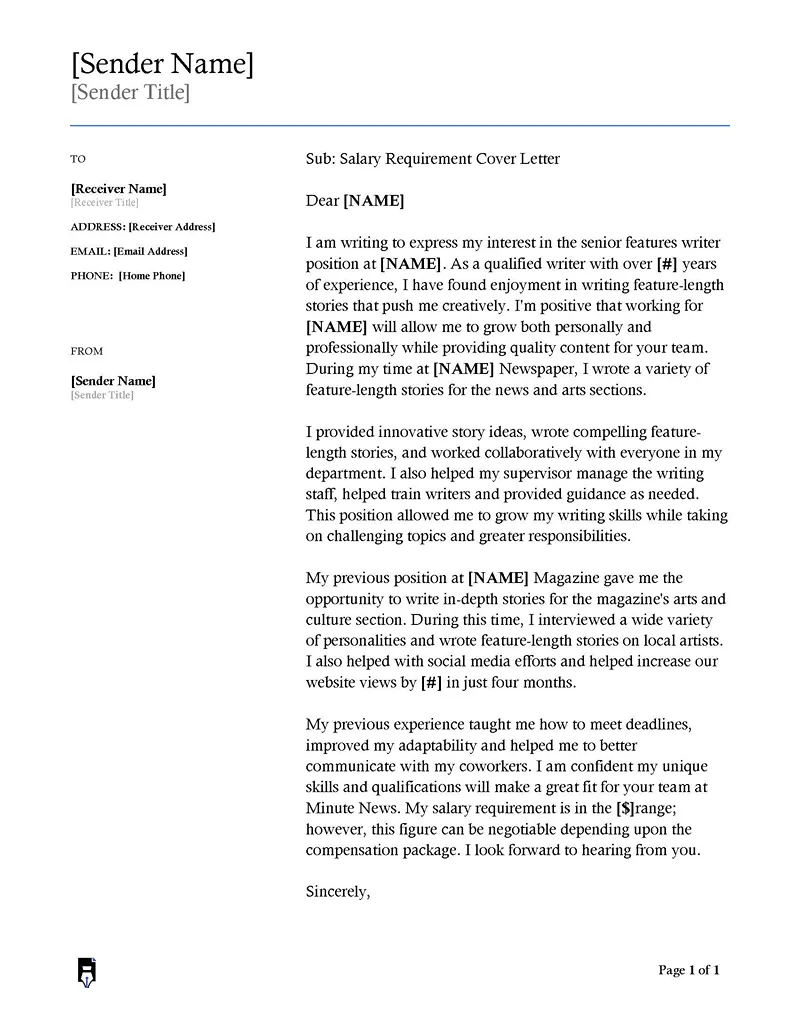
If the job posting explicitly asks for salary expectations, you’ll need to address it directly. Be clear, concise, and professional. There are a couple of ways to handle this within your cover letter. You can state a specific salary or provide a salary range. Always ensure that your stated salary or range aligns with your research and experience. Keep it realistic, and ensure your skills are properly priced. This shows that you’ve done your homework and are serious about the role. You can mention a specific salary or a range, depending on the job and your preferences. Using the direct approach can demonstrate your decisiveness and willingness to be transparent.
Offering a Salary Range
Providing a salary range is often a more strategic approach than stating a single number. This gives you some flexibility during negotiations. Your range should be based on your research, reflecting your skills, experience, and the job’s requirements. The range should be realistic and within market standards. Use a range that is relatively narrow to convey confidence, but gives you some room for negotiation. Consider the company’s size, industry, and location when determining your range. If you’re unsure, it’s often better to err on the side of a slightly higher range, as you can always negotiate down.
Deferring the Conversation

If the job posting doesn’t explicitly ask for salary expectations, or if you’re uncomfortable discussing it in the cover letter, it’s perfectly acceptable to defer the conversation. You can state that you are flexible and are open to discussing salary expectations during the interview process. This approach allows you to focus on your qualifications and show your eagerness for an interview. Focus on how your skills and experience align with the job requirements. This approach can be effective for candidates who are unsure about the salary range or who prefer to negotiate in person. It’s a polite way to indicate your willingness to discuss the topic later. A great way to state this is ‘I am open to discussing salary expectations during the interview process.’
Highlighting Your Value
Throughout your cover letter, make sure to highlight your value to the company. Emphasize your accomplishments, skills, and how you can contribute to their success. This proactive approach helps justify your salary expectations. Tailor your letter to the specific job requirements and demonstrate how your experiences align. When discussing your skills and experience, use the STAR method (Situation, Task, Action, Result) to provide concrete examples. Show the hiring manager exactly what you can bring to the role. Emphasizing value positions you as a valuable asset and strengthens your negotiating position.
Quantifying Your Accomplishments
Whenever possible, quantify your accomplishments. Use numbers, percentages, and specific results to demonstrate your impact in previous roles. For example, instead of saying, ‘I improved sales,’ say, ‘I increased sales by 15% in one quarter.’ Quantifiable achievements provide concrete evidence of your skills and experience. Use action verbs to describe your contributions. Provide data that demonstrates your performance, adding credibility to your claims. This is a good way to demonstrate the value you can bring to the company and justify your salary expectations. Providing quantifiable results will also show your ability to improve the company’s revenue.
Focusing on Transferable Skills

Even if your experience doesn’t perfectly align with the job description, highlight your transferable skills. These are skills that can be applied across different roles and industries, such as communication, problem-solving, leadership, and project management. Explain how these skills will help you succeed in the new role. Emphasize your adaptability and willingness to learn. Demonstrate how your previous experiences have equipped you with the skills necessary for success in this new position. By focusing on transferable skills, you show the hiring manager your potential to grow and adapt within the company. Use the cover letter to highlight skills that might not be listed in the job description but are still important to the role.
Common Mistakes to Avoid
Avoid common pitfalls when addressing salary expectations. These mistakes can negatively impact your application. Understanding these mistakes will increase your chance of getting an interview and a job offer. The details you put into your cover letter and how they are phrased is critical. This will greatly affect your chances of landing the job. Pay attention to the tone and wording you use. A well-crafted cover letter demonstrates your professional maturity and your appreciation of the company.
Being Too Vague
Avoid being vague about your salary expectations. Saying, ‘I’m looking for a competitive salary’ is not helpful. It’s better to provide a specific number or a range. Be clear and concise in your expectations. Being too vague may be perceived as a lack of confidence or research. It can be frustrating for recruiters who have to contact you again to ask the same question. Your cover letter is an opportunity to provide all the necessary details so they can make the right decision. Always do the proper research to show you know the market.
Asking for Too Little

Underselling yourself can be a costly mistake. Research your worth, and don’t be afraid to ask for what you deserve. This shows you are aware of your skills and that you have done your research. When you are in your comfort zone, the company may offer you a salary you are not entirely happy with. Asking for too little could mean a lower salary than what you deserve, and will lead to a feeling of being undervalued. If you are too low, it may also raise questions about your skills and experience. Ensure you do your research and provide the best possible rate for your skills.
Asking for Too Much
Asking for a salary that is significantly above the market rate can eliminate you from consideration. Ensure that your expectations are realistic. Do your research, and align with the average salary range. Asking for too much could signal unrealistic expectations or a lack of understanding of the job market. Understand what the job entails and the overall value it can bring to the company. It can also lead to the hiring manager to reject your application based on the belief that your expectations are too high for your skill level. While you don’t want to undervalue your skills, overvaluing them can be equally detrimental.
Finalizing Your Cover Letter
Before submitting your cover letter, proofread it carefully. Ensure that it’s free of errors and typos. Double-check the salary expectation section to make sure it’s clear, concise, and aligned with your research. Ask a friend or colleague to review your letter for feedback. Ensure that your cover letter is a well-crafted representation of yourself. Remember, the cover letter is your first impression, so make it count. A well-written cover letter could be the ticket to your next interview. Take your time, and put in the effort to make your cover letter the best it can be. Your effort will pay off.