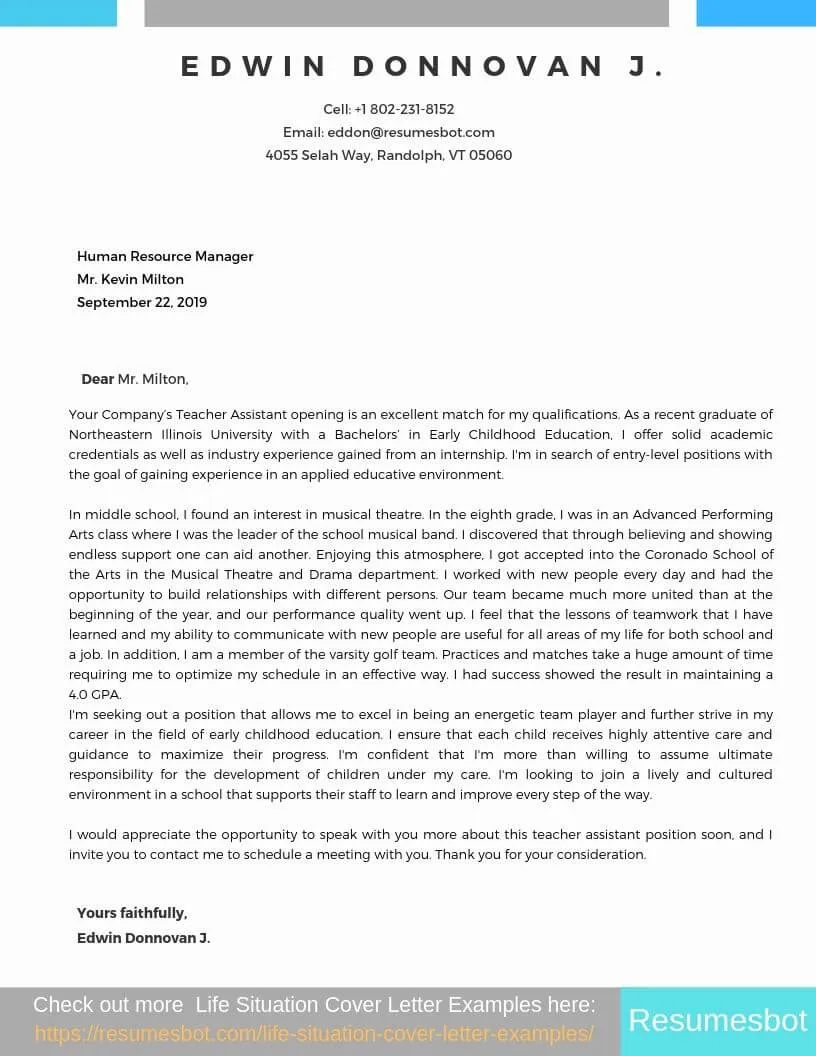
Why a Cover Letter is Crucial for Teaching Assistant Jobs
Even without direct teaching experience, a cover letter is your key to unlocking a Teaching Assistant (TA) position. It’s your personal introduction, going beyond a resume to showcase your unique skills, experiences, and unwavering passion for education. This document demonstrates your solid communication skills, meticulous attention to detail, and genuine interest in the role. It provides a golden opportunity to narrate your story, highlighting how you’d be a valuable asset to the teaching team. Also, it’s your chance to address any perceived shortcomings, like lack of experience, by focusing on transferable skills and a relentless desire to learn.
Highlighting Transferable Skills for Teaching Assistant Roles
Since you might lack specific teaching experience, emphasizing your transferable skills becomes paramount. These are the skills applicable across various roles that can readily be applied to teaching assistance. Consider communication, both written and verbal, for interacting with students and faculty. Highlight your talent for clearly explaining concepts, active listening, and providing constructive feedback. Project management skills, such as organization, time management, and the ability to meet deadlines, are also valuable. Demonstrate problem-solving skills by showcasing how you’ve overcome challenges. Leadership and teamwork are assets, as TAs often collaborate with instructors and students. Provide concrete examples of leading groups, mediating conflicts, or contributing to a team’s success.
Previous Academic Achievements & Coursework

Use your cover letter to highlight your academic achievements, even if you lack experience. Emphasize the relevant coursework that aligns with the TA position. Mention high grades, honors, or awards in related subjects. For instance, if the TA role is in chemistry, highlight your strong performance in your chemistry courses. Describe any projects you’ve completed, like research papers or lab experiments, showing your subject matter understanding. If you boast a high GPA, be sure to mention it to highlight your academic dedication. Include any advanced courses you have taken, or any areas where you have developed a strong foundation. Highlighting past accomplishments helps build a compelling case for your potential success in supporting the instructor and helping students.
Projects & Volunteer Experience for Teaching Assistant
You likely have relevant projects or volunteer experiences to leverage, even without direct teaching experience. Detail these to demonstrate skills that will translate well into the TA role. Any projects, academic or otherwise, that involved teaching, mentoring, or tutoring should be described in detail. If you volunteered as a tutor at a local school or community center, share your experiences. Highlight the skills developed: patience, communication, and the ability to explain complex concepts. If your volunteer experience isn’t directly related to teaching, highlight the skills you’ve acquired. For example, volunteering at a library might demonstrate your ability to work with diverse groups and follow instructions. Always quantify your accomplishments whenever possible. Instead of saying “Tutored students,” state how many students you helped and the results achieved. Emphasize leadership roles and successful management of responsibilities.
Showcasing Passion for Education and Learning
Your genuine passion for education should shine through your cover letter. Convey your enthusiasm for the subject matter and your dedication to helping others learn. Describe your motivation to become a teaching assistant, whether it’s the satisfaction you get from helping students succeed or your eagerness to contribute to a positive learning environment. Share specific examples of how you’ve demonstrated this passion. Have you assisted classmates? Reference any books, articles, or educational philosophies that inspire you. Mention any professional goals related to education or teaching. Your letter’s tone should reflect your excitement and willingness to contribute, making you a more attractive candidate.
Tailoring Your Cover Letter to the Specific TA Position

Customizing your cover letter is essential for each Teaching Assistant position. Don’t send a generic letter. Scrutinize the job description, identifying the key skills and qualifications sought. Tailor your letter to highlight how your skills and experiences align with these requirements. Use the same keywords and phrases from the job description. If the job requires experience with specific software or equipment and you have that experience, include those details. Mention any specific course materials or curricula you are familiar with. By tailoring your letter, you show you understand the position’s requirements and have researched the role. This demonstrates your genuine interest and increases your chances of success.
Researching the Department and Professor
Show your seriousness by researching the department and professor. Look up the professor’s research interests and teaching style. If you have read their publications, mention them. Explain how your interests align with the professor’s work or the department’s goals. Visit the department’s website to learn more about the courses, faculty, and research opportunities. Include this information in your letter to show genuine interest. If you know current TAs or students, ask about their experience and the professor’s expectations. This will help you tailor your letter and make a better impression. Your research demonstrates initiative and a commitment to the role, appreciated by potential employers.
Formatting Your Cover Letter to Impress
Proper formatting is crucial to making a good first impression. Use a professional font, like Times New Roman or Arial, and ensure readability. Maintain consistent formatting throughout the letter, including font size and spacing. Include your contact information at the top of the letter. Address the letter to the specific professor or hiring manager, when possible. Keep the letter concise, ideally no longer than one page. Use clear and concise language, avoiding jargon. Proofread your letter for grammar and spelling errors. A well-formatted letter shows your attention to detail, essential for a teaching assistant. Always align your letter with the institution’s standards and guidelines if provided.
Structuring Your Cover Letter Effectively

Structure your cover letter logically and engagingly. It requires a clear beginning, middle, and end. Start with a strong opening to grab the reader’s attention. Mention the specific position and where you saw the job posting. In the body paragraphs, highlight your transferable skills, experiences, and your passion for education. Explain how your skills align with job requirements. Provide specific examples and quantify your accomplishments. In your conclusion, summarize your qualifications and reiterate your enthusiasm. Include a call to action, such as expressing your availability for an interview. A well-structured letter is easy to read and demonstrates your ability to communicate effectively.
The Introduction: Grab Their Attention
The first paragraph sets the tone and determines whether the reader will continue reading. Start by stating the specific position you’re applying for and where you found the job posting. Briefly explain why you’re interested in the position and the institution. Consider using a hook to grab the reader’s attention. Mention a specific project, a research interest, or your passion for helping students. Avoid generic statements. Make your introduction personal and compelling. Clearly state the main reason you’re applying, highlighting what makes you an ideal candidate. This sets the stage for the rest of the letter and demonstrates your enthusiasm.
The Body: Selling Your Skills
Use the body of your cover letter to sell your skills and experiences. Organize information logically. Highlight the most relevant skills and experiences. Provide specific examples to support your claims. If you tutored, mention the subjects and results. If you worked on a project, describe your role and accomplishments. Quantify achievements. Instead of saying “Improved student grades,” state by how much they improved. Use action verbs to describe your skills, such as “managed,” “organized,” or “assisted.” Connect your skills and experiences to the job description. Show the hiring manager that you understand the role and its responsibilities.
The Conclusion: Call to Action

The conclusion is where you summarize your key qualifications and offer a call to action. Reiterate your interest and willingness to discuss your qualifications. Thank the hiring manager for their time. Provide your contact information, and indicate your availability for an interview. Ensure a professional closing. Avoid clichés. Instead, write a strong and memorable closing statement. The call to action allows you to take control and encourage the hiring manager to take the next step by requesting an interview.
Proofreading & Editing Your Cover Letter
Carefully proofread and edit your cover letter before submitting it. Errors in grammar, spelling, or punctuation create a negative impression. Read your letter aloud to catch any errors. Use spell check and grammar check tools, but don’t rely on them exclusively. Have a friend, family member, or career counselor review your letter for improvements. Make sure your letter is easy to read and the content is clear. Pay attention to the overall formatting. A polished cover letter demonstrates your attention to detail and professionalism.
Cover Letter Don’ts for Teaching Assistant Applications
Avoid these common mistakes to make your cover letter stand out. Don’t use generic language or templates. Tailor each letter to the specific position. Don’t simply repeat information from your resume; provide additional context and details. Don’t include irrelevant information. Keep the focus on the skills and experiences relevant to the TA role. Don’t be negative or make excuses for your lack of experience. Focus on your transferable skills and enthusiasm. Avoid slang or informal language. Maintain a professional tone. Don’t exceed the one-page limit. Proofread and edit your letter carefully before submitting it.