Understanding the Purpose of a Cover Letter
In the competitive landscape of job applications, a well-crafted cover letter serves as your initial handshake with a potential employer. More than just a formality, it is a critical tool designed to introduce you, showcase your skills and experiences, and ultimately, convince the hiring manager that you are the ideal candidate for the role. It is an opportunity to go beyond the confines of your resume and tell your professional story, highlighting your achievements, aspirations, and unique value proposition. The purpose of a cover letter is multifaceted, ranging from introducing yourself and expressing your interest in the position to elaborating on how your qualifications align with the job requirements and the company’s needs. The effective cover letter complements your resume, providing context and personality, and encouraging the recruiter to delve deeper into your qualifications, which is something your resume cannot do.
Why is a Cover Letter Important
The importance of a cover letter cannot be overstated in the job application process. It provides an opportunity to make a strong first impression, demonstrating your communication skills, attention to detail, and genuine interest in the position. By personalizing your cover letter to each job application, you show recruiters that you’ve done your research and are truly interested in the opportunity, setting you apart from candidates who send generic applications. A cover letter also allows you to explain any gaps in your resume, such as career changes or periods of unemployment, providing context and reassuring employers. It provides a platform to highlight key skills and experiences that directly align with the job requirements and showcase your accomplishments, something your resume may not fully capture. Moreover, it gives you the chance to express your personality, enthusiasm, and fit within the company culture, all of which help the hiring manager to assess your potential fit within their team.
Highlighting Your Unique Value Proposition

Your unique value proposition (UVP) is what sets you apart from other candidates, representing the unique blend of skills, experiences, and personality traits that you bring to the table. Highlighting your UVP is crucial in a cover letter as it helps you distinguish yourself and make a lasting impression on potential employers. This involves identifying what makes you unique, whether it’s a specific skill set, a successful track record, or a particular approach to problem-solving. When articulating your UVP, be clear and concise, focusing on what you can offer the company and how you can contribute to their success. Emphasize the benefits of hiring you, using concrete examples to demonstrate your accomplishments and the impact you’ve made in previous roles. Tailor your UVP to each job application by aligning it with the specific requirements and the company’s needs, showing how your unique strengths directly address their challenges. The goal is to showcase what you can do for them and why they should choose you over other qualified candidates.
Key Components of a Winning Email Cover Letter
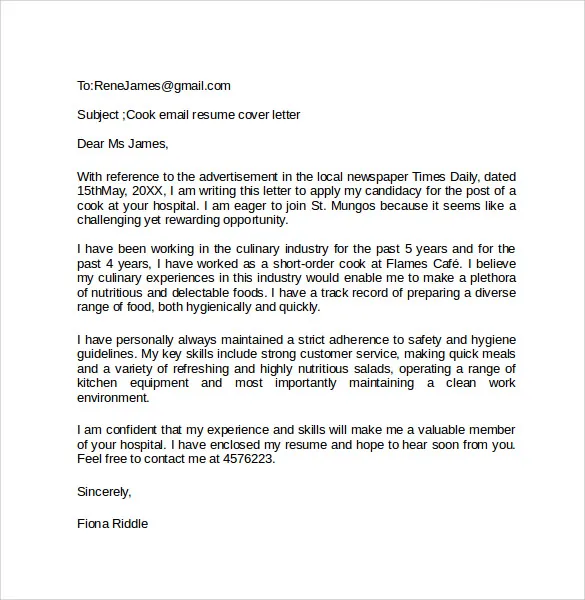
A winning email cover letter comprises several key components that work together to create a compelling narrative. These components are the building blocks of a successful cover letter. The first is a professional salutation and opening, which sets the tone for your letter. Next, you’ll need a compelling first paragraph that captures the reader’s attention and states your purpose. Follow this with an insightful middle section where you demonstrate your skills and experience, quantify your achievements, and tailor your letter to the specific job. Include the closing, where you express your gratitude, seek an interview, and provide contact information. Additionally, a well-crafted email subject line can significantly impact whether your email gets opened. Make sure to include an attachment with the resume and cover letter, and follow best practices for your email body. Following up with the recruiter demonstrates your genuine interest.
The Salutation and Opening
The salutation and opening paragraph are the foundation of your cover letter, setting the tone and capturing the reader’s attention. Use a professional salutation such as ‘Dear Mr./Ms./Mx. [Last Name],’ and address the hiring manager directly if possible. If you’re unsure of the hiring manager’s name, use ‘Dear Hiring Manager’ or ‘Dear [Department Name] Team.’ In the opening paragraph, immediately state the position you’re applying for and where you found the job posting. This shows clarity and directness. Then, briefly express your enthusiasm for the role and company, highlighting any key aspects that drew you to the opportunity. Your goal is to create an engaging first impression, showcasing your interest and setting the stage for the rest of your letter. A strong opening captures the reader’s interest and compels them to continue reading, increasing your chances of a positive outcome.
Crafting a Compelling First Paragraph

The first paragraph of your cover letter is your opportunity to make a strong impression. Start by stating the specific position you are applying for and where you discovered the job posting. This is critical for clarity and showing you have a plan. Then, briefly express your enthusiasm for the role and the company. Highlight any key aspects of the job or company that specifically appealed to you. This shows the employer that you’ve done your research and are genuinely interested. Consider mentioning a specific achievement or skill that aligns with the job requirements to immediately grab the reader’s attention. You want to spark their interest and motivate them to learn more about you. Remember to keep it concise and focused, setting the stage for the rest of your letter. The initial paragraph is your elevator pitch; make it count and make it memorable.
Demonstrating Your Skills and Experience
The main body of your cover letter is where you demonstrate your skills and experience. This section should provide a detailed overview of your qualifications and how they align with the job requirements. Start by highlighting the key skills mentioned in the job description and illustrating how you possess those skills. Give specific examples of how you’ve used these skills in previous roles and the results you achieved. Showcase your relevant experience by detailing your accomplishments and responsibilities in previous positions. Tailor your experience to match the job requirements. Use action verbs and quantify your achievements to make your descriptions more compelling and impactful. Focus on the specific skills and experiences that are most relevant to the role, showcasing why you are the best fit. This is your opportunity to show the recruiter what you are able to do and how your past experiences are a direct match for the role.
Quantifying Achievements
Quantifying your achievements is a crucial step in making your cover letter more impactful and persuasive. Instead of simply listing your responsibilities, use numbers and metrics to demonstrate the value you brought to previous roles. This adds credibility to your claims and provides concrete evidence of your abilities and impact. For instance, instead of saying you ‘increased sales,’ state that you ‘increased sales by 15% within six months.’ If you ‘improved customer satisfaction,’ quantify it by saying you ‘improved customer satisfaction scores by 20%.’ Use numbers to highlight any positive outcomes you achieved, such as cost savings, efficiency gains, or increased productivity. When possible, include specific figures, percentages, and data points to illustrate your accomplishments. This makes your achievements more tangible and shows potential employers the measurable results you can deliver. The numbers speak volumes, and it provides employers with valuable insights into your capabilities and how you can contribute to their success.
Tailoring Your Letter to the Specific Job

Customizing your cover letter for each job application is critical to demonstrating your genuine interest and making a strong impression on recruiters. Before you begin writing, carefully review the job description and identify the key skills, experiences, and qualifications the employer is seeking. Then, tailor your cover letter to directly address these requirements. Use the same keywords and phrases from the job description when describing your skills and experiences. Highlight the specific experiences and achievements that align with the job responsibilities. Show the employer how your unique background and expertise make you the perfect candidate for the position. By tailoring your cover letter, you show the hiring manager that you’ve done your research, understand their needs, and are a perfect match for the role. Customization sets you apart from applicants submitting generic letters. It also ensures you address the needs of the specific role and company.
Researching the Company and Role
Thorough research is the cornerstone of a compelling cover letter and a successful job application. Before you begin writing, invest time in researching the company and the specific role you are applying for. Visit the company’s website to learn about their mission, values, and recent achievements. Explore their social media profiles and news articles to understand their culture and current projects. Examine the job description closely, noting the essential skills, experiences, and qualifications they are seeking. Use this information to tailor your cover letter, demonstrating your understanding of the company and how your skills align with their needs. Researching the role means understanding the responsibilities, the team you would be joining, and the challenges they face. By showcasing your knowledge, you demonstrate your genuine interest, making a powerful impression. This proactive approach sets you apart from other candidates.
Showcasing Relevant Skills and Experiences
Your cover letter offers the perfect opportunity to showcase your relevant skills and experiences, going beyond a simple recitation of your resume. Begin by highlighting the key skills that match the requirements listed in the job description. Provide specific examples of how you’ve utilized these skills in previous roles and the positive results you achieved. Focus on demonstrating your abilities with concrete examples, providing context and showcasing your expertise. Use action verbs to make your descriptions more dynamic and engaging. For example, instead of saying you ‘managed a team,’ you might say you ‘led a team of ten, improving project completion rates by 20%.’ Quantify your achievements whenever possible, using numbers and metrics to illustrate your impact. Tailor your examples to directly address the company’s needs and show how your past successes can benefit them. This focused approach ensures your cover letter resonates with the hiring manager.
Emphasizing Your Enthusiasm and Fit

Expressing your enthusiasm and highlighting your fit with the company culture can significantly boost your chances of landing an interview. The goal is to go beyond listing your qualifications and to connect with the hiring manager on a more personal level. Express your genuine interest in the role and the company, highlighting specific aspects that appeal to you. Show that you understand the company’s values, mission, and culture. Mention any relevant company initiatives or projects that excite you. Explain why you are drawn to the company and what you hope to achieve in the role. Demonstrate how your personality, work ethic, and professional goals align with their company’s environment. Enthusiasm is contagious, and it makes you a more memorable candidate. By making a genuine connection, you show the recruiter that you are more than just a list of qualifications.
Structuring Your Cover Letter for Readability
A well-structured cover letter is essential for keeping the hiring manager engaged and ensuring your key points stand out. Start with a clear and concise introduction, stating the position you’re applying for and where you found the job posting. In the body of your letter, organize your content into distinct paragraphs, each focusing on a specific skill, experience, or achievement. Use headings or bullet points to break up large blocks of text and make your letter easier to scan. Keep your sentences and paragraphs concise. Ensure your writing is easy to read, and avoid jargon. End with a strong closing that expresses your gratitude and reiterates your interest in the position. By structuring your cover letter logically and clearly, you demonstrate your communication skills and help the recruiter to quickly grasp your qualifications.
Formatting and Font Choices
The formatting and font choices in your cover letter can significantly affect its readability and professional appearance. Choose a clean, easy-to-read font like Arial, Times New Roman, or Calibri, keeping the font size between 10 and 12 points for optimal legibility. Use consistent formatting throughout your document. This includes spacing, indentations, and bullet points. Keep the margins at 1 inch on all sides. This creates a balanced look and helps the reader. Avoid using excessive bolding, underlining, or italics, which can be distracting. Use headings and subheadings to break up the text and guide the reader’s eye. Ensure your document is well-organized and visually appealing, showing your attention to detail and professionalism. A visually clean and professional cover letter reflects well on you and increases the reader’s chances of considering your application.
Keeping it Concise and Engaging

In today’s fast-paced world, recruiters often have limited time to review applications. It is crucial to keep your cover letter concise and engaging to capture their attention. Aim for a cover letter that is no more than one page long, and keep paragraphs short and to the point. Use action verbs and strong language to convey your message quickly. Focus on the most relevant skills and experiences, avoiding unnecessary details. Write in an active voice to make your writing more dynamic and engaging. Start your letter with a strong hook to grab the reader’s attention, and end with a clear call to action. Use clear, concise language. Avoid using jargon or overly complex sentences. A well-crafted, concise cover letter demonstrates your respect for the reader’s time and increases the impact of your message.
Proofreading and Editing Your Letter
Proofreading and editing are essential steps that can significantly impact your cover letter’s effectiveness. Before you submit your cover letter, carefully review your document for any typos, grammatical errors, and spelling mistakes. Errors reflect poorly on your attention to detail and can damage your credibility. Read your letter out loud, as this can help you catch awkward phrasing and mistakes. Use grammar and spell-check tools to identify potential issues, but don’t rely on them entirely. Have a friend, family member, or career advisor review your cover letter to provide feedback and catch any errors you may have missed. Ensure your tone is professional, your writing style is clear, and your formatting is consistent. A polished, error-free cover letter demonstrates professionalism and significantly improves your chances of making a positive impression.
Common Mistakes to Avoid
Avoiding common mistakes is crucial to crafting a winning cover letter. Steer clear of these pitfalls to make a positive impression. One of the most significant mistakes is sending a cover letter full of typos and grammatical errors. Another error is using generic and unfocused content that does not address the specific job requirements or the company’s needs. It’s also essential to avoid ignoring the job description. If the job description specifically requests certain information, make sure you provide it. Don’t reuse a cover letter and adjust it to the job. Instead, tailor your cover letter, making sure the job requirements are a match. The recruiter can then see the value you can provide. By sidestepping these mistakes, you can ensure your cover letter stands out.
Typos and Grammatical Errors

Typos and grammatical errors can be detrimental to your job application, damaging your credibility and portraying a lack of attention to detail. Before submitting your cover letter, carefully proofread your document for any spelling mistakes, grammatical errors, and punctuation issues. Read your cover letter slowly, and ideally, read it out loud, as this helps you catch awkward phrasing and errors that might be missed during silent reading. Make use of grammar and spell-check tools, but don’t rely on them entirely; they often miss subtle errors. Have a second pair of eyes review your cover letter to catch anything you might have missed. A polished, error-free cover letter demonstrates your professionalism and ensures your message is clear and well-received.
Generic and Unfocused Content
Generic and unfocused content is a major turn-off for recruiters, as it fails to make a personal connection or demonstrate genuine interest in the role. Avoid using generic phrases and cliches, as these make your cover letter sound impersonal and insincere. Ensure your cover letter is tailored to the specific job and company. Tailor it so that you can showcase your unique skills, experiences, and achievements that align with the role. Don’t just list your qualifications. Highlight the most relevant aspects and show how your background makes you the ideal candidate. Make sure the cover letter showcases the value you bring to the company. Focus on what you can do for them and how you can contribute to their success. By avoiding generic content, you demonstrate that you’ve invested time and effort in understanding the role and company.
Ignoring the Job Description
Ignoring the job description is a critical error that can lead to your cover letter being overlooked. The job description is your roadmap, providing a clear outline of the skills, experiences, and qualifications the employer is seeking. Before you start writing your cover letter, carefully review the job description and identify the key requirements. Tailor your cover letter to address these requirements. Use the same keywords and phrases from the job description. Emphasize the specific experiences and achievements that align with the job responsibilities. If the job description requests specific information, make sure you provide it. By demonstrating that you understand the job requirements and are a strong fit, you significantly increase your chances of landing an interview.
The Closing and Call to Action

The closing of your cover letter is your final opportunity to leave a lasting impression and guide the reader toward your desired outcome. Express your gratitude for the hiring manager’s time and consideration. Reiterate your enthusiasm for the position and the company, reminding the reader why you are a good fit. End with a clear call to action. State your availability for an interview. Make it easy for the hiring manager to take the next step. Provide your contact information, including your phone number and email address. Make sure to use a professional closing such as ‘Sincerely,’ or ‘Best regards,’ followed by your name. The closing is your final chance to make a positive impact. Make it count.
Expressing Gratitude and Seeking an Interview
Expressing gratitude and seeking an interview are essential elements of the closing of your cover letter. Thank the hiring manager for their time and consideration, acknowledging the effort they’ve invested in reviewing your application. This shows respect and professionalism, leaving a positive impression. Reiterate your interest in the position and express your enthusiasm for the opportunity to learn more. End with a clear call to action by requesting an interview. Specify your availability for an interview, making it easy for the hiring manager to take the next step. Make sure to include your contact information, so the hiring manager can easily reach you. Expressing gratitude and seeking an interview are crucial steps in the job application process. It is the final push that converts the potential employer into your future employer.
Providing Contact Information
Providing your contact information is a critical element of your cover letter, ensuring the hiring manager can easily reach you for an interview or follow-up. Make sure to include your phone number and professional email address in the closing of your cover letter. Double-check your information to ensure its accuracy. Including your contact information makes it easy for the recruiter to respond and facilitates the next step in the hiring process. Make it easy for the recruiter to contact you. Be prompt and responsive. A well-crafted cover letter should make it easy for the recruiter to take the next step and to initiate the hiring process.
Email Subject Lines for Cover Letters

A compelling email subject line can significantly impact whether your cover letter email gets opened and read. Your subject line is the first thing the hiring manager sees, so it’s essential to make it clear, concise, and attention-grabbing. The subject line should immediately communicate the purpose of your email, typically the job title and your name. If the job posting specifies a reference number, include it in the subject line. Avoid generic subject lines such as ‘Cover Letter’ or ‘Job Application.’ Instead, use a more descriptive subject line, such as ‘Application for Marketing Manager Position – [Your Name]’. A well-crafted subject line increases the chances that your email will be opened and read, moving your application further along.
Best Practices for Subject Lines
Implementing best practices for your email subject lines is crucial for maximizing the visibility of your cover letter. Keep your subject line concise and to the point, making it easy for the reader to understand. Include the job title and your name, providing context for the recipient. If there’s a reference number, include it. Avoid using vague or overly creative subject lines that might confuse or mislead the reader. Make sure the subject line is relevant to the content of your email. Proofread your subject line to eliminate any typos or grammatical errors. By following these best practices, you increase the chances of your email being opened and read, giving your application a strong start.
Examples of Effective Subject Lines
To help you craft an effective subject line, consider the following examples. ‘Application for Software Engineer Position – [Your Name]’ clearly communicates your purpose. ‘Marketing Manager Application – Job ID #1234 – [Your Name]’ includes a job ID for easy reference. ‘Cover Letter – [Your Name] – Project Manager Role’ provides clarity, while ‘Enthusiastic [Your Name] Applying for [Job Title]’ expresses your interest. ‘Referral from [Name] - [Your Name]’ if you have a referral, can also improve chances. ‘Following up – [Job Title] – [Your Name]’ can be used for follow-up emails. These subject lines are clear, concise, and informative, increasing the likelihood that your email will be opened and read. They also show that you are precise and professional.
Sending Your Cover Letter via Email
Sending your cover letter via email is a common practice, and it requires attention to detail to ensure a professional presentation. Compose your email in a clear, professional tone. Use a formal salutation and closing, and be mindful of your grammar and spelling. Attach your cover letter and resume as separate PDF files. Name your attachments with your name and the document type, such as ‘Your Name_Cover Letter.pdf’ and ‘Your Name_Resume.pdf.’ Proofread your email carefully before sending it. Make sure your email address is professional and appropriate. Double-check the recipient’s email address to avoid any delivery issues. Sending your cover letter via email should look professional and show a polished presentation.
Attaching Your Resume and Cover Letter
Properly attaching your resume and cover letter is a vital step in the application process. These files need to be clear and easy to access. Attach your cover letter and resume as separate PDF files. PDF format ensures that your documents maintain their original formatting regardless of the recipient’s device or software. Label your attachments with your name and document type. For example, use “Your Name_CoverLetter.pdf” and “Your Name_Resume.pdf.” This helps the recipient easily identify your files. Always double-check that both attachments are included before sending your email. These practices will ensure your documents are easily accessible, professional, and enhance your application.
Email Body Best Practices
The email body accompanying your cover letter should be as professional and well-crafted as the cover letter itself. Keep it concise and to the point. Use a professional salutation and closing. Briefly introduce yourself and the position you’re applying for. Express your interest in the role and the company, and briefly mention a few key skills or experiences that make you a good fit. Refer the reader to your attached cover letter and resume for more detailed information. Thank the hiring manager for their time and consideration, and include your contact information. Proofread your email body carefully for any errors. The email body serves as an introduction and should complement the attached documents.
Follow-Up Strategies
Following up after submitting your cover letter can demonstrate your continued interest and initiative. Consider the appropriate timing for your follow-up, typically one to two weeks after submitting your application. If you haven’t heard back, it’s perfectly acceptable to send a polite follow-up email. Keep your follow-up email brief and professional. Refer to the specific position you applied for, restate your interest in the role, and briefly mention any updates or additional information. Thank the hiring manager again for their time and consideration. If you don’t receive a response after the follow-up, it’s acceptable to move on. Following up is important, but be respectful of the hiring manager’s time.
When and How to Follow Up
Determining the right time and method for following up after submitting your cover letter is essential for making a positive impression. Wait one to two weeks after sending your application before sending a follow-up email. This timeframe is typically enough time for the hiring manager to review your application. In your follow-up email, reference the specific position you applied for and restate your interest in the role. Briefly mention any updates to your qualifications or any additional information that might be relevant. Thank the hiring manager again for their time and consideration. Be polite and professional in your communication. If you haven’t heard back after your follow-up, it’s generally safe to assume that the company has moved on to other candidates. Following up demonstrates initiative.
Thank You Note
Sending a thank-you note after an interview is a crucial step in the job application process. Express your gratitude to the interviewer for their time and consideration. Reiterate your interest in the position and briefly mention something specific you discussed during the interview. This shows you were engaged and provides a personalized touch. Reiterate how your skills and experience align with the job requirements. Thank-you notes can be sent via email or postal mail, depending on the company’s preferences. Keep your thank-you note brief and professional. The thank-you note reinforces your interest, solidifies your connection with the interviewer, and leaves a positive impression.
Conclusion - Mastering the Cover Letter Email
Mastering the art of crafting a winning cover letter email is a skill that can significantly improve your job application success. By understanding the purpose of a cover letter, highlighting your unique value proposition, and following best practices for each component—from the salutation to the closing—you can create a compelling narrative that captures the recruiter’s attention. Remember to tailor your letter to each job, research the company and role, and showcase your relevant skills and experiences. Always proofread your letter, avoid common mistakes, and focus on providing a clear call to action. Consistent application of these strategies, from crafting a compelling subject line to utilizing effective follow-up strategies, will enhance your chances of landing an interview. By following these tips, you can transform your cover letter email into a powerful tool to launch your career.